The Hypercar class now sits at the top of endurance racing. Since 2021, it has led the FIA World Endurance Championship, including the 24 Hours of Le Mans, and it has reshaped the fight for overall victory at the world’s most famous endurance race.
In 2026, that fight looks especially fierce. Aston Martin, Alpine, BMW, Cadillac, Ferrari, Genesis, Peugeot and Toyota all bring Hypercars to the 94th running of the 24 Hours of Le Mans. The race also forms round three of the eight-race FIA World Endurance Championship season, which adds even more championship pressure to the usual Le Mans drama.
The provisional entry list confirms 18 Hypercar competitors for the event, with cars from Aston Martin, Toyota, Cadillac, BMW, Genesis, Alpine, Ferrari, Peugeot and Cadillac WTR. The same document also lists 19 LMP2 entries and 25 LMGT3 entries, creating a 62-car field for the 2026 race.
What is a Hypercar?
A Hypercar is a closed-cockpit prototype built to compete for overall victory in the FIA World Endurance Championship. It represents the fastest and most technically advanced category on the grid.
The class replaced the previous top-level prototype structure and gave manufacturers more freedom to express their identity. As a result, the field now includes very different cars, engines and design philosophies, yet they all race under one competitive framework.
That framework matters because Hypercar brings two rule sets together: Le Mans Hypercar, known as LMH, and Le Mans Daytona h, known as LMDh. Both types can race in the FIA WEC, while eligible cars can also compete in the IMSA WeatherTech SportsCar Championship. Therefore, manufacturers can target both Le Mans and Daytona with closely related machinery.
This convergence has helped rebuild the top class. It has also attracted global manufacturers because it offers prestige, technical relevance and cost control at the same time.
LMH vs LMDh: what is the difference?
Although LMH and LMDh cars race together, they follow different design routes.
LMH: more design freedom
Le Mans Hypercar regulations give manufacturers wide freedom over the car’s architecture. A brand can create a car that closely reflects its own engineering philosophy, and the rules also allow a front-axle hybrid system.
This freedom explains why LMH cars often feel more distinctive. Manufacturers can shape the car around their own concept rather than build from a common base.
Ferrari’s 499P, Peugeot’s 9X8, Toyota’s hybrid prototype and Aston Martin’s Valkyrie all show how flexible the LMH idea can become.
LMDh: a shared backbone
LMDh takes a more standardised approach. The car’s “backbone” comes from one of four approved chassis manufacturers: Dallara, Multimatic, Ligier or Oreca.
That backbone includes the main car structure, while each manufacturer adds its own internal combustion engine, bodywork and hybrid system. This formula reduces development costs and helps teams race across championships.
BMW, Cadillac, Alpine and Genesis all use the LMDh route in the 2026 Hypercar field.
The key Hypercar rules explained
Hypercar regulations aim to balance speed, manufacturer identity and financial control. The cars run as closed-cockpit prototypes, and teams use professional driver line-ups.
The FIA WEC allows both hybrid and non-hybrid cars. Michelin supplies the tyres, which means every Hypercar runs on the same tyre brand. The class also uses a minimum weight of 1,030 kg and a maximum power output of 500 kW, or around 680 hp.
At Le Mans, these cars lap the 13.626-km Circuit de la Sarthe in roughly three and a half minutes. However, pure speed alone does not decide the race. Teams must manage fuel, tyres, traffic, night driving, strategy, reliability and changing weather.
Why Balance of Performance matters
Balance of Performance, often shortened to BoP, plays a central role in Hypercar racing. It aims to keep different car concepts competitive against one another.
Without BoP, one design route could dominate because LMH and LMDh cars do not share the same technical base. Therefore, organisers use adjustments to balance performance across different cars, engines and hybrid systems.
This does not remove the challenge. Teams still need sharp strategy, consistent drivers, strong pit work and a reliable car. However, BoP helps prevent the rules from favouring one manufacturer before the race even starts.
Aston Martin THOR Team: the Valkyrie’s next step
Aston Martin returns with the Valkyrie, one of the most striking cars in the Hypercar field. Unlike most rivals, the Valkyrie began life as a road-car concept, and that gives it a unique identity.
The team runs two entries. The #007 features Harry Tincknell, Tom Gamble and Ross Gunn, while the #009 brings together Alex Riberas, Marco Sørensen and Roman De Angelis.
Aston Martin used its first Hypercar season as a learning year after a long absence from top-level endurance racing. At Le Mans, the British marque finished 12th and 14th, which gave the programme a foundation rather than a fairytale. However, the team has already shown signs of progress, including a fourth-place finish for the #007 at Spa-Francorchamps.
Now, Aston Martin needs to turn promise into a stronger Le Mans result. The Valkyrie has fan appeal, a V12 soundtrack and an ambitious team behind it. Next, it needs race-winning consistency.
Alpine Endurance Racing: chasing the breakthrough
Alpine enters 2026 with momentum and ambition. The French manufacturer scored its first win at the 6 Hours of Fuji in 2025, which also marked the 100th FIA WEC race. That result gave the A424 project a major boost.
For Le Mans, Alpine fields two cars. The #35 features António Félix da Costa, Charles Milesi and Ferdinand Habsburg. The #36 includes Frédéric Makowiecki, Jules Gounon and Victor Martins.
The arrivals of Félix da Costa and Martins strengthen the squad, while the A424 continues to develop. Alpine endured a frustrating Spa-Francorchamps round, but the team still left Belgium with confidence ahead of Le Mans.
The target looks clear: Alpine wants to move from potential to podium contention. At Le Mans, that requires speed, discipline and a clean race.
BMW M Team WRT: from progress to pressure
BMW enters Le Mans with serious momentum after a one-two finish at the TotalEnergies 6 Hours of Spa-Francorchamps. The #20 led the way, while the #15 completed the sweep.
The #15 car includes Kevin Magnussen, Raffaele Marciello and Dries Vanthoor. The #20 features Robin Frijns, René Rast and Sheldon Van Der Linde.
BMW’s M Hybrid V8 made steady progress through previous seasons, although Le Mans brought frustration. Now, the team has a new aerodynamic package and proof that it can win in the FIA WEC.
That changes the pressure. BMW no longer arrives only as an improving contender. It arrives as a genuine threat. The marque last won Le Mans overall in 1999, so another victory would carry major historical weight.
Cadillac Hertz Team JOTA: American power with Le Mans intent
Cadillac brings speed, experience and a clear point to prove. In 2025, Cadillac Hertz Team JOTA claimed Hyperpole at Le Mans and won the Rolex 6 Hours of São Paulo. Those results showed the V-Series.R’s potential.
The #12 car features Louis Delétraz, Will Stevens and Norman Nato. The #38 includes Sébastien Bourdais, Earl Bamber and Jack Aitken.
Cadillac has also refined the car’s aero package. The reshaped rear wing profile and removal of the front winglets aim to improve peak speed, which matters hugely on the long straights at Le Mans.
If Cadillac combines that straight-line performance with reliability and sharp execution, it can fight near the front. The team already knows how to produce one-lap speed. Now, it must convert that into 24-hour strength.
Cadillac WTR: a second American chance
Cadillac WTR adds another V-Series.R to the Hypercar field. The #101 car features Ricky Taylor, Jordan Taylor and Filipe Albuquerque.
Wayne Taylor Racing made its Le Mans debut last year, but the race ended with retirement. Therefore, the team returns with unfinished business.
This entry also strengthens Cadillac’s overall presence. With three cars in the Hypercar class, Cadillac matches Ferrari’s number of entries and gives itself more strategic opportunity across the race.
Ferrari-AF Corse: the benchmark returns
Ferrari enters Le Mans as the team everyone must measure themselves against. In 2025, Ferrari-AF Corse won the FIA World Endurance Championship, while Ferrari also claimed a third consecutive Le Mans victory through the AF Corse #83 499P.
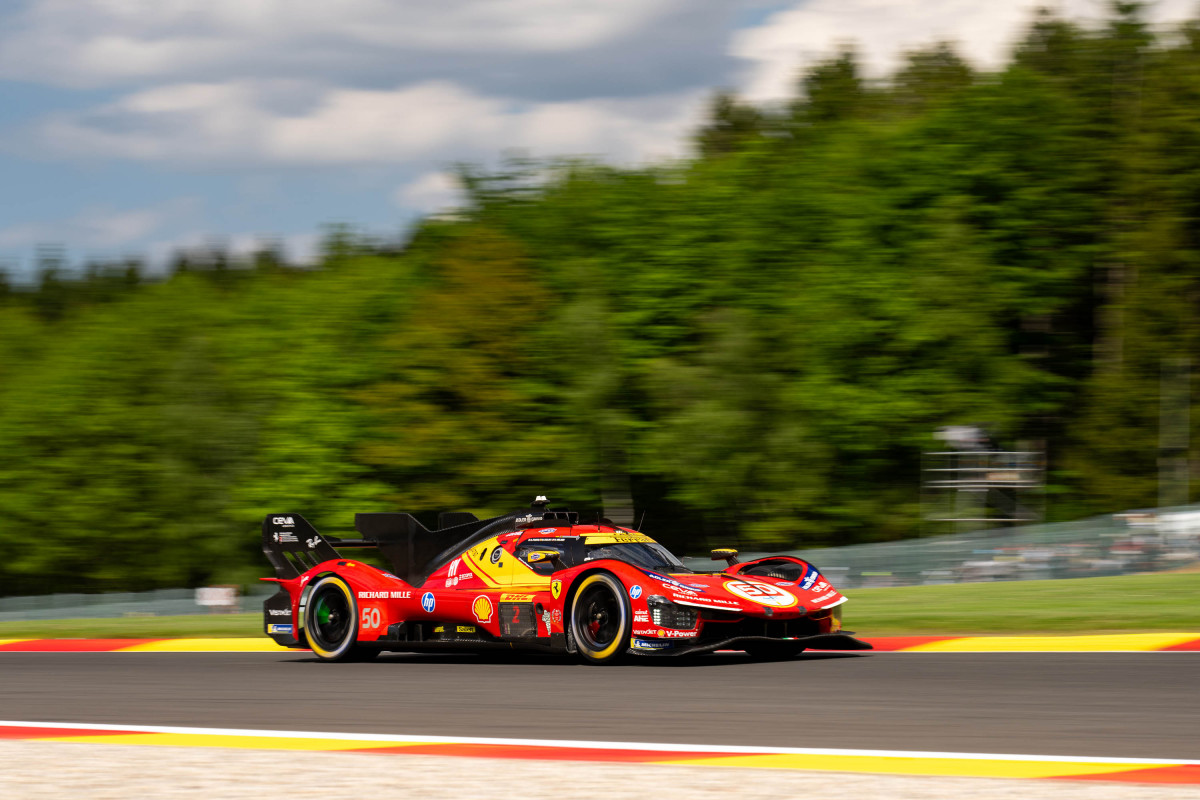
The factory line-up remains formidable. The #50 features Antonio Fuoco, Nicklas Nielsen and Miguel Molina. The #51 includes Alessandro Pier Guidi, James Calado and Antonio Giovinazzi.
Ferrari has not made major visible changes to the 499P. Instead, the team has focused on data, simulator correlation, procedures and detail work. That approach suits a proven winner. When a car already wins Le Mans, the team does not need revolution. It needs refinement.
Ferrari’s challenge now comes from expectation. Everyone wants to stop the streak, and Ferrari must defend its place at the top against a deeper and more confident field.
AF Corse: the #83 aims to repeat history
The #83 AF Corse Ferrari 499P returns with Robert Kubica, Yifei Ye and Philip Hanson.
This car enters the 2026 race with enormous credibility because it won Le Mans last year. It also keeps the same driver line-up, which gives the team continuity in a race where trust and rhythm matter.
A repeat victory would underline Ferrari’s dominance in the Hypercar era. However, Le Mans rarely rewards reputation alone. AF Corse must execute another flawless race to stay ahead of the factory giants.
Genesis Magma Racing: the major new arrival
Genesis brings the newest headline to the 2026 Hypercar class. The South Korean manufacturer enters with the GMR-001-Hypercar and immediately adds another major brand to the top class.
Genesis fields two cars. The #17 features André Lotterer, Luis Felipe Derani and Mathys Jaubert. The #19 includes Mathieu Jaminet, Paul-Loup Chatin and Daniel Juncadella.
The team has relied on Oreca’s chassis expertise and brings a twin-turbo V8 engine concept. It also has huge experience in the cockpit, especially through Lotterer, a three-time Le Mans winner.
For Genesis, the first major target looks practical: finish the race with both cars. However, the team has already scored its first FIA WEC points at Spa-Francorchamps, so it arrives with signs of progress rather than only ambition.
Peugeot TotalEnergies: searching for the final step
Peugeot enters Le Mans with the 9X8 and a clear desire to convert lessons into results.
The #93 car features Paul Di Resta, Stoffel Vandoorne and Nick Cassidy. The #94 includes Loïc Duval, Malthe Jakobsen and Théo Pourchaire.
Peugeot’s recent seasons have mixed encouraging signs with disappointing outcomes. The team has restructured, developed the car and sharpened its competitive target. Now it must show that the 9X8 can fight consistently against the strongest Hypercars.
The ingredients exist: experienced drivers, factory backing and a distinctive car. However, Peugeot needs a clean, competitive Le Mans to prove that its project has turned a corner.
Toyota Racing: the modern endurance giant
Toyota remains one of the defining forces of modern endurance racing. The Japanese manufacturer brings two TR010 Hybrid entries to Le Mans.
The #7 features Mike Conway, Kamui Kobayashi and Nyck de Vries. The #8 includes Sébastien Buemi, Brendon Hartley and Ryō Hirakawa.
Toyota’s car builds on the GR010 Hybrid project introduced in 2021 and reworked in 2022. The team has already won the 6 Hours of Imola this season, so it arrives with race-winning form.
Toyota knows how to win long races, manage pressure and execute complex strategies. However, the Hypercar field has become much deeper since the early days of the class. Therefore, Toyota no longer fights one main rival. It must beat a full grid of factory-backed challengers.
The main storylines to watch
The first major storyline centres on Ferrari. Can anyone stop the 499P after three consecutive Le Mans wins?
Next, BMW arrives with fresh confidence after its Spa one-two. If the M Hybrid V8 carries that form to Le Mans, BMW can challenge for a first overall win since 1999.
Cadillac also looks dangerous, especially if its aero updates improve straight-line speed. Meanwhile, Toyota brings proven endurance strength and will try to reassert itself against newer rivals.
Aston Martin and Peugeot need breakthrough results. Alpine wants to turn progress into a podium challenge. Genesis, meanwhile, wants to establish itself quickly and finish its first Le Mans with credibility.
Together, these storylines create a Hypercar field with depth, variety and genuine unpredictability.
Why the 2026 Hypercar class matters
The 2026 Hypercar class shows why endurance racing has entered a stronger era. It combines global manufacturers, different car concepts, professional driver line-ups and major technical variety.
LMH gives brands design freedom. LMDh gives them cost control and championship flexibility. Balance of Performance then brings both approaches into the same fight.
That mix makes Le Mans more accessible to manufacturers and more exciting for fans. It also creates a race where Aston Martin, Alpine, BMW, Cadillac, Ferrari, Genesis, Peugeot and Toyota can all tell different stories through different machines.
A compelling top-class narrative
The 2026 24 Hours of Le Mans Hypercar class promises a fierce battle for overall victory. Ferrari enters as the benchmark, BMW arrives with momentum, Toyota brings endurance pedigree, Cadillac brings speed, and the rest of the field brings ambition, development and pressure.
That combination gives the 94th running of Le Mans a compelling top-class narrative. In Hypercar, the question no longer asks whether the class has succeeded. It asks which manufacturer can survive 24 hours, master the details and write the next chapter in endurance racing history.
2026 24 Hours of Le Mans Hypercar entry list
- #007 Aston Martin THOR Team — Aston Martin Valkyrie
Harry Tincknell / Tom Gamble / Ross Gunn - #009 Aston Martin THOR Team — Aston Martin Valkyrie
Alex Riberas / Marco Sørensen / Roman De Angelis - #7 Toyota Racing — Toyota TR010 Hybrid
Mike Conway / Kamui Kobayashi / Nyck de Vries - #8 Toyota Racing — Toyota TR010 Hybrid
Sébastien Buemi / Brendon Hartley / Ryō Hirakawa - #12 Cadillac Hertz Team JOTA — Cadillac V-Series.R
Louis Delétraz / Will Stevens / Norman Nato - #15 BMW M Team WRT — BMW M Hybrid V8
Kevin Magnussen / Raffaele Marciello / Dries Vanthoor - #17 Genesis Magma Racing — Genesis GMR-001-Hypercar
André Lotterer / Luis Felipe Derani / Mathys Jaubert - #19 Genesis Magma Racing — Genesis GMR-001-Hypercar
Mathieu Jaminet / Paul-Loup Chatin / Daniel Juncadella - #20 BMW M Team WRT — BMW M Hybrid V8
Robin Frijns / René Rast / Sheldon Van Der Linde - #35 Alpine Endurance Team — Alpine A424
António Félix da Costa / Charles Milesi / Ferdinand Habsburg - #36 Alpine Endurance Team — Alpine A424
Frédéric Makowiecki / Jules Gounon / Victor Martins - #38 Cadillac Hertz Team JOTA — Cadillac V-Series.R
Sébastien Bourdais / Earl Bamber / Jack Aitken - #50 Ferrari AF Corse — Ferrari 499P
Antonio Fuoco / Nicklas Nielsen / Miguel Molina - #51 Ferrari AF Corse — Ferrari 499P
Alessandro Pier Guidi / James Calado / Antonio Giovinazzi - #83 AF Corse — Ferrari 499P
Yifei Ye / Robert Kubica / Philip Hanson - #93 Peugeot TotalEnergies — Peugeot 9X8
Paul Di Resta / Stoffel Vandoorne / Nick Cassidy - #94 Peugeot TotalEnergies — Peugeot 9X8
Loïc Duval / Malthe Jakobsen / Théo Pourchaire - #101 Cadillac WTR — Cadillac V-Series.R
Ricky Taylor / Jordan Taylor / Filipe Albuquerque
See the full schedule for the 2026 edition of the 24 Hours of Le Mans, and you can get live updates on race day from our blog.