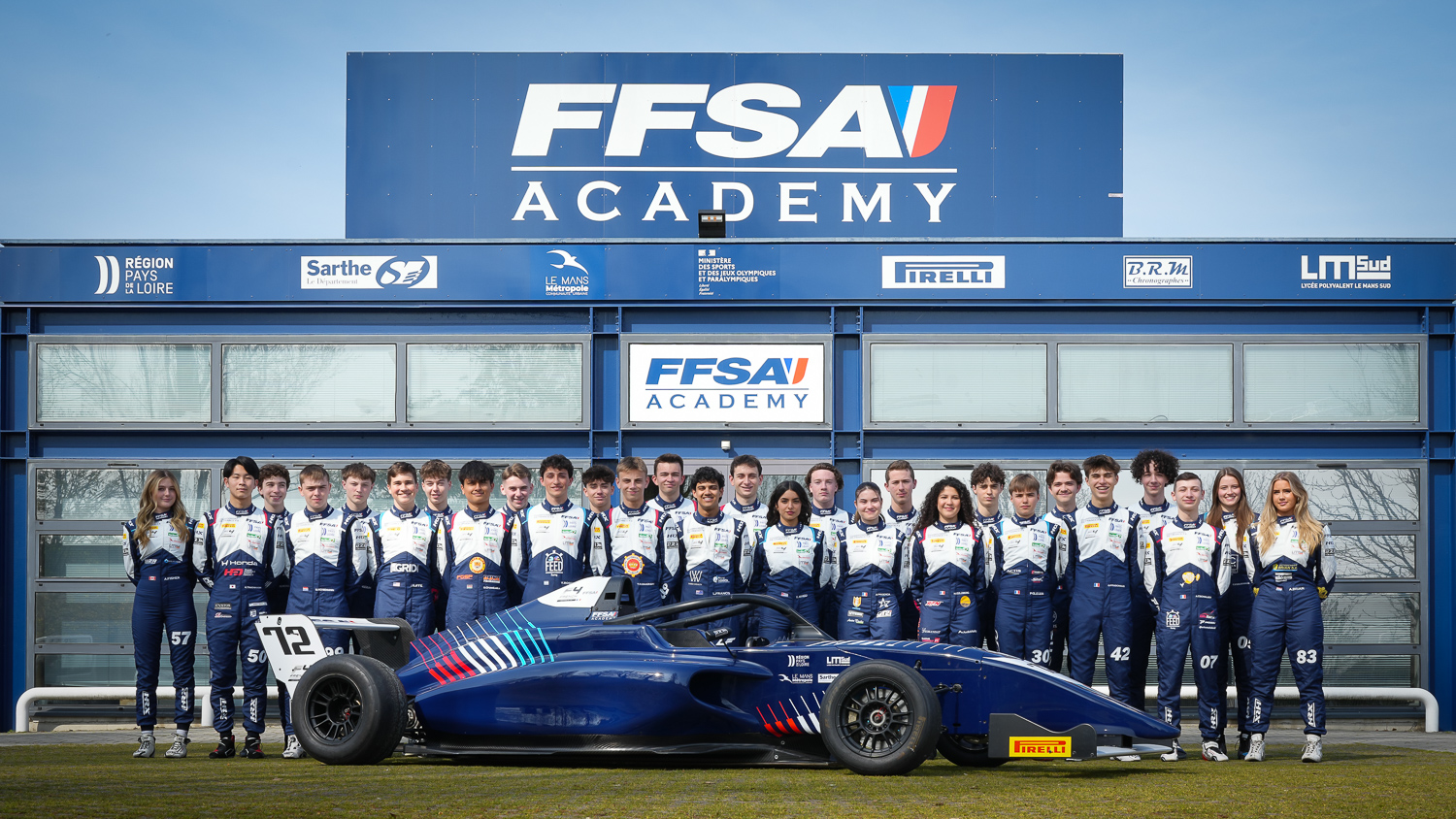
The 2026 FIA-certified French Formula 4 (F4) Championship delivered a season defined by dominant individual performances, changing championship battles and historic achievements across its two classifications. Guillaume Bouzar ultimately secured the Drivers’ Championship following an impressive second campaign with the FFSA Academy, while Clara Stiebleichinger became the inaugural French Women’s F4 Champion after a closely contested battle with Annabelle Brian.
Across six rounds and 18 races, nine different drivers secured outright victories, highlighting the competitive depth of the international field. Bouzar established himself as the championship’s leading contender during the opening rounds, collecting five victories and consistently strong results. However, Thibaut Ramaekers emerged as a serious challenger during the middle of the season, while Kota Tsuchihashi produced an exceptional late-season resurgence to finish runner-up.
The campaign also marked an important development for female participation in French F4. The FFSA Academy introduced a dedicated Women’s Championship, with Brian, Angelina Proenca and Stiebleichinger each leading the standings at different stages. Meanwhile, Williams Racing Driver Academy member Jade Jacquet made history at Lédenon by becoming the first woman to win a French F4 race outright.
Bouzar eventually concluded the season with 240 points, finishing 48 ahead of Tsuchihashi and 79 clear of Ramaekers. Stiebleichinger secured the Women’s Championship by just 11 points, ensuring that the final round at Circuit Paul Ricard provided a dramatic conclusion to the 2026 campaign.
2026 French F4 Round 1: Nogaro: Bouzar establishes early championship advantage
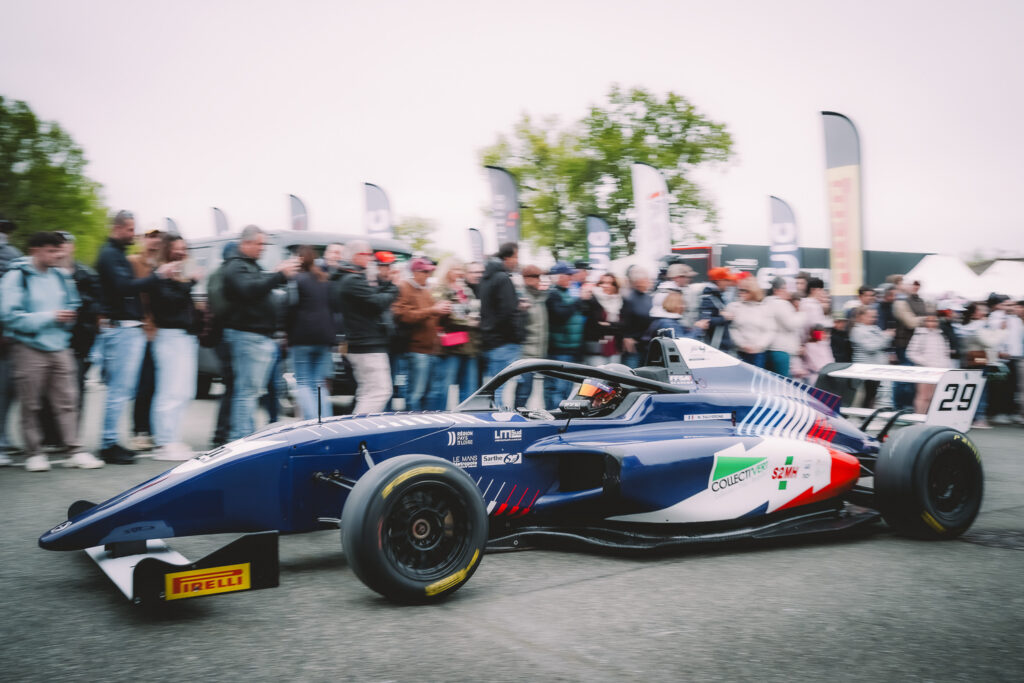
The championship began at Circuit Paul Armagnac in Nogaro from 4–6 April, where a 32-driver field assembled for the traditional Easter weekend event. Bouzar immediately demonstrated his experience by securing pole position for both principal races, establishing himself as one of the early championship favourites.
The Frenchman converted his qualifying advantage into victory during Race 1, maintaining control despite a Safety Car interruption. Hugo Herrouin finished second, while Tsuchihashi inherited third after officials imposed a 20-second penalty on Ramaekers following contact with Tom Dussol.
However, the reverse-grid contest produced a different winner. Australian rookie Lewis Francis advanced into contention during the opening stages before overtaking Yuval Rosen to claim the lead. Francis subsequently controlled the race to secure his maiden French F4 victory, with Lilian Soares finishing second and Rosen completing the podium.
Bouzar encountered difficulties after contact with Dussol forced both drivers to retire, restricting his opportunity to extend his championship advantage.
Nevertheless, the Frenchman remained well-positioned heading into the final race, having already demonstrated the pace and consistency required to challenge for the title.
Dauvergne secures maiden victory as Bouzar retains championship lead
Monday’s final race produced another breakthrough when Matthéo Dauvergne claimed his maiden single-seater victory.
The French rookie had demonstrated strong qualifying pace but could not start Race 1 because of a mechanical problem. However, he recovered to seventh in the reverse-grid contest before challenging Bouzar during the final race.
Bouzar initially maintained the advantage on track, but officials imposed a five-second penalty for his defensive manoeuvre against Ramaekers at the start. The sanction promoted Dauvergne to victory, with Ramaekers finishing second and Bouzar dropping to third.
The opening Nogaro weekend therefore produced three different winners, immediately demonstrating the strength of the field.
Bouzar nevertheless emerged as the championship leader with 43 points, establishing a 13-point advantage over Herrouin. Dauvergne followed third on 28, while Tsuchihashi and Oscar Goudchaux remained level on 27.
Meanwhile, the inaugural Women’s Championship developed into a competitive contest. Lisa Billard led the women on track across all three races, but her participation in F1 Academy prevented her from scoring championship points.
Consequently, Brian left Nogaro leading the Women’s Championship with 40 points, just one ahead of Proenca. Stiebleichinger followed third on 35, establishing the foundation for the title battle that would unfold throughout the season.
Summary of results
- Race 1: Guillaume Bouzar
- Race 2: Lewis Francis
- Race 3: Matthéo Dauvergne
Drivers’ Championship after Round 1
- Guillaume Bouzar — 43 points
- Hugo Herrouin — 30
- Matthéo Dauvergne — 28
- Kota Tsuchihashi — 27
- Oscar Goudchaux — 27
Women’s Championship after Round 1
- Annabelle Brian — 40 points
- Angelina Proenca — 39
- Clara Stiebleichinger — 35
Although Bouzar had secured an early advantage, several rookies had already demonstrated their ability to challenge for victories. The next round at Dijon-Prenois would consequently provide an important indication of whether the Frenchman could maintain his position.
2026 French F4 Round 2: Dijon: Bouzar strengthens championship lead
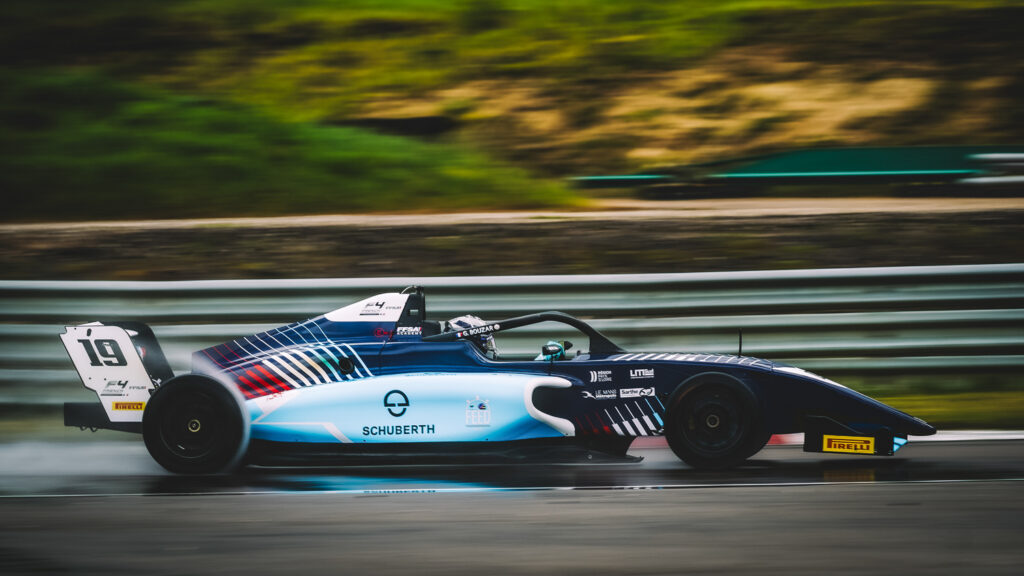
The championship continued at Dijon-Prenois from 15–17 May, where changing weather conditions complicated Qualifying and created opportunities for several drivers.
Rain affected the circuit before the session, forcing competitors onto wet tyres. However, the surface gradually dried, making tyre management, traffic and the timing of qualifying attempts increasingly important.
Bouzar again established the benchmark, recording a 1:27.041 to secure pole position for Race 1. His second-fastest lap also placed him on pole for Sunday’s finale, giving the championship leader another opportunity to maximise his points.
The Frenchman subsequently converted his qualifying advantage into victory during Race 1, maintaining control despite repeated Safety Car interruptions.
Herrouin finished second after overtaking several competitors during the closing stages, while Ramaekers completed the podium. Soares followed fourth, ahead of American Jack Iliffe.
However, Saturday’s reverse-grid race provided Ramaekers with an opportunity to respond.
Starting from seventh, the Belgian progressed through the field before overtaking Iliffe to claim the lead. He eventually secured his maiden French F4 victory, with Iliffe finishing second and Jules Avril completing the podium.
Bouzar finished sixth, limiting the points he surrendered to his closest challenger.
Bouzar completes Dijon double as Proenca takes Women’s Championship lead
Sunday’s final race again belonged to Bouzar, who converted pole position into the lead and controlled the contest despite several interruptions.
The Frenchman secured his third victory of the season, finishing ahead of Soares and Iliffe. His performance also included the fastest lap, completing another highly productive weekend.
The official FFSA Academy Dijon report highlighted Bouzar and Ramaekers’ victories, while the Pit Debrief race review detailed the changing conditions and their effect on the championship.
Iliffe also emerged as one of the strongest performers, securing consecutive podium finishes in Races 2 and 3. Meanwhile, Soares’ consistent results moved him into the leading championship positions.
The Women’s Championship experienced its first change of leadership. Ginevra Panzeri topped the women’s classification in Races 1 and 2, while Billard secured another on-track victory in Race 3.
However, their ineligibility for championship points allowed Proenca to capitalise on her consistent performances. She moved ahead of Brian and Stiebleichinger, establishing a 19-point advantage.
Bouzar entered the following round at Spa-Francorchamps with 100 points, holding a 47-point lead over Ramaekers and Soares.
Summary of results
- Race 1: Guillaume Bouzar
- Race 2: Thibaut Ramaekers
- Race 3: Guillaume Bouzar
Drivers’ Championship after Round 2
- Guillaume Bouzar — 100 points
- Thibaut Ramaekers — 53
- Lilian Soares — 53
- Hugo Herrouin — 52
- Jack Iliffe — 33
Women’s Championship after Round 2
- Angelina Proenca — 95 points
- Annabelle Brian — 76
- Clara Stiebleichinger — 68
Bouzar had therefore established a substantial advantage after only two rounds. Nevertheless, Ramaekers’ maiden victory and Soares’ continued consistency ensured that several drivers remained capable of challenging during the middle of the season.
2026 French F4 Round 3: Spa-Francorchamps: Ramaekers triumphs on home soil
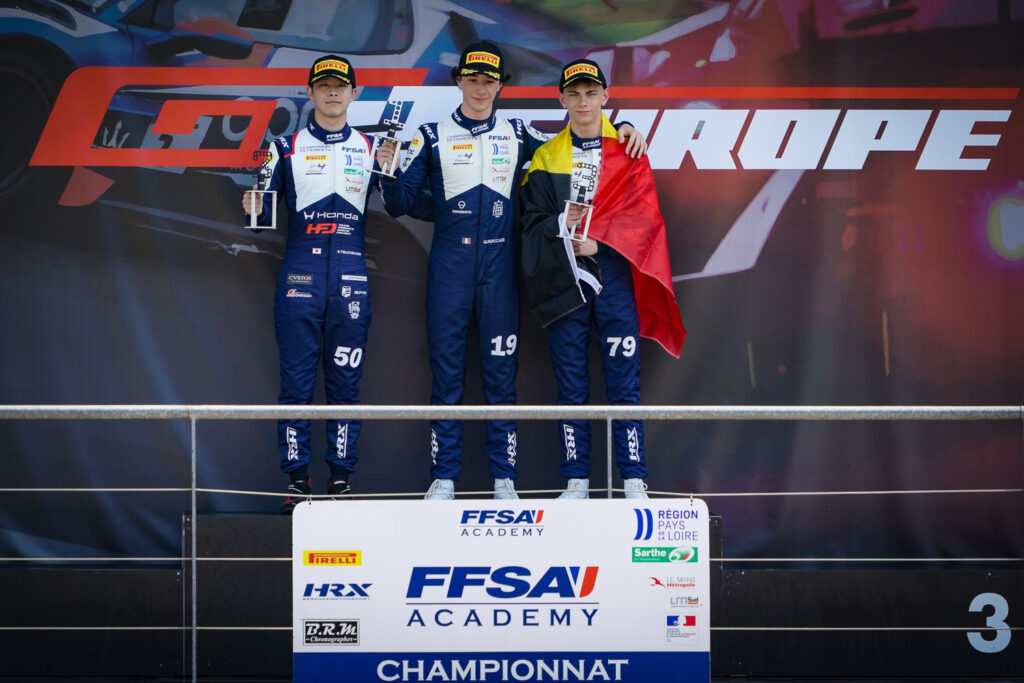
The championship travelled to Belgium’s Circuit de Spa-Francorchamps from 19–21 June, where high temperatures and closely contested racing challenged the field.
Bouzar continued his strong qualifying form, recording a 2:23.770 to secure another double pole position. Ramaekers qualified second, while Herrouin, Tsuchihashi and Dussol completed the leading five.
However, the Belgian immediately challenged Bouzar during Race 1, overtaking the championship leader before the end of the opening lap.
Ramaekers maintained his advantage despite a Safety Car interruption, eventually securing his second victory of the season at his home circuit.
Bouzar finished second after recovering from a brief battle with Herrouin, who completed the podium. Tsuchihashi followed fourth, adding valuable points after his difficult Dijon weekend.
The reverse-grid contest subsequently provided another maiden winner when Rosen converted pole position into victory.
The Israeli driver controlled the race despite Bouzar progressing rapidly from tenth on the grid. The Frenchman eventually moved into second, but Rosen maintained a substantial advantage to secure his first French F4 win.
Maverick McKenna completed the podium, recording his strongest result of the season at that stage.
Bouzar responds with fourth victory as Stiebleichinger takes Women’s lead
Sunday’s final race allowed Bouzar to respond to Ramaekers’ success.
The championship leader converted pole position into the lead and maintained control despite repeated Safety Car interruptions. He ultimately secured his fourth victory, completing another strong points-scoring weekend.
Ramaekers inherited second after officials imposed a one-place penalty on Tsuchihashi, who dropped to third following an infringement during an overtake.
Bouzar consequently increased his Drivers’ Championship total to 155 points, extending his advantage over Ramaekers to 58.
The official FFSA Academy report confirmed Bouzar’s success, while the Spa-Francorchamps review highlighted the performances of Ramaekers and Rosen.
Meanwhile, Stiebleichinger emerged as the strongest eligible Women’s Championship competitor.
The Austrian secured the overall women’s race victory in Race 1, while Brian produced an impressive recovery from 28th on the grid to tenth overall in Race 2.
Although Billard led the women on track during Race 3, Stiebleichinger collected the maximum eligible championship points.
Her results moved her into the Women’s Championship lead with 126 points, seven ahead of Brian and 11 clear of Proenca.
Summary of results
- Race 1: Thibaut Ramaekers
- Race 2: Yuval Rosen
- Race 3: Guillaume Bouzar
Drivers’ Championship after Round 3
- Guillaume Bouzar — 155 points
- Thibaut Ramaekers — 97
- Hugo Herrouin — 72
- Lilian Soares — 66
- Kota Tsuchihashi — 58
Women’s Championship after Round 3
- Clara Stiebleichinger — 126 points
- Annabelle Brian — 119
- Angelina Proenca — 115
Bouzar therefore reached the halfway stage with four victories and a commanding championship advantage. However, Ramaekers continued emerging as his closest challenger, setting up an important fourth round at Magny-Cours.
2026 French F4 Round 4: Magny-Cours: Ramaekers reduces championship deficit
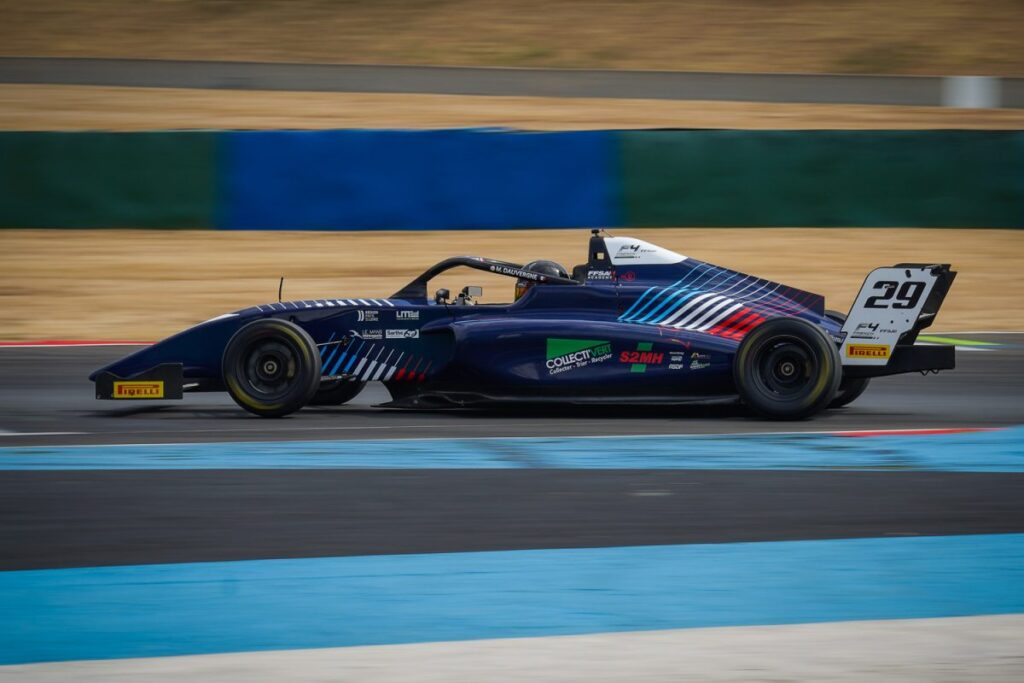
The championship entered its second half at Circuit de Nevers Magny-Cours from 31 July–2 August, where the title battle became considerably more competitive.
Dauvergne initially emerged as the strongest qualifier, recording a 1:40.975 to secure pole position for both principal races. Ramaekers qualified second, while Tsuchihashi followed third.
However, Ramaekers converted his competitive starting position into victory during Race 1.
The Belgian overtook Dauvergne during the opening stages and maintained his advantage despite three Safety Car periods.
Tsuchihashi followed second, while Dussol secured his maiden championship podium in third. The result represented an important milestone for the French rookie, who had struggled to convert competitive pace into strong results earlier in the season.
Bouzar, meanwhile, endured his most difficult opening race of the campaign. The championship leader finished outside the points, providing Ramaekers with an opportunity to reduce his deficit.
Saturday’s reverse-grid contest subsequently produced another breakthrough when McKenna secured his maiden French F4 victory.
The American took control during the opening stages and resisted pressure from Soares throughout the race, eventually winning by just 0.516 seconds.
Ramaekers completed the podium, while Bouzar finished fourth, limiting the points he surrendered.
Bouzar claims fifth victory as Ramaekers reignites title battle
Sunday’s final race initially appeared likely to produce another victory for Dauvergne, who converted pole position into the lead.
However, Ramaekers remained close behind and repeatedly challenged the French rookie.
Their battle eventually compromised both drivers, allowing Bouzar to move ahead and take control.
The championship leader subsequently maintained his advantage to secure his fifth victory of the season, finishing ahead of Ramaekers and Dussol.
Nevertheless, the Belgian emerged as the weekend’s strongest points scorer. His victory and two further podium finishes supplied 50 points, reducing Bouzar’s championship advantage from 58 to 39.
The official FFSA Academy Magny-Cours report provided the context for the closely contested title battle, while the Pit Debrief weekend review detailed the sporting incidents and championship implications.
Meanwhile, Brian regained the Women’s Championship lead through another strong weekend.
The Dutch driver secured victories among the eligible competitors and capitalised on difficulties for Stiebleichinger and Proenca.
Brian consequently moved to 175 points, establishing a nine-point advantage over Stiebleichinger. Proenca followed third on 140, while Sofia Zanfari and Héloïse Goldberg remained involved in the battle for the remaining podium position.
Summary of results
- Race 1: Thibaut Ramaekers
- Race 2: Maverick McKenna
- Race 3: Guillaume Bouzar
Drivers’ Championship after Round 4
- Guillaume Bouzar — 186 points
- Thibaut Ramaekers — 147
- Lilian Soares — 92
- Hugo Herrouin — 89
- Kota Tsuchihashi — 88
Women’s Championship after Round 4
- Annabelle Brian — 175 points
- Clara Stiebleichinger — 166
- Angelina Proenca — 140
Magny-Cours therefore represented the most significant challenge to Bouzar’s championship position. Although the Frenchman remained in control, Ramaekers had substantially reduced the deficit, creating renewed uncertainty heading into the final two rounds.
2026 French F4 Round 5: Lédenon: Tsuchihashi delivers breakthrough double victory
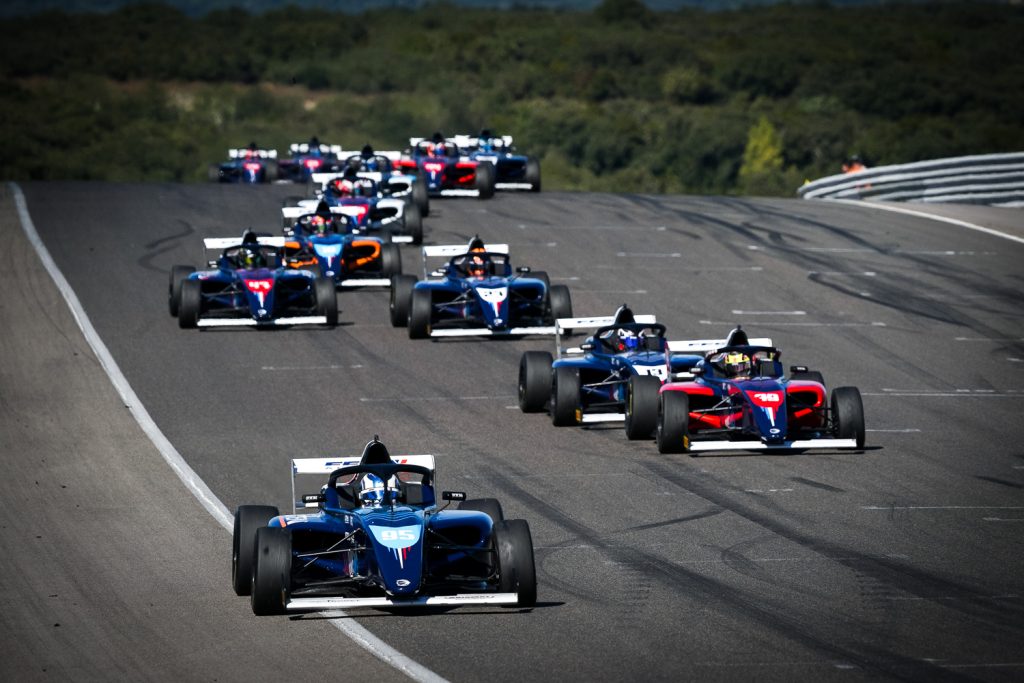
The championship continued at Circuit de Lédenon from 18–20 September, where Tsuchihashi produced the strongest weekend of his French F4 career.
Having gradually improved his competitiveness throughout the season, the Japanese driver secured his maiden pole position with a 1:21.769, finishing just 0.019 seconds ahead of Soares.
Bouzar qualified third, while Ramaekers faced a more difficult session and could manage only ninth. The result immediately placed the Belgian at a disadvantage in his attempt to reduce the championship deficit.
Tsuchihashi subsequently converted pole into victory during Race 1, maintaining his advantage despite a Safety Car interruption.
Bouzar finished second, collecting valuable points ahead of Soares, who completed the podium.
Ramaekers finished eighth, surrendering further ground to his championship rival.
However, Saturday’s reverse-grid contest produced one of the most significant results in French F4 history.
Williams Racing Driver Academy member Jacquet inherited pole position after qualifying tenth. She converted the advantage into the lead and maintained her position despite pressure from Ramaekers.
Jacquet eventually crossed the line 1.620 seconds ahead of the Belgian, becoming the first woman to win a French F4 race outright.
Jacquet makes history as Tsuchihashi completes Lédenon double
Jacquet’s achievement represented an important milestone for the FFSA Academy and her development as a driver.
The official FFSA Academy report confirmed the historic victory, which followed her competitive qualifying performance.
Ramaekers finished second on track, while Francis completed the podium.
However, Bouzar encountered another setback after an incident compromised his race, providing Ramaekers with an opportunity to recover points.
Sunday’s final race nevertheless restored the championship leader’s advantage.
Tsuchihashi secured another controlled victory, completing his first double-winning weekend. Bouzar finished second, while Soares collected another podium in third.
Ramaekers could manage only 19th, failing to capitalise on Bouzar’s reverse-grid difficulties.
The Lédenon weekend consequently represented the decisive turning point in the championship.
Bouzar increased his advantage from 39 to 62 points, while Tsuchihashi’s 57-point weekend moved him from fifth to third overall.
Meanwhile, Brian retained her Women’s Championship lead, although Stiebleichinger and Proenca remained within reach heading into the finale.
Summary of results
- Race 1: Kota Tsuchihashi
- Race 2: Jade Jacquet
- Race 3: Kota Tsuchihashi
Drivers’ Championship after Round 5
- Guillaume Bouzar — 223 points
- Thibaut Ramaekers — 161
- Kota Tsuchihashi — 145
- Lilian Soares — 127
- Hugo Herrouin — 113
Women’s Championship after Round 5
- Annabelle Brian — 214 points
- Clara Stiebleichinger — 201
- Angelina Proenca — 185
Although Bouzar had not yet mathematically secured the Drivers’ Championship immediately after Lédenon, his substantial advantage placed him in a commanding position. However, the separate Women’s Championship remained undecided, ensuring that Paul Ricard would host another important title battle.
2026 French F4 Round 6: Paul Ricard: Bouzar arrives as confirmed champion
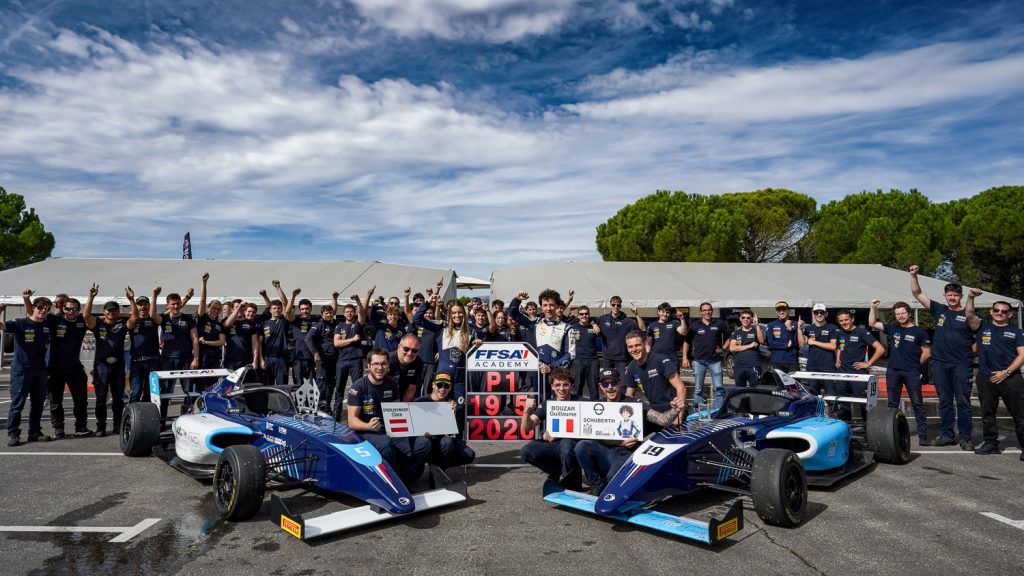
The championship concluded at Circuit Paul Ricard from 9–11 October, with Bouzar arriving as the confirmed Drivers’ Champion.
Although the Frenchman held a 62-point advantage over Ramaekers, his title became mathematically certain before the finale because of the Belgian’s participation in Formula Regional European Championship testing.
Under the FFSA Academy’s regulations, Ramaekers could participate at Paul Ricard but could not score championship points. Consequently, Bouzar entered the final event with the title secured, leaving the fight for runner-up honours unresolved.
Tsuchihashi immediately demonstrated his determination to secure second overall by claiming another double pole position.
The Japanese driver recorded a 2:07.587, finishing just 0.009 seconds ahead of Dauvergne. Francis followed another thousandth further back, highlighting the exceptionally narrow margins.
However, Dauvergne emerged as the strongest competitor during Race 1.
The Frenchman overtook Tsuchihashi and established a comfortable advantage, securing his second victory of the season.
Tsuchihashi finished second, while Francis completed the podium.
Saturday’s reverse-grid contest subsequently produced another breakthrough when Dussol converted pole into his maiden French F4 victory.
The Frenchman maintained his advantage despite two Safety Car periods, resisting McKenna throughout the closing stages.
Dussol eventually won by 0.669 seconds, with McKenna finishing second and Bouzar completing the podium.
Tsuchihashi wins finale as Stiebleichinger secures historic title
Sunday’s final race provided Tsuchihashi with an opportunity to secure runner-up honours.
The Japanese driver converted pole into the lead and maintained his advantage despite two Safety Car interruptions.
Francis emerged as his closest challenger, but Tsuchihashi controlled the closing stages and crossed the line 0.385 seconds ahead. McKenna completed the podium.
The victory represented Tsuchihashi’s third of the season and confirmed second overall with 192 points.
Meanwhile, the Women’s Championship reached a dramatic conclusion.
Stiebleichinger had collected maximum eligible points during both Saturday races, overturning Brian’s advantage before the finale.
The pair subsequently battled during Sunday’s race, with Brian attempting an overtake at the northern chicane with two laps remaining. However, contact between their cars effectively ended the Dutch driver’s championship challenge.
Stiebleichinger continued and secured the inaugural Women’s Championship with 261 points, finishing 11 ahead of Brian.
The official FFSA Academy finale report confirmed both championship outcomes, while the Pit Debrief Paul Ricard summary covered the weekend’s three winners and decisive incidents.
Summary of results
- Race 1: Matthéo Dauvergne
- Race 2: Tom Dussol
- Race 3: Kota Tsuchihashi
Drivers’ Championship after Round 6
- Guillaume Bouzar — 240 points
- Kota Tsuchihashi — 192
- Thibaut Ramaekers — 161
- Lilian Soares — 143
- Hugo Herrouin — 119
Women’s Championship after Round 6
- Clara Stiebleichinger — 261 points
- Annabelle Brian — 250
- Angelina Proenca — 212
The season therefore concluded with Bouzar holding a 48-point advantage over Tsuchihashi, while Stiebleichinger secured the inaugural Women’s Championship by the narrowest margin between the two eventual champions’ title battles.
Bouzar’s journey to the title: From experienced contender to champion
Bouzar entered the 2026 French F4 Championship as one of the field’s most experienced competitors, having finished fifth overall during his first campaign in 2025.
The Frenchman immediately demonstrated his progress by securing double pole position at Nogaro before claiming victory during the opening race.
Although a retirement and subsequent penalty compromised his remaining results, Bouzar still left the first event as championship leader.
Dijon subsequently established the foundation for his title challenge. He secured two victories and finished sixth in the reverse-grid contest, extending his championship advantage to 47 points.
The Frenchman continued demonstrating his consistency at Spa-Francorchamps, where he secured another double pole and collected two runner-up finishes before winning Race 3.
By the halfway stage, Bouzar had accumulated 155 points, establishing a 58-point advantage over Ramaekers.
His ability to maximise points during difficult races became increasingly important as the championship progressed, particularly when his closest rivals demonstrated stronger pace.
Consistency and qualifying strength prove decisive for Bouzar
Magny-Cours presented Bouzar with his most significant challenge of the season.
An uncompetitive opening race allowed Ramaekers to reduce the championship deficit, while the Belgian’s victory and subsequent podium finishes threatened to transform the title battle.
However, Bouzar responded with victory in Sunday’s finale, protecting a 39-point advantage.
Lédenon subsequently proved decisive. Although Tsuchihashi dominated the weekend, Bouzar finished second in both principal races, collecting valuable points while Ramaekers encountered difficulties.
The result increased his championship lead to 62 points, placing him in a commanding position before Paul Ricard.
Bouzar eventually concluded the season with five victories, 11 podium appearances and 240 championship points.
His success reflected a combination of strong qualifying performances, race-winning speed and consistent points accumulation. Even when his rivals secured victories, Bouzar frequently limited their gains by finishing near the front.
The Frenchman’s improvement from fifth in 2025 to champion in 2026 also demonstrated his development throughout two seasons with the FFSA Academy.
Ramaekers emerges as Bouzar’s principal championship challenger
Ramaekers established himself as Bouzar’s closest rival during the middle of the season.
Although the Belgian struggled during the opening Nogaro weekend, he demonstrated competitive pace at Dijon by securing his maiden French F4 victory in the reverse-grid contest.
He subsequently claimed another win at Spa-Francorchamps, defeating Bouzar during the opening race at his home circuit.
The performances gradually moved him ahead of Herrouin and Soares in the Drivers’ Championship, establishing him as the principal challenger.
Magny-Cours provided his strongest opportunity to threaten Bouzar’s advantage.
Ramaekers secured victory in Race 1 before adding third in Race 2 and second in Race 3, collecting 50 points and reducing the championship deficit to 39.
However, Lédenon significantly damaged his prospects.
The Belgian could manage only eighth and 19th in the principal races, allowing Bouzar to extend his lead.
Ramaekers subsequently prioritised preparations for 2027 through Formula Regional testing, which prevented him from scoring points at Paul Ricard under the championship regulations.
He ultimately finished third overall with 161 points, having secured three victories during the season.
Tsuchihashi’s late-season resurgence secures runner-up honours
Tsuchihashi’s championship developed differently from those of Bouzar and Ramaekers.
Although the Japanese driver demonstrated competitive pace during the opening round at Nogaro, he struggled to maintain consistent results at Dijon.
His fortunes improved at Spa-Francorchamps, where fourth, fifth and third-place finishes lifted him into the championship top five.
Magny-Cours subsequently provided another competitive weekend, although he remained some distance behind the leading title contenders.
However, Lédenon transformed his season.
Tsuchihashi secured his maiden pole position before winning both principal races, completing the weekend with 57 championship points.
The performances moved him from fifth to third overall and brought him within 16 points of Ramaekers.
He continued that momentum at Paul Ricard, securing another double pole position and finishing second in Race 1 before winning the season finale.
Tsuchihashi eventually finished runner-up with 192 points, 31 ahead of Ramaekers.
His three victories across the final six races represented one of the strongest improvements of the championship, demonstrating the progress he had achieved throughout his rookie campaign.
Soares and Herrouin demonstrate consistency behind leading three
Beyond the championship’s leading contenders, Soares and Herrouin delivered several important performances.
Soares emerged as one of the most consistent competitors during the opening rounds. His podium finishes at Dijon and subsequent competitive results established him among the championship leaders.
Although the Frenchman could not convert his pace into an outright victory, he continued collecting valuable points, particularly during the latter stages of the season.
His performances at Lédenon proved particularly important, with podium finishes in both principal races helping him retain fourth overall.
Soares eventually finished the championship with 143 points.
Herrouin also enjoyed an encouraging campaign, beginning with second place at Nogaro before adding another runner-up finish at Dijon.
However, inconsistent results during the middle rounds prevented him from maintaining a sustained championship challenge.
He concluded the season fifth on 119 points, finishing just two ahead of Dauvergne.
Their campaigns demonstrated the importance of consistency across the six-round championship, particularly with strong competitors frequently fighting for the same limited points-paying positions.
Dauvergne combines qualifying pace with two victories
Dauvergne’s rookie campaign featured some of the championship’s strongest individual performances alongside several difficult weekends.
The Frenchman secured his maiden single-seater victory during the season opener at Nogaro, benefiting from Bouzar’s penalty to claim Race 3.
However, technical problems and inconsistent results subsequently restricted his points accumulation.
Magny-Cours demonstrated his outright potential, with Dauvergne securing pole position for both principal races.
Nevertheless, he could not convert either opportunity into victory, while incidents and difficult battles limited his championship gains.
He eventually returned to the top step at Paul Ricard, overtaking Tsuchihashi to secure his second victory of the season.
Although contact with Rosen ended his final race prematurely, Dauvergne finished sixth overall with 117 points.
His campaign therefore demonstrated considerable speed, particularly over a single lap, while also highlighting the importance of maintaining consistent results across an exceptionally competitive championship.
Francis, Dussol and McKenna achieve important breakthroughs
Several other competitors contributed to the championship’s competitive depth, particularly through maiden victories and podium finishes.
Francis secured his first victory during the reverse-grid race at Nogaro, demonstrating impressive racecraft against more experienced competitors.
Although his results became less consistent during the middle rounds, the Australian returned to the podium at Lédenon before finishing third and second in the two principal races at Paul Ricard.
He ultimately finished seventh overall with 82 points.
Dussol also demonstrated considerable progress during the campaign, collecting podium finishes at Magny-Cours before achieving his maiden victory during the final round.
His triumph at Paul Ricard represented an important milestone, allowing him to complete the season eighth with 82 points.
McKenna followed ninth on 75 after securing his first championship victory at Magny-Cours.
The American subsequently completed his campaign with two more podium finishes at Paul Ricard, demonstrating improved competitiveness during the closing rounds.
Their achievements illustrated the strength of the field beyond the championship’s leading three drivers.
Iliffe, Rosen and Goudchaux contribute to competitive midfield
Iliffe emerged as another promising competitor, particularly during the early stages.
The American collected consecutive podium finishes at Dijon, moving into the championship top five after the second round.
Although he struggled to maintain that momentum consistently, Iliffe continued collecting points and eventually finished tenth overall with 63.
Rosen also achieved an important breakthrough at Spa-Francorchamps, where he converted reverse-grid pole into his maiden French F4 victory.
The Israeli subsequently finished 11th overall with 56 points, while Goudchaux followed 12th on 52.
Goudchaux demonstrated competitive pace throughout the opening rounds but encountered several setbacks that prevented him from securing more substantial points.
Further down the standings, Avril, Chandaria, Pasquier and Jimmy Hélias all achieved points-scoring finishes, while Eschalier, Woda, Senecloze, Stiebleichinger and Sasha Beisemann completed the list of championship scorers.
The performances highlighted the competitive nature of the field, particularly with close qualifying margins and frequent Safety Car interruptions creating opportunities for drivers throughout the grid.
The inaugural Women’s Championship: A season of changing leaders
The introduction of the FIA-certified French Women’s F4 Championship represented one of the most significant developments of the 2026 season.
Ten female drivers participated at Nogaro, providing a substantial field for the new classification.
However, the championship’s eligibility regulations created an important distinction between on-track race results and championship points.
Drivers participating simultaneously in other categories, including F1 Academy competitors Billard and Jacquet, could appear in the women’s race classifications without receiving points towards the dedicated championship.
Consequently, the title battle developed primarily among the full-time eligible competitors.
Brian emerged as the initial leader after Nogaro, although Proenca quickly moved ahead through consistent performances at Dijon.
Stiebleichinger subsequently demonstrated significant improvement at Spa-Francorchamps, winning Race 1 and collecting another substantial points haul during the final race.
The Austrian therefore moved into the championship lead at the halfway stage.
However, Brian responded at Magny-Cours, recovering the advantage and establishing herself as the principal title contender heading into the final two rounds.
Brian and Stiebleichinger maintain close title battle
Brian’s championship challenge relied heavily on consistent results and her ability to recover positions during races.
Her performance at Spa-Francorchamps demonstrated that strength particularly clearly, as she climbed from 28th on the grid to tenth overall in the reverse-grid contest.
Meanwhile, Stiebleichinger continued collecting important results, frequently finishing among the leading eligible female competitors.
The pair remained closely matched throughout the second half of the season.
Lédenon provided another significant development, with Brian retaining the championship lead despite strong performances from Stiebleichinger, Proenca and Zanfari.
However, the title remained undecided heading into Paul Ricard.
Stiebleichinger subsequently transformed the situation by collecting maximum eligible points during both Saturday races, establishing an advantage before Sunday’s final race.
Her late collision with Brian ultimately settled the championship, confirming the Austrian as the inaugural winner.
Stiebleichinger concluded the campaign with 261 points, just 11 ahead of Brian.
Proenca finished third with 212, while Goldberg and Zanfari completed the leading five.
Jacquet makes history with first outright French F4 victory by a woman
Beyond the dedicated Women’s Championship, Jacquet achieved one of the most significant milestones of the season.
The Williams Racing Driver Academy member entered 2026 with a primary programme in F1 Academy, although she continued participating in selected French F4 events.
Having demonstrated competitive qualifying pace during the opening rounds, Jacquet secured tenth during Qualifying at Lédenon, placing herself on pole for the reverse-grid Race 2.
She converted that opportunity into victory, maintaining the lead throughout the contest despite pressure from Ramaekers and a Safety Car interruption.
The result made Jacquet the first woman to win a race outright in the FFSA Academy’s French F4 Championship.
Furthermore, she recorded the fastest lap, strengthening the significance of her performance.
The achievement also demonstrated her progress since joining the Williams Racing Driver Academy.
Although Jacquet could not score points towards the separate Women’s Championship, her on-track success represented an important achievement for female participation in French single-seater racing.
How the 2026 French F4 championship battle changed
The Drivers’ Championship initially developed around Bouzar’s strong opening performances, with the Frenchman establishing an early advantage through victories at Nogaro and Dijon.
Although Ramaekers secured his maiden victory during the second round, Bouzar’s two wins at Dijon strengthened his position significantly.
Spa-Francorchamps subsequently reinforced that advantage, with Bouzar’s victory and two runner-up finishes increasing his championship lead to 58 points.
However, Magny-Cours introduced the season’s most significant challenge.
Ramaekers secured victory and two further podiums, reducing the deficit from 58 to 39 and reopening the possibility of a closely contested championship conclusion.
Nevertheless, Lédenon decisively shifted the momentum back towards Bouzar.
Although Tsuchihashi emerged as the strongest competitor, Bouzar’s two second-place finishes contrasted with Ramaekers’ difficult weekend, increasing the championship advantage to 62.
The Belgian’s subsequent ineligibility to score at Paul Ricard confirmed Bouzar’s title before the finale.
Meanwhile, Tsuchihashi’s late-season surge transformed the remaining championship positions, allowing him to move ahead of Ramaekers and secure runner-up honours.
Nine different winners highlight the competitive depth of French F4
Despite Bouzar’s dominance in the Drivers’ Championship, nine different competitors claimed outright race victories during the 18-race campaign.
Bouzar emerged as the most successful driver with five wins, while Ramaekers and Tsuchihashi followed with three each.
Dauvergne secured two victories, while Francis, Rosen, McKenna, Jacquet and Dussol each claimed one.
The results illustrated the strength of the field, particularly in reverse-grid races where several drivers capitalised on opportunities to achieve significant milestones.
Race victories by driver
- Guillaume Bouzar — 5 wins
- Thibaut Ramaekers — 3 wins
- Kota Tsuchihashi — 3 wins
- Matthéo Dauvergne — 2 wins
- Lewis Francis — 1 win
- Yuval Rosen — 1 win
- Maverick McKenna — 1 win
- Jade Jacquet — 1 win
- Tom Dussol — 1 win
The championship also demonstrated its international reach, with race winners representing France, Belgium, Japan, Australia, Israel and the United States.
Furthermore, several competitors achieved podium finishes without securing victories, highlighting the competitiveness of both qualifying sessions and race conditions.
2026 French F4 final championship standings
The following classifications reflect the official FFSA Academy final championship standings after the sixth and final round at Circuit Paul Ricard.
The championship featured 18 races across six events, with three races per weekend.
Races 1 and 3 awarded points to the top ten finishers, while the reverse-grid Race 2 used a reduced points allocation. The championship also awarded bonus points for pole positions and fastest laps under its sporting regulations.
Although several drivers participated as guests or entered other categories simultaneously, the final championship classifications reflect only the points for which each competitor remained eligible.
Drivers’ Championship — Positions 1–16
- Guillaume Bouzar — 240 points
- Kota Tsuchihashi — 192
- Thibaut Ramaekers — 161
- Lilian Soares — 143
- Hugo Herrouin — 119
- Matthéo Dauvergne — 117
- Lewis Francis — 82
- Tom Dussol — 82
- Maverick McKenna — 75
- Jack Iliffe — 63
- Yuval Rosen — 56
- Oscar Goudchaux — 52
- Jules Avril — 27
- Shane Chandaria — 23
- Nicolas Pasquier — 15
- Jimmy Hélias — 9
Drivers’ Championship — Positions 17–32
- Arthur Eschalier — 8 points
- Wojciech Woda — 5
- Thomas Senecloze — 4
- Clara Stiebleichinger — 1
- Sasha Beisemann — 1
- Annabelle Brian — 0
- Paul Gleizes — 0
- Kyler Cheezum — 0
- Sofia Zanfari — 0
- Angelina Proenca — 0
- Héloïse Goldberg — 0
- Isabella Abreu — 0
- Autumn Fisher — 0
- Ginevra Panzeri — 0
- Lisa Billard — 0
- Jade Jacquet — 0
Several drivers competed in selected events without appearing in the final points-scoring classification, including Walter Schulz, Arthur Barbe and Gabriel Canal.
Women’s Championship — Complete final standings
- Clara Stiebleichinger — 261 points
- Annabelle Brian — 250
- Angelina Proenca — 212
- Héloïse Goldberg — 178
- Sofia Zanfari — 163
- Isabella Abreu — 43
- Autumn Fisher — 23
Panzeri, Billard and Jacquet also appeared in the women’s on-track classifications during the season but remained ineligible to collect points towards the dedicated French Women’s F4 Championship because of their participation in other categories.
Conclusion: Bouzar and Stiebleichinger complete championship-winning campaigns
The 2026 French F4 Championship ultimately belonged to Bouzar and Stiebleichinger, whose respective achievements defined the season’s principal title battles.
Bouzar’s five victories and consistent podium finishes enabled him to establish a substantial championship advantage during the opening rounds, while his ability to respond to Ramaekers’ mid-season challenge proved decisive.
His success represented significant progress from his fifth-place finish in 2025, confirming his development throughout two campaigns with the FFSA Academy.
Meanwhile, Tsuchihashi’s exceptional late-season performances secured runner-up honours, with three victories across the final two rounds highlighting his improvement.
The inaugural Women’s Championship also provided an important addition to the French F4 programme. Stiebleichinger’s title-winning campaign, Brian’s consistent performances and Jacquet’s historic outright victory demonstrated the competitiveness of the female field.
Although Bouzar emerged as the clear Drivers’ Champion, nine different race winners ensured that the season produced important milestones throughout the grid.
With several competitors preparing to progress further along the single-seater ladder, the 2026 championship provided another important opportunity for emerging talents to establish themselves in international motorsport.