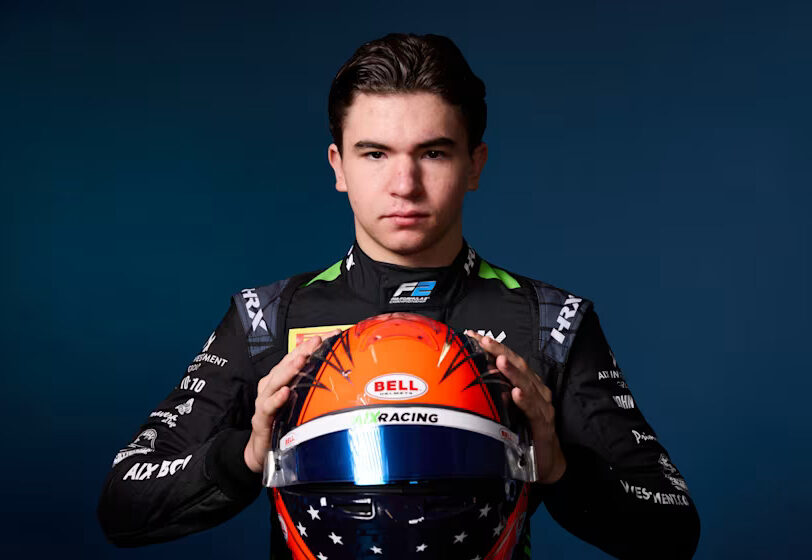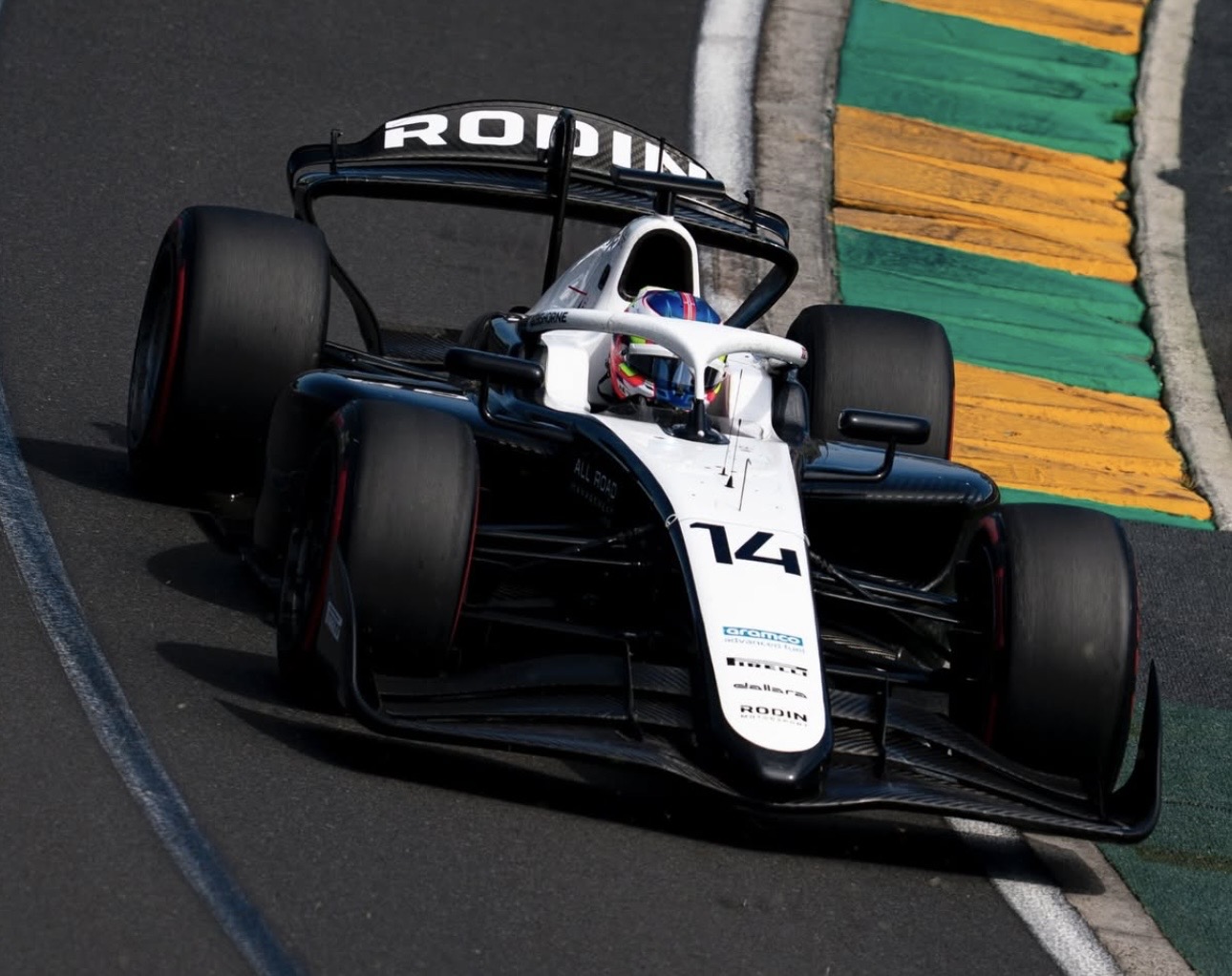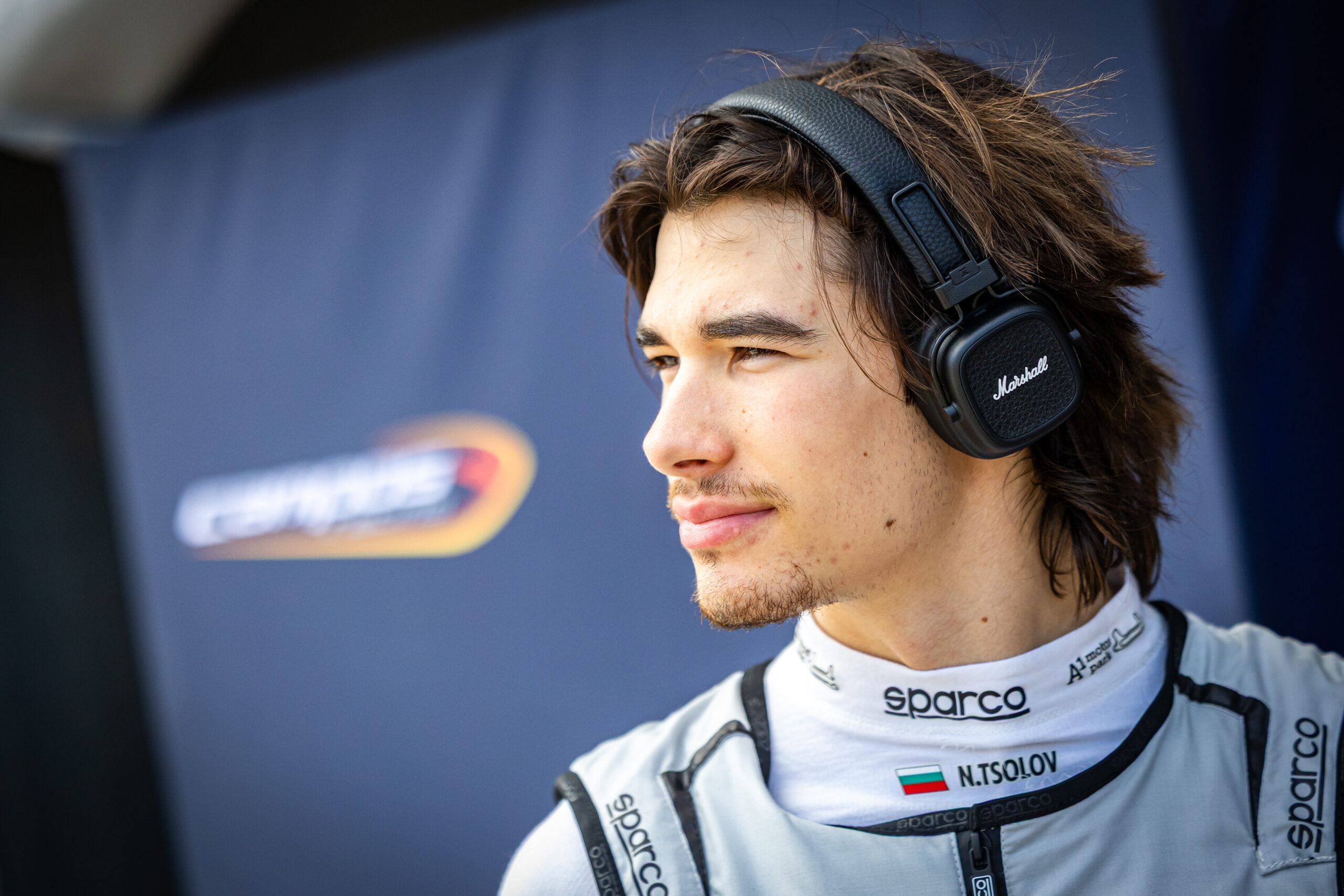
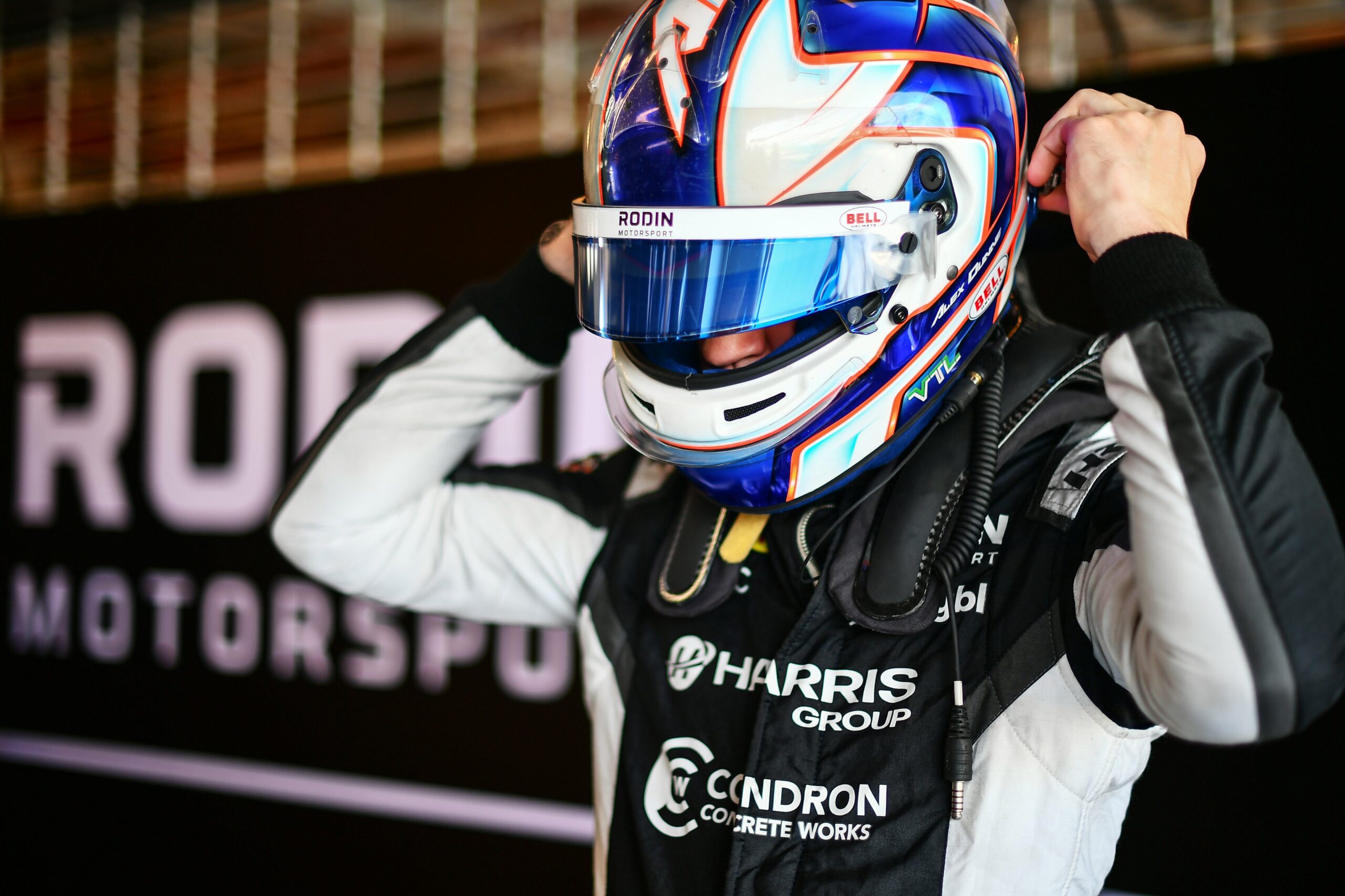
In his 2025 F2 campaign with Rodin Motorsport, Alex Dunne stood out as one of the most impressive rookie drivers in recent seasons. Throughout the season, he combined genuine front-running pace with the inevitable learning moments that come with stepping up to such a competitive level to finish fifth in the Drivers’ Championship with 150 points.
Alex Dunne’s campaign with Rodin Motorsport
Dunne stepped up to FIA Formula 2 full-time in 2025 with Rodin Motorsport after building a strong reputation in junior single-seaters. As an Irish driver in the international spotlight, he faced both external pressure and a clear personal ambition to prove he belonged at the front.
Expectations were higher than those usually placed on a rookie. Rodin Motorsport had already shown it could fight for strong results in previous seasons. Dunne himself set ambitious goals from the outset. He wanted to establish consistency, fight for wins and build a platform for a future title challenge, something he later referenced when speaking about his 2026 ambitions.
Early breakthrough and headline victories
Alex Dunne’s adaptation to Formula 2 with Rodin Motorsport was rapid. From the opening rounds, he showed that he could translate raw speed into race-winning performances, delivering one of the standout drives of the season in Bahrain.
Starting fourth on the grid for the Feature Race, Dunne controlled the race on a high degradation circuit. He managed his tyres superbly and gradually pulled away from the field. He took a dominant victory, finishing more than eight seconds ahead of Luke Browning. The performance highlighted not only his speed but also his maturity in strategy execution over a full-distance race.
Later in the season, Dunne added a second Feature Race victory at Imola. Once again, he showed strong race craft and calm decision-making under pressure.
A run of consistent points finishes and multiple podiums followed. By mid-season, Dunne firmly placed himself in the championship fight. For a brief period, he even moved into the lead of the standings, underlining the strength of his rookie campaign.
Momentum hindered by penalties and fine margins
Despite the highs, Dunne’s 2025 season also featured costly setbacks. In a tightly packed field, small mistakes and penalties carried heavy consequences. These moments ultimately prevented him from sustaining a title challenge through to the final rounds.
One of the most significant turning points came in Belgium. Dunne crossed the line first in the Feature Race at Spa-Francorchamps. However, a post-race time penalty dropped him down the order. What looked like a crucial victory instead became a major loss of championship points.
In Monaco, Dunne actually qualified on pole after a strong lap, but a first-lap collision with Victor Martins at the tight first corner in the Feature Race triggered a huge multi-car pile-up that ended his race and dealt a significant blow to his championship lead.
Street and semi-street circuits exposed some rougher edges of his rookie season. Monaco proved especially difficult. Dunne became involved in a major incident and received penalties that halted his momentum. Other weekends suffered from a mix of compromised qualifying sessions, traffic in races and further sanctions.
Final results and a season assessment of Alex Dunne’s 2025 F2 campaign
By the end of the year, Dunne had secured two victories and eight podium finishes, ending the 2025 Formula 2 season fifth in the Drivers’ Championship. For a first full campaign in the series, it was an impressive return and one that confirmed his status as a genuine front-runner.
The statistics reflect a driver who was regularly capable of winning on merit, rather than simply capitalising on unusual circumstances. At the same time, the points lost through penalties, incidents, and a handful of quieter weekends provide a clear picture of where improvements can be made.