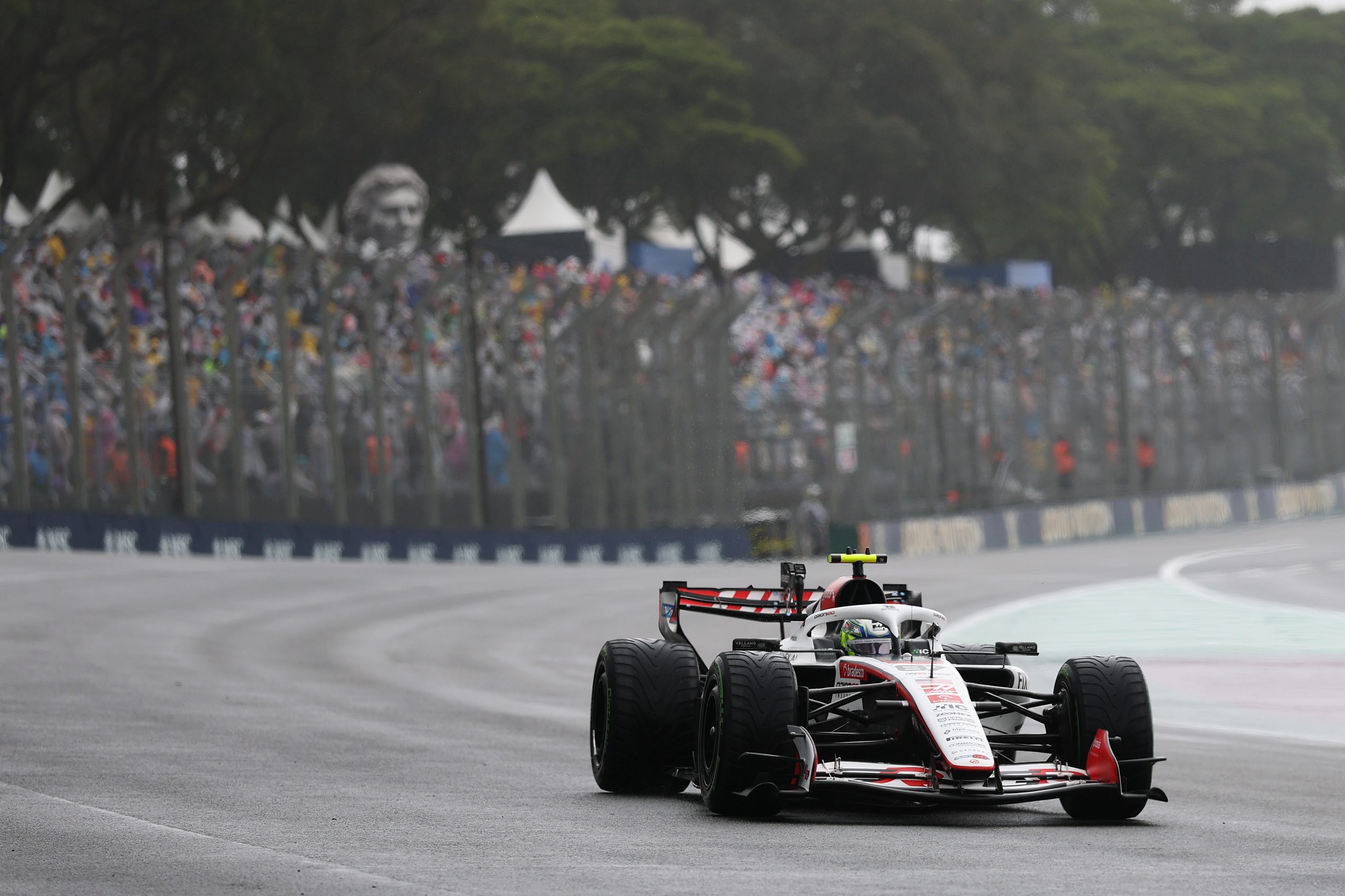
The 2026 F1 São Paulo GP was supposed to offer Ollie Bearman a chance to steady a season that had begun to slip. Instead, it delivered another afternoon of disappointment. The team’s grip on seventh in the constructors’ championship is also loosening by the round.
Bearman had given Haas hope for on Saturday, dragging the VF-26 into Q3 in treacherous wet conditions. He achieved a career-best qualifying result of P8 on the grid. After George Russell and Charles Leclerc’s penalties, the young Briton moved up to P6.
However, a lap-one moment at Turn 3 on Sunday damaged the rear of his car. It was a damage the team had not spotted at the time. He had lost the rear on his own, and Alonso clipped the back of his VF-26 as he had nowhere to go. The 21-year-old dropped to P9.
Bearman had retired in Austin and Mexico City. His new teammate, Rafael Câmara, making his F1 debut, finished 20th. Audi, meanwhile, had closed the gap in the fight for seventh to just three points. The pressure is now palpable.
A 20-second stop that ended the race
The damage from the first lap moment only became apparent to Haas when they called Bearman in on Lap 16 for slicks. The jack could not seat properly. By the time Bearman rejoined the F1 São Paulo GP, he had falled from the fringes of the points to near the back of the field.
“The issue was that I had a 20-second pit stop,” Bearman said. “That’s normally not ideal for a full race. So, in the first stop I lost a lot of time and ended up stuck behind [Carlos] Sainz and a few others, I think Stroll as well. So it was a super long day after that.”
The frustration was compounded by what he could see ahead of him. Before the stops shuffled the order, Bearman had been running ahead of both Ferraris.
“I was in front of [Charles] Leclerc and [Lewis] Hamilton. Obviously, they were much faster at that time when it went dry. But I was ahead of those guys. So it really hurts.”
The implications of a P17 result don’t just affect the British driver. They also, largely, affect the team. Every opportunity squandered carries consequences, and Bearman knows it.
“We need to understand because it’s a lot of pressure at the moment, a lot of fighting for this P7. And I feel like we’re just giving it away at this stage.”
The correct strategy for Bearman at the F1 São Paulo GP
The irony of Bearman’s F1 São Paulo GP was that the strategy was sound. He was adamant that the calls from the pit wall were correct on when to pit for the dry compound. The team boxed on the right laps, and communicated well through the changing conditions. However, the problem was purely operational and completely costly.
“We communicated well when to box, when to stay out, when to change tyres. We boxed on the correct lap both times. But we just had very, very slow pit stops, especially the first one. The margins are very tight. And when you are stationary for 20 seconds in the pit lane, it’s game over.”
A five-second penalty for an unsafe release in Leclerc’s path added insult to injury. The incident capped a triple-header in which Haas missed clear chances to score.
Asked whether the tyre situation added to the challenge, Bearman offered a measured view.
“Definitely a bit worse than last year’s ones. I think there’s a few more parameters that the manufacturer has to put in mind when they design these tyres because of the straight-line modes, ride heights and things like that. So the tyre feels a bit less forgiving, very stiff, very hard to warm up. Lap 1 was a big challenge.”
Qualifying, at least, offered a highlight. Bearman’s Q3 appearance and sixth-place grid slot were bright spots in an otherwise bleak weekend. “A little bit,” he said when asked if he could take encouragement.
“We don’t score points in [qualifiyng], but at least we had one highlight of the weekend.”
With three rounds remaining and Audi closing, Haas cannot afford many more afternoons like Interlagos. The car is capable, the driver is capable, but in a constructors’ fight this tight, capability without execution is worth nothing at all.