
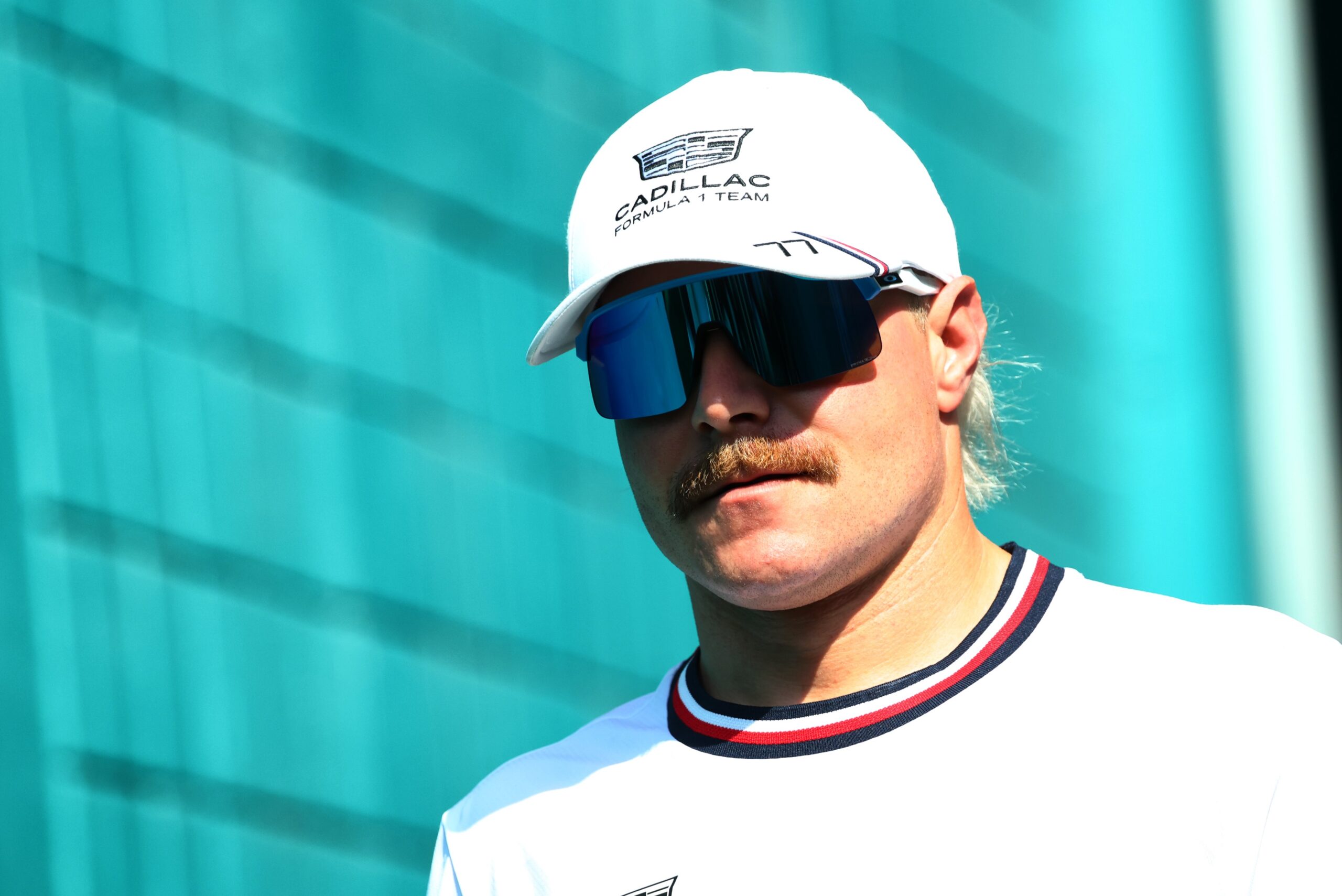
Cadillac’s Valtteri Bottas has shed more light on the topic of mental health, the stigma attached to it, and whether a cutthroat high-performance sport like F1 now offers better support to vulnerable drivers.
Bottas is one of the few drivers on the current grid who has spoken candidly about his mental health struggles. Three years ago, he revealed that the sport’s weight limits had left him suffering from an undiagnosed eating disorder and mental burnout when he started racing in F1 in 2013.
Following a year on the sidelines, the Finn has now embarked on a fresh start with newcomers Cadillac. He competed in his 250th career F1 race at the 2026 Miami GP in early May.
Bottas on how open F1 currently is to conversations about mental health
Speaking in a print media session ahead of the race weekend in Miami, Valtteri Bottas opened up about the stigma surrounding mental health and whether F1 now provides a more welcoming environment in comparison to the previous decade.
The 36-year-old stated that support for mental health struggles in motorsport and society in general has noticeably improved since he became an F1 driver thirteen years ago. Emphasising how they now have access to numerous platforms and resources that advocate for mental health awareness, he added that the increased visibility empowered him to thoroughly detail his own personal battles.
“I think so. I think the sport has changed a lot. The world has changed a lot in the last 10-15 years with many things into good.
“And I think there’s much more platforms that you can express yourself, you can speak about things. There’s better ways for people to communicate and share their issues or anything from the past.
“So, I think, yes, it’s definitely a more welcoming environment for everyone in F1, but I think in the whole world.”
The process behind the “Born Crazy” essay
“Born Crazy” is a highly personal essay Valtteri Bottas wrote for The Players’ Tribune, reflecting on his mental health struggles, the eating disorder he developed early in his career, and the pressure he faced as Lewis Hamilton’s “wingman” at Mercedes.
With regard to how the idea for “Born Crazy” came about, the 10-time race winner revealed that the outlet had approached him late last year and that the essay—echoing his own words and thoughts—is the fruit of a long interview.
Furthermore, Bottas explained that he agreed to open up to the publication to provide a window into the brutally competitive world of F1 and the toll it has taken on his physical and mental health over the years.
“I’m not a great writer, I must admit. So, it’s basically a long interview you do with The Players’ Tribune, and then they propose something, and then I can kind of modify it myself. So, really, everything in it is from my words and how I describe things.
“There was just a request actually, I think it was last winter, that ‘would you be interested in sharing your story’. And I thought, yeah, it’s a good opportunity for me to maybe share a bit more to the fans and the people of my journey until now.”
The message Bottas has for younger drivers
Asked if catharsis was a motivating sentiment behind his collaboration with The Players’ Tribune and whether he wants to encourage younger racing drivers to embrace their vulnerability, the newest F1 team’s Valtteri Bottas made it apparent that he wants to actively be a part of the shift that’s fundamentally dismantling historical stigma around mental health.
Underlining the universal truth that no human being is perfect, the Finn drew attention to how drivers can learn from each other’s struggles and mistakes and strive to steer clear of them in the future.
“I think it’s important to highlight that we’re all humans; nobody is perfect. Everyone has their struggles or their issues, and then hopefully somebody can learn from other people’s mistakes. And doing it all yourself, of course part of life is learning about your mistakes.
“But yeah, it’s always good to, I think, looking at other examples or other people’s mistakes to kind of try and prevent them.”