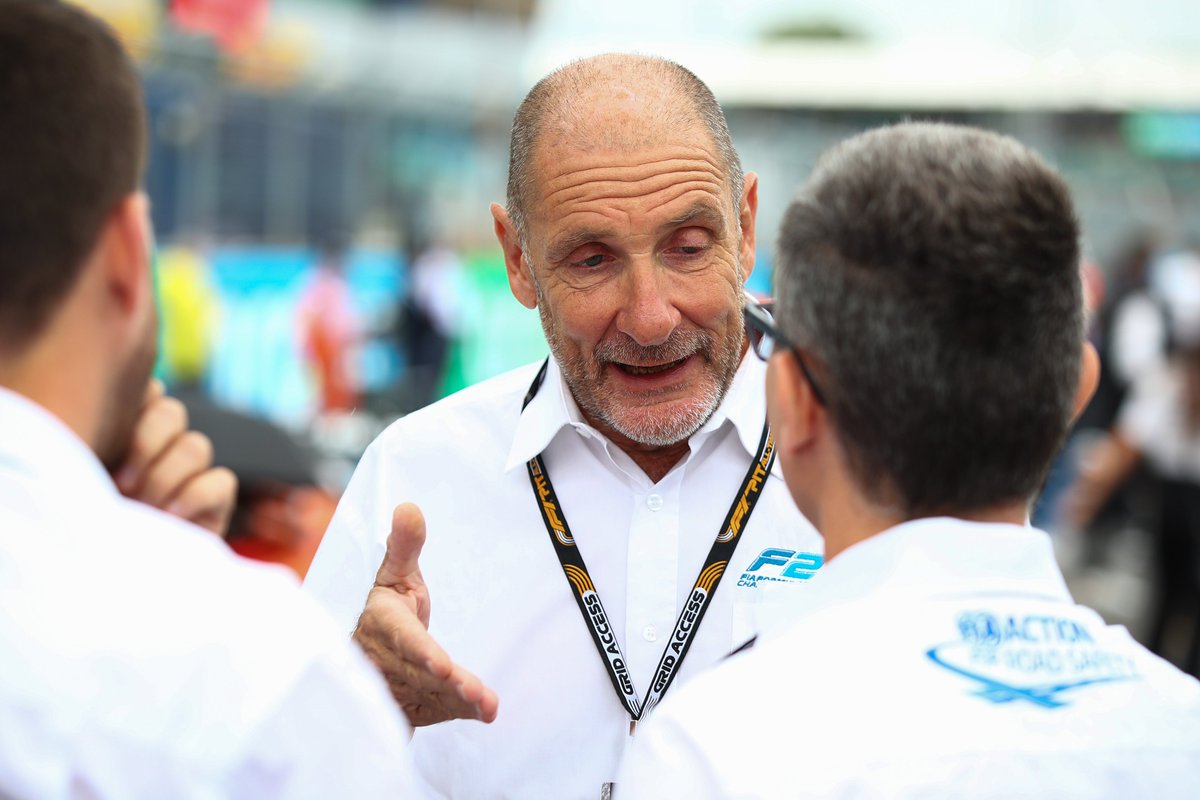
At a recent press conference attended by Pit Debrief, Bruno Michel addressed how Formula 3 will manage a swelling talent pipeline, a broader feeder ecosystem, and heightened expectations around funding, amidst the introduction of the new prize fund. Crucially, he explained how the new prize fits into a coherent strategy that safeguards sporting quality while accelerating progression. Therefore, he framed the plan as an investment in structure, not a short-term fix. Moreover, he emphasised discipline on grid size, clarity on eligibility, and alignment with the FIA pyramid so that teams, drivers, and backers can plan with confidence.
Elite talent still progresses
The new prize fund aims to sustain the development of young drivers and accelerate their progression from F3 to F2. During the press conference, Michel addressed the timing of its introduction and whether previous generations had been lost for financial reasons.
He maintained that the system already elevates genuine front-runners. Driver academies, management groups, sponsors, and F1 teams identify standout prospects early and mobilise funding to move them up. Meanwhile, scouts and team principals scrutinise junior categories continuously, which channels support towards the most promising talent. Therefore, Michel argued, the pathway functions as intended—and the prize strengthens it rather than fixes it.
“I’ve been, as I said, involved in young categories for the last 20 few years, I don’t want to say, and I have never seen really strong drivers not making it through the next category. And it’s something that I’m quite proud of, I would say, because the very strong drivers are always finding the right financing, whether through management companies, whether through personal money, whether through now, a lot of them are related to Formula 1 teams. And, you know, there are a lot of scouts in the system to follow those guys and make sure that they can go through.”
The prize fund’s purpose in the pathway
Michel positioned the prize as a logical step on the journey to F1. Rather than rescue underfunded drivers, the initiative aims to reinforce merit-based advancement. Furthermore, it signals that the championship expects the best to move up and to convert support into performance. Therefore, the message remains clear: prove readiness, then step forward decisively.
“So what we’re doing is not something that we think we had to do to make sure that the drivers could continue to finance their career. But it’s something that we think it’s normal that we do as part of the accession to the ultimate place, which is Formula 1.”
Early reactions from the paddock
Then, he addressed the immediate feedback. Understandably, public responses often arrive in waves; however, early signals trend positive. Notably, several F2 drivers have praised the initiative, which suggests confidence in the ladder’s direction. Even so, the championship anticipates more concrete reactions as teams and drivers finalise plans, contracts, and test schedules.
“Well, honestly, I don’t know. I saw the reactions of a few drivers on social media, but not so many, I must say. And, funnily enough, some drivers that are racing in Formula 2 at the moment, they are saying that it’s a great initiative that we’re taking. Of course, it’s definitely something that is positive for them, but I cannot tell you specifically that some drivers have already reacted.”
Managing influx and fixed capacity
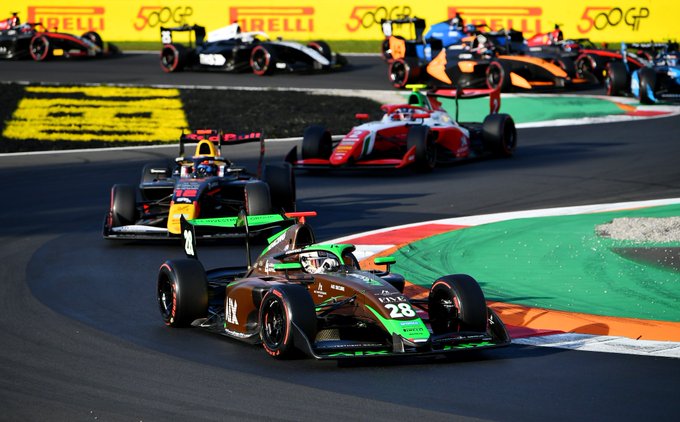
With interest flowing from a wider set of series beyond the traditional F4 and Formula Regional pathways, the talent pool interested in F3 has deepened with more intense competition for the 30 seats. While Michel understands that the new prize fund may further increase interest in the sport, he insists that F3 must hold firm at 30 cars to protect sporting standards, operational quality, and cost control. Moreover, he points to near-term testing as a practical checkpoint, because teams and drivers will reveal their hand as line-ups solidify.
“You know, I think for us, it’s good to have many categories that are leading to Formula 3, and we’re not going to complain about that. I must say that we have 30 cars in Formula 3 at the moment, and I don’t think it would be a good idea to increase that number, even though it’s true that the requests for seats in Formula 3 are quite numerous. And that I think now most of the drivers for next seasons are not maybe all signed, but at least a lot of them are already engaged with teams, and we will see that in the testing that we’re going to organise in October with Formula 3 cars starting in Paris next week.”
Defending the FIA pyramid
Furthermore, he reaffirmed full support for the FIA’s structured ladder: F4 to Formula Regional to F3 to F2. Importantly, recent format tweaks across the lower tiers now align more closely with F3 and F2, which, in turn, creates a consistent learning curve for drivers. Consequently, competitors encounter familiar procedures, technical frameworks, and sporting philosophies as they climb.
“After that, our position is always to be in defence, I would say, of what the FIA has set up as a pyramid, which is Formula 4, Formula Regional, and then leading to Formula 3 and then to Formula 2. And we are very, very happy that they’ve been deciding to change a few things in the format of the different categories to align them with what we’ve been trying to do in Formula 3 and in Formula 2 for the last years.”
Regional incentives strengthen the step
Additionally, support now grows from below. Specifically, Formula Regional in Europe will award a prize fund that helps the winner step into F3. As a result, more well-prepared, competitive drivers will reach the grid. In parallel, robust series in the UK, Spain, and further afield add variety and depth. Therefore, the broader ecosystem both widens the funnel and sharpens standards.
“And [there is] also the fact that Formula Regional this year in Europe is going to give a prize fund for the winning drivers to go to Formula 3. So, I think all this is very, very positive. And as you say, there are other categories in England, in Spain, and even internationally, and I’m not going to complain that so many young drivers are coming into the system now.”
Navigating economic cycles
Nevertheless, Michel cautions that the market shifts. Today’s buoyant conditions can tighten tomorrow; accordingly, the championship must plan for volatility. Therefore, it will protect grid quality through disciplined capacity, prudent stewardship, and continual monitoring of category health. Ultimately, sustainable strength—not expansion for its own sake—keeps the ladder credible.
“I think it’s good. I think at the moment, the economy of the old system is quite good, but we all know that it can become difficult, and we’ve seen that in the past. And I’ve done this business for quite a long time, I would say, and there’s been some difficulties. And there are many categories. But at the end of the day, some categories survive, and others don’t. So that’s also something that we need to look at very carefully.”