Toyota Racing Technical Director David Floury has praised the Japanese manufacturer’s remarkable resurgence during the 2026 FIA World Endurance Championship (WEC), highlighting the technical improvements, strategic decisions and resilience that enabled the team to reclaim the Hypercar Manufacturers’ Championship. Following a difficult 2025 campaign, Toyota has secured four victories from the opening seven races, including triumphs at the 24 Hours of Le Mans and its home event at Fuji, while guaranteeing that one of its two crews will secure the Drivers’ Championship.
The introduction of the updated TR010 HYBRID has played a significant role in restoring Toyota’s competitiveness, although the manufacturer’s victories have come under considerably different circumstances. Strategic decisions proved decisive at Imola and Fuji, while Le Mans demanded exceptional resilience and Barcelona demonstrated the car’s outright performance advantage. Despite costly setbacks at São Paulo and Circuit of The Americas (COTA), Toyota ultimately secured its eighth Manufacturers’ Championship with one round remaining.
Speaking ahead of the season-ending 6 Hours of Monza, Floury reflected on the team’s achievements in an interview published by the official FIA WEC website, discussing the challenges behind its success, Mike Conway’s impending retirement and the increasingly competitive Hypercar field awaiting Toyota in 2027.
Floury praises Toyota’s remarkable recovery from difficult 2025 season
Toyota’s return to championship-winning form represents a significant turnaround following an unusually difficult 2025 campaign. Although the manufacturer finished second in the Hypercar Manufacturers’ standings, it struggled to match the outright performance of its leading rivals throughout much of the season. The team failed to secure a podium finish until the final round in Bahrain, where a commanding one-two provided a positive conclusion to an otherwise frustrating year.
That result demonstrated Toyota’s remaining potential but also highlighted the work required to restore the consistency that had previously established the manufacturer as the benchmark in endurance racing. The team’s response has been emphatic, with four victories across seven rounds and another championship secured before the season finale.
Reflecting on the achievement, Floury praised the commitment of Toyota’s personnel and the collective effort required to overcome the previous season’s difficulties. “I’m delighted for the whole team, because everyone worked relentlessly to put us in this position this year,” he explained, before adding, “After a more challenging 2025 campaign, we bounced back.”
The resurgence culminated in the dominant Barcelona one-two that secured Toyota’s eighth Manufacturers’ Championship, completing an impressive recovery while leaving the team’s two crews to contest the remaining Drivers’ title at Monza.
TR010 HYBRID development proves crucial to Toyota’s resurgence
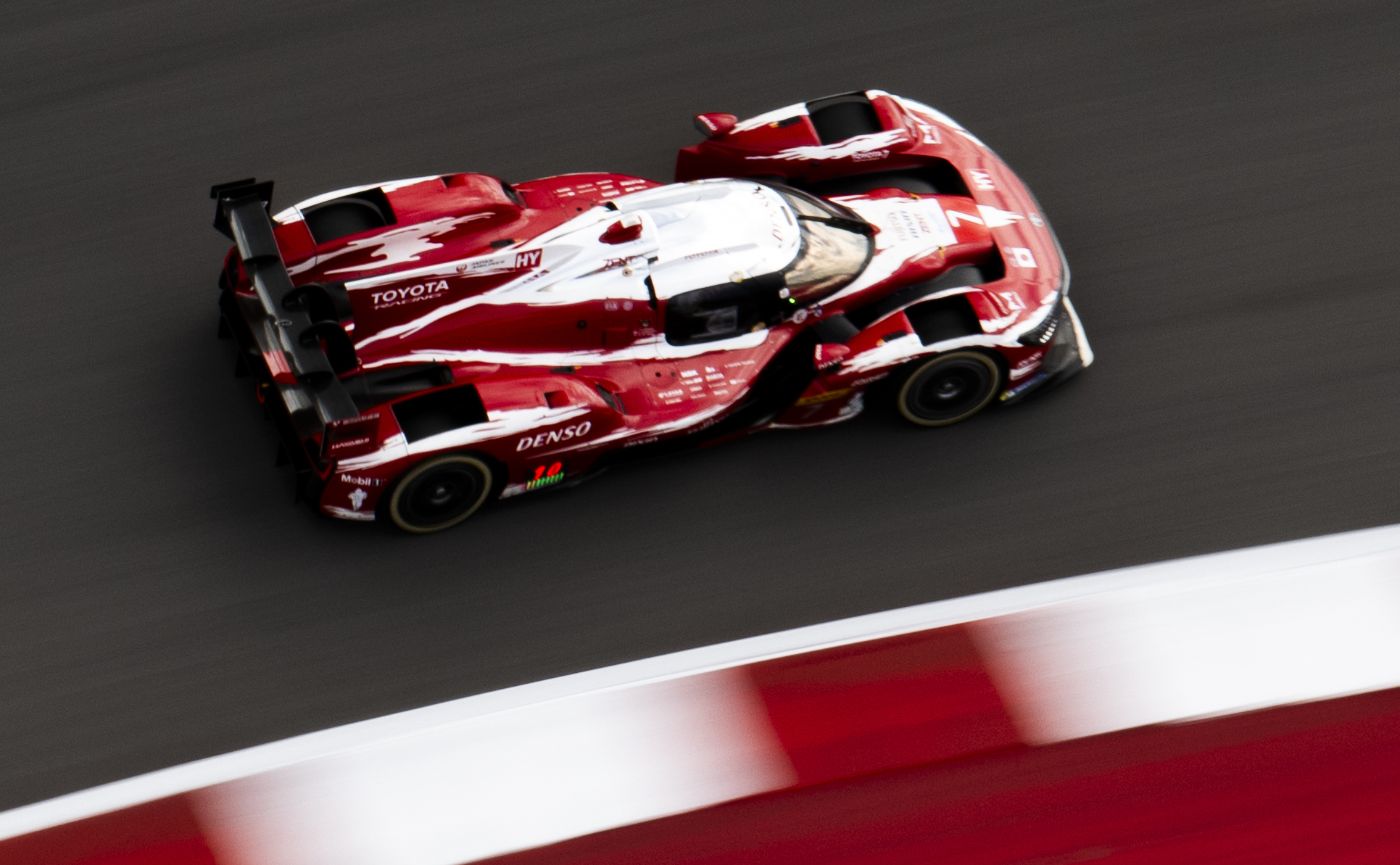
Central to Toyota’s improved performance has been the introduction of the TR010 HYBRID, which replaced the previous GR010 HYBRID designation ahead of the 2026 campaign. The updated Hypercar incorporates significant aerodynamic and bodywork developments, including revisions to its front end, sidepods, engine cover and rear wing. Toyota also introduced a new racing identity and distinctive red livery as part of its efforts to establish a renewed visual direction for the programme.
However, the manufacturer prioritised more than the car’s appearance. Engineers focused on improving its operating characteristics across different circuits and conditions, aiming to provide drivers with more predictable handling while making the machinery easier to optimise during race weekends.
Floury explained that the development programme combined those technical objectives with the manufacturer’s wider design philosophy. “It was vital for the brand to evolve the Hypercar with a fresh look, more aligned with its modern design language,” he stated. “The goal was also to make the car more user-friendly for the drivers, easier for the engineers to set up, and more consistent across all conditions.”
The introduction of the TR010 HYBRID ahead of the 2026 WEC season marked an important step in Toyota’s efforts to restore its competitiveness, although Floury remained cautious about the manufacturer’s championship prospects.
Memories of 2016 Le Mans heartbreak shape Floury’s approach
Despite Toyota’s considerable technical progress, Floury approached the 2026 season without assuming that the updated Hypercar would automatically deliver championship success. His extensive experience in endurance racing has reinforced the importance of remaining cautious, particularly when reliability problems and unpredictable circumstances can overturn even the strongest performances.
The French engineer continues to remember Toyota’s devastating defeat at the 2016 24 Hours of Le Mans, when the leading #5 TS050 HYBRID suffered a mechanical failure with approximately four minutes remaining. The retirement denied Toyota what appeared to be an almost certain maiden victory at the French endurance classic, demonstrating how quickly success can disappear in the closing stages.
That experience continues to influence Floury’s assessment of the team’s prospects, regardless of its competitive position. “I rarely believe anything is finished until one crosses the finish line, and I’m not naturally over-confident. Over-confidence usually leads to errors.”
Toyota’s 2026 campaign subsequently reinforced that philosophy. Although the TR010 HYBRID demonstrated sufficient performance to challenge for victories, the team encountered several setbacks that threatened its championship position. Those difficulties highlighted the importance of combining technical progress with reliability, strategic discipline and consistent execution across every race.
Imola victory demonstrates Toyota’s strategic strengths
Toyota began the 2026 season with an important milestone at the 6 Hours of Imola, securing its 50th WEC victory during the manufacturer’s 100th championship appearance. The #8 TR010 HYBRID shared by Sébastien Buemi, Brendon Hartley and Ryō Hirakawa emerged victorious following an intense battle with Ferrari, which initially appeared capable of controlling its home event.
Although the Italian manufacturer demonstrated strong outright pace, Toyota adopted a more effective approach to tyre management and pit-stop strategy. By extending its stints and capitalising on the timing of a Virtual Safety Car, the Japanese team gained track position and established an advantage that Ferrari could not overturn during the closing stages.
The strategic battle that delivered Toyota’s landmark Imola victory demonstrated the team’s ability to maximise opportunities even when its competitors possessed a performance advantage. Floury identified the quality of Toyota’s execution as the decisive factor, explaining that “We managed to win more on strategy and execution than on pure pace.”
The result provided an encouraging beginning to the season and confirmed the updated Hypercar’s potential. However, Toyota’s most demanding test would arrive at Le Mans, where the team needed to maintain its competitiveness throughout an entire day of racing.
Le Mans triumph rewards Toyota’s resilience under pressure
Toyota’s second victory of the season came at the 24 Hours of Le Mans, where Mike Conway, Kamui Kobayashi and Nyck de Vries secured the manufacturer’s sixth overall triumph at the prestigious endurance classic. The #7 crew overcame several challenges throughout the race before narrowly defeating BMW, while Buemi, Hartley and Hirakawa completed the podium in the sister #8 Toyota.
The result demonstrated the importance of maintaining competitive performance while managing the unpredictable demands of endurance racing. Neither Toyota possessed a decisive outright speed advantage throughout the event, forcing the team to rely on effective strategy, reliability management and the experience of its drivers.
The closely contested battle that delivered Toyota’s sixth Le Mans victory also strengthened the manufacturer’s championship position, with the two cars collecting a combined 80 points.
Floury considers the victory particularly significant because of the difficulties both entries encountered during the race. “I’d say it was the toughest race,” he acknowledged. “Le Mans is a unique and inherently brutal race. We had to dig deep as a team to overcome the issues on both cars and keep them in contention right to the end.”
The result established a 36-point advantage over BMW in the Manufacturers’ standings, placing Toyota in a strong position before the championship moved to the Americas.
São Paulo exposes Toyota’s performance limitations
Despite its successes at Imola and Le Mans, Toyota encountered a considerably more difficult challenge during the Rolex 6 Hours of São Paulo. The manufacturer struggled for outright pace throughout the Brazilian event, preventing either TR010 HYBRID from competing near the front as BMW and Ferrari emerged as the principal contenders for victory.
The #7 Toyota finished 12th following a difficult race affected by penalties, while the sister #8 entry encountered an even more substantial setback after contact damaged its suspension. Extensive repairs cost the team approximately 12 laps, leaving the car 17th and last among the Hypercar finishers.
The difficult São Paulo race that allowed BMW to close the championship gap represented a sharp contrast to Toyota’s earlier performances. BMW capitalised by securing its second victory of the campaign, reducing the Japanese manufacturer’s advantage from 36 points to just five.
Floury acknowledged the frustration of competing without the pace required to influence the outcome. “You end up being spectators, and that’s never a comfortable position to be in,” he explained, describing the Brazilian event as “It was a frustrating race.”
The setback highlighted the competitive nature of the Hypercar category, particularly as different circuit characteristics continued to influence the performance of individual manufacturers.
Late COTA retirement reinforces importance of reliability
Toyota’s frustrations continued during the Lone Star Le Mans at COTA, although the circumstances differed considerably from those encountered in Brazil. The team demonstrated competitive pace throughout the American event, with the #7 TR010 HYBRID appearing set to secure victory after de Vries established a commanding advantage during the closing stages.
However, a hydraulic pressure failure affected the car’s power steering with approximately ten minutes remaining, forcing the Dutch driver to retire. The sudden failure denied Conway, Kobayashi and de Vries a likely second victory of the season, while also preventing Toyota from capitalising fully on a difficult race for BMW.
The late technical failure that denied Toyota victory at COTA proved particularly frustrating because the team’s performance had otherwise demonstrated substantial progress. Floury nevertheless refused to attribute the setback to misfortune, insisting that Toyota needed to address the underlying problem.
“Retiring 12 minutes from the finish line might look like bad luck, but I see it differently,” he explained. “Reliability issues simply shouldn’t happen to us. We have to be better than that.”
Toyota subsequently introduced corrective measures to resolve the hydraulic failure and addressed an unrelated software issue responsible for a pit-lane speeding penalty involving the #8 entry. Although the manufacturer retained a nine-point championship advantage, COTA demonstrated that technical reliability remained essential to converting strong performances into victories.
Fuji victory marks Toyota’s return to winning form on home soil
Toyota responded strongly during the 6 Hours of Fuji, securing its first victory on home soil since 2023 following another strategic battle. The #8 crew of Buemi, Hartley and Hirakawa capitalised on an alternative approach during the closing stages, with Hirakawa eventually defending against Alpine’s Victor Martins to secure victory by just 0.591 seconds.
The result followed a difficult period for Toyota, which had struggled in São Paulo before losing a likely victory at COTA. However, the team’s response demonstrated its ability to identify opportunities and execute effective strategies despite lacking a decisive performance advantage over its competitors.
The dramatic Fuji victory secured through a late strategic gamble also strengthened Toyota’s position in the championship, particularly after BMW endured another difficult afternoon.
Floury believes the result demonstrated the team’s ability to respond effectively when its championship position came under pressure. “We didn’t falter when it mattered most,” he recalled, before emphasising the importance of Toyota’s collective performance. “We didn’t have the speed to win on pure performance alone, which speaks volumes about the strength of this team.”
The home victory marked Toyota’s third success of the campaign and helped restore its championship momentum. It also provided an important foundation for Barcelona, where the manufacturer would demonstrate a different aspect of the TR010 HYBRID’s capabilities.
Barcelona performance surprises Floury as Toyota secures championship
Toyota delivered its most convincing performance of the season at the inaugural 6 Hours of Barcelona, securing a commanding one-two finish that confirmed the Hypercar Manufacturers’ Championship with one round remaining. Buemi, Hartley and Hirakawa controlled much of the race in the #8 TR010 HYBRID, eventually crossing the line just 0.583 seconds ahead of Conway, Kobayashi and de Vries in the sister entry.
The result provided a striking contrast to Toyota’s previous victories. Whereas Imola and Fuji had rewarded effective strategic decisions and Le Mans required exceptional resilience, Barcelona demonstrated the manufacturer’s outright performance advantage over its closest competitors.
The dominant Barcelona race that secured Toyota’s eighth Manufacturers’ Championship also completed a remarkable recovery from the previous season, giving Toyota four victories across the opening seven rounds.
Floury admitted that the team’s performance exceeded expectations, particularly because several competitors had completed recent testing at the Spanish venue while Toyota had not.
“During the race, we were surprised by how strong we were compared to the competition. Barcelona was the only race we won on outright performance. To-date, we’ve won four out of seven races in very different ways.”
The result increased Toyota’s championship advantage over BMW to 58 points, placing the Manufacturers’ title beyond reach while guaranteeing that one of its two crews would also secure the Drivers’ crown at Monza.
Tyre management remains an important advantage for Toyota
Floury believes Barcelona’s circuit characteristics played an important role in Toyota’s exceptional performance, particularly the abrasive asphalt and demanding tyre requirements. The TR010 HYBRID has demonstrated an ability to manage degradation effectively, allowing its drivers to maintain competitive lap times throughout extended stints without suffering the same performance losses as some of their rivals.
That characteristic proved particularly valuable at Barcelona, where the combination of long-radius corners and sustained lateral loads places considerable stress on the tyres. Toyota’s ability to preserve performance across longer runs allowed both crews to establish an advantage that proved difficult for their competitors to overcome.
Floury compared the circuit’s surface with Bahrain, where Toyota has traditionally demonstrated exceptional competitiveness. “The closest surface to it is Bahrain, where we’ve won the last nine races. We manage tyre wear better than our competitors, and that’s a key strength for us.”
However, those advantages may not translate directly to Monza, where long straights, heavy braking zones and potentially cooler conditions will present a different technical challenge. Toyota will therefore need to adapt its approach rather than assume that the characteristics responsible for its Barcelona dominance will deliver the same performance advantage during the season finale.
Toyota approaches Monza with Drivers’ Championship still undecided
Although Toyota has already secured the Manufacturers’ Championship, the Hypercar Drivers’ title remains undecided between its two crews heading into the 6 Hours of Monza. Buemi, Hartley and Hirakawa lead with 114 points after securing three victories, while Conway, Kobayashi and de Vries occupy second with 97, leaving a 17-point difference with one race remaining.
The #8 crew enters the finale as the clear favourite following consecutive victories at Fuji and Barcelona, although the #7 Toyota retains a mathematical opportunity to overturn the deficit. With 26 points available, including the bonus for pole position, both combinations remain capable of securing the title.
The final championship calculations ahead of the 2026 Monza finale underline the importance of the two crews’ qualifying performances and race results, particularly as Toyota has confirmed that it will allow them to compete without team orders.
Nevertheless, securing the Manufacturers’ Championship before the final round has reduced the pressure on the organisation. Floury acknowledged that the team can approach Monza with greater confidence, explaining that “It gives us a bit of breathing room and removes the pressure,” even though the individual Drivers’ Championship remains unresolved.
The weekend will also carry considerable emotional significance as Conway prepares to make his final professional racing appearance.
Floury reflects on Conway’s contribution to Toyota’s success
Conway’s impending retirement will bring an end to a successful association with Toyota that began in 2014, during which the British driver established himself as one of the manufacturer’s most important endurance racing competitors. His achievements include two overall victories at the 24 Hours of Le Mans and two FIA WEC Drivers’ Championships, alongside numerous race victories and podium finishes.
Before joining Toyota, Conway enjoyed a successful single-seater career, including victory at the 2006 Macau Grand Prix, before establishing himself in sportscar racing. His performances with G-Drive Racing in the WEC’s LMP2 category during 2013 subsequently attracted Toyota’s attention, leading to a test opportunity the following year.
Floury recalled witnessing Conway’s Macau triumph, which also featured his future Toyota teammate Kobayashi. “I was in Macau back in 2006 when he won the Grand Prix. Funnily enough, Kamui [Kobayashi] took pole position,” he explained, reflecting on the beginning of a career that would eventually produce substantial success in endurance racing.
The announcement of Conway’s retirement following the 2026 WEC season confirmed that Monza would mark his final appearance with Toyota. Floury paid tribute to both his achievements and his character, explaining that “He’s a true gentleman, a proper team player and someone who is always a pleasure to work with. It’s an immense pride to have shared this journey.”
Floury anticipates tougher championship defence in 2027
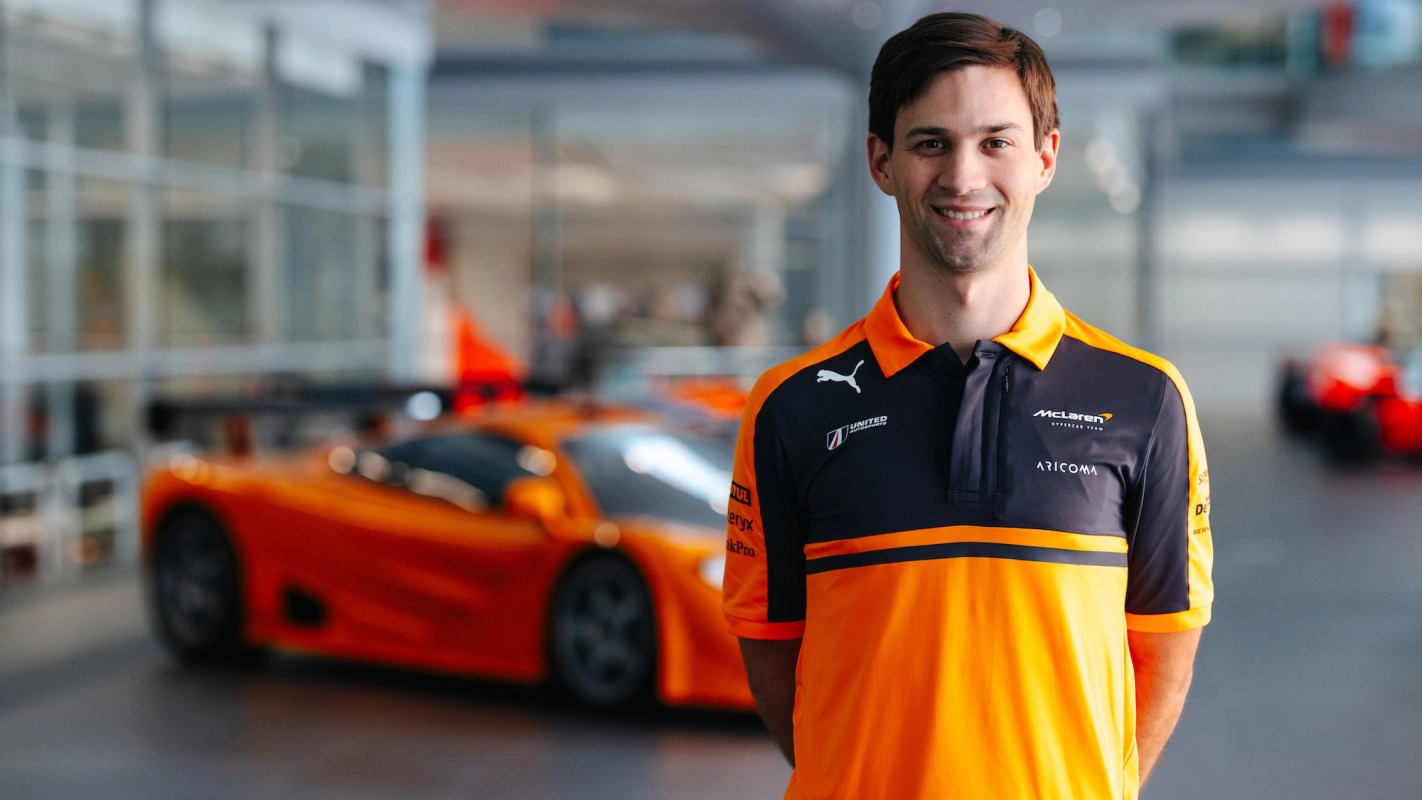
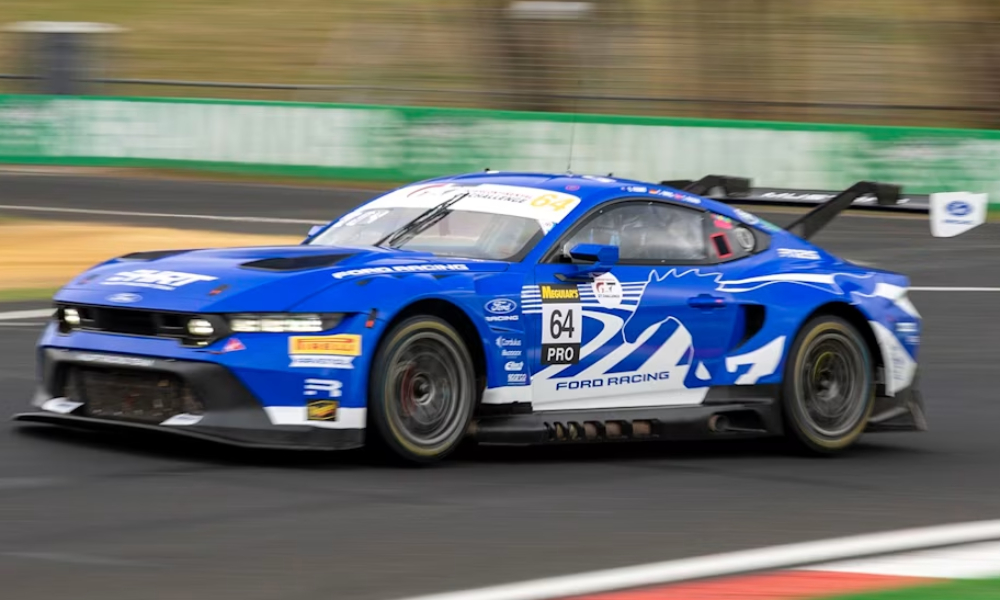
Although Toyota has secured another Manufacturers’ Championship, Floury expects the Japanese organisation to face an even more demanding challenge when the WEC enters its next season. The Hypercar category will expand further in 2027, with McLaren and Ford preparing to join a manufacturer field that already features several established championship contenders.
Toyota’s rivals have demonstrated considerable progress throughout 2026, particularly BMW M Team WRT, which remained a serious championship challenger during much of the campaign. Ferrari, Cadillac and the remaining manufacturers have also shown the ability to compete near the front, reinforcing the importance of continued development as teams prepare for the following season.
Floury acknowledged the competitive threat posed by those programmes, particularly as additional manufacturers introduce new machinery and expand the technical resources available across the grid. Nevertheless, he remains enthusiastic about the challenge, insisting that “Defending our titles will be tough, but we’re eager to go again next year,” as Toyota prepares to protect its championship achievements.
The expanded Hypercar field outlined ahead of the 2027 WEC season will increase the difficulty of maintaining Toyota’s current advantage, particularly as the manufacturer attempts to secure another overall victory at Le Mans.
Toyota remains determined to challenge for further titles
Toyota’s 2026 campaign has demonstrated the importance of combining outright speed with strategic flexibility, reliability and effective race execution. Its four victories have arrived under contrasting circumstances, illustrating the different strengths that have enabled the manufacturer to regain its position at the top of endurance racing.
However, the setbacks at São Paulo and COTA also highlighted areas requiring continued improvement. Toyota’s technical progress has delivered a championship-winning package, but Floury remains aware that reliability and operational consistency will become increasingly important as the competition strengthens.
The arrival of McLaren and Ford will add further depth to a Hypercar category already featuring several prestigious manufacturers, creating an increasingly competitive environment for the defending champions.
Floury welcomed that challenge while reaffirming Toyota’s determination to remain among the leading contenders. “Having at least nine manufacturers in Hypercar, including some of the greatest names in Le Mans history, is incredible. It’s a top-tier championship with elite competitors, but we’re here to fight for victory at Le Mans and the titles, and we will push as hard as we can to make that happen.”
As Toyota prepares for the season-ending 6 Hours of Monza, the manufacturer can reflect on a campaign that restored its championship-winning form while establishing a strong foundation for the future. With the Drivers’ title still to be decided between its two crews, Toyota will aim to complete its remarkable comeback before turning its attention towards defending its achievements in 2027.