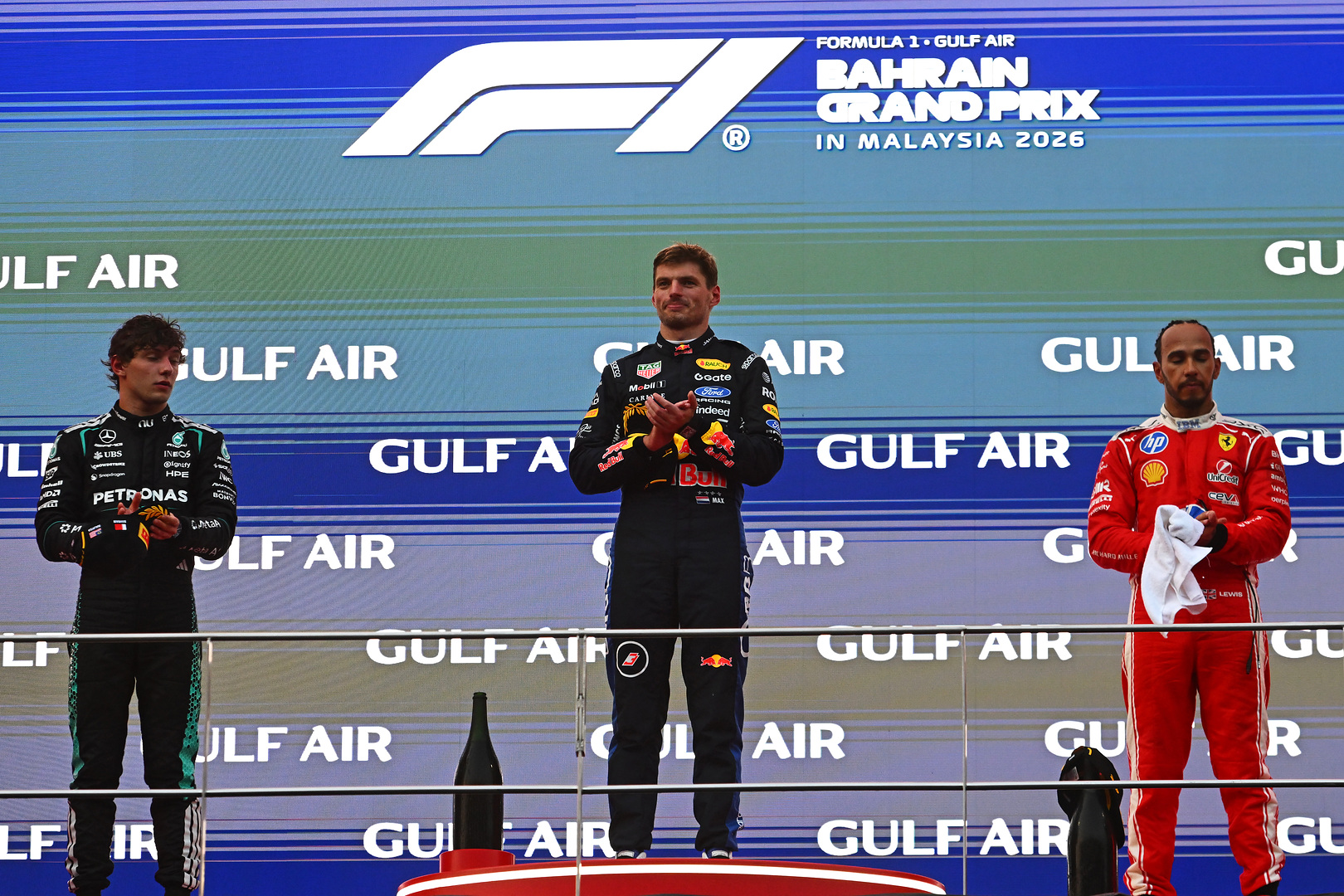
Following a heavily delayed and long 2026 F1 race in Malaysia, FIA single-seater technical director Nikolas Tombazis spoke after the race to clarify the unusual events.
With heavy rain, standing water and an unpredictable software malfunction bringing multiple cars to a standstill during the formation lap at Sepang, the start was pushed back by over an hour. Lewis Hamilton was one of them.
Tombazis addressed the series of events, the software malfunction and the reasoning behind the final starting order.
Weather delays and software malfunctions
Speaking about the beginning of the series of events, Tombazis explained that race control had no choice initially but to delay the race start because of heavy rain, poor visibility and standing water. Fortunately, the rain cleared quickly, allowing the field to head out for the formation laps.
However, a technical malfunction occurred and stopped the start once again. Tombazis noted that F1 cars run on specific, common software developed together by the FIA and the teams.
This system features safety settings designed to reduce power levels in specific areas during wet weather. Because the season had experienced practically no wet weather running prior to this weekend, these settings had not been thoroughly tested.
During the formation laps, several cars ran at very low speeds, activating this safety system. This slow movement combined with the safety software showed a bug that prevented some cars from re-accelerating and resuming to normal speeds, ultimately causing multiple cars to stop on track.
“Well it was a sequence of various events, first of all of course we couldn’t start the race at the scheduled time at three o’clock, the rain was far too heavy and the visibility and there was quite a lot of standing water in the track. So obviously we had to delay that was fairly normal, fortunately the rain didn’t last too long.
“We got in a position to start relatively soon afterwards, unfortunately then during the formation laps, just as a background info, in wet conditions there are some different software settings for the cars for safety reasons to stop, to reduce the power in certain sectors from the maximum to a lower level.
“And this year we’ve had very little wet weather running or none at all almost, so it wasn’t maybe adequately checked, this is software that is developed by us, the FIA, together with the teams, it’s common software for all the cars, and basically there was a combination of events between those software settings and the fact that some cars went incredibly slow during the formation lap and those entered a sort of a bug into the software which was stopping those cars to re-accelerate and to go to normal speeds. As a result of that we had quite a few cars affected by that problem which caused them to stop.”
Tombazis on managing the 2026 F1 Malaysia restart and fixing the software
Addressing the long procedure required to get the race back on its way, Tombazis acknowledged that the regulations do not cover such an unusual scenario in full detail. With cars stopped, some having completed only one formation lap while others completed two, race control faced a complex problem regarding grid positions.
Driven by the principles of fairness and common sense, race control determined it would be unfair to punish drivers who suffered these system malfunctions. Consequently, they called for a full reordering of the grid to the positions before the race.
Tombazis pointed out that once the cause of the problems became clear, the FIA worked fast to release an updated version of the software to the teams. Distributing the update to all the teams, guiding them through the installation and verifying that every car successfully uploaded the upgrade took about 20 minutes.
Tombazis concluded that while the wait felt long for everyone, the fast technical response ensured a safe restart of the race.
“Then moving on, we had to obviously think about the restart, considering that the regulations don’t cover that particular eventuality in full detail. So many cars, some cars having only done one formation lap, some having done two, so many cars being out of position is not covered by the regulations. We had to apply some common sense and fairness, it was not the fault of any of these teams or drivers that they had this issue, so it would have been massively unfair if they started at the back, so we had to do the reordering.
“Yeah, perhaps I should also add that as soon as the formation lap problems happened, we understood the problem very soon afterwards and we issued some, an updated software to the teams.
“It took about sort of 20 minutes for the software to be issued, some explanations, the teams had to update the software on the car, they had to ask a couple of questions and we had to make sure they all had done that work, so all of that took maybe about 20 minutes or so and so that was what caused that delay for the second start “