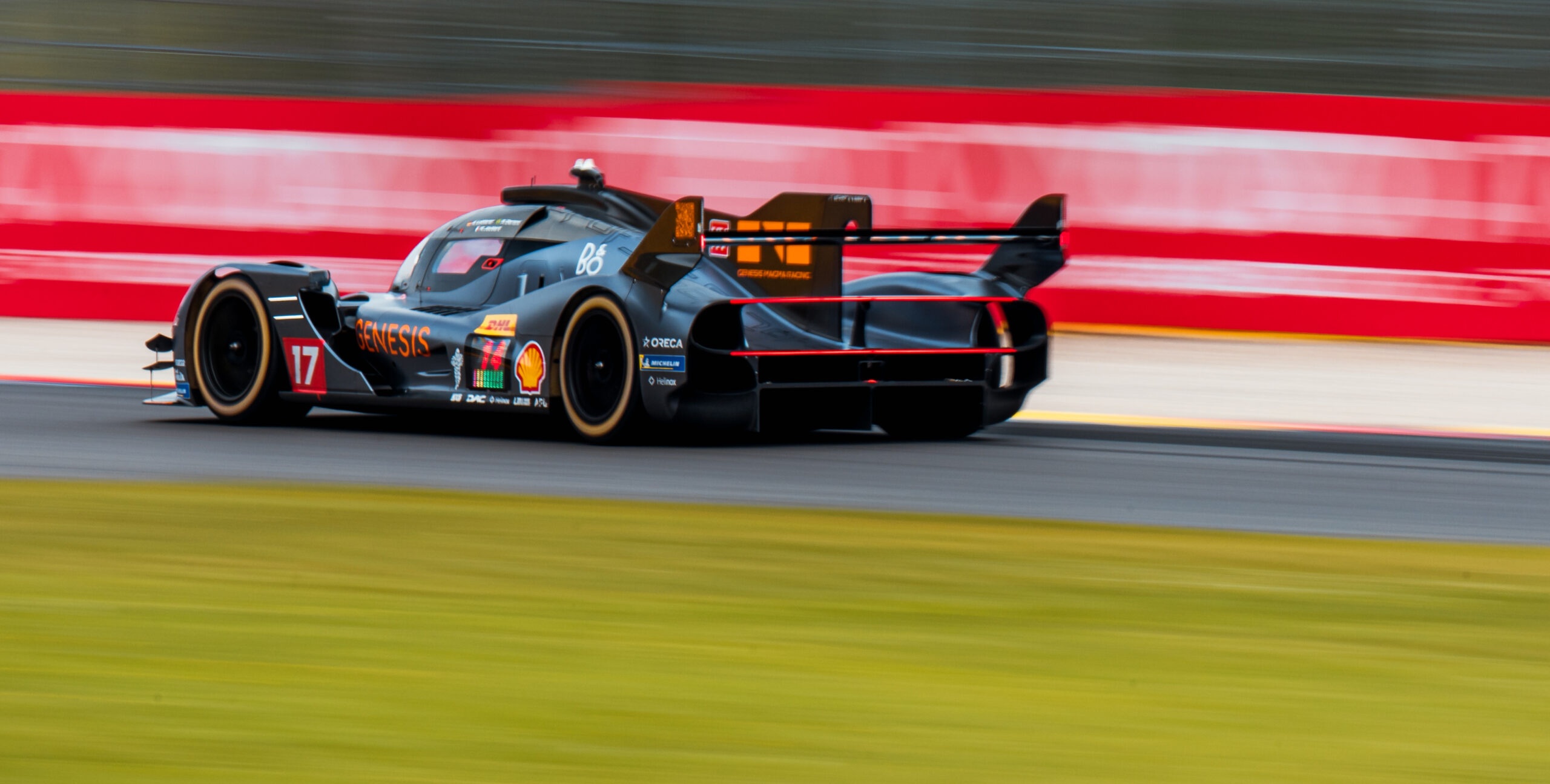
Genesis Magma Racing will face its biggest challenge yet when it takes on the 2026 24 Hours of Le Mans in only its third FIA World Endurance Championship appearance.
The premium Hyundai brand launched its motorsport programme in late 2024 and has immediately entered the highly competitive Hypercar category. As a result, Genesis has had to build experience against established manufacturers including Ferrari, Toyota, Cadillac, BMW, Alpine, Peugeot, Aston Martin and others.
Despite that steep learning curve, the GMR-001 Hypercar has already shown encouraging signs. Genesis brought both cars to the finish at Imola and repeated that achievement at Spa-Francorchamps, making it one of only four Hypercar manufacturers to reach Le Mans with a 100 percent finishing record in 2026.
Jaminet highlights Le Mans significance
Le Mans will place Genesis under a level of pressure it has not yet faced in race conditions. The 24-hour distance is four times longer than Imola or Spa, while the Circuit de la Sarthe also brings unique demands through its long straights, high-speed sections, night running and heavy traffic.
However, Mathieu Jaminet believes the team has already seen enough from the GMR-001 to approach the event with cautious optimism. The Frenchman also acknowledged the special feeling of racing at home in the world’s biggest endurance race.
“The 24 Hours of Le Mans is the highlight of the year for every single team and driver,” mused Jaminet to FIAWEC. “I always feel it is a very special event, especially being French and having a lot of fans there – you get to feel a bit like a rockstar for a few days!
“Looking at the first two races, we know the GMR-001 Hypercar has great potential, but we’ve had small problems here and there that the team has been pushing flat-out to solve so we can be as prepared as possible. Seeing the chequered flag without any issues would be a bit of a win, and if we manage that, we should also have a bit of pace to challenge some other cars, so let’s see where we end up.”
His comments reflect Genesis’ current position. The team has already shown promise, but it still views a clean finish at Le Mans as a significant milestone in its first endurance racing season.
Spa result gives Genesis reason for belief
Genesis produced its strongest performance to date in round two at Spa-Francorchamps. The No. 17 GMR-001, driven by André Lotterer, Pipo Derani and Mathys Jaubert, finished eighth after a composed and strategic race.
That result carried extra value because Derani had to defend late in the race on heavily worn tyres. The Brazilian held off pressure from the No. 12 Cadillac, No. 8 Toyota and No. 36 Alpine, giving Genesis a meaningful points finish against several more experienced Hypercar programmes.
The team also showed progress over one lap. In qualifying, Jaminet brought the sister No. 19 entry closer to the outright benchmark than Genesis had managed at Imola, despite Spa being a longer lap. Meanwhile, Jaubert’s race pace provided another encouraging sign, as only the No. 93 Peugeot, No. 007 Aston Martin and the leading BMWs lapped faster than him.
Derani urges Genesis to stay grounded
Although Spa offered encouragement, Derani insists Genesis must keep its expectations realistic before Le Mans. The Brazilian knows the French endurance classic can expose any weakness, particularly for a new team still gathering data and experience.
“We were not expecting the result we had at Spa, and we want to keep our feet on the ground to make sure we tackle Le Mans with humility,” added Derani. “It’s by far the biggest challenge we’ve had so far, but as we’ve already proved, we are ready for any task – regardless of how difficult it is, we throw ourselves in. We want to gather as much experience as possible to make the GMR-001 a better package, and any result we achieve will be a bonus.”
That approach underlines the team’s long-term mindset. Genesis does not need to win immediately to validate its programme. Instead, it must continue building reliability, understanding tyre behaviour, refining operations and improving the GMR-001 as a complete package.
Reliability could play into Genesis’ hands
Le Mans often rewards experience, but it also rewards restraint. A fast car can lose the race through one mistake, one mechanical issue or one poorly timed intervention. Therefore, Genesis’ early finishing record may prove valuable.
Both GMR-001 Hypercars reached the chequered flag at Imola and Spa, giving the team useful race mileage before its first 24-hour contest. That reliability alone does not make Genesis a favourite, but it could give the team a foundation in a race where attrition still shapes the result.
If the GMR-001 can avoid trouble, Genesis may find itself fighting more established rivals as the race develops. Its Spa performance showed that the car can compete in the pack, particularly when strategy and consistency bring it into the right window.
Le Mans marks a major step in Genesis’ long-term plan
Genesis enters Le Mans as a newcomer, but its project already carries serious intent. The brand has joined endurance racing during one of the most competitive Hypercar eras, and that choice reflects ambition rather than caution.
The 2026 race will not only test the GMR-001’s speed. It will test the team’s procedures, mechanics, strategy calls, driver consistency and ability to manage pressure over a full day and night.
For now, a clean finish would represent a meaningful achievement. However, Genesis has already shown enough to suggest it can do more than simply survive. If the team builds on its Imola and Spa reliability while unlocking more race pace, its first Le Mans appearance could become another important step in a rapidly developing Hypercar programme.
See the full schedule for the 2026 edition of the 24 Hours of Le Mans, and you can get live updates on race day from our blog.