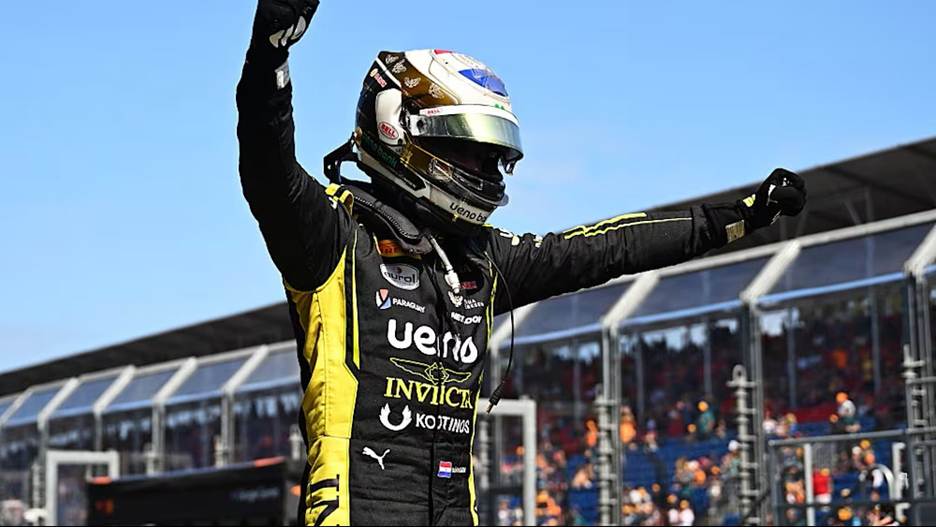
The FIA Formula 2 Championship’s arrival at a brand-new circuit inevitably resets the competitive order. With no historical data, no prior race weekends, and limited practice time, drivers must rely heavily on adaptability, preparation, and instinct. The 2026 Miami F2 Round therefore offers both uncertainty and opportunity in equal measure, forcing the grid, including veterans like Invicta Racing’s Joshua Dürksen to extract performance almost immediately.
While a daunting task for many, at lead on paper, for Dürksen, however, that challenge aligns well with his driving style. Rather than viewing the lack of experience as a disadvantage, he sees it as a chance to prove his ability to learn quickly and maximise every available session. He discussed this during a virtual media roundtable ahead of the 2026 Miami GP attended by Pit Debrief.
Dürksen embracing new circuits with confidence as F2 prepares for its North American debut at the 2026 Miami GP
While some drivers prefer established tracks where data and experience can guide performance, Dürksen actively welcomes new additions to the calendar. He believes that adaptability plays a decisive role in modern F2 competition, especially given how short practice sessions are.
In response to a question by Pit Debrief, he explained that his approach depends more on mindset and learning speed than prior knowledge of a circuit.
“I think it depends on the situation of each driver. I always like new tracks so for sure I see it as a benefit as well because I feel like I adapt very quickly to every new track.
Although he acknowledged that experience can provide an advantage on familiar venues, he places greater importance on his ability to adjust quickly. Importantly, he does not see any meaningful difference between new and old circuits when it comes to his preparation or confidence.
“But looking back, this is my third year in F2 so for sure maybe I would have a bit of an advantage going just in traditional tracks. But to be honest, I’m not worried because I know I adapt very quickly so for sure I’m also looking forward to it. For me, it’s the same now. If I race on a new track or an older track, I think both are very good for me.”
Condensed preparation and rapid learning
The addition of Miami to the calendar at relatively short notice created logistical and technical challenges for teams and drivers alike. However, Dürksen explains that Formula 2’s structure already trains drivers to operate under tight preparation windows.
He highlighted that while teams had to work harder to refine simulation models, drivers still arrived with a solid baseline of preparation.
“Yeah, I think, as Nikola [Tsolov] said, we had enough time to prepare for Miami. For sure, it was a bit more difficult, maybe to get the correct track model, because of course, it was not expected that the F2 race is here.
He went on to stress that modern drivers develop rapid adaptation skills because they are regularly thrown into high-pressure situations with minimal running time.
“But as Nikola said as well, I mean, we get used to the tracks pretty quickly. We have very little running and Free Practice, and we go straight to Qualifying. So I think we developed this ability of just adapting very quickly, learning very quickly and just beyond speed.
Even with the last-minute nature of the event, he remains satisfied with the level of preparation achieved across both driver and team sides, despite the added logistical complexity.
“So yes, it was very last minute. But for us drivers, at least, I think we still had enough time, maybe for the team. Logistically, it was a bit more difficult to organise everything. But from our point of view, I think we had good time to prepare for it.”
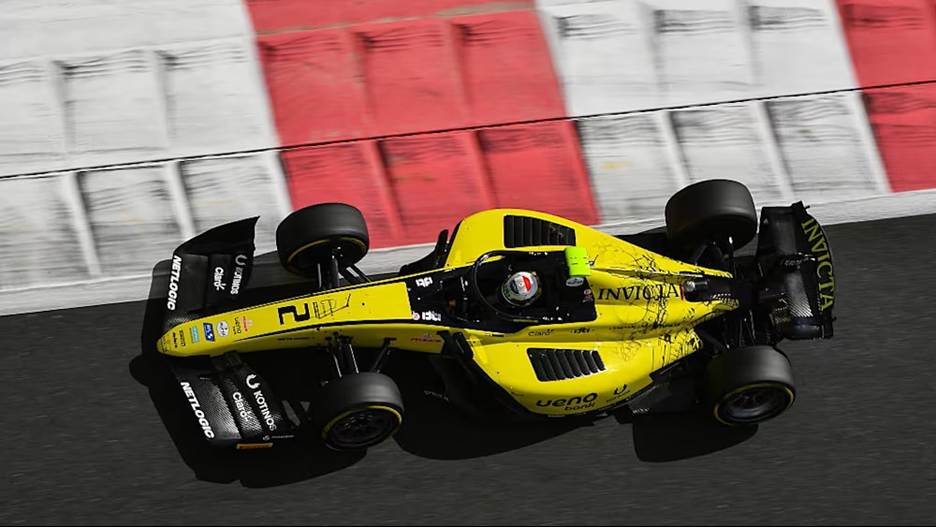
Simulation work as a competitive foundation for Dürksen ahead of 2026 Miami F2 Round
With real-world mileage limited, simulation work plays a crucial role in preparing for unfamiliar circuits. For Dürksen, the quality of modern sim tools helps bridge the gap between virtual preparation and on-track performance.
He explained that even without prior experience of a track like Miami, drivers can still build a strong understanding of its layout and demands before arriving.
“No, I mean, by being new tracks, of course, I don’t have the experience on these tracks, but that doesn’t stop me from preparing well. We have very good simulators, we have very good track models.
In addition, he emphasised the importance of correlation between simulator data and real-world car behaviour. His experience, he noted, in F2 allows him to interpret this data more effectively, which strengthens his preparation process.
“With my experience in the F2 car, we can correlate very quickly the sim model with the car model. So I think we can get already pretty accurate data of these tracks. So I don’t feel it’s a setback. It’s just, of course, different tracks, but I feel we will be as prepared as we should be for the normal tracks.”
Dürksen on the Miami challenge as F2 makes its North American debut
Miami presents a particularly complex layout due to its combination of high-speed sections and tight, technical corners. As a result, drivers must constantly adapt their rhythm across different sectors.
Dürksen described the circuit as a blend of several existing tracks, requiring a mix of skills rather than a single driving approach.
“I think Miami is a track which has some similarities to other tracks. I feel like it’s an interesting combination of, let’s say, Melbourne, Baku and maybe a bit of general Sector 1. It’s just like the first sector here in Miami is just pretty much high speed corners, fast flowing.
He further explained that the second half of the lap contrasts sharply with the opening sector, placing additional emphasis on adaptability and precision in slower sections.
“And then the Sectors 2 and 3 are very tight corners, low speeds. Also, the track is a bit more narrow there. So it just gives me a bit of flat tracks to Baku as well. I think I can mix up those experiences from those tracks to make it in this track.
Despite the complexity, he remains optimistic about the weekend, viewing the layout as both visually impressive and technically engaging.
“And I think it’s going to be quite a cool weekend. It looks really nice. And yeah, I think it’s going to be very good.”
Strong team expectations and championship ambitions
Beyond his own development and performance targets, Joshua Dürksen places significant emphasis on the wider environment at Invicta Racing. In a F2 championship often decided by marginal gains, he recognises that success depends not only on individual speed but on the collective strength of the entire organisation.
Moreover, Dürksen highlighted the importance of a strong and balanced driver line-up. He praised his teammate Rafael ‘Rafa’ Câmara, while also pointing to the depth and competitiveness within the garage as a key factor in their overall performance.
“Yeah, for sure. It’s very nice that he says that, but I feel the same as him. I think we have a very strong line-up. Rafa was basically unbeatable in F3. He was super quick. He adapted very quickly as well to F2.”
In addition, he underlined the significance of Invicta’s recent success across multiple seasons. Consecutive championship victories have not only strengthened confidence within the team but also reinforced belief in its operational consistency, technical strength, and ability to execute under pressure when it matters most.
“Of course, the guys from Invicta won now, twice in a row, the championship. For sure, they have a very strong car, a very strong team altogether.”
Bringing these elements together, Dürksen expressed a clear sense of ambition for the season ahead. He believes that his own experience, combined with the team’s proven pedigree and current performance level, places them firmly in the championship fight once again.
“Combining all of that also with my experience, I think we make a very strong team. So there’s no doubt for me that, for sure, we will have very good chances to win the championship again this year.”
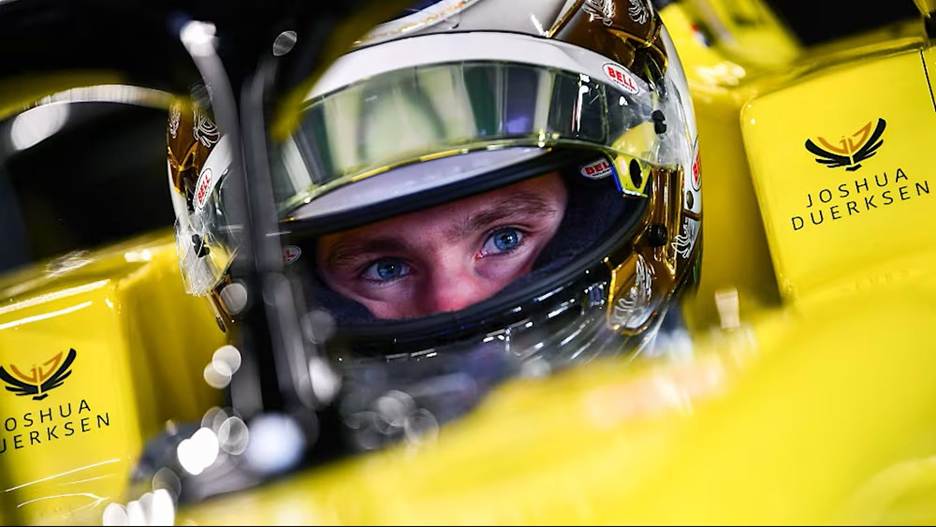
Early success building momentum
In addition to long-term expectations, early-season performance has played a crucial role in shaping confidence within the team. Strong results at the start of the campaign have reinforced the belief that their pace is not theoretical, but already proven under race conditions. For Dürksen, early victories serve as an important validation of preparation work done both in the factory and on track.
“So for sure, it gives a big, big boost of confidence. Winning the first race, scoring already good points. It just shows that there’s speed, and I know that we have the speed with Invicta. So I’m really feeling confident and we had a good start. And for sure, we’re aiming to keep going like this and for sure fighting for a championship.”
Continuous improvement and learning
While immediate results matter, Dürksen also places strong emphasis on long-term development. Reflecting on previous seasons, he avoids focusing on single defining moments. Instead, he views progress as a gradual accumulation of small improvements across multiple areas of performance.
“Well, I think it’s just continuous learning, you know. There’s not like one specific thing that can change everything. It’s just, I think, the accumulation of the little bits that makes you better, right. So really, I’ve just been working on myself, just improve in all the areas I think I need to improve.”
In addition, he highlighted the importance of having a supportive and structured team environment. With access to experienced engineers and strong technical guidance, he believes he can address weaknesses more efficiently and stay on a clear development trajectory throughout the season.
“And I think with Invicta, for sure they will be able to help me a lot in case I have some issues or if I don’t understand some things, for sure they will be able to help me a lot and make sure that I’m on the right way.”
Ultimately, this combination of personal discipline and team support forms the foundation of his approach. Rather than relying on isolated breakthroughs, Dürksen continues to build his performance step by step, with consistency and adaptability remaining central to his ambitions.
Dürksen ready for changing weather conditions in 2026 Miami F2 Round
Despite his preparation and confidence heading into the 2026 Miami F2 round, Joshua Dürksen still faces an element of unpredictability in the form of the weather, which could prove decisive over the course of the weekend. With forecasts suggesting the possibility of thunderstorms on Sunday, he remains open-minded about how conditions may evolve and influence the race.
Rather than treating rain as a complication, Dürksen views it as an additional layer of challenge that can create opportunities for adaptable drivers. In particular, he welcomes the prospect of tackling a new circuit in mixed or wet conditions, seeing it as a valuable test of both driver skill and team strategy.
“Yeah, for me, it’s always exciting to have new conditions and racing in the wet. In Miami, I think it’s going to be very exciting as well. I heard in theory that in Miami, if it rains, it rains properly. So maybe we need to see how much it rains.”
He also emphasised trust in race control decisions, while reaffirming his readiness for any scenario.
“And that’s going to be the call of the FIA. If it rains too much, we might not race. If they think it’s good conditions to race, we will race. And as Nikola said, we’re always ready for every condition. So I’m really looking forward to it.”
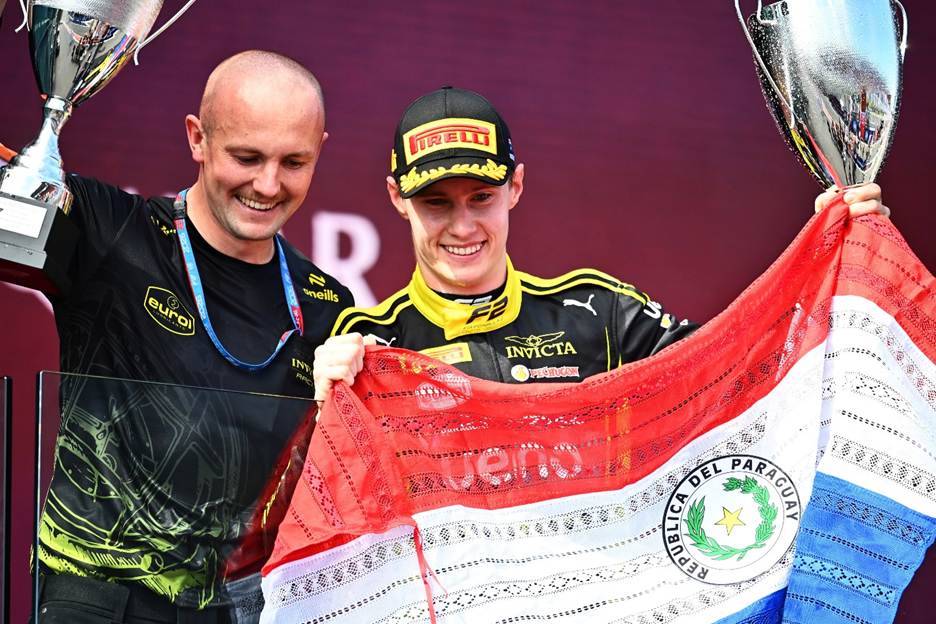
A home-like atmosphere in Miami offers Dürksen a sense of familarity
Finally, beyond the racing action and technical demands of the weekend, Miami offers Joshua Dürksen a sense of familiarity that significantly enhances his overall experience at the event. The city’s cultural atmosphere, combined with its strong South American presence and vibrant environment, creates a setting that feels unusually close to home compared to a typical F2 destination.
Hen responding to a question from Pit Debrief, he reflected on how quickly he has settled into the environment, highlighting the comfort he feels within the city’s multicultural and Spanish-speaking communities, as well as the generally warm conditions that contribute to a welcoming atmosphere.
“Well, yeah, that’s really true. I mean, since I arrived to Miami, I just feel like back at home, basically, you know, just a lot of Spanish-speaking people, just a very nice weather as well. Just the city, I really like Miami.”
Moreover, Dürksen also recognised the symbolic significance of the Miami round, not only as a key event on the calendar but also as one that holds particular meaning for him personally and for his team.
“So as you said, it’s the closest of what I could call my home Grand Prix. For sure, it’s the home Grand Prix of Invicta. So that makes it even more like my home race.”
He further emphasised the emotional impact of the support he has received, noting how meaningful it has been to connect with fans from across South America, particularly those sharing his background and heritage.
“But yeah, that’s true, and I really feel the support. I’ve met already with some people from Paraguay, but from all South America, to be honest. And yeah, it just feels like home.”
Dürksen confident ahead of new challenge at 2026 Miami F2 Round
As F2 arrives in Miami, Joshua Dürksen demonstrates a clear and confident approach to uncertainty. Through simulation preparation, rapid adaptability, and strong team support, he continues to turn unfamiliar conditions into competitive opportunity. Ultimately, his mindset reflects a driver focused not on limitations, but on extracting performance wherever the calendar takes him.