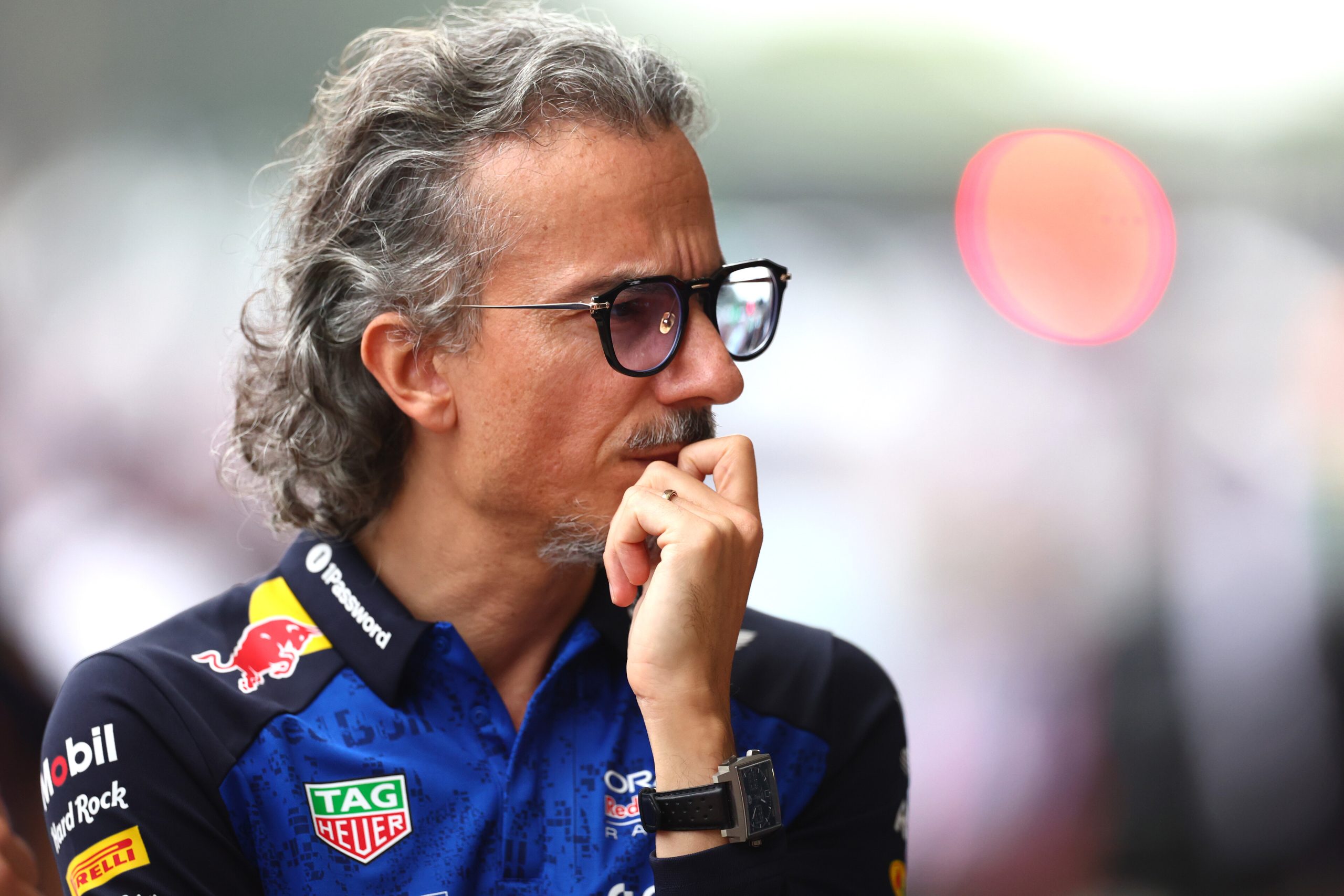
Red Bull Team Principal Laurent Mekies believes the team was likely responsible for Isack Hadjar’s disappointing result at the 2026 F1 Las Vegas GP, after a front wing failure ended the Frenchman’s hopes of securing another podium finish.
While Max Verstappen celebrated his fourth victory of the season, Hadjar endured a frustrating evening despite demonstrating impressive pace throughout the opening stages of the 50-lap contest.
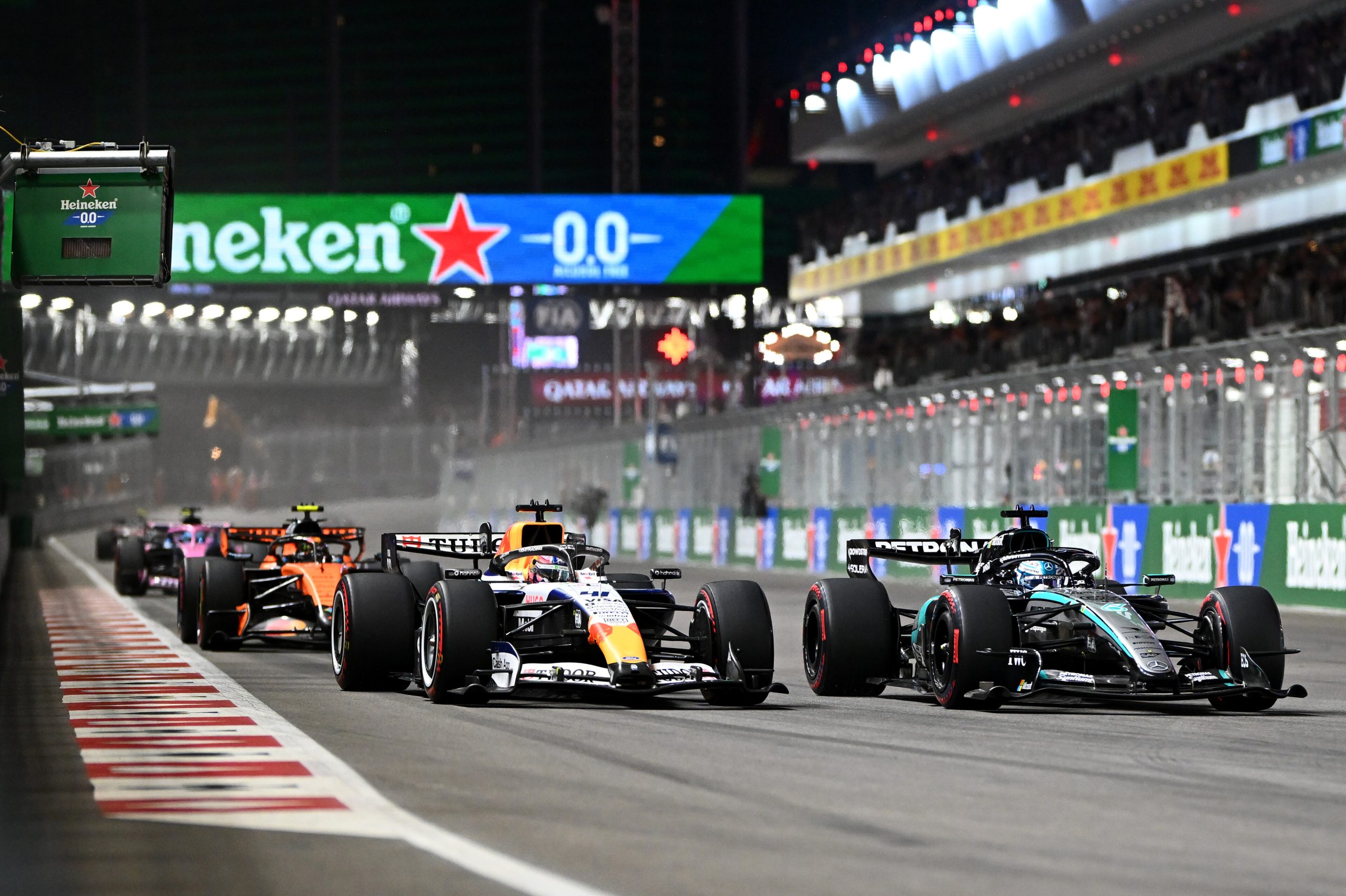
Starting fourth, Hadjar quickly established himself among the frontrunners, challenging teammate Verstappen and Mercedes driver George Russell as the field engaged in an unusually intense battle for position.
The Frenchman briefly ran second behind Verstappen, putting Red Bull in a promising position for a potential double podium. However, the team’s decision to manage its drivers’ positions raised questions, particularly as Hadjar felt vulnerable to the cars behind.
His race then unravelled when his front wing failed shortly after the Safety Car restart, forcing him into an unscheduled pit stop and ending his chances of a strong result. He initially crossed the line in 14th but dropped to 15th following a post-race ten-second penalty for driving unnecessarily slowly under Safety Car conditions.
Speaking to the media, Mekies reflected on Red Bull’s approach to the unusual racing conditions, the circumstances surrounding Hadjar’s disappointment and the progress the young driver has made throughout the season.
Mekies explains Red Bull’s decision not to swap positions
The 2026 Las Vegas GP produced an extraordinary amount of overtaking as drivers struggled to maintain their positions for extended periods.
With energy management and an unexpectedly powerful slipstream effect influencing the racing, the leading drivers repeatedly exchanged positions throughout the contest.
When asked about Hadjar’s frustration with Red Bull’s decision to manage the order between its drivers, Mekies admitted that the team had not anticipated such an unpredictable race.
“Fair points,” he admitted. “I think the first thing to say is that as much as we all knew it was an energy-poor track, and we were all expecting a lot of gaming in the race, as much as we saw yesterday the much bigger than expected slipstream effect, I think none of us were going into the race thinking that we’ll have two overtaking per lap for 50 laps.”
“So why am I saying that?”
“Because I truly think that in the first few laps we all had to adapt on what is the new reality for this race, and in doing so, obviously Isack [Hadjar] was really fast, he was doing all the right things, all the right behaviours in the battles, and at some stage we had both cars P1 and P2 on the road, on merit.”
Protecting positions
Hadjar’s pace meant Red Bull had two cars capable of fighting at the front, although the constant exchanges of position complicated the team’s strategic decisions during the 2026 F1 Las Vegas GP.
Rather than allowing its drivers to repeatedly swap places, Red Bull believed maintaining a coordinated approach offered the best opportunity to protect their positions against the chasing pack.
“And we understood at that stage, it was a few laps into the race, that the yo-yo effect was going to be what it turned out to be until lap 50, and we didn’t feel that swapping the car every lap would be the fastest way to go to the end,” he said.
“We will never know the answer, and we felt it was certainly better if both cars could help each other defend on the positions behind.”
Mekies acknowledged that the decision was unlikely to satisfy Hadjar, who had demonstrated enough pace to challenge his teammate while also facing pressure from his rivals.
Red Bull accepts responsibility for Hadjar’s lost opportunity
Despite the strategic disagreement, Hadjar continued to fight among the leading drivers until the Safety Car period changed the complexion of his race.
The Frenchman remained in podium contention after the restart, but his front wing suddenly failed as he approached Turn 5. The damage forced him to return to the pits and dropped him out of the leading group.
For Red Bull, the failure turned a potential double podium into a disappointing result for Hadjar, particularly after his strong performance during the opening half of the race.
Mekies praised the Frenchman’s response to the team’s instructions and acknowledged that Red Bull was likely responsible for the mechanical setback.
“I can completely get that it’s not the most pleasant answer, especially as we were not into a situation that we had prepared, in situations where it was unexpected to be in that game, but Isack has understood and has executed very well, and it’s a shame that he didn’t get a strong result today, and it’s most likely on us, with the front wing issue.”
“Extremely likely on us, and we’ll work hard to make sure he has a chance to win.”
His comments underline the frustration surrounding Hadjar’s result. Although the Frenchman had the pace to compete at the front, circumstances beyond his control prevented him from converting that performance into points.
Verstappen ultimately held off the McLaren duo of Lando Norris and Oscar Piastri to secure victory, demonstrating Red Bull’s competitiveness around the Las Vegas Street Circuit.
However, Hadjar’s retirement from podium contention left the team wondering what might have been had both cars reached the chequered flag without trouble.
Mekies praises Hadjar’s growing maturity
Beyond the disappointment of his Las Vegas GP result, Mekies also highlighted Hadjar’s development during the latter stages of the 2026 F1 season.
The Frenchman has continued adapting to the demands of racing for Red Bull, where expectations and pressure remain high, particularly when competing alongside Verstappen.
Having previously worked with Hadjar during his time at Racing Bulls, Mekies has witnessed his progression first-hand.
When asked whether the young driver had become calmer and more mature in recent months, the Red Bull Team Principal emphasised the importance of emotional management and its influence on performance.
“You know, Isack is a very intelligent individual, and it’s very difficult for us non-drivers to assess what drivers have to deal with in terms of management of their emotions when they are in the car,” he said.
“And he knows very well that managing his emotions better gives him lap time in the car, and lap time outside of the car in terms of the quality of communication with his engineers.”
Mekies believes that Hadjar has made particularly significant improvements over the previous few races, both in his driving and in his ability to communicate effectively with the team.
“And as you pointed out, he made very big steps in the last 2-3 races, and we see even more potential moving forward, so he’s exchanging better and better with his engineering crew, and he’s executing stronger when he’s able to keep his emotions under control, and we’re very happy with the progress he’s making.”
Red Bull looks to build on Hadjar’s potential
The contrasting outcomes for Red Bull’s drivers highlighted both the team’s competitiveness and the opportunities it missed at the Las Vegas GP. Verstappen delivered another victory, while Hadjar demonstrated the pace needed to challenge the leading contenders before the front wing failure brought his podium hopes to an end.
Although the Frenchman left the 2026 F1 Las Vegas GP without points, Mekies remained encouraged by his performance and the progress he has made in recent races.
Red Bull must now address the front wing issue that compromised Hadjar’s race, particularly as Mekies believes the team bears responsibility for the failure.
With two rounds remaining in the season, Hadjar will have further opportunities to translate his improving performances into results.
For Mekies, the objective is clear: ensure the Frenchman has the equipment and support to fight for victories, rather than watch another promising race slip away through circumstances outside his control.