In 2026, change remains central to the philosophy of the ADAC RAVENOL 24H Nürburgring. Since its debut in 1970, organisers at ADAC Nordrhein have consistently refined the regulations to reflect technological progress while improving safety and operational efficiency.
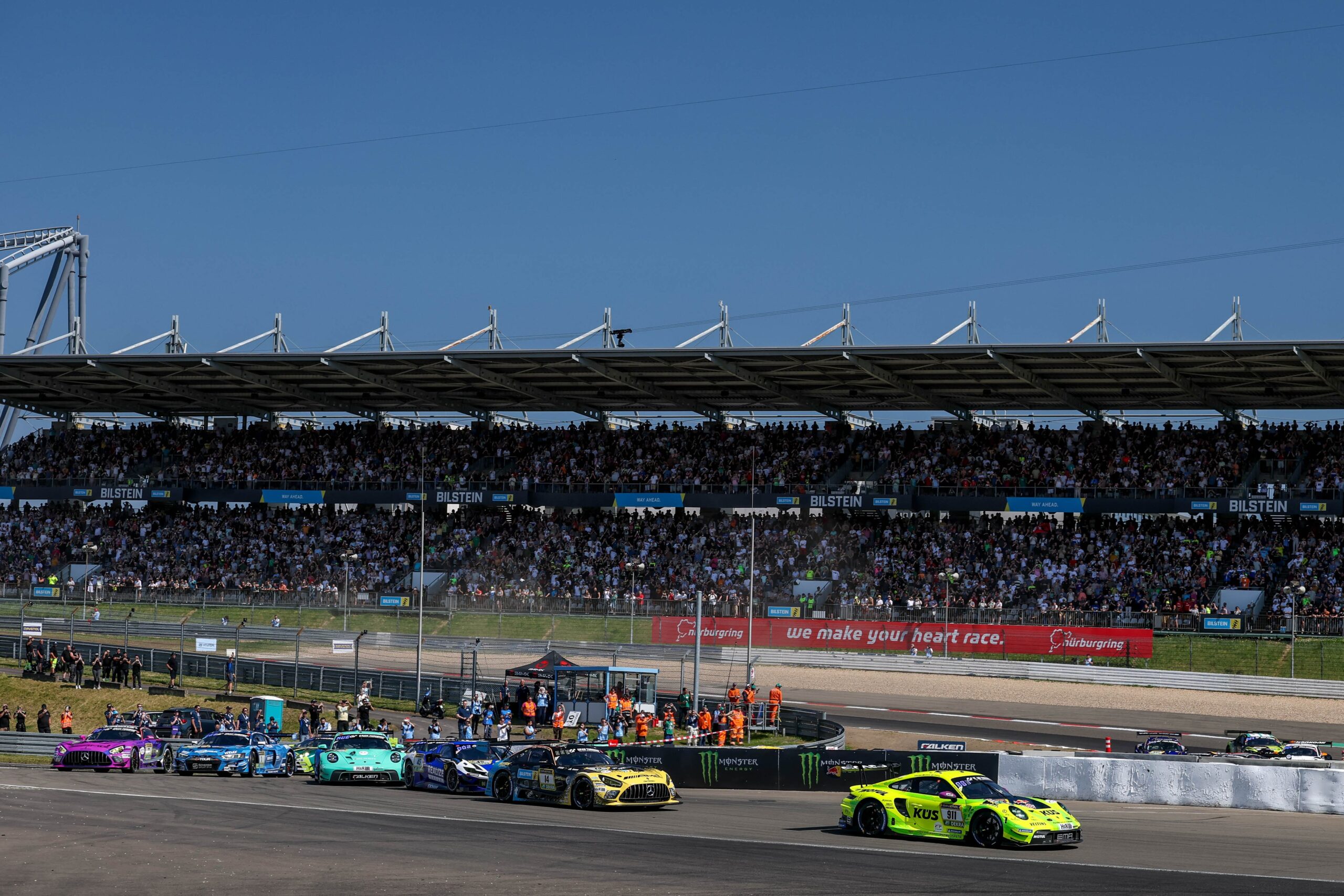
As a result, the race continues to thrive in its 54th edition. Interest has surged once again, with teams rushing to secure places on the grid. In fact, more than three weeks before the entry deadline, it has already become clear that all 150 available starting positions will be filled.
Consequently, the event’s official notice remains the key reference point, outlining every rule—including how the starting grid is determined.
A new era for top Qualifying
One of the most significant changes arrives in the Top Qualifying format. Organisers have introduced a three-stage system—Top Q1, Top Q2, and Top Q3—mirroring the structure used in Formula 1.
Race Director Walter Hornung explained the reasoning behind the update: “We opted for the new format because we wanted to make the process more understandable and transparent for the fans,”.
The system retains its exclusivity. Only top classes—SP9 (GT3), SP11 (GT2), AT1, SP-Pro, and eligible SP-X entries—can participate. However, teams must meet strict performance criteria, including a minimum engine output of 450 horsepower for SP-X cars.
Teams can still secure early access to the decisive Top Q3 shootout. Up to six cars may pre-qualify based on performances in earlier Nürburgring Langstrecken-Serie races and the Qualifiers event.
The allocation process rewards both qualifying speed and race performance. Drivers earn positions through fastest laps, as well as calculated “theoretical” best laps derived from sector times.
Then, the Friday showdown begins. Top Q1 features all eligible cars not already pre-qualified. From there, the 20 fastest advance to Top Q2, where they battle for the remaining places in the final shootout.
Ultimately, Top Q3 delivers the climax. A maximum of 12 cars compete individually for pole position, ensuring a dramatic and fan-friendly finale.
Enhanced visibility with light panels
In parallel with sporting changes, organisers continue to prioritise safety. Traditionally, marshals switch from flags to light panels at night. However, from 2026 onwards, drivers will also benefit from these panels during the day.
This update addresses the unpredictable weather conditions of the Nürburgring, where rain and fog often reduce visibility. The panels replicate the marshal’s flag signals and act as an additional visual aid.
Hornung highlighted the success of early trials: “We tested this system during the second NLS race in 2026,”. He added: “It was very well received by the drivers and the on-site marshals who have to operate it.”
Organisers now plan to install 28 panels on the Nordschleife and eight on the Grand Prix circuit, further strengthening trackside communication.
Record demand for grid places
The 24H Nürburgring has long held a reputation as the world’s largest race by participant numbers. Nevertheless, even the vast Nordschleife has limits.
Regulations cap the field at 150 cars, and for 2026, demand has exceeded expectations. Weeks before the entry deadline, organisers have already confirmed a full grid. Therefore, a structured selection process will follow. Officials will assess entries based on class balance, as well as the technical and sporting quality of teams and vehicles.
This approach ensures that the race maintains its defining diversity—from production-based cars to high-performance GT3 machines—while preserving competitive integrity.
Balancing tradition and innovation
The 24H Nürburgring continues to evolve without losing its essence. By refining qualifying formats, enhancing safety systems, and managing unprecedented demand, organisers strengthen the event’s global appeal.
At the same time, the race remains true to its roots: a multi-class endurance challenge that tests drivers, teams, and machines against the unforgiving Green Hell.
As anticipation builds, one thing becomes clear—the 2026 edition will not only honour tradition but also showcase the future of endurance racing.