Nigel Mansell has issued a warning for the F1 2026 season. He drew on a career defined by raw bravery to critique the sport’s move toward automation. Many know him as “Il Leone,” with his legacy standing on the physical exertion of the 1980s and 90s. He famously collapsed while pushing his Lotus across the finish line in Dallas.
Mansell is the driver who understands the visceral connection between man and machine. Consequently, when he speaks on the dilution of the sport’s soul, the F1 world should listen.
He argued that modern regulations have traded genuine grit for a computer-generated spectacle. This change feels increasingly hollow as the sport evolves.
Nigel Mansell on the illusion of overtakes in F1 2026
1992 F1 World Champion Mansell focused his critique on energy recovery systems. These systems dictate the flow of a battle. He noted that automated power deployment stripped the driver of tactical agency.
“I might get shot for saying this, but suddenly some of the overtakes are just false,” he stated. “I mean, some of the overtakes look great, and then you come out the next corner, and then the car just blasts past you and the other car goes backwards because the computer’s giving you the extra power not at the right time, and the driver doesn’t control that, obviously, because he wouldn’t have employed it.”
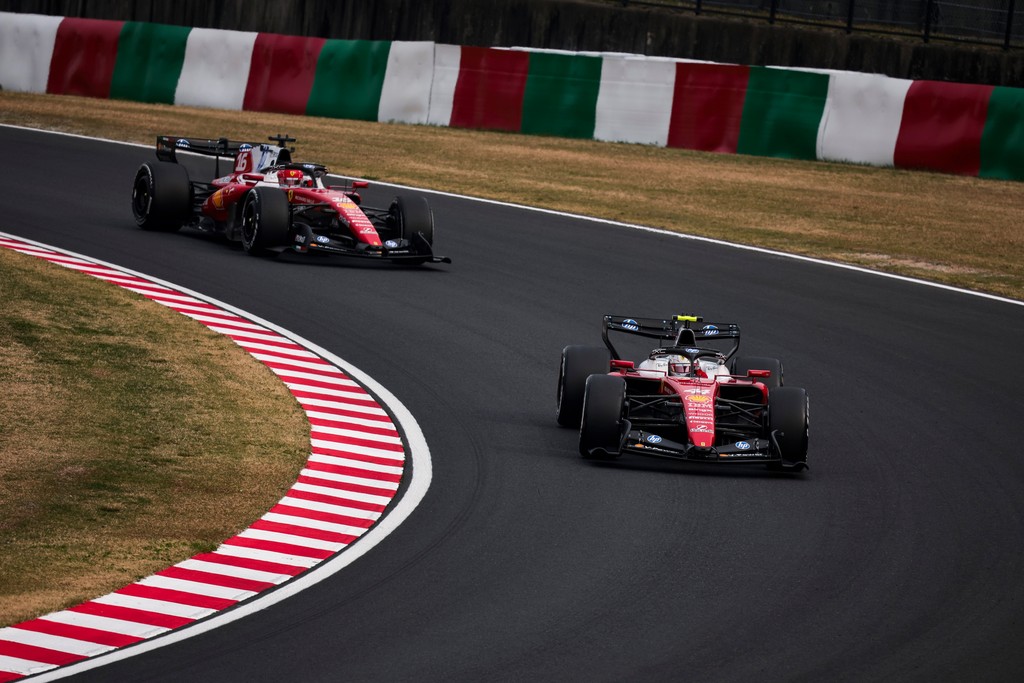
Furthermore, Mansell referenced reigning World Champion Lando Norris’ moment with Ferrari’s Lewis Hamilton at the 2026 Japanese GP to highlight the loss of control.
“I think it was Lando [Norris] who quoted, ‘well, I didn’t want to overtake him going into the fast corner into the chicane, but I had no choice.'”
Ultimately, this creates a “yo-yo” effect. Drivers became passengers to their own acceleration due to these new F1 2026 regulations.
Debunking the lift and coast myth
However, the debate sharpened when Nigel Mansell addressed Stefano Domenicali’s vision of the F1 2026 regulations. The F1 CEO compared modern harvesting to the turbo era of the 1980s in an interview with The Race. Domenicali suggested that this kind of management has always been part of the game.
Mansell flatly rejected the parallel, “No, we didn’t. No, no, we didn’t.”
On the contrary, he explained that his era required an intuitive touch. A computer cannot replicate that physical feel.
“If we lifted and coasted, it was like feathering. Feathering a throttle,” he explained.
He noted that slipstreaming and deciding not to overtake was a smart way to save fuel. Therefore, he argued that the current reality is a far cry from the past. Cars now slow by 50 to 70 km/h mid-corner to recharge.
The shadow of the Japan crash
Beyond the quality of the racing, the veteran remains deeply concerned about safety. Specifically, he pointed to a recent scare in Japan. He sees the current system as a ticking time bomb.
The incident showed a terrifying speed differential. One car, Ollie Bearman’s, was on the boost, while Franco Colapinto was harvesting energy.
When a car “derates,” it suddenly loses electrical deployment at the end of the straight. It essentially acts as a moving chicane.
At the F1 2026 Japanese GP, this quirk nearly resulted in a catastrophe. “I think it’s very dangerous at the moment, and we got away with one terrible accident in Japan already, so that was luck,” he warned.
The closing speeds are now extreme. Drivers have little time to react when the car in front drops 50km/h. As a result, Nigel Mansell believed F1 2026 regulations are playing with fire.
“He could have been hurt really bad, Oliver [Bearman], so let’s just tweak it,” he urged.