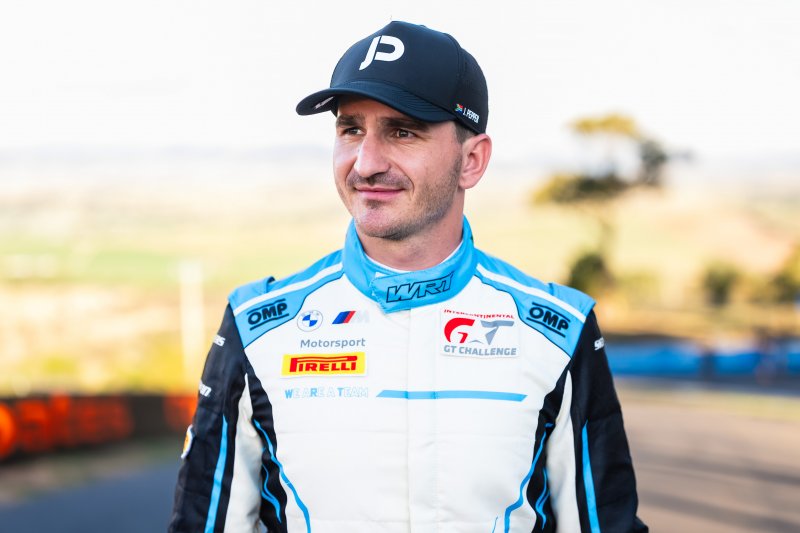
Jordan Pepper sits at the centre of a changing South African motorsport story, one in which drivers from the country increasingly occupy leading roles across international GT and endurance racing rather than having to prove that such careers are possible at all.
Alongside Kelvin and Sheldon van der Linde, Pepper belongs to a generation that left South Africa young and built professional careers in Europe without a clear contemporary blueprint to follow. Their routes eventually carried all three to factory-driver status, although each had to navigate the financial, geographical and personal challenges that come with pursuing motorsport thousands of kilometres from home.
Pepper’s own journey took him from uncertainty as a teenager abroad to success at some of GT racing’s biggest events, including victory in the CrowdStrike 24 Hours of Spa and, more recently, a place within BMW M Motorsport’s GT programme. As his career has developed, so too has the visibility of South African drivers on the international stage.
That change has given younger African racers something Pepper never had when he first left home: contemporary examples of drivers from their own part of the world reaching the highest levels of professional motorsport. In an exclusive interview with Pit Debrief, Pepper reflected on what that shift means, the sacrifices still required to make the transition to Europe and the legacy he hopes his generation can leave behind.
Pepper and the van der Lindes had no blueprint to follow
When Pepper, Kelvin and Sheldon first began trying to establish themselves outside South Africa, they could not simply study the career of another active South African factory endurance driver and follow the same route. Instead, they entered an unfamiliar environment knowing that much of the process would involve learning through experience.
“Yeah, the interesting thing is, when Kelvin and myself and also Sheldon, when we first came over, we didn’t really have any reference South African driver currently as a factory driver, especially in the world of endurance racing. There was no one really ahead of our time to look up to. So we kind of had to knock our own toes a little bit, also learn and make mistakes on our own and learn from it and grow.
That lack of a reference point meant their mistakes carried another purpose. Every lesson helped them understand how European paddocks worked, while every opportunity allowed them to test whether a professional career abroad could become sustainable.
As their results improved, however, their progress also began challenging a perception Pepper had encountered at home. What once appeared almost inaccessible gradually became something three South Africans were achieving simultaneously through different programmes and manufacturers.
“And it’s cool that we’ve seemed to open up this opportunity because there was a big stigma in South Africa that there was no way to make it outside of South Africa as a professional racing driver. And we proved that wrong.
Their success did not remove the obstacles facing those who followed, but it did change the evidence available to them. A young South African driver could now point towards living examples rather than simply imagining that an international career might be possible.
A visible pathway changes what younger drivers can imagine
That visibility has become increasingly important as another generation of African drivers begins moving through karting and junior single-seater categories.
Kenyan F4 driver Shane Chandaria, for example, has identified Pepper, the van der Linde brothers and David Perel among the African racers whose careers reinforce his belief that he can create his own international pathway. Those examples matter because they make the destination more tangible, even if the route towards it remains difficult.
Pepper sees that growing ambition as a reflection of the talent already present within South African motorsport. In his view, the country’s karting scene and grassroots formulas provide young racers with an environment in which they can develop the fundamentals before considering a move abroad.
“And I think now what we start to see is that trend of younger guys coming through because I’m a big believer [that] South Africa produces amazing talent from the karting roots. We have the grassroots formulas, which I think are good enough to kind of cut your teeth, but you have to make that transition. And it’s very daunting for most. It’s very daunting to come across. It’s very daunting to have the idea of giving up a lot.
That final step, rather than the absence of talent, represents the more difficult problem. Success at home can prove that a driver possesses speed, but moving into Europe requires an entirely different level of commitment.
For Pepper, understanding that distinction becomes crucial for anyone who wants to follow the path his generation created.
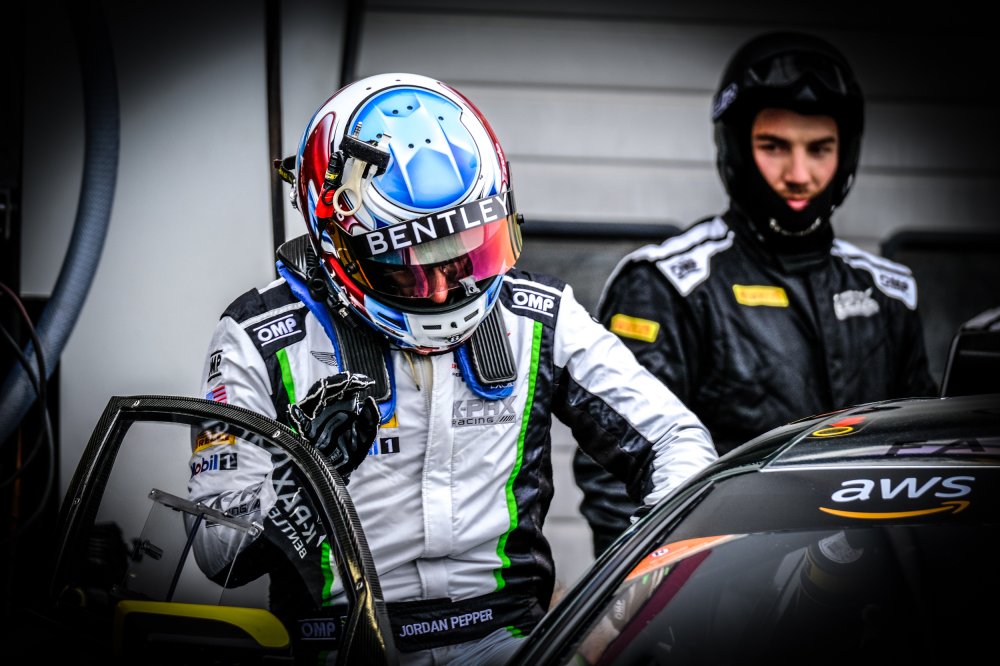
Talent only takes a driver so far
Europe remains home to many of the teams, manufacturers and championships capable of turning junior success into a professional career. As a result, Pepper believes aspiring drivers eventually need to place themselves within that environment rather than attempting to build the entire pathway from South Africa.
That decision brings opportunity, but it also demands sacrifice. A young driver may need to relocate before establishing any certainty over results, funding or future programmes, meaning commitment away from the circuit can become as important as performance on it.
Pepper therefore gives younger racers a demanding answer when they ask what separates those who progress from those who do not.
“And I think the difference maker, [the thing] that will make the difference, and it’s something I always share with the younger guys, is you really have to sacrifice a lot. You really have to base yourself in Europe. You really have to do it because, when I look at all the grown racing drivers right now, you look at their stories and everyone has a huge sacrifice.
That perspective echoes Kelvin van der Linde’s reflections on South Africa’s growing motorsport presence. Like Pepper, van der Linde has spoken about the difficulty of establishing a career in Europe and the value younger drivers now gain from seeing several South Africans succeed internationally.
Even so, simply knowing that others have completed the journey does not make the personal cost of doing so disappear.
Distance from home creates another layer of difficulty
Funding affects drivers from almost every country, but South Africans also have to contend with the distance separating their domestic motorsport scene from Europe.
A serious European campaign can mean more than travelling for races. For many young drivers, it requires relocating thousands of kilometres from family, friends and familiar support systems while simultaneously trying to establish themselves in an intensely competitive industry.
Pepper believes that geographical reality deserves as much attention as the financial challenges typically associated with junior racing.
“And the biggest daunting fact of being South African is not only the financial side, which is a big limit, but also the being so far away from home at a young age is also quite hard on kids in general.
The emotional cost becomes particularly significant when results fail to justify the sacrifice immediately. A difficult weekend can feel very different when a driver also has to manage rent, travel, language barriers and daily life in an unfamiliar country.
Pepper understands that situation because he lived it. Long before factory contracts gave his career stability, his journey into professional GT racing included periods when staying in Europe required almost as much determination as competing there.
That experience continues to shape the advice he gives today.
Pepper remembers how easily he could have gone home
Pepper now looks back on those years as an established professional, but his career once stood far closer to ending than his later success might suggest.
At 18, he found himself in a country where he could not speak the language, living in a small apartment and looking for coaching work to help cover his expenses. At the same time, his racing was not progressing well enough to provide immediate reassurance that the sacrifice would eventually pay off.
“I’m a lot older now. I’m 30 this year, so getting very old, but I remember when I was 18 and racing was not going so well. And I’m in a new country, cannot speak the language, living in a 30-square-metre apartment, trying to figure out how I’m going to pay rent, trying to find out where I can go coaching people. It’s quite easy at that point to just go, ‘You know what? This is not for me,’ and fly back home to South Africa. And the fact that I didn’t, obviously, not to say that that made the difference, but I think that mentality is what’s needed to make the difference.”
Pepper does not present persistence as a guarantee that success will follow. Motorsport offers too few seats and depends on too many external factors for determination alone to decide a career.
Instead, he sees that mentality as something that allowed him to remain in the environment long enough for another opportunity to arrive. In that sense, his experience gives younger drivers a more complete example than the victories and factory contracts alone ever could.
Yet the destination he eventually reached was one he had imagined long before Europe became part of his daily life.
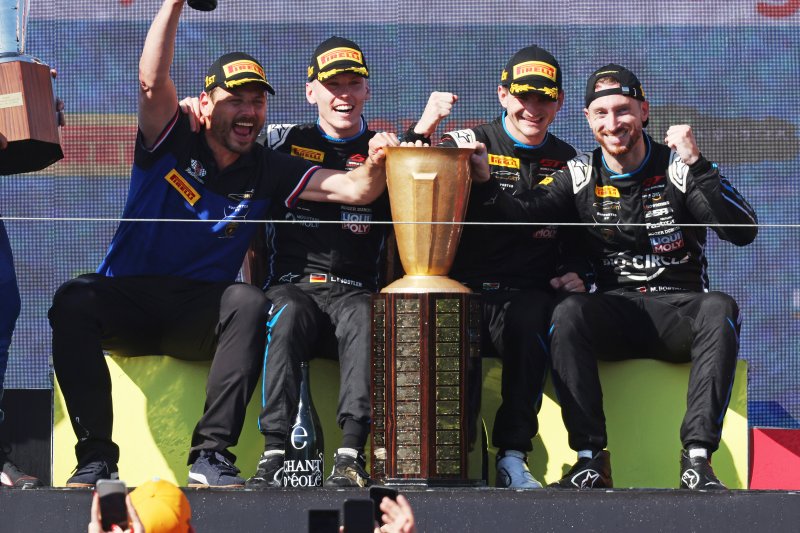
Endurance racing formed part of the dream from childhood
Pepper’s eventual career in endurance racing carries particular significance because the discipline already occupied his imagination when he, Kelvin and Sheldon were children.
Before any of them signed professional contracts, the three shared their interest through simulator racing. Even then, Pepper remembers the same obsession with endurance competition and perfection that would later become part of their professional lives.
Asked whether they ever stop to consider how remarkable their progression has become, Pepper immediately returned to those early memories.
“For sure,” he answered. “There’s moments I think endurance racing maybe was always the thing we were meant to do, because I remember clear, vivid memories of driving on the simulator when we were like 10, 11 years old or 12 years old together, doing a 24-hour race, but trying to be so perfect that we restarted probably every third lap for about 12 hours because we wanted to be so perfect.
Those childhood sessions now sit at the beginning of three very different professional stories. Pepper later won the 24 Hours of Spa, Sheldon became a race winner in the FIA World Endurance Championship, while Kelvin built a career spanning major GT championships, DTM and endurance racing.
The destination may resemble what they imagined as children, but the routes that took them there eventually moved apart.
Shared ambition developed into three separate careers
As their careers advanced, Pepper and the van der Lindes passed through periods where they lived together and supported one another before professional opportunities pulled them towards different manufacturers, teams and championships.
Rather than weakening their shared story, Pepper believes those separate journeys made it more significant. Each driver eventually needed to establish his own reputation instead of relying on their common background.
“And it was always the thing that we always dreamed of doing. And I think our story is pretty cool. There was moments where we obviously lived together, we supported each other, we’ve gone our own separate ways, we’ve really made our own names.
That independence remains important when looking at what the three have achieved. Kelvin has taken victories and titles across GT competition while also succeeding in DTM with BMW, while Sheldon has developed into a central part of BMW’s prototype programme alongside his own DTM success.
Pepper, meanwhile, forged his identity through GT competition and major endurance events before his own career eventually brought him into the same manufacturer structure as the brothers.
Consequently, while the South African connection gives their collective story additional meaning, Pepper does not believe it should overshadow their individual achievements.
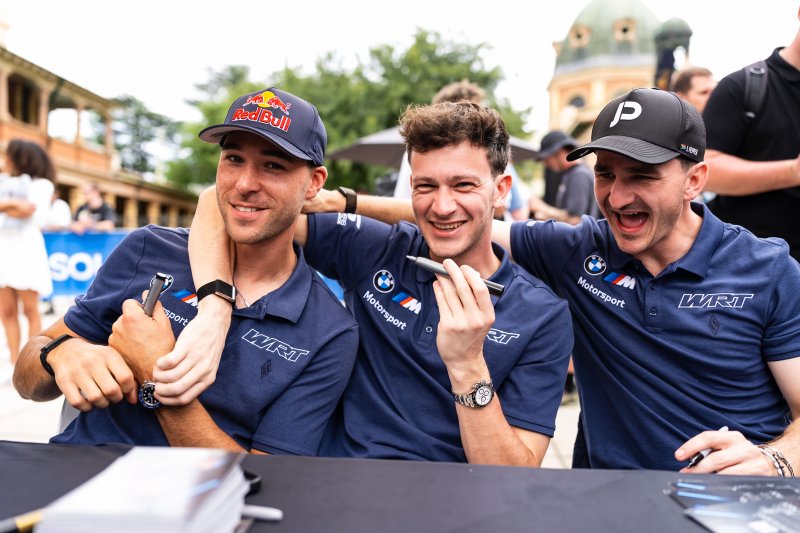
Pepper values the trio without reducing them to one story
Because all three emerged from the same country and generation, people naturally discuss Pepper and the van der Lindes together. Pepper appreciates that association, particularly because their shared history extends so far beyond their professional careers.
At the same time, however, he believes each driver deserves recognition for what he achieved independently after their paths diverged.
“I think it’s cool to talk about us as a trio of South Africans, but at the same time, individually, I think we’ve all done amazing things, which is cool.
Their careers have since converged in a way that adds another layer to that story. Pepper’s arrival within BMW’s factory structure placed all three under the same manufacturer for the first time, even though their programmes continue to differ.
Pepper now shares Team WRT’s #32 BMW with Kelvin and Charles Weerts in GT World Challenge Europe endurance competition, while Sheldon remains closely involved in BMW’s prototype programme.
Having built their identities separately, they can now come back together without losing what makes each career distinct.
Their paths have converged again under BMW
For Pepper, the reunion feels special precisely because it did not follow a straight line. Each driver spent years developing his own strengths, working within different environments and earning recognition independently before the same manufacturer eventually brought their careers closer together again.
“And then now to have the story where we’re all back in the same brand, or in the same brand for the first time together, which is cool. It’s a special thing, but at the same time, we each have our own identities. We each are very individual, different characters, bring our own strengths. And what’s nice is I think we complement each other well and help each other when we can.
Their friendship therefore exists alongside three established professional identities rather than replacing them. They can exchange advice or support one another while continuing to pursue separate sporting objectives.
However, Pepper also recognises how unusual it is that all three reached this level at all. Their current positions can make their progression look almost inevitable in hindsight, but he remembers many talented South Africans who never received the same opportunity to complete the journey.
That awareness adds another dimension to what their collective success means.
Reaching the top was never inevitable
Motorsport routinely loses talented drivers to funding shortages, limited opportunities and circumstances beyond their control. For South Africans, the cost and distance involved in reaching Europe only magnify those difficulties.
Pepper therefore views the fact that he, Kelvin and Sheldon all established lasting international careers as something worth appreciating rather than taking for granted.
“But at the same time, it’s cool just to see that all three of us were able to make that step and make it to where we are. Because it’s quite often that the people we were [around] in South Africa, there was a lot of good guys that never made it. And it’s cool that the three of us really went that extra level and were able to do it. So it’s very special.”
That knowledge also informs how Pepper now views his influence on younger racers. His career cannot solve the financial or geographical barriers another South African may face, but it can demonstrate that those obstacles do not automatically make an international career impossible.
As Pepper has accumulated greater success, that role has become harder to separate from his ambitions as a driver.
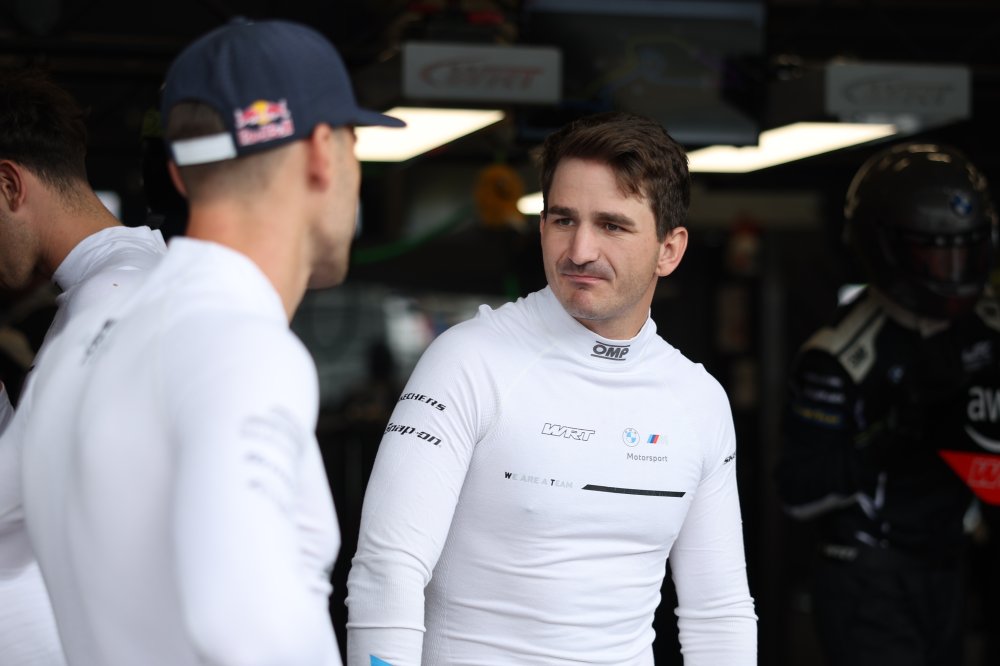
Pepper wants his legacy to extend beyond trophies
Pepper still measures himself through competition. He wants to win races, add major trophies and eventually claim victories across endurance racing’s biggest 24-hour events.
His Spa victory already gave him success in one of the discipline’s defining races, but Pepper wants considerably more before he considers his competitive ambitions fulfilled.
Nevertheless, when he looks further ahead, he does not want a list of results to represent the entirety of his career.
“I really hope that that’s something that I can leave behind, is kind of being one of those guys who opened up, let’s say, the discovery of it. For sure, I really want to do as well as I can and I really want to win as many races as I can. And the goal is quite clear: to try to win every big 24-hour out there.
For Pepper, opening that door means showing younger drivers both sides of the journey. The victories demonstrate what can happen, but the difficult years explain what reaching them can demand.
That same desire for authenticity extends to how he wants people to remember him personally.
Pepper wants to remain recognisably himself
Competition brings out an intensity Pepper readily acknowledges. He connects that hunger strongly with his South African identity and has little interest in softening the desire to win that has helped shape his career.
However, he also wants the paddock to recognise another side of his personality once the racing ends.
“But ultimately, just stay true to myself, the character I am. I’m obviously very fiery, being South African, very hungry and wanting to win. But at the same time, I think amongst the paddock, I’m one of the, let’s say, friendly characters outside the track.
That balance also makes his story more accessible to younger drivers. Pepper can point towards factory programmes and major victories, but he can just as easily remember struggling to pay rent at 18 and wondering whether returning to South Africa made more sense.
Ultimately, though, his ideal legacy would not require future drivers to look specifically towards him, Kelvin or Sheldon for reassurance. Instead, he wants their generation to help make South African success common enough that it no longer attracts surprise.
From South African exception to international expectation
When Pepper and the van der Linde brothers first entered Europe, the lack of South African factory endurance drivers ahead of them meant they had to create much of their own reference point.
Drivers following them now begin from a different position. They can see South Africans winning major GT races, competing successfully in DTM, racing prototypes at the highest level and earning factory contracts with leading manufacturers.
Those examples cannot make funding easier or bring Europe geographically closer, but they can change the expectations surrounding what a South African driver might achieve.
Pepper hopes that process continues until nationality becomes associated with competitiveness rather than novelty.
“So that would be cool. And then hopefully one day see a lot of South Africans where everyone goes, not like, ‘Oh, who’s that South African?’ Where everyone’s like, ‘Yeah, you have to have a South African in your car if you want to win.’ And I think that would be a cool legacy to leave.”
That ambition completes the circle of Pepper’s story. His generation first had to prove that South Africans could leave home, withstand the difficult transition to Europe and establish sustainable careers at the highest levels of international motorsport.
Now, Pepper wants those achievements to make the next transition slightly less uncertain. If future South African drivers enter major paddocks with their credibility already assumed rather than having to establish it from nothing, his influence will have extended far beyond the victories that first made people notice.