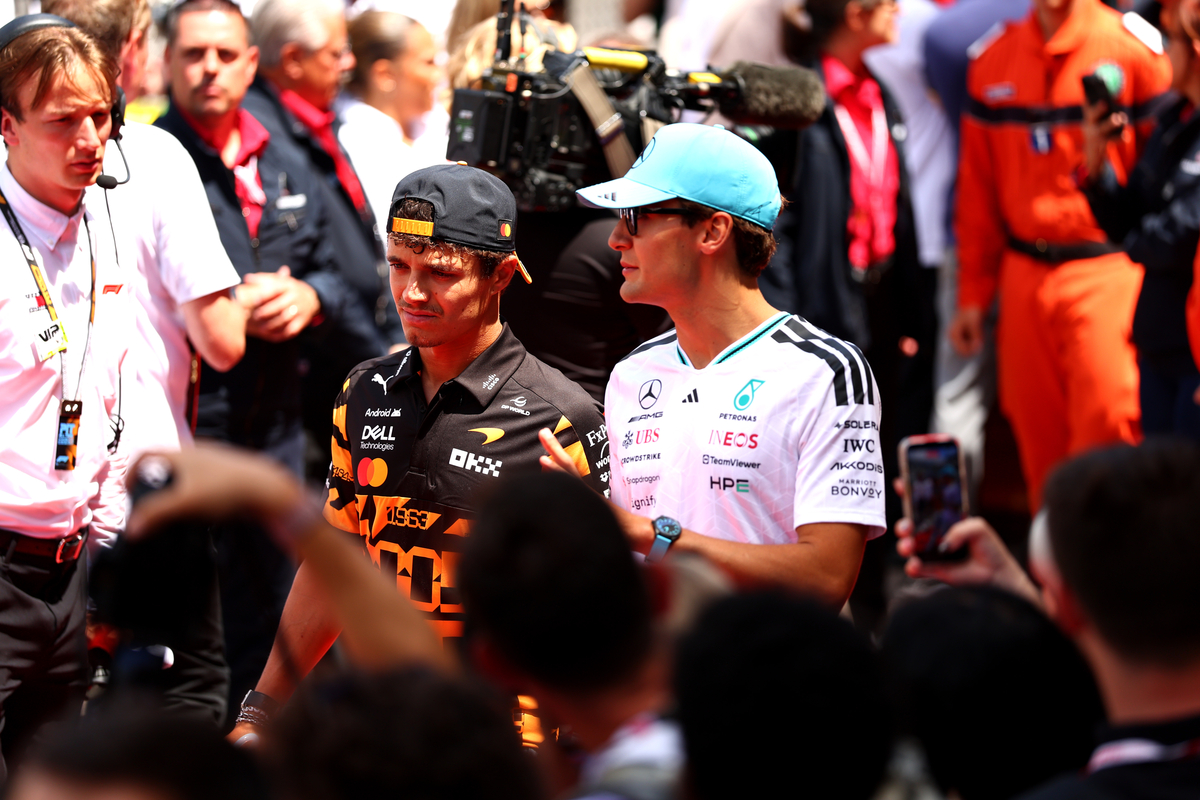
George Russell and Lando Norris have shared their thoughts on how the 2026 F1 regulations interact with different driving styles and whether the new generation of cars has altered the balance of power between teammates on the grid.
The new engines, featuring a near 50-50 split between the internal combustion engine and electrical energy, have a noticeable impact on how drivers handle their cars over a single lap and race distance.
The level of energy management now required over a flying lap is inherently antithetical to the traditional flat-out approach. With the machine seemingly superseding driver skill, the complex deployment algorithms often punish drivers for pushing in the medium- and high-speed corners, leaving them with suboptimal energy to deploy on the following straight.
The new ruleset sees drivers lift and coast and even experience super clipping when a car’s battery runs out of deployable electric energy on a long straight or through a high-speed corner. Furthermore, it discourages them from taking risks during qualifying since slower yet consistent driving leads to faster lap times.
The cars are so sensitive to the regulatory quirks that even adjusting the throttle in one section of the track can make the hybrid system go haywire, drain the battery at an inconvenient moment, and compromise a lap.
Limited in-season testing making adaptation difficult
Speaking in a print media session ahead of the 2026 Spanish GP weekend, George Russell opened up about how difficult it is to get to grips with the new technical regulations, with F1 severely limiting in-season testing of current-specification cars.
Although he pointed out how experimenting during the practice sessions and the races has its own complications, the Brit conceded that these challenges are part and parcel of the sport.
“Yeah, I mean it’s like, in a game of football, you are struggling with something, they tell you can’t go to the training pitch until the day before the match.
“And you’ve got, you know, two one-hour sessions to try and totally change something and improve upon it.
“So, it has been difficult using the practice sessions as an opportunity to trial things, and even in the races themselves having to try things in the races and working on those techniques. So, that is just the challenge of Formula 1.”
Russell believes the 2026 F1 regulations suit a certain driving style more
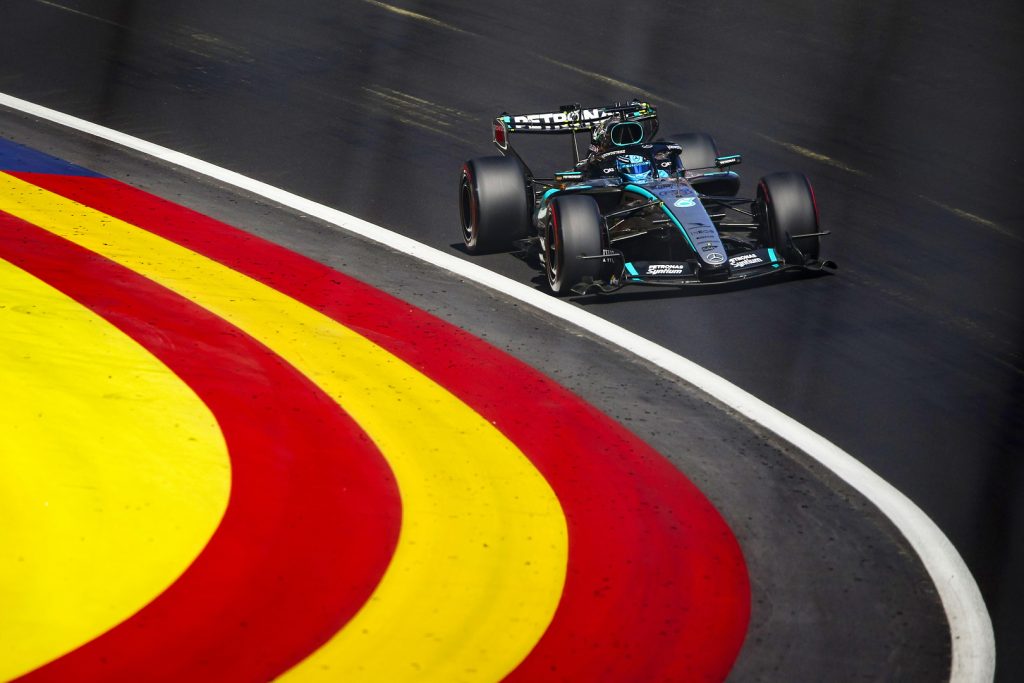
Furthermore, George Russell claimed that certain driving styles align more naturally with the handling profile of the current F1 machinery, creating unusual performance trends across the grid.
Referring to how the new ruleset has led to performance swings between teammates at Mercedes, McLaren, Ferrari, and Red Bull in comparison to the ground effect era, the 28-year-old surmised that his struggles this season stem from an incompatibility between his natural driving style and the demands of the 2026 F1 cars and tyres.
“It has been a strange season when you look at the competitiveness of Piastri against Lando [Norris] last year, Charles [Leclerc] versus Lewis [Hamilton], and even the dominance of Max [Verstappen] against all of his teammates of the previous era.
“This year myself, Charles and Oscar [Piastri] are struggling much more compared to our teammates, and Max’s teammates have been substantially closer to him than anybody has in the past six years. I think we’ve all got pretty similar driving styles.
“The drivers who are performing very well this year, you know, Kimi [Antonelli], Lewis, and Lando have also got quite similar driving styles.
“So, to me it’s pretty clear with this car, with these tyres, what I need to achieve, and the trends are there with those four drivers I just mentioned.”
Norris disagrees with Russell’s driving style theory
Meanwhile, Lando Norris firmly disagreed with Russell’s claim that the 2026 F1 regulations and cars reward a specific driving style, arguing instead that a driver’s adaptability is the ultimate key to performance.
Surmising that his driving style is not really similar to that of Antonelli and Hamilton, the reigning World Champion argued that his adaptability is the source of his competitiveness in 2026.
“I’m not sure. Honestly, I wouldn’t really say my driving style suits this car. I think my driving style is good because I’m able to adapt better.
“I don’t think it’s one style that works; I don’t think I drive the same way as Kimi. I’ve obviously never had him as a teammate or Lewis. I have no idea. He can probably paint a better picture. He has also not been my teammate. So, I don’t think he can speak from knowledge of that.”
Norris argues adaptability is key to competitiveness in 2026
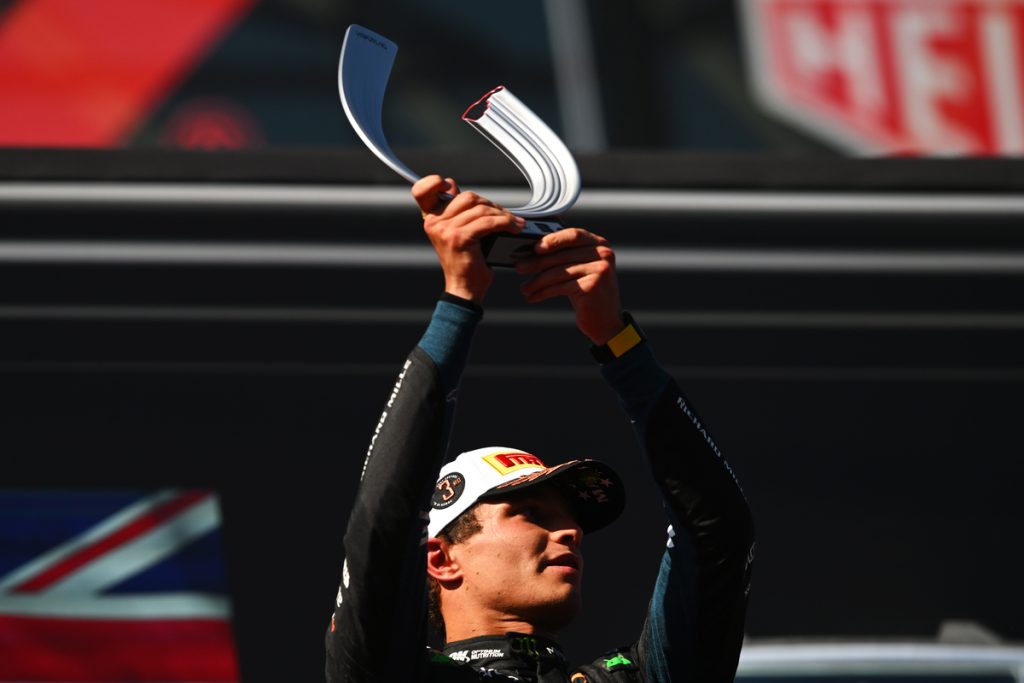
Drawing attention to how Piastri was more competitive in the first half of the 2025 F1 season, Lando Norris stated that gaining a better understanding of the MCL39 and adapting to it fuelled his resurgence in the latter half, which saw him lift his maiden Drivers’ title.
Highlighting how the 2026 cars differ radically from the cars of the previous campaign, Norris rejected Russell’s assessment that his driving style suits the new F1 regulations. He reiterated that adaptability is one of his biggest strengths and that tweaking his driving style around the MCL40 has allowed him to extract more from the car than his teammate.
“My driving style doesn’t suit this car. My adaptability is what allows me to drive the car I’ve got. So, I think my strength is my adaptability to different driving styles, just as it wasn’t necessarily the best thing that I had for me last year.
“I think last year, the beginning suited Oscar a little bit more. And my strength was being able to adapt better to then finally understand how to drive it in a better way. Hence, then I worked, started to have a better second half of the season.
“And the same thing with this year. You don’t drive this car anywhere close to last year. Not even 1%, I feel, is remotely the same.
“So, I think it’s incorrect from saying my driving style just suits it. My ability to adapt better, I think, is what’s my strength.”