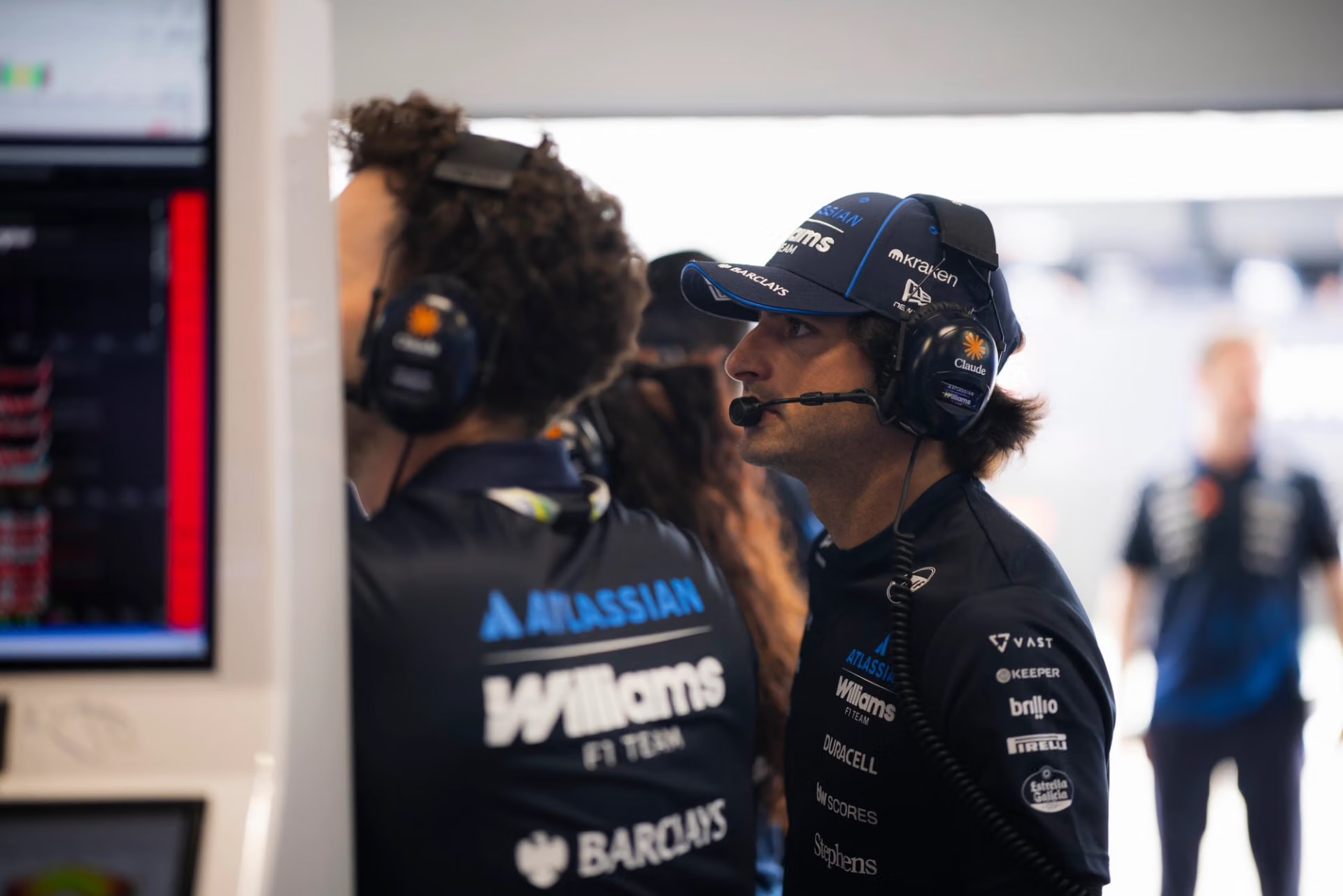
Before the beginning of the 2026 F1 season, Carlos Sainz and Williams had anticipated the introduction of a new generation of challengers, building on a strong 2025 after two superb podium finishes in the second half of the season at Baku and Qatar.
The engine partnership with Mercedes had seen the Grove-based team regularly feature inside the top ten, with Sainz and teammate Albon amassing 137 points to secure a strong fifth place in the teams’ standings. It was their strongest car since the middle of the last decade.
Williams F1 is experiencing a rather harrowing 2026 season
In spite of the impressive dominance displayed by Mercedes throughout the 2026 F1 season, with the driver and team championship titles already in possession of the Brackley-based squad, Sainz and Williams didn’t manage to achieve similar performances. In fact, he only managed to end a race in the points four times, significantly struggling even to find his way out of Q1 during Qualifying throughout the year.
2026 has been one of the 32-year-old’s strongest seasons in F1. Unfortunately for him, a car that was delayed, overweight and ultimately miles off the pace across the whole campaign has meant he could not show his speed fully.
The Spanish driver went into detail explaining the issues with the FW48, still present since the debut of this new generation of challengers.
“There are three key areas where we have failed this year, I would say. One is getting the car on time to the track. Two would be getting the car on weight. Number three would be getting the aero concept right. I think the first two, I trust that we are going to solve it next year. We are going to get the car on weight and on time.”
Sainz admits his greatest worry for Williams F1 in 2026 and beyond
While certain aspects might be solved quite quickly with time, effort and more in-depth knowledge of the newly introduced challenger, the aerodynamic situation is definitely tougher to address. Completely revising the aerodynamic concept of a car is a huge challenge both in terms of workload and trying to close the massive gap to Mercedes, Ferrari, Red Bull and McLaren in this area.
“The number three is the one that worries me, or let’s say that we are having to put more effort on. I think that number three is the most important one, because it is the one that generates performance. The team would have been ok to be overweight, late, but performing.”
As a consequence, all other issues pale in comparison to the lack of pace. Sainz admits it is a challenging moment for both him and Williams F1, but he is also aware of the hard work going towards improving, which in his opinion should be the greatest concern for his team.
It has been a very, very difficult run over the last two decades for the British squad. The last time the team arguably had a benchmark chassis/car at some stage in a season was all the way back in 2003 when Juan Pablo Montoya was a serious title contender.
“We would have had to improve the other two things, but I think we would have all been still calm about the situation. That’s why having performance in the car becomes number one priority and the number one focus for the team, getting the aero concept right and developing the aerodynamics and the chassis in a good way.
“That’s where we are putting all of our effort now, hoping and knowing that the manufacturing and the weight situation have already been addressed in the first half of the year.”