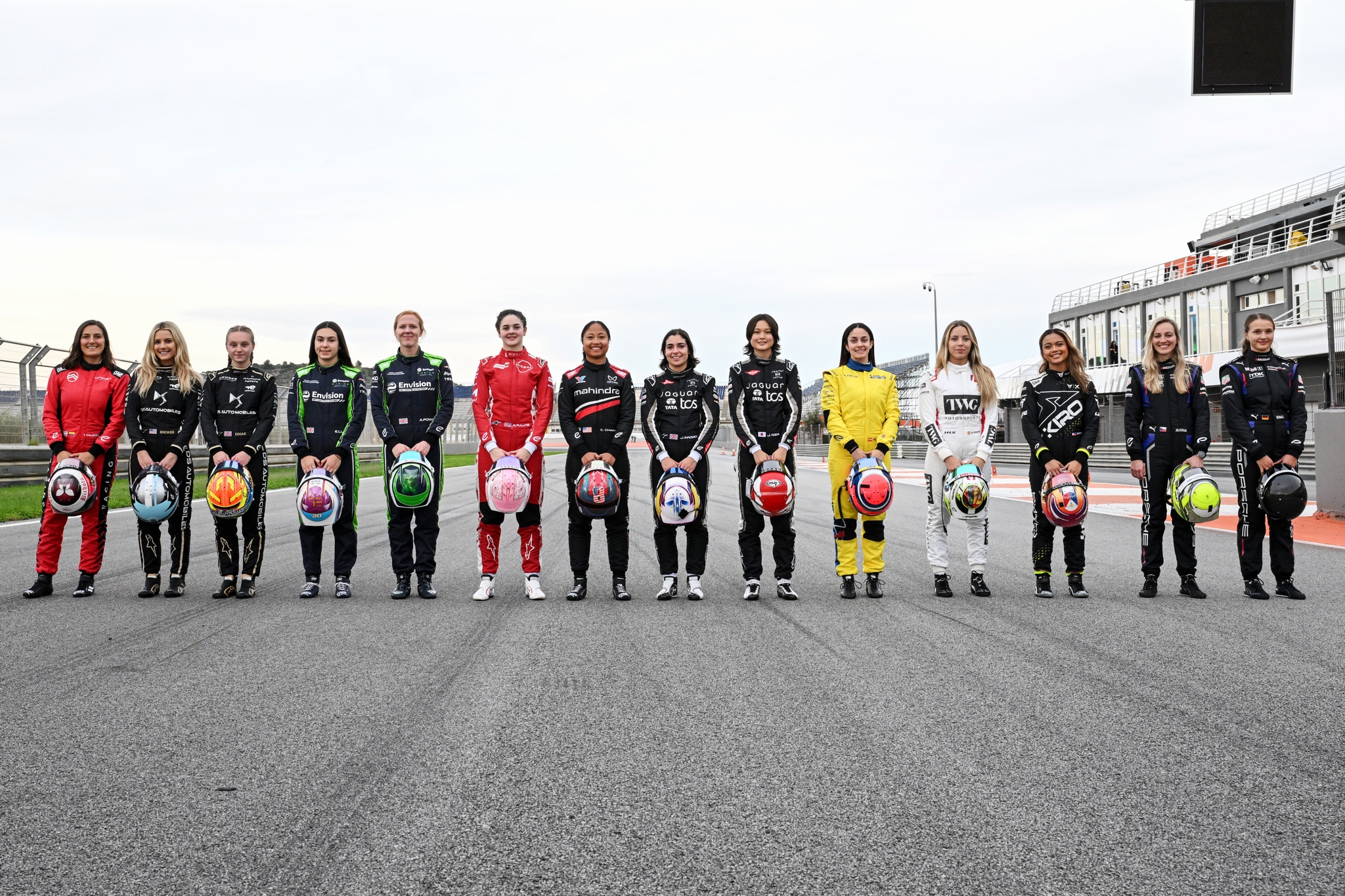
More than a decade has passed since a female driver last competed in a Formula E race, yet the championship may now be closer than ever to changing that.
In recent years, the FIA Formula E World Championship has done more than any other championship to equalize the opportunities between men and women. By launching initiatives such as the Formula E Women’s Test, the championship has already helped female drivers join Formula E teams in official roles. As the series continues to develop, the question is no longer whether women can drive a Formula E car. The real question is whether a team will finally give one a race seat.
Formula E women who paved the way for today’s female drivers
Since its start in 2014, Formula E has always raced towards a brighter future. While much of its focus has been on sustainability, equity has also been a key topic. Formula E has seen three women officially compete in a race, with only one going on to score points. While none of these opportunities developed into a long-term Formula E career, Katherine Legge, Michela Cerruti, and Simona de Silvestro demonstrated that women can compete at the highest level of the championship.
Legge became one of the championship’s first female drivers when she competed in Formula E’s inaugural race at the 2014 Beijing E-Prix for Amlin Aguri. Racing alongside teammates Takuma Sato and António Félix da Costa, she claimed P15 and P16 results before leaving the championship after Round 2 to resume her sports car career in the IMSA SportsCar Championship.
Italian driver Cerruti also participated in the inaugural race with Trulli GP. She competed in the opening four rounds before leaving the championship, recording a best finish of P12.
Finally, de Silvestro became the last woman to race in Formula E when she joined Andretti Autosport for the final two races of Season 1 alongside Jean-Éric Vergne. After finishing P11 and P12, she secured a full-time seat for Season 2, where she scored points with P9 finishes at Long Beach and Berlin.
More than a decade later, de Silvestro remains the first and only woman to score points in Formula E. However, Legge and de Silvestro have since returned to Formula E in testing and driver development roles.
Formula E isn’t just talking about diversity, it’s taking action
While the Formula E grid has not featured a female driver since Season 2, the all-electric series has continued to invest in the future of women in motorsport through unique opportunities. Off-track, the FIA Girls on Track initiative has invited girls aged 12-18 to experience the world of motorsport for free. Participants take part in hands-on activities and workshops, while gaining exclusive behind-the-scenes access at E-Prixs and other events.
Meanwhile, on-track, Formula E has continued its efforts through the introduction of the Women’s Test. Launched in 2024 and continued in 2025, the event sees every team field at least one professional female driver for a full day of running in the GEN3 Evo car.
These initiatives, especially the Women’s Test, have created a genuine development opportunity that allows teams to evaluate female drivers under the same conditions as the series’ full-time drivers. More importantly, it has already delivered impressive results, with several participants securing official roles within Formula E teams.
The opportunities are already working
The true success of the Formula E Women’s Test has always been revealed after the chequered flag. Following both tests, 6 of the 21 participants have secured rookie or official development roles, with four moving into permanent team positions, demonstrating the clear progress towards a female full-time driver.
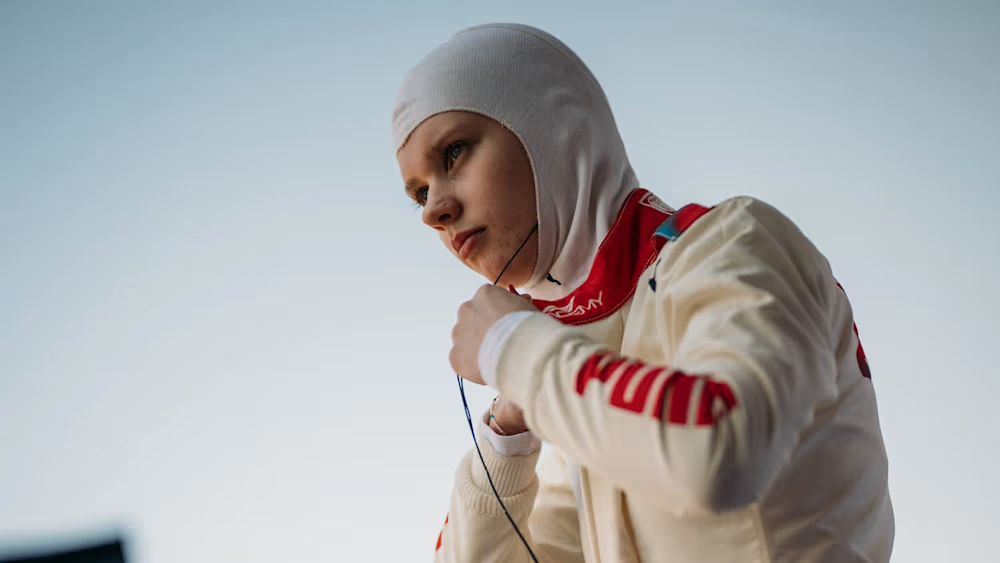
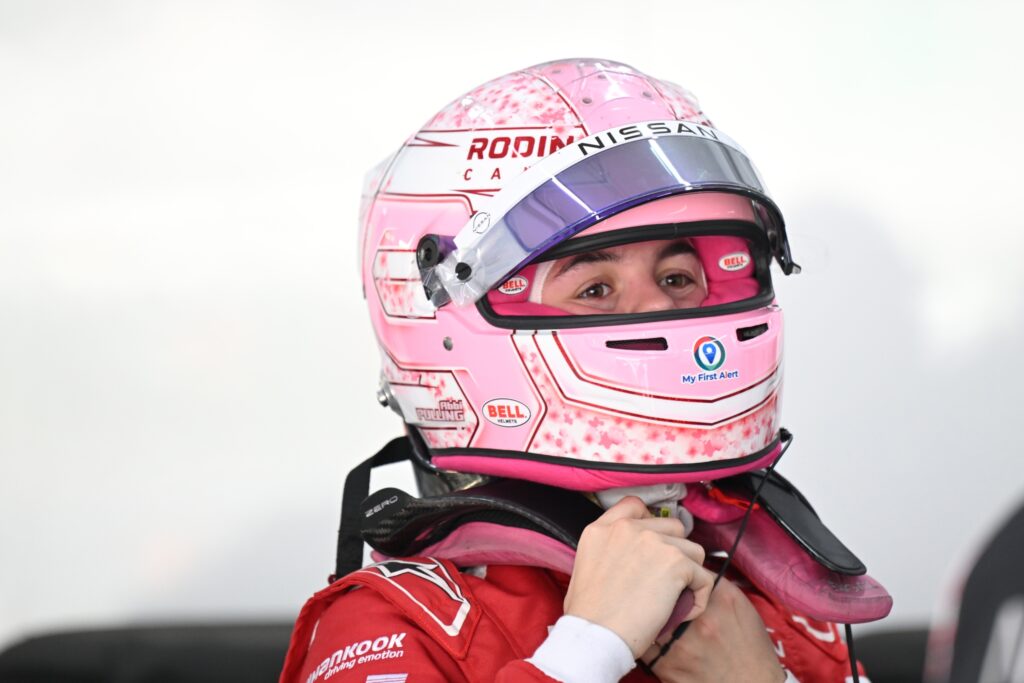
2024 F1 Academy champion Abbi Pulling is a clear example of how Formula E’s initiatives have turned into genuine results. Pulling’s Formula E journey began during the inaugural Women’s Test, where she topped the timesheets despite driving the Nissan GEN3 Evo car for the first time. Having impressed the Nissan team, she continued with a second session during the 2025 Berlin Rookie Test before signing a multi-year deal ahead of the 2025 Women’s Test, becoming Nissan’s official rookie and simulator driver. Her role now extends beyond test days, contributing to simulator work, rookie sessions, and race preparation.
Beyond Pulling, Bianca Bustamante earned a development role with CUPRA KIRO after participating in the 2024 Women’s Test, while Jamie Chadwick served as a test and rookie driver for Jaguar TSC Racing. Alice Powell, Nerea Martí, Sophia Flörsch, and reigning F1 Academy champion Doriane Pin have also earned official positions across the Formula E paddock.
While a development role is not the same as a race seat, it is essentially a step towards one. Before securing a permanent seat, 6 of the current 22 Formula E drivers followed Formula E’s development path, serving as rookie, test, reserve, and development drivers. Therefore, with the introduction of the Women’s Test, professional female drivers now have access to a genuine pathway into the all-electric series.
The numbers suggest a woman is getting closer
For years, one of the most common arguments against a woman becoming a top-level motorsport driver was that the pace simply was not there. While opportunities have undoubtedly played a role, recent performances suggest that this argument is becoming increasingly difficult to justify.
The 2025 Formula E Women’s Test in Valencia saw Chloe Chambers set the fastest time of the day with a 1:22.767. While it was Chambers’ first time driving a Formula E car, the American driver finished just four-tenths off the best time set by Envision Racing’s Joel Eriksson across the entire four-day pre-season test. Chambers’ time was also quicker than what CUPRA KIRO’s rookie Pepe Martí managed after his second session of pre-season testing. Meanwhile, Pulling finished just 0.064s behind Chambers, providing further evidence that challenges the long-held belief that female drivers are not competitive enough.
Notably, speaking after the second Women’s Test in an interview with Motorsport.com, Formula E’s Jeff Dodds highlighted how the decreasing performance gap may soon unlock greater opportunities.
“So, a year on from the last test, we halved the timing gap between the championship male drivers and the female test drivers. My instinct is, if you ask me to bet, I would say within the next two years you’ll see a woman driving in the world championship. That’s my bet.”
“What we have to do is continually provide them opportunities to get in the car and test the car, to give them opportunities to showcase their potential to the teams who hire them – we don’t hire them – and the teams only hire people they think can win them championships. So they have to showcase themselves to be potential, and we have to remove some of the barriers,” Dodds explained.
What’s stopping it from happening?
Despite the progress Formula E has made, one significant obstacle remains: securing a race seat. Formula E is one of the most competitive championships in the motorsport world, with just 22 race seats available across 11 teams.
With such limited seats available, teams rarely make decisions based on potential. Instead, they prioritize drivers with reliable previous experience who they believe can consistently score points and challenge for championships. On the current grid, 17 of the 22 drivers have competed for more than two seasons in Formula E, with Lucas di Grassi, Sébastien Buemi, and Jean-Éric Vergne remaining on the grid since the first season. As Dodds shared earlier, Formula E can provide opportunities for women to showcase their abilities, but it cannot influence the seat decisions made by individual teams.
On the other hand, Formula E is also competing with other categories for junior talent. Several leading women continue to pursue opportunities in other championships. Abbi Pulling, for example, is currently racing in the GB3 Championship, while Doriane Pin is competing full-time in the European Le Mans Series.
Speaking ahead of the 2025 Formula E Women’s Test in a media session attended by Pit Debrief and other media outlets, Nerea Martí argued that the breakthrough will come when a female driver fully commits to competing as a full-time Formula E driver.
“So I would love to be competing in Formula E, but it’s just a matter of time,” she shared. “I think they are waiting for a girl who can be 100% prepared to do it all, all season. So, let’s see, maybe we can do it in the future. You never know. I will prepare for sure.”
Why GEN4 could change things
Formula E’s upcoming GEN4 era will present a significant reset for both teams and drivers. Unlike previous generations of Formula E machinery, the introduction of the GEN4 car in 2026/27 will force every competitor to adapt from scratch. This reset could prove particularly significant for female drivers as teams may no longer choose between drivers with years of experience, potentially placing greater emphasis on adaptability and long-term potential.
The GEN4 car will also introduce changes designed to make the car more physically accessible. Power steering will be a key new addition, marking the first time the championship has incorporated greater inclusivity into the design of its race car. By reducing the physical demands placed on drivers and improving cockpit adaptability, GEN4 aims to ensure performance is determined more by skill, preparation, and racecraft.
Formula E is also exploring new ways to support drivers who had fewer opportunities behind the wheel. Through partnerships such as its collaboration with Google Cloud and the use of AI technology, the championship is looking at ways to accelerate learning and development for female drivers entering the series.
With this in mind, Jeff Dodds shared: “We’re fully committed to testing the hypothesis that men and women can compete equally in our sport.”
While GEN4 will not guarantee a Formula E full-time female driver, it may provide the best opportunity yet for a team to finally take that step.
The final step
Welcoming a female full-time driver into the Formula E championship is no longer a question of whether it is possible, but when someone will finally be given the opportunity.
Formula E has created a pathway that did not exist before, allowing female drivers to gain experience, prove their pace and become part of Formula E teams. Therefore, the final step cannot come from another initiative or another test day. It has to come from a team willing to look beyond tradition and trust the results these drivers have delivered.