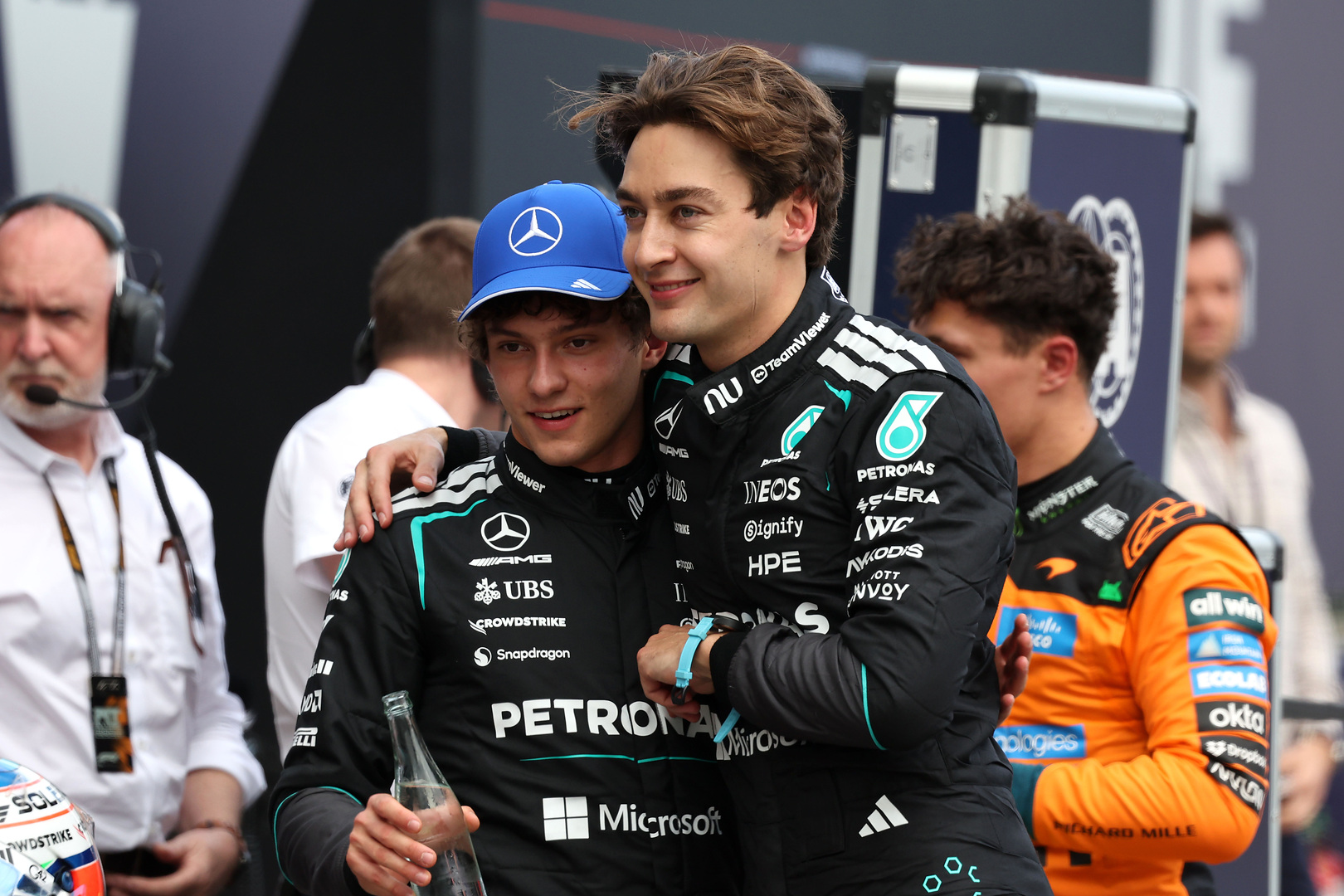
Toto Wolff shared insight into Mercedes F1 Team driver development philosophy. He focused on how the team manages both George Russell and Kimi Antonelli. The Mercedes Team Principal highlighted accountability, consistency, and expectation management as key pillars. Mercedes continue to balance experience with emerging talent. Wolff’s comments offered a clear view of how the team supports its drivers on and off track.
Wolff on driver mindset and accountability
Wolff stressed the importance of self-reflection in driver performance. He explained that Mercedes actively encourage drivers to analyse their own mistakes before looking at external factors.
“Something which we are always trying to instil in the mindset of our drivers, and I remember we worked with George back in the day when he was a Williams junior, is first you need to introspect. What is it that I can do better? And only then you can look outward.”
Wolff added that junior categories also teach this mindset early in a driver’s career. As a result, both current Mercedes drivers apply this approach consistently.
“And that’s what both drivers are doing. And because they have been taught so by the junior categories also.”
Wolff praises Russell’s consistency at Mercedes F1 Team
Wolff then turned to George Russell’s performances. He praised the British driver’s consistency and high level. At the same time, he noted that race circumstances have often worked against him, like the Safety Car at the Japanese GP.
“And, you know, you may say that I haven’t seen many mistakes that George has done until now, but I have seen races going against him that he could have won. With safety cars or being stuck in traffic.”
He also highlighted Russell’s accountability when things do not go to plan. According to Wolff, this attitude makes him a key asset for the team.
“And when it was about his own performance deficit that eventually led to this kind of unlucky situation, then he’s the first one to tackle it. But he’s driving on such a high level. He’s instrumental to the team’s success. He’s a great character.” He continued: “He’s a Mercedes driver. And we can see that.”
Russell joined the Mercedes F1 Team in 2022 after three seasons at Williams. Since then, he has established himself as a consistent performer within the team.
Managing Antonelli’s development at Mercedes F1 Team
Wolff also discussed Kimi Antonelli’s development. He outlined a structured plan that focuses on long-term progress rather than immediate results.
“And when it comes to Kimi, we’ve always been very clear in our objectives. Our first learning year with great performances, highlights, and then other moments where it’s going to be very difficult. And we’ve exactly seen that.”
Antonelli has now entered his second year in the programme with Mercedes F1 Team. Wolff confirmed that his development matches the team’s expectations.
“And now we’re in the second year. And he continues to develop in a way that we have hoped to see and forecasted.”
The Italian driver remains one of the most promising young talents in motorsport. Mercedes continue to guide his progression carefully.
Wolff on pressure and expectations
Wolff then addressed the growing external pressure on Antonelli. He pointed in particular to the attention from Italian media and fans.
“But at the same time, not by increasing expectations to irrational levers. And of course in Italy, everybody wants to talk about World Championships and comparisons to Senna come up, which is I don’t enjoy to read because he’s a 19 year old that has been most visible in Italy.”
He explained that Mercedes aim to reduce pressure rather than increase it. The team balances support with moments of challenge to aid development.
“And it’s more about decreasing the expectations and pressure rather than increasing them. But he copes very well. He has a great personal environment. And I think in the team, there’s times where we put our arm around him. Other times, we exercise more pressure. But overall, everything is coming together as expected.”
Wolff’s comments underline Mercedes F1 Team long-term approach. The team continues to focus on steady growth, controlled expectations, and strong internal support.