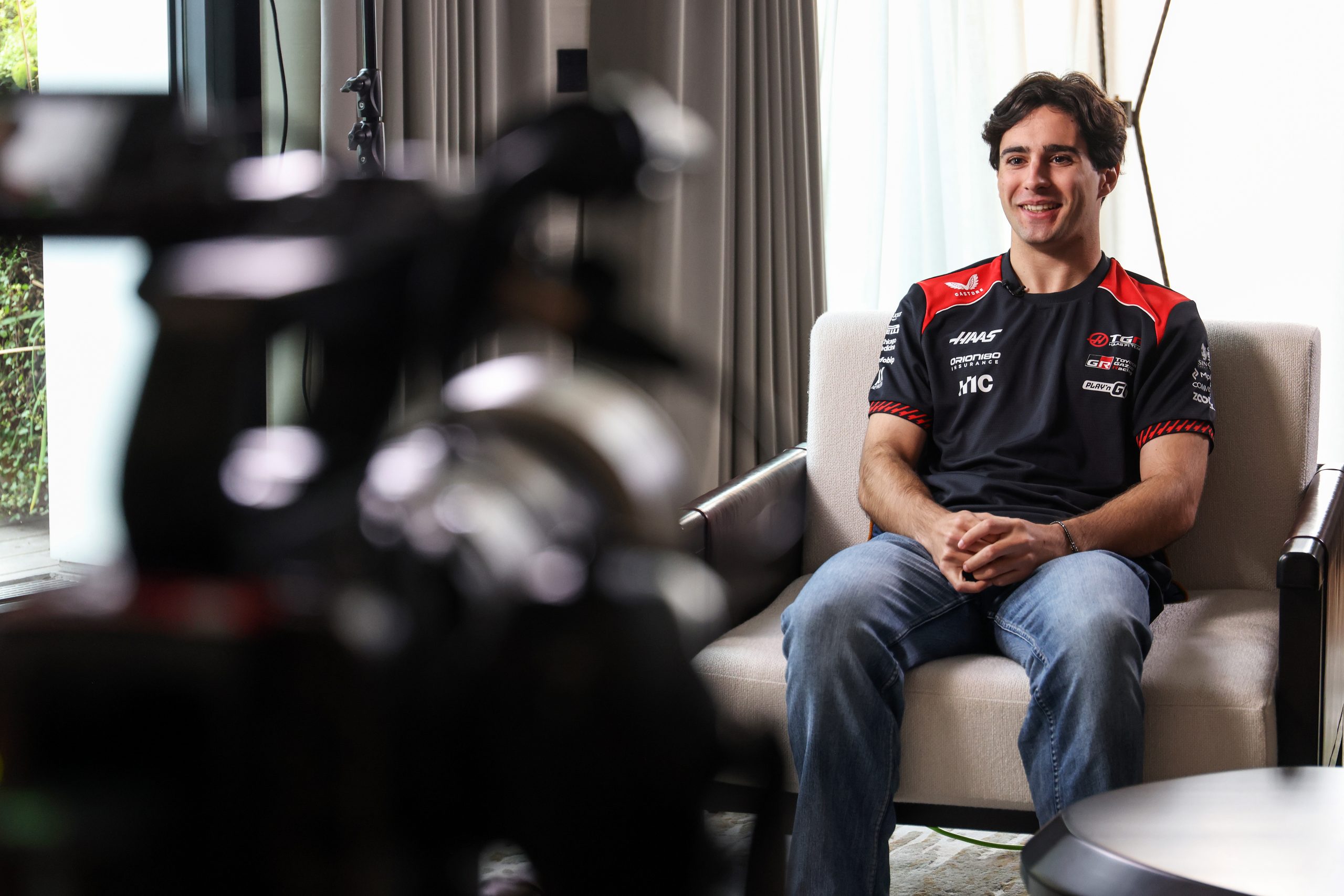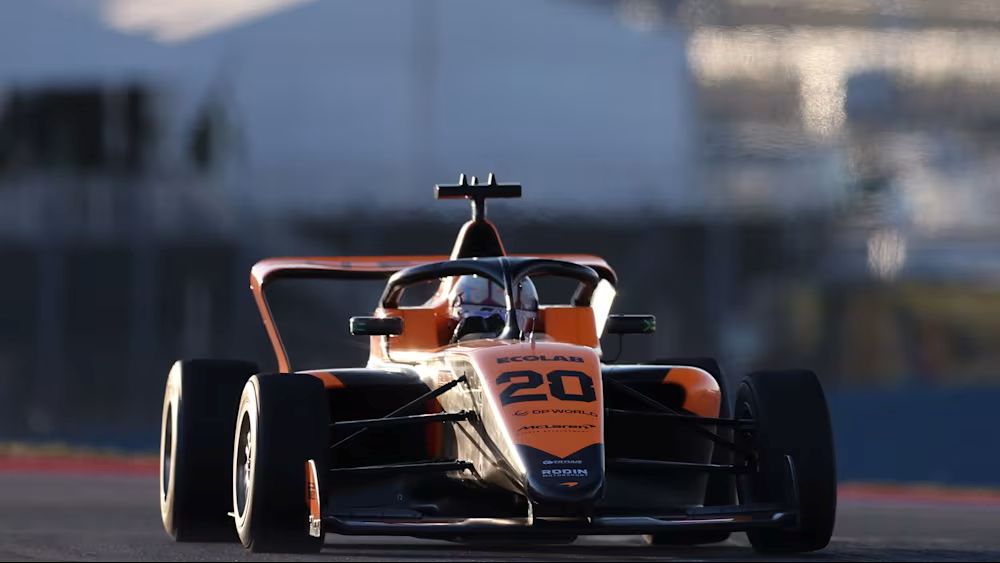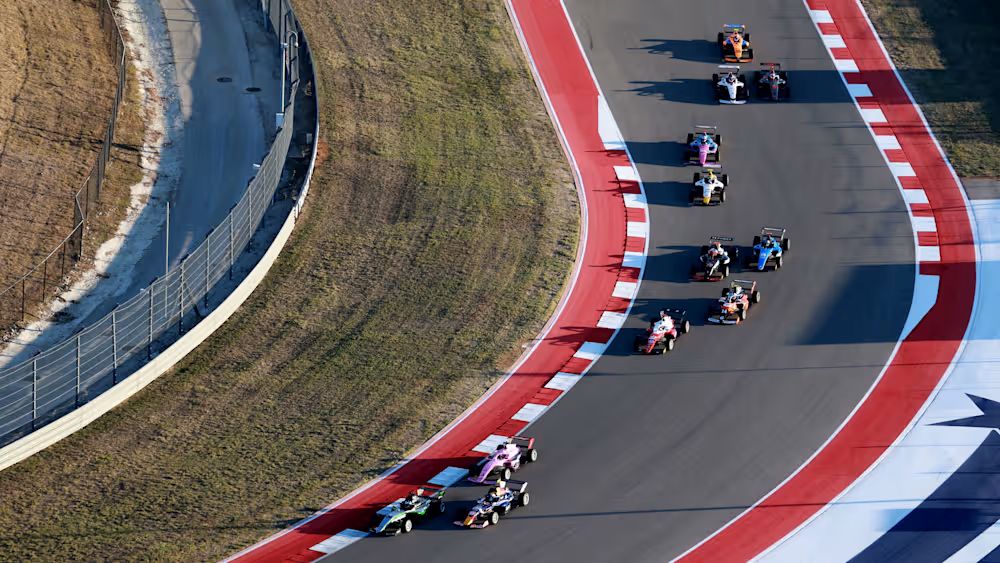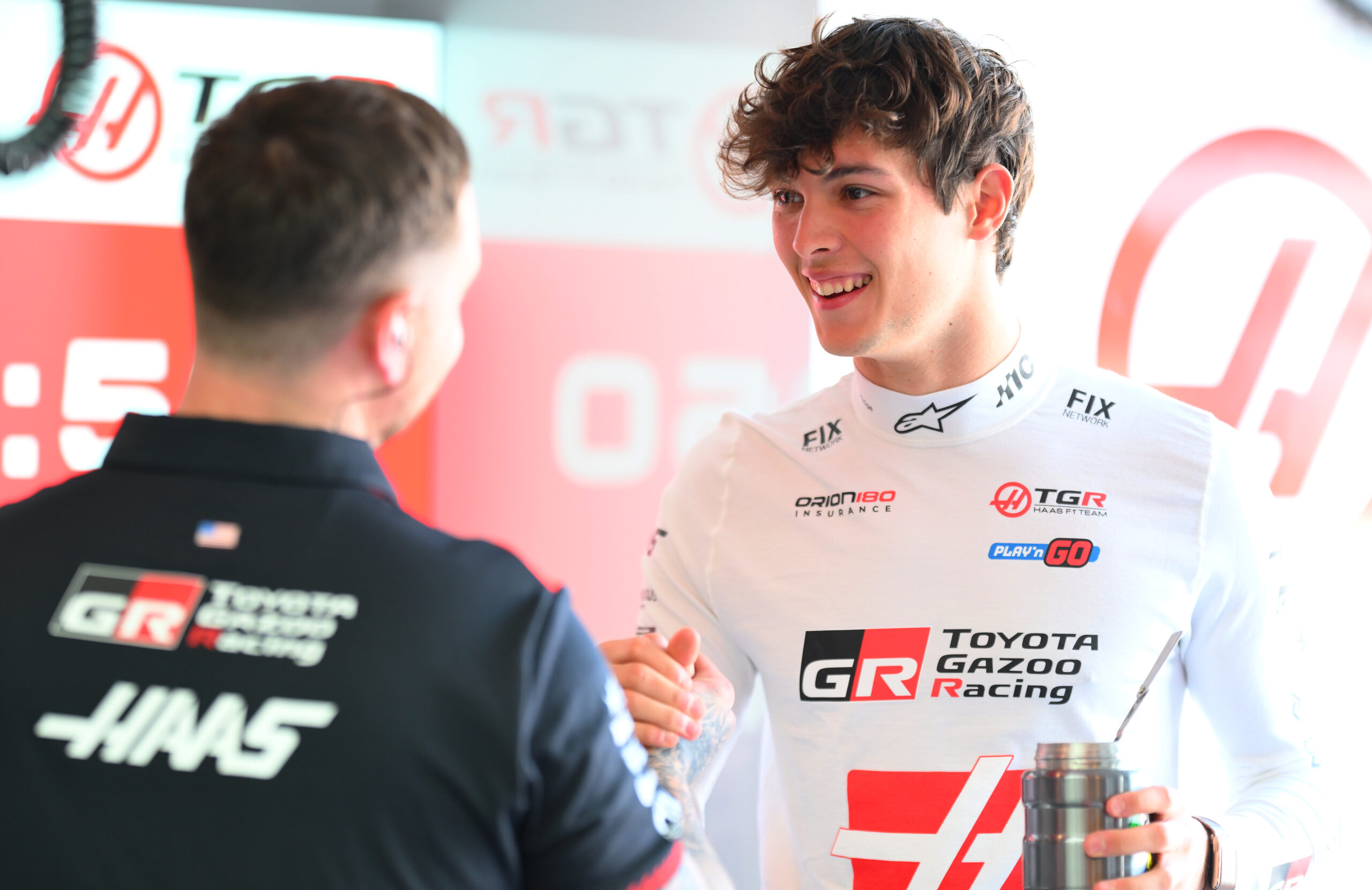
After a solid rookie season at Haas, Ollie Bearman qualified P12 at the 2026 F1 Australian GP this weekend. Pushing past Q1 where the Brit was only 16th, he managed to secure a P12 finish for the first Qualifying of the season.
He had a strong second half of the 2025 season, culminating in a career-best P4 in Mexico. The Britain has much to learn amidst the ever-evolving 2026 regulation changes. They affect not only the cars and their engines, but also the qualifying format ahead of the 2026 Australian GP.
Adjusting to new energy
The Haas driver mentioned struggling to warm-up tyres and getting through traffic in Q1. He struggled to find confidence and had to use Q2 as a reference since Q1 was so messy.
Bearman felt that he could have written off Q1 in the 2026 F1 Australian GP Qualifying.
“Q1 was tough, I didn’t really get a lot together through traffic, through issues with tyre warm-up. Then Q2 and Q1 was really kind of a baseline for me because Q1 was so messy, so I was kind of starting from zero almost. So like Turn 1 was terrible, I just could not find the confidence in Turn 1.”
The Britain hit some traffic during Sector 3 but says he has more to prove in a cleaner session. After the first qualifying of the season, there’s room for improvement as he learns how to manage this 50/50 hybrid engine.
Bearman believed he had more lap time than what he showed during Q1 and Q2 at the 2026 Australian GP. Haas just missed out versus Audi.
“Then unfortunately I got a lot of traffic in Sector 3, so I had a feeling that I had a lot more lap time in the bag relative to what I could do in Q2 and Q1. And actually I was able to do a slightly better lap in Q2 and Q2, but I think through a cleaner session there’s definitely a 10th in that. And with this energy stuff, honestly, I’m sure I go back and see lap time.”
Bearman is still adjusting ahead of the 2026 F1 Australian GP. Following his rookie season, mastering these new regulations is no easy feat. He barely got comfortable with driving in the sport before having such massive regulation changes thrown at him, where energy management is so key.
“It’s just what we have to get used to with these regs.”
A strong power unit is worth more at the 2026 F1 Australian GP
Bearman mentions the Racing Bulls’ power unit being very strong both in Bahrain and at the Qualifying this weekend. He knows that Albert Park favors a strong power unit with lots of long straights, naming this weakness to blame for his position ahead of the 2026 F1 Australian GP.
Bearman stays positive that as the season goes on and they race on other tracks, Haas will be able to move closer to the Racing Bulls.
“Yeah, so the RB looked to have made a step ahead from Bahrain. I’m not sure if that’s power unit. We saw on one day that the RB power unit or the Ford power unit was very, very strong.
“Then after that they never showed that power again. And on a track like this, a strong power unit is obviously worth a bit more. So I hope it’s that and that when we get to normal tracks we can be a bit closer to them.”
Reaching the front of the midfield amongst competitors
Bearman placed closely behind the Audi cars and ahead of both Alpines. He kept an eye on the competition, noticing that Gabriel Bortoleto managed to get to Q3 at the 2026 F1 Australian GP.
“But also Audi hats off to them starting from where they started with a new power unit to be straight in Q3. That’s super impressive. And Alpine as well, they seem to have lost a bit of performance since the test.”
The Haas driver was happy with his qualifying performance as both cars placed close to the front of the midfield. With all new cars and the first race of the season, every team is still developing. He will be pushing hard to hold onto that spot during the F1 Australian GP.
“So it’s now Sunday in Melbourne and it looks like we’re in the mix. We’re definitely at the front of the midfield but we need to push and make sure that we can hold on to that spot. Because everybody’s developing at this early stage.”
Bearman is taking nothing for granted so early in the 2026 F1 season. He knows that staying at the front of the midfield requires big improvements every weekend. He is focused on working hard at getting a handle on the car, slowly but surely.
“I think you can make big, big steps weekend to weekend. So we’re not taking that for granted. It’s not a given.
“We need to keep working.”
Managing tyres, brakes and outlap
Bearman got into rhythm by the end of the 2025 F1 season last year. He managed a career-best P4 finish in Mexico and a six top 10 finishes after the summer break. Now, he’s adjusting to tyres, brakes and outlap changes all at once, he said he struggled to focus on so many things during the 2026 F1 Australian GP Qualifying.
“Yeah, I mean it was a bit chaotic. And even if it went fairly smoothly from inside the cockpit it was far from it. With the amount of management you have to do, you can’t really focus on your tyres and brakes and outlap.”
Though it looked smooth from the outside, he affirmed that inside the cockpit he felt far from it. Running a mile a minute, Bearman was preoccupied with the battery staying charged, as well as trying to manage tyre temperatures. He knows that playing the battery chess-game takes precedence over tyre strategy.
“There’s so many more things that you have to keep an eye on. Which means that often you go into Turn 1 and you’re like, oh wait, my tyres aren’t ready. But at least my battery is ready and that’s worth a lot more.”
Late launch causing problems
It’s no secret that Bearman finds the regulations frustrating. He has accepted that they just have to get used to it even though he still finds the last launch process ‘quite annoying’.
Drivers have to leave it until the line to go full power and start a lap.
“It’s just that we have to get used to this new way of doing things. Also, the last launch is quite annoying. You have to start the lap basically at the line.
“So it means that I was getting traffic from people launching because they go so slowly. It’s not that you try and do the last corner as fast as you possibly can and start the lap in the best way. It’s that you have to go slowly and wait and wait and wait and then go.”
A different approach required for Qualifying at the F1 Australian GP
Ollie Bearman explained that, previously, drivers would push flat out on the last corner and didn’t have to worry about finding cars launching at the line as energy management has never been a concern in qualifying in F1.
The change means drivers start the last corner much slower at the 2026 F1 Australian GP Qualifying. The change in speed versus a push lap is huge and is quite hazardous for all the cars involved.
“So a lot of traffic, just people at different run plans. Normally, if you’re starting a push lap or finishing a push lap, the last corner is flat out. And now, if you’re starting a push lap, the last corner is 100 kph less than a push lap.
“So the delta is huge and that creates some dangerous situations.”