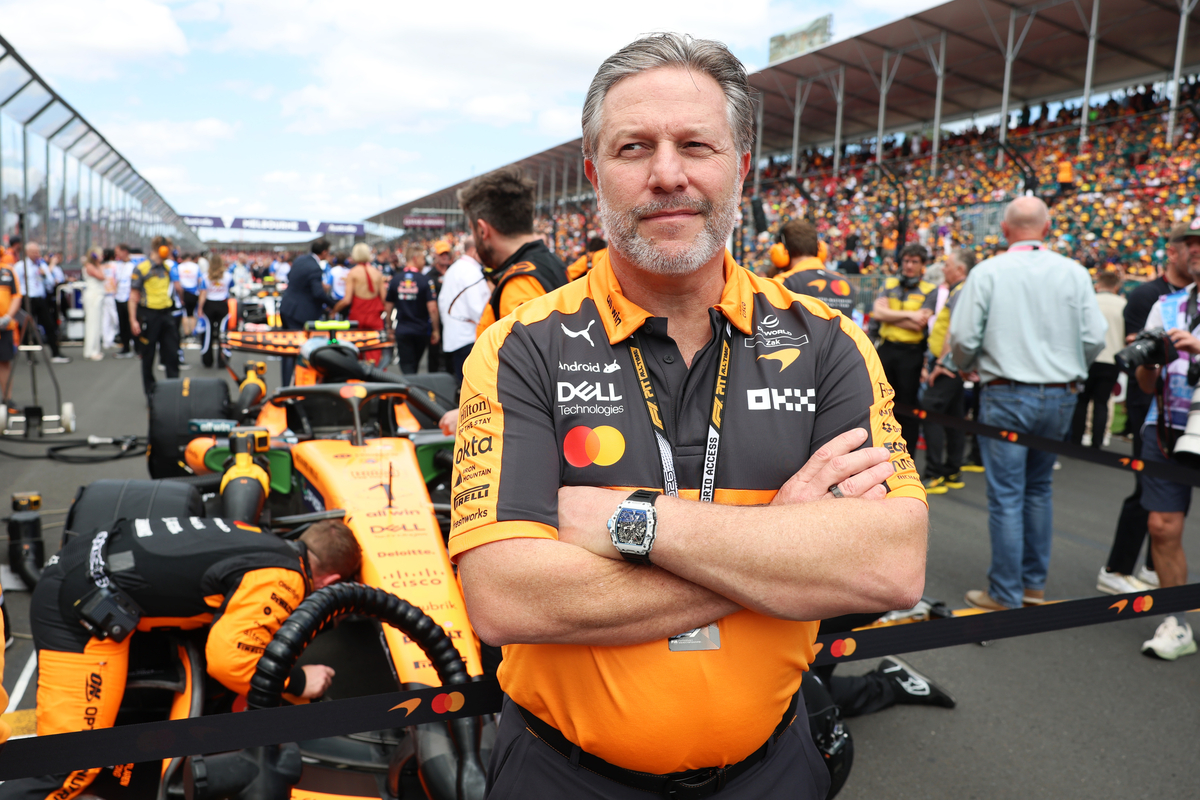
McLaren Racing’s CEO Zak Brown has opened up about the impact of multi-team ownership on sporting fairness in F1, what the acceptable level of partnership between teams should be, the existing alliance between Red Bull Racing and Racing Bulls, whether the FIA has taken any steps to prevent the further growth of A/B squads, and what he thinks of Mercedes potentially buying a stake in Alpine.
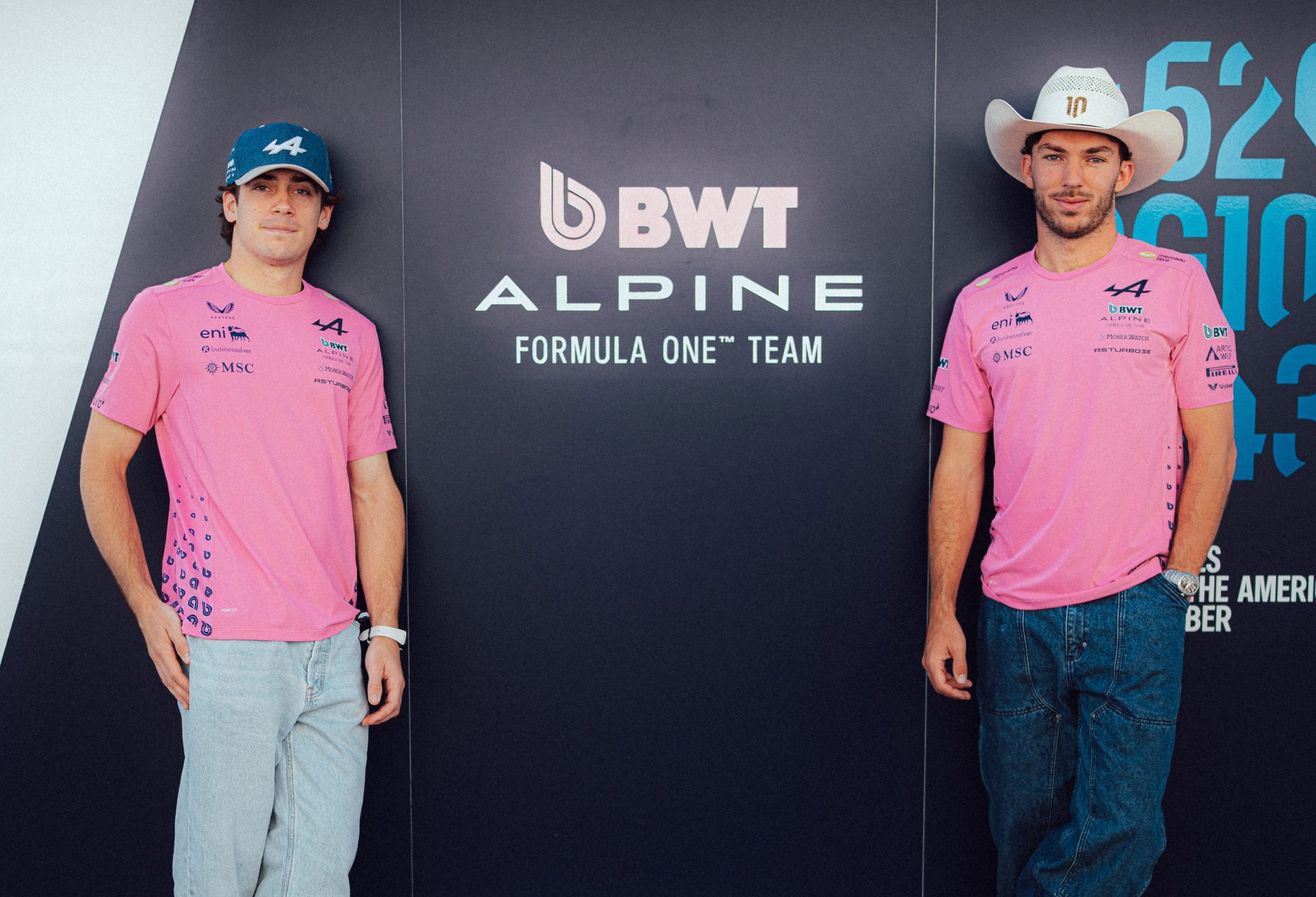
Last month, reports emerged that Mercedes are considering becoming a minority shareholder in Alpine through the purchase of the 24% stake that the American Otro Capital investment group is currently looking to offload.
Although it has been made abundantly clear that the closing of the aforementioned deal wouldn’t result in Alpine transforming into Mercedes’s junior team, many are apprehensive of how the two outfits would work together closer than before while maintaining complete independence operationally.
Brown claims A/B team alliances compromise sporting fairness in F1
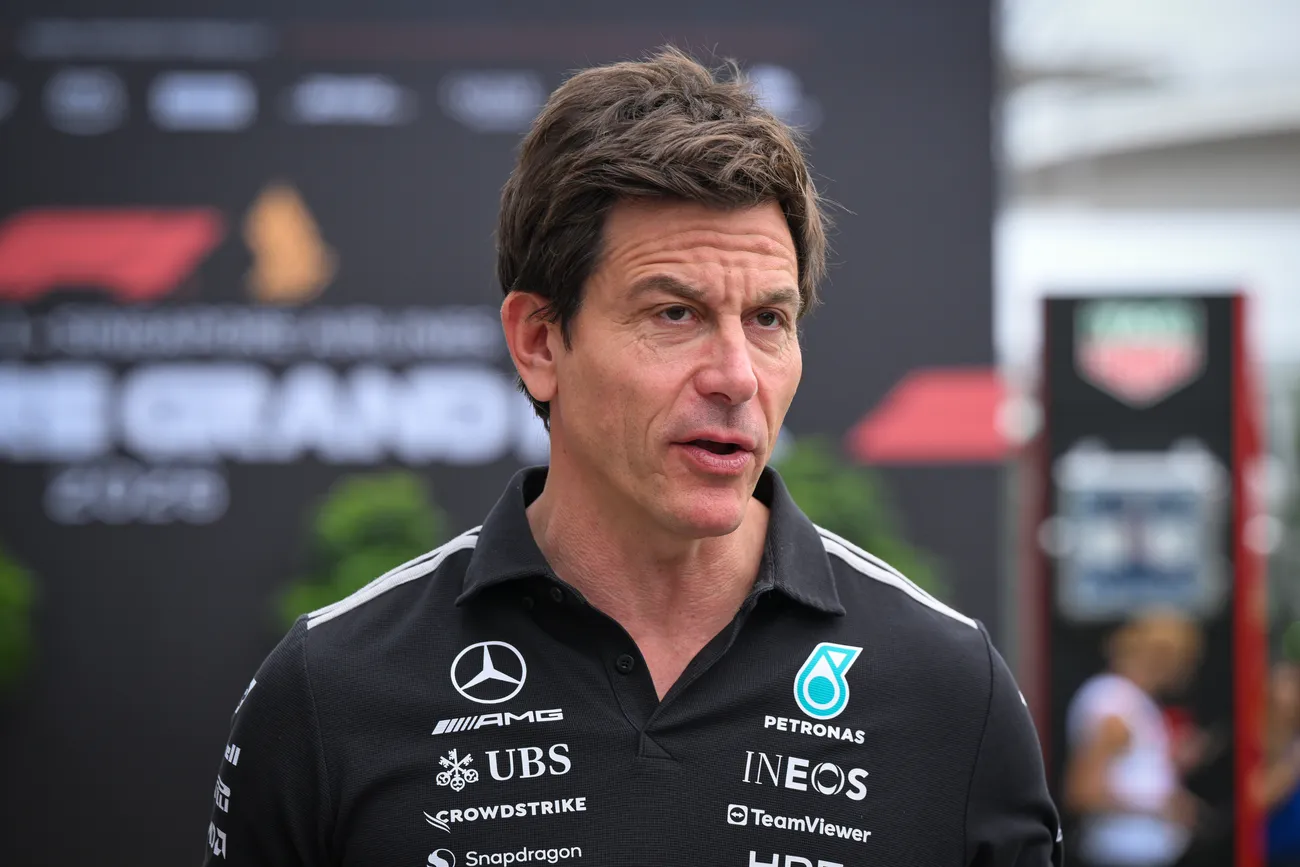
Speaking in a media session held at Woking on April 22, Zak Brown shared his thoughts on co-ownership in the sport amid speculations that Mercedes seek to buy a stake in rival team Alpine.
Brown stood his ground, insisting that F1 needs to steer clear of multi-team ownership as fast as possible. While he acknowledged the circumstances that led to Red Bull GmbH taking possession of two teams on the grid, the American drew attention to the sporting and financial benefits they gain even if they run their operations separately.
Citing how Daniel Ricciardo, who was racing for the satellite squad at the time, took a fastest lap point away from McLaren to help Red Bull Racing in Singapore in 2024, Brown highlighted the negative influence these tactics have on the integrity of F1.
“It [his opinion] hasn’t changed at all. I think I’ve been consistent. This is now my ninth season or my 10th season.
“I think A/B teams, we need to get away from as much as possible, as quickly as possible. I think co-ownership, which we have one group now, and I understand how that came about and why it came about. But in today’s day and age, that’s prohibited in almost, if not all, major forms of sport.
“I think it runs a real high risk of compromising the integrity of sporting fairness. I’ve been vocal about it from day one.
“We’ve seen it play out on track in a sporting way. Daniel Ricciardo taking a fastest lap point away from us to help the other team.”
How McLaren are at a disadvantage
Reigning constructors’ champions McLaren have to wait until 2028 for Max Verstappen’s race engineer, GianPiero Lambiase, to join them, due to existing contractual obligations and a likely gardening leave. Meanwhile, Red Bull and their sister team are able to swap staff without any significant delays.
Referring to Laurent Mekies, who earned a promotion from Racing Bulls and replaced Christian Horner immediately after Red Bull sacked him last year, Zak Brown expressed his frustrations over how McLaren have to sit tight and strike financial deals to appoint new personnel under the current cost cap rules.
The 54-year-old also called attention to the FIA penalising Racing Point [currently Aston Martin] for copying elements of the 2019 Mercedes car and the instances of Ferrari and customer team Haas taking on each other’s personnel. He maintained that these employee exchanges, with the outfits involved not incurring any financial setbacks, are utterly unfair.
“We’ve seen IP violations on the Aston Martin slash Racing Point on brake ducts. We’ve seen employees move overnight, where we either have to wait and sometimes make financial deals, which then impacts us in the cost cap.
“So, when you see other teams that move from one to the other, and then also without financial compensation, that’s an unfair financial advantage. That’s an unfair sporting advantage. We’ve seen Ferrari and Haas move people back and forth.”
What an acceptable level of partnership between F1 teams is
Zak Brown surmised that a few power unit manufacturers doubling as suppliers on the F1 grid is an acceptable compromise. However, he asserted that all customer teams should strictly maintain their autonomy regardless of the technical partnership they share with their engine supplier.
Additionally, Brown expressed caution that the lack of independence and transparency surrounding multi-team ownership in F1 could lead to fans losing interest in the sport.
“We know IP is a lot in your head. So, you put that all together. Can you imagine a Premier League game when you’ve got two teams owned by the same group? One’s going to get relegated if they lose. The other can afford to lose. And that’s what we run the risk of.
“So, I think having engine power units [manufacturers] as suppliers is as far as it should go. And then in my view, all 11 teams should be absolutely as independent as possible, because I think it has a high risk and we have seen it compromise the integrity of the sport. And that will be what turns fans off quicker than anything else.”
Brown reveals whether F1 has taken any action to curb the influence of multi-team ownership
Asked if the sport has taken any steps over the years to prevent such alliances from growing, McLaren Racing’s CEO disclosed how he had flagged certain violations with regard to co-ownership and A/B squads last year.
Moreover, Zak Brown implied that the increased vigilance on the part of the FIA has resulted in Red Bull and Racing Bulls developing cars in 2026 that don’t share a common design philosophy.
“Yeah, it was a big discussion in the last Concorde. I wrote to the FIA and Formula 1 last year on the topic because we see things happen all the time and we flag them.
“I think there’s a higher level of awareness and watching by the FIA. I’m glad to see, quite frankly, that the Racing Bulls and the Red Bull don’t look like the same race car.”
Furthermore, Brown commended Mekies, who is currently Red Bull Racing’s team principal and holds significant control over the affairs of two different F1 squads, for his transparency and openness to discussion whenever the other teams have raised any pertinent objections.
“I think I’ve had these conversations with Laurent [Mekies], and I’m not picking on him in particular, but he’s the only one who’s got two teams.
“And he’s been very open and transparent of, ‘hey, if you see something that you don’t like, let’s just chat about it’. So, I think they recognise it and don’t want to push the envelope.”
Brown on Red Bull’s case and how a new multi-team ownership would hurt F1
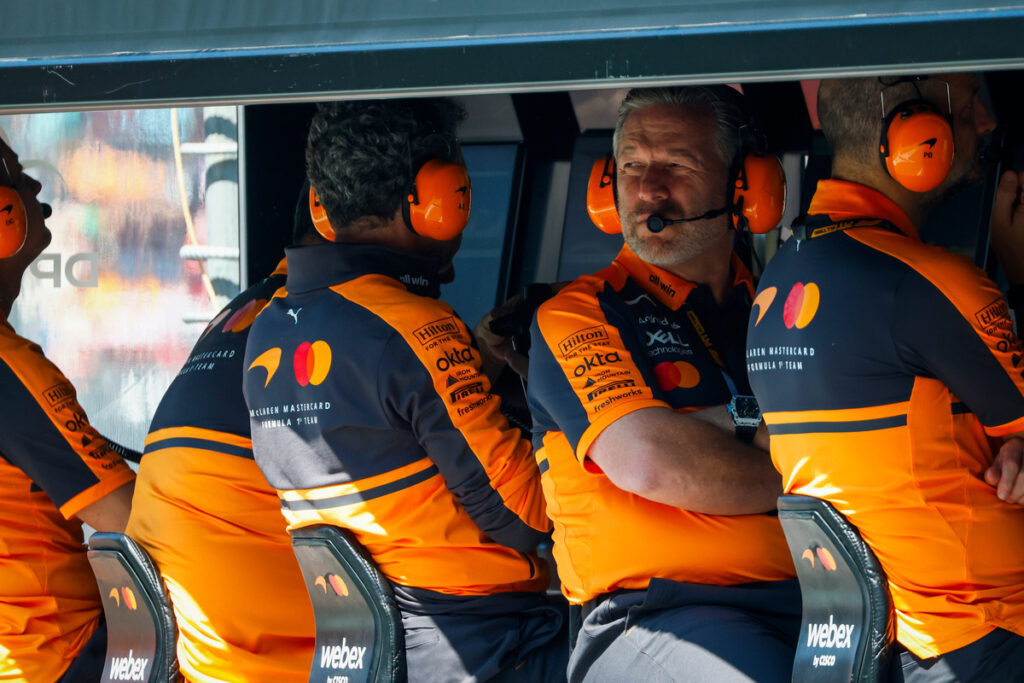
Red Bull bought the failing Minardi team at the end of the 2005 F1 season and turned it into a satellite outfit to develop rookie drivers for the main Red Bull Racing. Several top drivers, including multi-time world champions Sebastian Vettel and Verstappen, started their F1 journey with the erstwhile Toro Rosso squad.
Showing his appreciation for what Red Bull have contributed to the sport over the years, Zak Brown conceded that he can tolerate their long-standing ownership of Racing Bulls as long as they don’t flout the sporting ethics. However, he also revealed that discussions had taken place in the most recent Concorde Agreement about potentially forcing Red Bull to sell off the Faenza-based team.
Although Brown ultimately argued that existing A/B alliances can be allowed to operate in F1 under the rigorous supervision of the FIA, he added that opening the door for another multi-team ownership would harm the sport and is, therefore, out of the question.
“There were discussions in the Concorde agreement about, should, over time, one of the [Red Bull] teams be divested. But I also have a huge appreciation for what they’ve done for the sport and how that was done a long time ago.
“So, I think as long as it’s managed, watched [the Red Bull situation is okay for now]. But certainly adding to it [through a brand-new alliance], I think would be a mistake for the sport.”
Brown’s opinion on Mercedes potentially becoming a minority shareholder in Alpine
In terms of whether his objection also applies to Mercedes potentially buying a stake in Alpine, Zak Brown didn’t let McLaren’s relationship with the Brackley-based outfit hold his tongue and proclaimed that a new multi-team ownership would deal a blow to F1’s integrity and thus should be nipped in the bud.
“Yeah, it applies to anybody and everybody. So, A/B teams, co-ownership, regardless of who it is, I frown upon it.
“I don’t think it’s healthy for the sport. But it’s not personal or towards any one team or individual.”