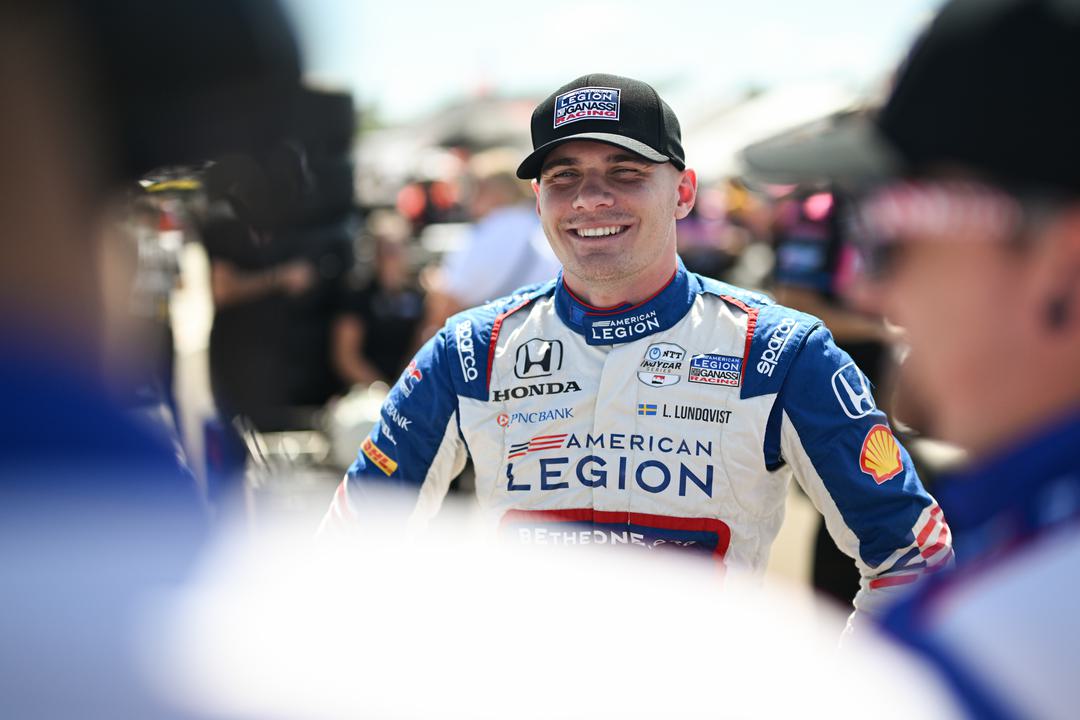
For many drivers, a career in motorsport begins long before they ever sit in a kart. Family connections, early exposure and a clear pathway through the junior ranks often shape the journey from the outset.
For Linus Lundqvist, it looked very different.
Speaking exclusively to Pit Debrief, Lundqvist driver reflects on a career that did not follow the typical blueprint, despite reaching the top levels of American single-seater racing, with IndyCar. There were no established connections, no inherited knowledge of the sport, and no clear roadmap to follow. Instead, everything had to be built from the ground up.
Starting from ground zero
When asked how his lack of a traditional motorsport background shaped his early career, Lundqvist admits it is not something he has ever been able to directly compare.
“It’s a little difficult to tell because I don’t really have anything to compare against, right?,” he said. “But obviously speaking to some other drivers and families, I don’t know if there’s one singular, regular route that drivers take. But obviously not having any family members or friends or any connection in motorsports meant that we really started from ground zero.”
“That every bit of mistake that maybe some other drivers might have picked up from their parents or whatnot, we had to make them. Both me but also as a family, the career decisions. Honestly, a big part of it has been budget related and finding budget and making sure the finances were in place.”
“Because before when we started with go-kart, we didn’t even realise you could make a career out of this. It was at that level. Being a racing driver is something you could actually do.”
“So our knowledge wasn’t great. Yeah, there’s been many potholes that in hindsight would have been nice to have missed. But I also believe that it’s part of the journey. And I think some of the mistakes that we made, obviously, we learned from it.”
“And I think at the end of it, we ended up in a position where I am a professional race car driver. So it’s not the most straight road, but it is our road.”
Unlike many of his contemporaries, Lundqvist did not grow up within the sport or with a clear pathway already mapped out. That lack of a traditional foundation shaped not only his early years, but the way he still approaches his career today.
A family-built foundation
If Lundqvist’s entry into motorsport was unconventional, so too was the structure that supported him through it.
One of the defining moments of his early career came not with a professional team, but within a family-run operation during his early single-seater years.
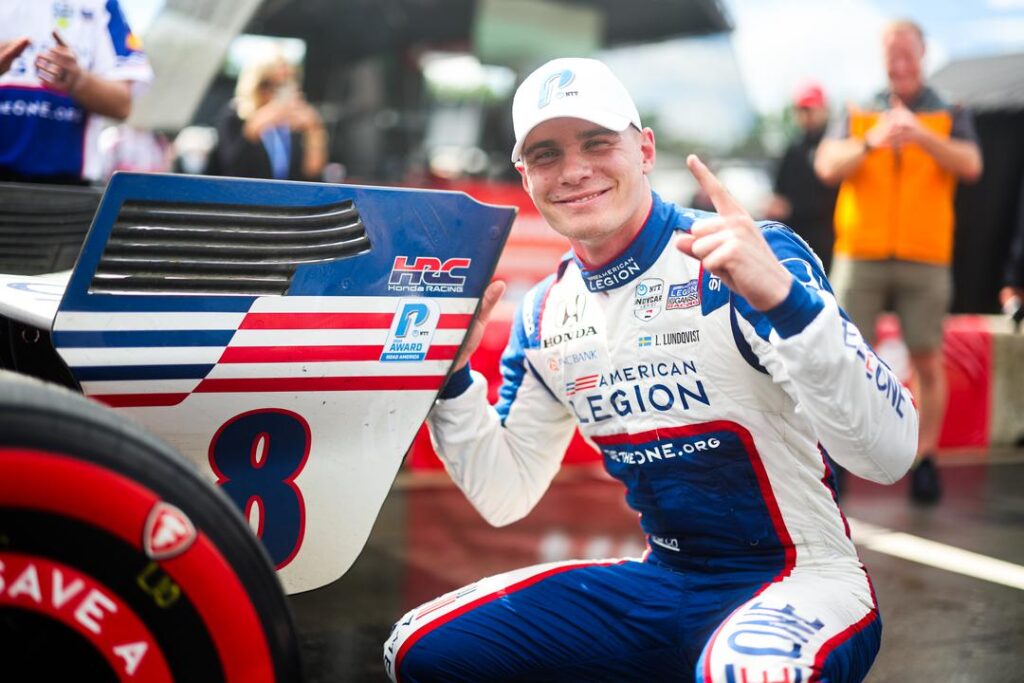
“Way back then, there are many. Obviously, the wins and the championships stand high. But I think one of my favourite memories is winning the championship together with my family because we ran it as a family team back in 2016 in the Formula STCC Nordic days.”
More than just a family team
“So like my first or second year in single seaters, but like the first level, just because we did it as a family team. So my stepdad was my mechanic. His brother was my engineer. He had a co-worker that he brought along.”
“My mom being an administrator and making sure that everybody was fed and we had places to sleep and we knew what we were doing. And this was at the time where I was still in school and they all had full time jobs, never run a race team before.”
“So there were definitely a lot of that 2-3 a.m. on a Sunday night and I had school the next morning. They had work and it rained all weekend. So all the equipment, our tent, everything was wet.”
“So the next day after school and after work, we had to put the tent up somewhere in our yard for it to dry. And in Sweden, it rains a lot. So we have to check the forecast and make sure that it doesn’t rain again, etc.”
“So it’s a moment like this that then and there, it was not fun at all. But now looking back it’s what makes the whole journey feel complete.”
At a level where many drivers are already backed by structured teams and financial support, Lundqvist’s early career relied almost entirely on family commitment. It is a story far removed from the polished image often associated with junior single-seater racing.
A system that rewards results
As Lundqvist progressed through the ranks, the limitations of the traditional European pathway became increasingly clear. Despite consistent results, the lack of a guaranteed route forward made long-term progression uncertain.
It was one of the key reasons behind his decision to pursue a career in the United States, where the structure of the junior ladder offered a clearer route to IndyCar.
“I think they realised what I also realised. I realised that a little bit earlier. But I think it’s becoming very popular for a couple of reasons.”
“I think the system generally works in the U.S., which means that if you do well and if you win championships in the lower series, you do get chances and get promoted to IndyCar. And there’s a real way forward.”
“And I think we have a lot to thank to IndyCar and the people in IndyCar that they do rate people in the lower series very highly if they do win championships.”
“That’s not something that always works in Europe. And I think a few people see that. That was one of the reasons why I went to America.”
“And another big portion of it was obviously the scholarship system. And I would not be here today without the scholarship system that is in America. So I’ll be forever thankful for that and the opportunities that you do have in America.”
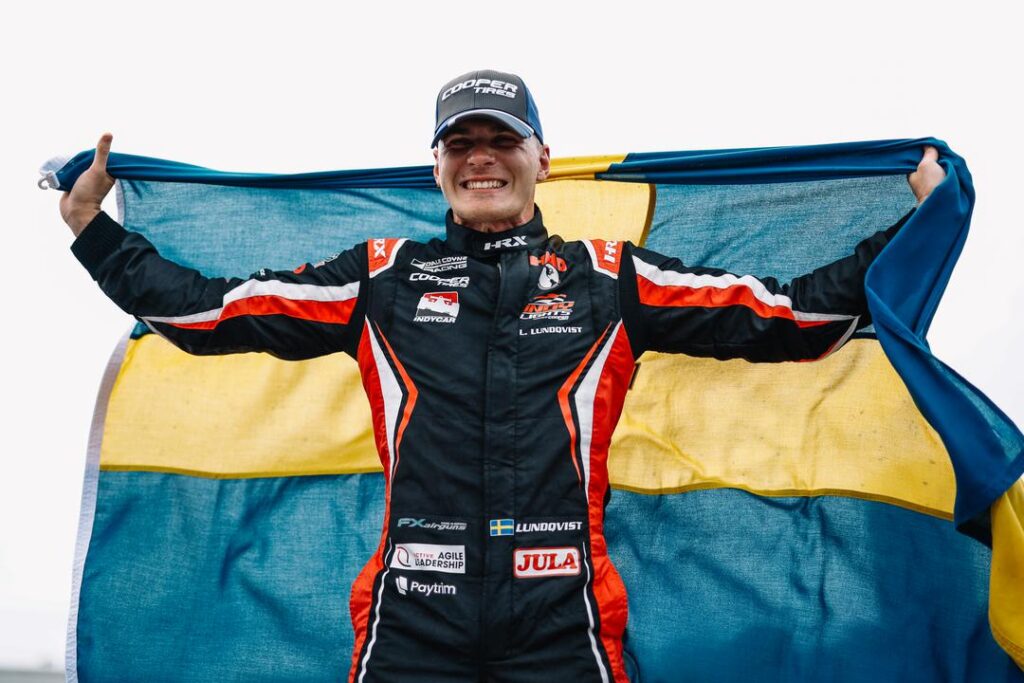
That move ultimately paid off, with Lundqvist securing the Indy Lights title in 2022 with HMD Motorsports, a result that would typically place a driver on the doorstep of IndyCar.
When results are not enough
Yet, as is often the case in motorsport, success did not immediately translate into stability.
Despite winning the Indy Lights title in 2022, a result that would usually secure promotion, Lundqvist entered the following IndyCar season without a guaranteed full-time seat. Instead, he had to wait for opportunities and prove himself in limited appearances, including his outing with Meyer Shank Racing. That opportunity came with little preparation time, placing immediate pressure on performance.
Reflecting on drivers he competed against in Indy Lights, including Kyle Kirkwood and David Malukas, who have since secured full-time IndyCar opportunities, Lundqvist remains realistic.
“Well, difficult to say, because I think everybody’s journey is slightly different. And like I said, mine has been everything but straight.”
“So I am obviously very disappointed to not be racing in IndyCar, period. Like no matter the reason or why or how or what anybody else is doing, I want to be racing and I believe that we deserve to still be in IndyCar.”
“So that’s all that you can do. And honestly, it makes me happy to see those guys do so well. Obviously, Kyle and David got great opportunities now.”
“And it fills me with confidence as well, seeing them do well, knowing that I competed and occasionally beat these guys. And that proves again to me that that’s where we belong.”
It is a situation that highlights one of the sport’s most difficult truths. Performance alone does not always guarantee opportunity.
The reality of the sport
That understanding has been shaped by experience, not theory. Despite his achievements and proven pace, Lundqvist has repeatedly found himself navigating uncertainty about his future.
It is a situation that forces drivers to confront a side of the sport that is rarely visible from the outside.
“It’s harsh. It doesn’t have emotions, doesn’t take into consideration your past or what you’ve done. Or honestly, to a certain extent, not even your results at times, which is a harsh truth and reality.”
“But it is also a reality. It has and probably always will be in this sport.”
“And most times there are no hard feelings. It’s just the way that the business works. But again, that doesn’t mean that it hurts when you’re not driving. Because obviously that is what you want to do.”
It is not a reaction to a single setback, but a broader understanding of how motorsport operates. Even at the highest levels, careers are shaped as much by timing, funding and opportunity as they are by results on track.
No single route to the top
If there is one takeaway from Lundqvist’s journey, it is that there is no single formula for reaching the top of the sport.
“There is not one right answer to getting a career. Yeah, it’s great. Well, not just that you don’t, you don’t have to follow like the classical routes that you, you know, you have to get to F4 when you’re 15.”
“And then you have to, you know, do the F3 and F2 ladder system or even in America. You can have many ways of arriving at wherever you want to be at.”
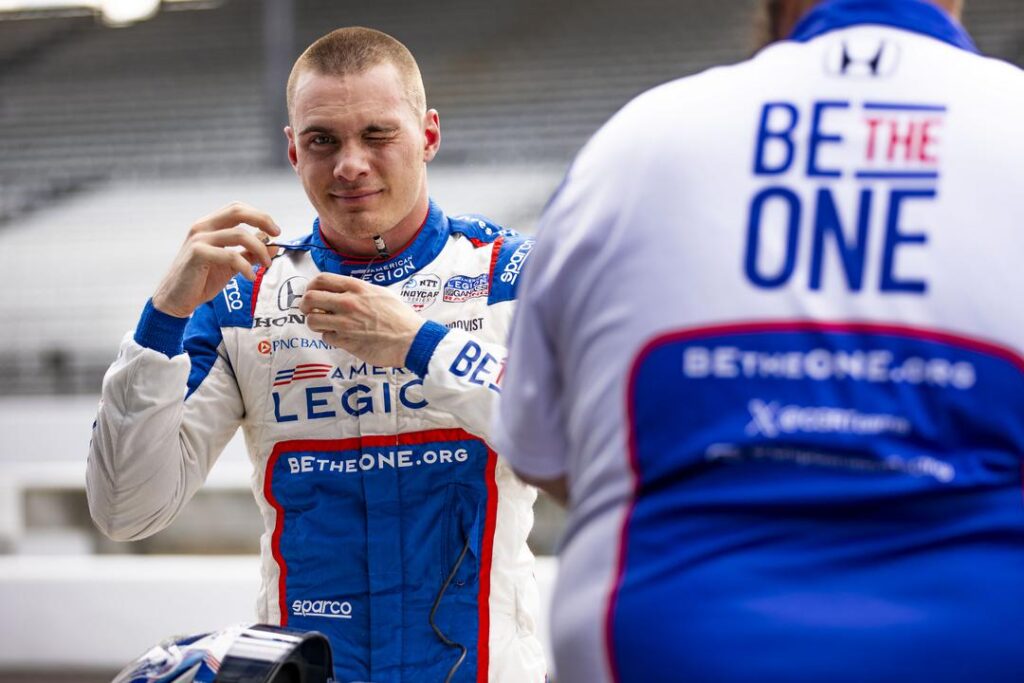
“And hopefully, if they do look at my career and wonder how the heck did he get there, they can see that it’s not a straight line, that you can have a few bumps on the road and still end up in a pretty good place.”
For Lundqvist, the path has never been simple. It has been shaped by uncertainty, setbacks and constant adaptation.
But it is his.