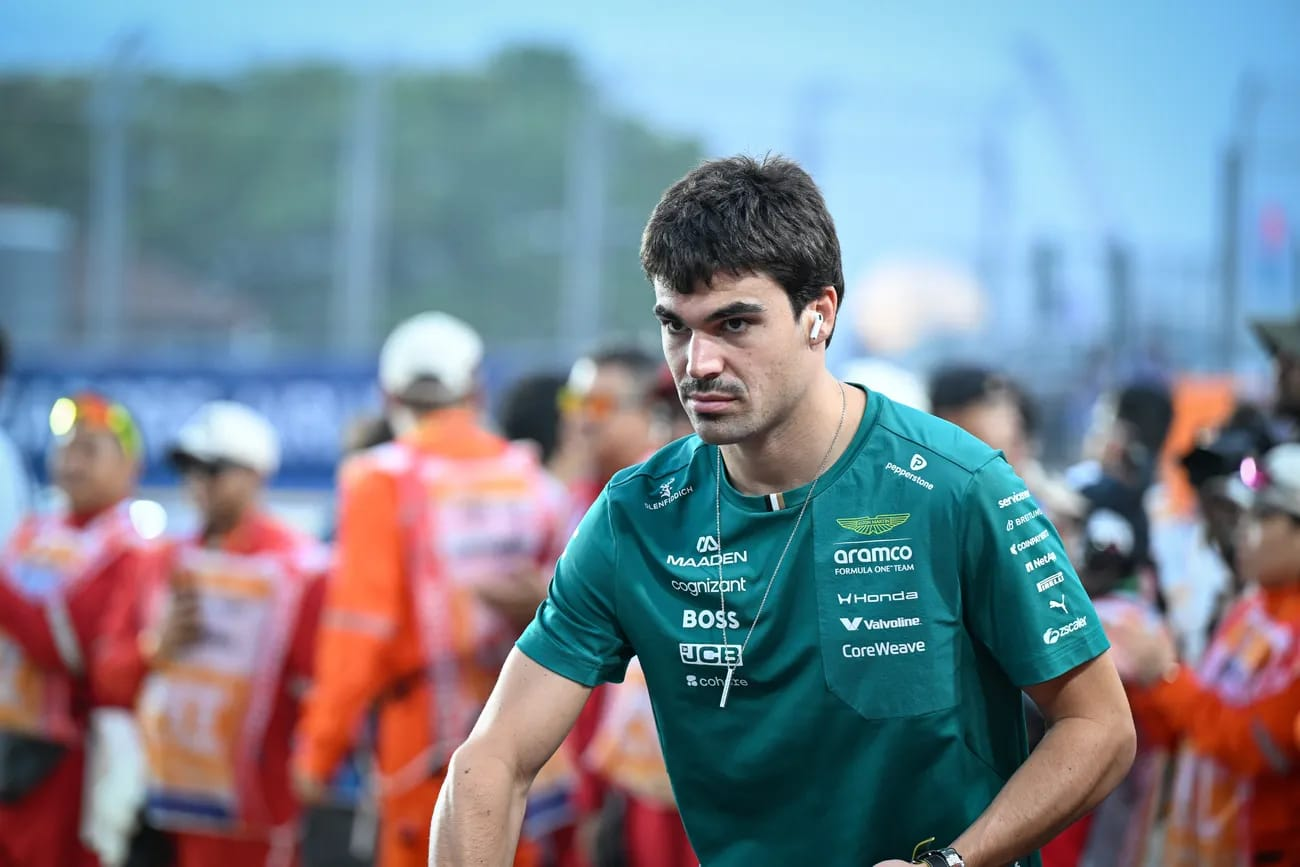
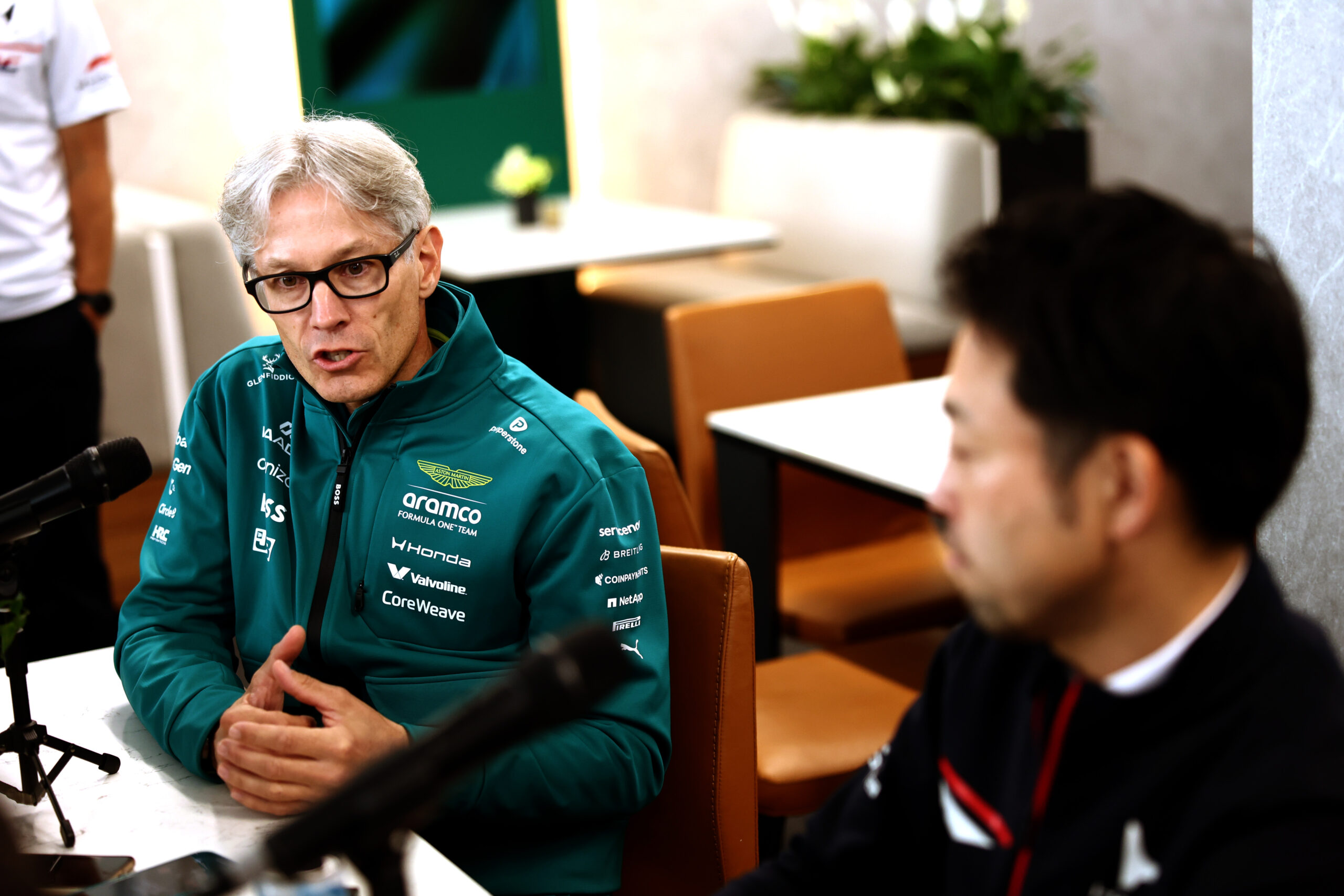
Aston Martin had yet another difficult race at the F1 Canadian GP, with Fernando Alonso retiring with what turned out to be a seat positioning issue and Lance Stroll finishing 15th. In comments after the race in a print media session, Chief Trackside Officer Mike Krack and Honda Trackside General Manager Shintaro Orihara were realistic but optimistic about where the team currently stood.
“Everything looks a bit flattering, but the reality kicks in”
Krack noted that, as positive as the start to Aston Martin’s race was–with Alonso up to 10th before slowly fading–their finish was unsurprising.
“From a pure performance point of view, I think we were where we expected to be, you know. At the beginning of the race, you know, with a couple of good calls, you find yourself in positions where you don’t start to hope quickly, you know. It’s always like that. I think Fernando was running 10 at one point, and Lance was running 14, starting from the pit lane.
“So everything looks a bit flattering, but the reality kicks in also quickly, and you have to always remind yourself, you know, where did we expect ourselves to be. Because in F1, you normally end where you belong, unless there is a complete chaotic race. When we saw people going out or more attrition, we thought, OK, let’s keep going. You know, you never know in Canada what’s happening next. But then there was not more after that.”
Cold tyres complicate Aston Martin’s race
Krack noted another factor in Aston Martin’s struggles were a cold track, exacerbated by earlier rain and VSC periods this weekend.
“I think this weekend we need also to consider that it was very cold. Everybody was struggling with tyre temps and us in particular. And you could see in the race, as soon as you had the blue flag or the VSC, it took us really long to get the tyres back on it. And then, you know, the problem that you described is you just amplify it each time because you have so much less grip.
“So it was difficult to understand really what was going on in terms of tyres. You know, did we fall out of the window again? And how many laps we need again to come back? Because if you see the lap time profile, you know, you can correlate it really to traffic or VSC or whatever.
“So we were on the bottom, really on the bottom line of keeping them in the window. And I was a bit concerned when I saw the temperatures yesterday night that we were going to have. Also looking at all the comments from all the drivers, even the top cars, saying ‘we struggle with temperatures’. We knew it was going to be difficult today.”
Aston Martin and Honda “observed positive things” at F1 Canadian GP
Krack noted that, despite all this, Aston Martin is making progress. “I think at the end of the day, from a reliability point of view, aside to the operational stuff that we mentioned earlier, I think on the PU side, there was not a single issue, not a single fault. So I think we have come a long way, but the performance is not where it should be.“
On the PU side, Orihara echoed Krack’s sentiment that the Canadian GP shows that Honda and Aston Martin are on the right track.
“So we have brought some parameter data set tuning updates. We observed positive things on the data. Still drivers, how to say, request a lot to improve. But we have seen positive things on the data which is saying our direction is right. So still, there is a gap between driver demand and our torque delivery. But we’ll see how we can improve this gap or reduce the gap.”
Orihara chalked up the improvement to a change in approach in aligning Honda’s engine parameters with Aston Martin’s drivers’ driving styles.
“Previous events [we] tuned our torque delivery to match [the] driver. But we found the way to reduce the gap, and that worked well this event. So we will keep working on this direction to reduce the gap between driver demand and our torque delivery.”