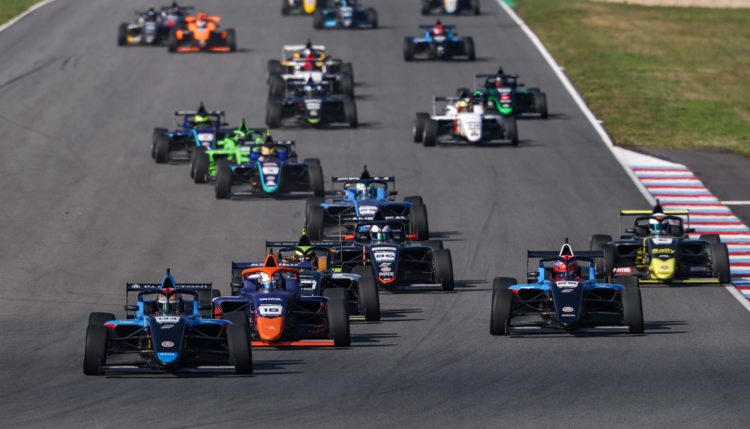
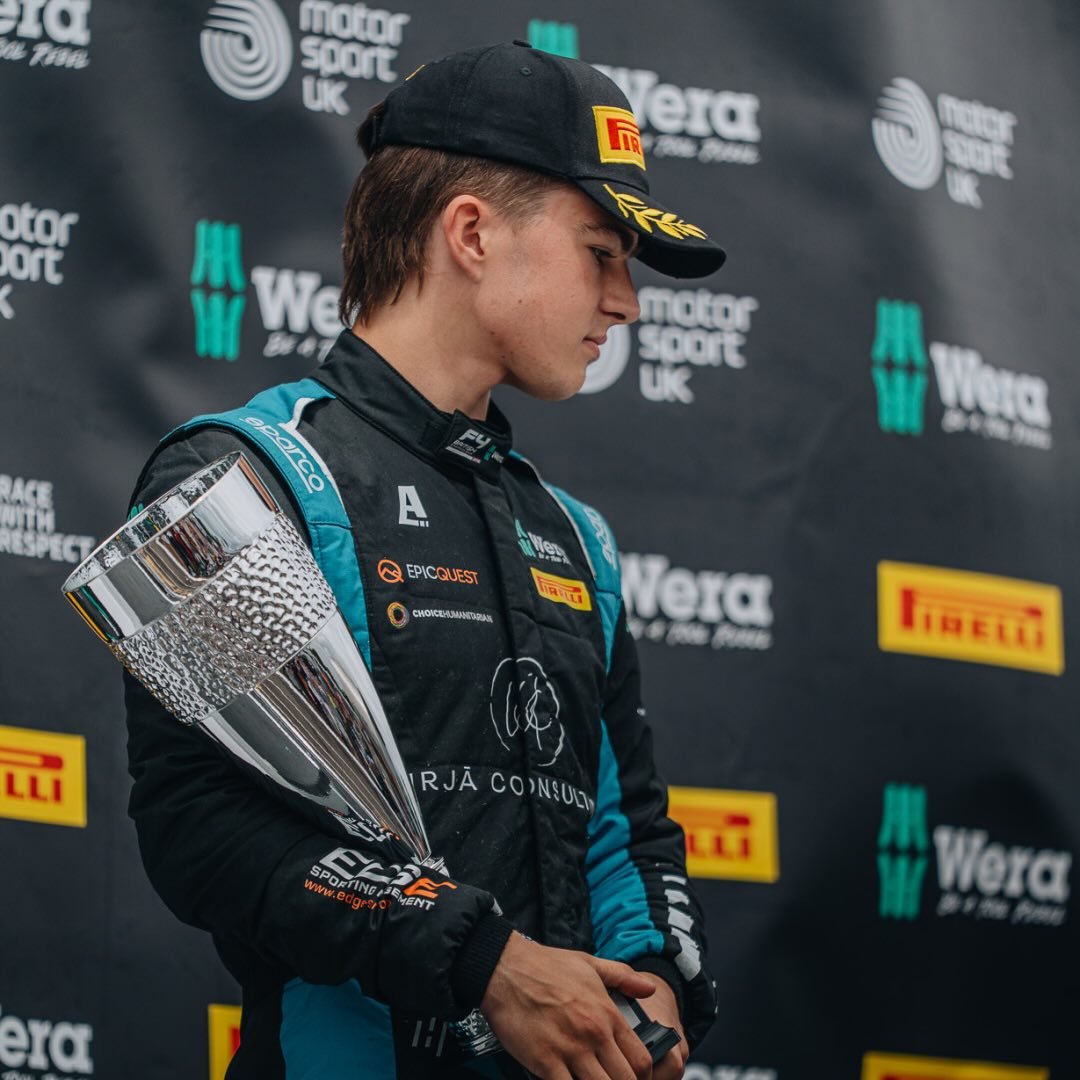
In an exclusive interview with Pit Debrief, Henry Mercier offered an in-depth perspective on the broader dimensions of his motorsport journey, moving beyond performance metrics to explore identity, representation, and long-term ambition. As an American competing within a traditionally European-dominated development pathway, Mercier occupies a distinctive position in British F4 and wider junior single-seater racing—one that carries both opportunity and responsibility.
While his primary focus remains on performance and progression, Mercier’s reflections reveal an increasing awareness of his role within the sport’s wider ecosystem. From inspiring the next generation of drivers to adapting to life in a new environment, his journey extends beyond the cockpit. Consequently, his perspective highlights not only the demands of competition, but also the evolving identity of a modern racing driver navigating an international career at a young age.
Representing the United States in British F4: Mercier on growing American presence in European racing
Historically, American representation in European single-seater racing has remained limited, particularly when compared to the depth of European talent pipelines. However, Mercier views this not as a structural barrier, but rather as an opportunity for growth. As more drivers begin to explore international pathways, he believes the landscape is gradually shifting.
Reflecting on this dynamic, Mercier acknowledged both past and present examples of American drivers who have competed successfully on the global stage, while also emphasising the potential for further expansion.
“I think historically Americans haven’t been represented necessarily in European racing. Obviously, there are some—you’ve got more modern ones, you’ve got Logan Sargent, I mean Colton Herta, you’ve got… I’m probably missing many, but those are just the big names. Then, I mean, you’ve got Mario Andretti. So there are representations, but there are very few of them. And I think there’s no reason why more Americans can’t be competing on an international level.”
He also pointed to a visible shift within his immediate competitive environment, where American participation has begun to increase.
“I remember last year, I was the only American on the grid. And now this year, I think there are four other Americans. So it is nice to see that there are more people coming over and wanting to race, specifically in British F4. And I know of a few in other F4 series as well. So it is very nice to see that.”
This progression not only reflects changing trends within junior categories, but also reinforces Mercier’s position within a growing cohort of American drivers pursuing careers in Europe. As a result, his role naturally extends beyond individual competition, contributing to a broader narrative of international representation.
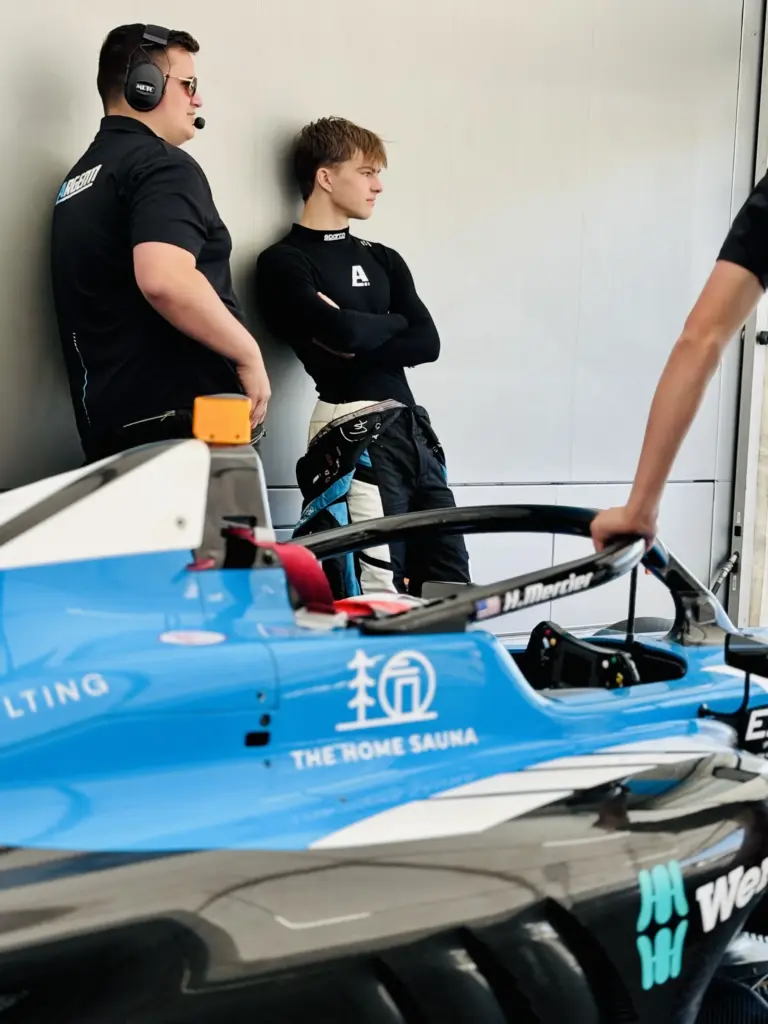
A foundation of support: Mercier highlights the people behind his progress
While individual performance often defines a driver’s public image, Mercier emphasised that success in motorsport remains inherently collaborative. Behind every competitive outing lies a network of individuals working to ensure that a driver can operate at their highest level. For Mercier, this support system has proven fundamental to his development.
He described this network as one of the most significant advantages in his career, allowing him to focus fully on driving while trusted individuals manage the surrounding complexities.
“I think it’s, for me, the thing I’m most grateful for in my career. I think I’ve been extremely lucky to have a good support system from my parents, from coaches, from my managers. It all just makes my life a lot easier as a driver as well. I’m not having to think about all the things that they do.”
He also elaborated on how each component of his support structure contributes in a distinct and meaningful way, highlighting the importance of experience and communication.
“For example, my managers just sort out everything with the team and then help me with that. My coaches can almost just get everything from the engineer. You know, obviously, the engineers are very good. I’m very happy with my engineer as well. Another thing, but the coaches—they’ve been there, they’ve experienced that. And a good coach can really relay that to a driver.”
At the centre of this structure, however, remain his parents, whose role extends beyond logistical support to form the foundation of his entire journey.
“And of course, my parents—I wouldn’t be in this position without them. So I think it’s all added up, and it’s all come together really well.”
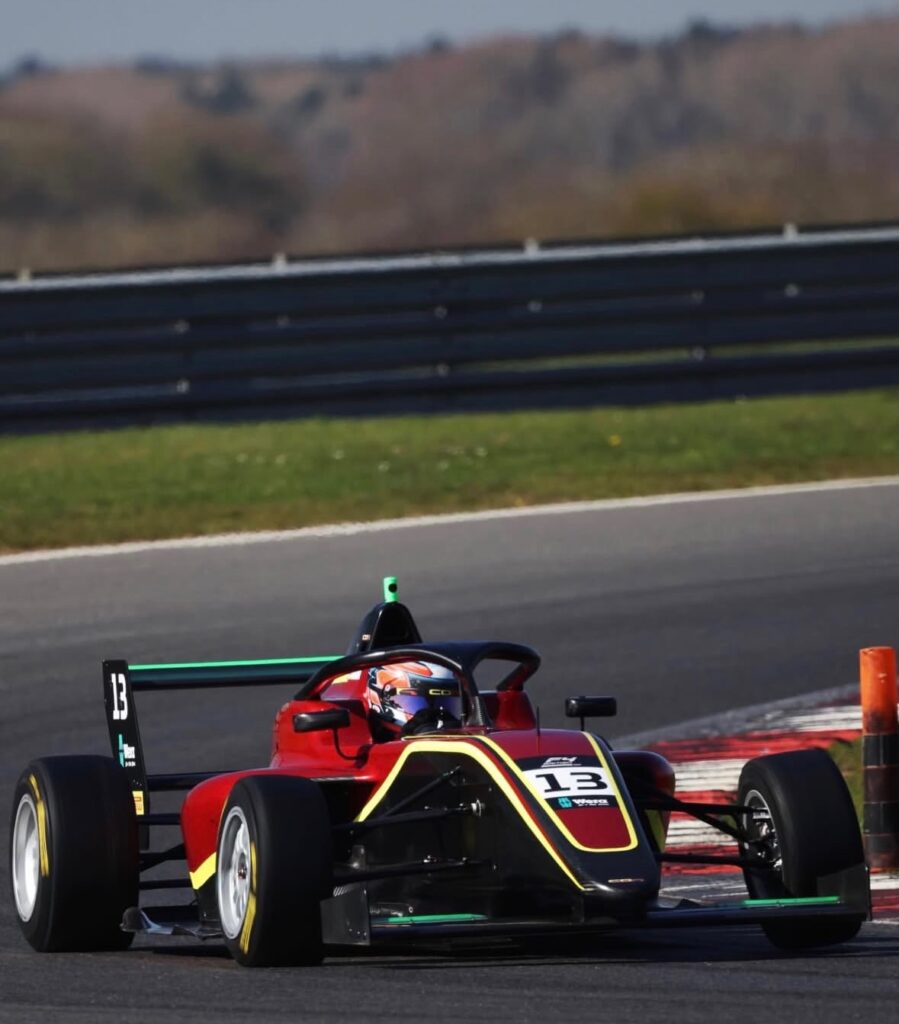
Exploring future pathways beyond F4: Mercier remains open in a changing motorsport landscape as he joins ranks of American talent aiming for the highest levels
The traditional pathway through single-seater racing has evolved significantly in recent years, with drivers increasingly exploring opportunities across multiple disciplines. Championships such as GT racing, endurance racing, and electric series now offer viable and attractive alternatives alongside the single-seater ladder.
Mercier recognises this shift and approaches it with an open mindset, demonstrating a willingness to adapt as opportunities arise.
“I’m very open to it. I’m someone who will be very happy racing whatever. I’ve got a big interest in GT racing, of course. It’s a very attractive area of the sport for me. I would love to get behind a GT car, of course.”
This openness reflects both curiosity and pragmatism. Rather than limiting himself to a single trajectory, Mercier remains receptive to the broader possibilities within motorsport. However, he also maintains a clear sense of priority, ensuring that his current objectives remain firmly in focus.
“But right now, my focus is still getting as high up the formula and single-seater ladder as I can. Whatever the next step might be—FREC, Eurocup—right now, that is what I’m focusing on and continuing with that until I either don’t have a choice or get an offer to do GT. But I would be more than happy racing prototype GT. It’s all still very attractive to me.”
Defining success: Mercier adopts a realistic long-term perspective
Long-term planning in motorsport requires both ambition and realism, particularly within the highly competitive single-seater ecosystem. While many drivers aspire to reach the pinnacle of Formula 1, the pathway remains exceptionally narrow. Mercier acknowledges this reality and frames his goals accordingly.
Rather than focusing solely on reaching a specific category, he defines success through sustainability—building a career that allows him to compete professionally without financial burden.
“I think if I’m at a point in my career where I’m either making a living racing or being able to race and not having to pay or bring money, I think I’ll be quite happy.”
He further contextualised this ambition by acknowledging the structural limitations of single-seater racing.
“Obviously, that’ll be very difficult in five years in single-seaters because the problem with single-seaters is there’s only really one place where you can be making a living—that’s Formula 1. So it is quite difficult in this route. But I think my goal is to be at a point where I’m making a living in five years from now.”
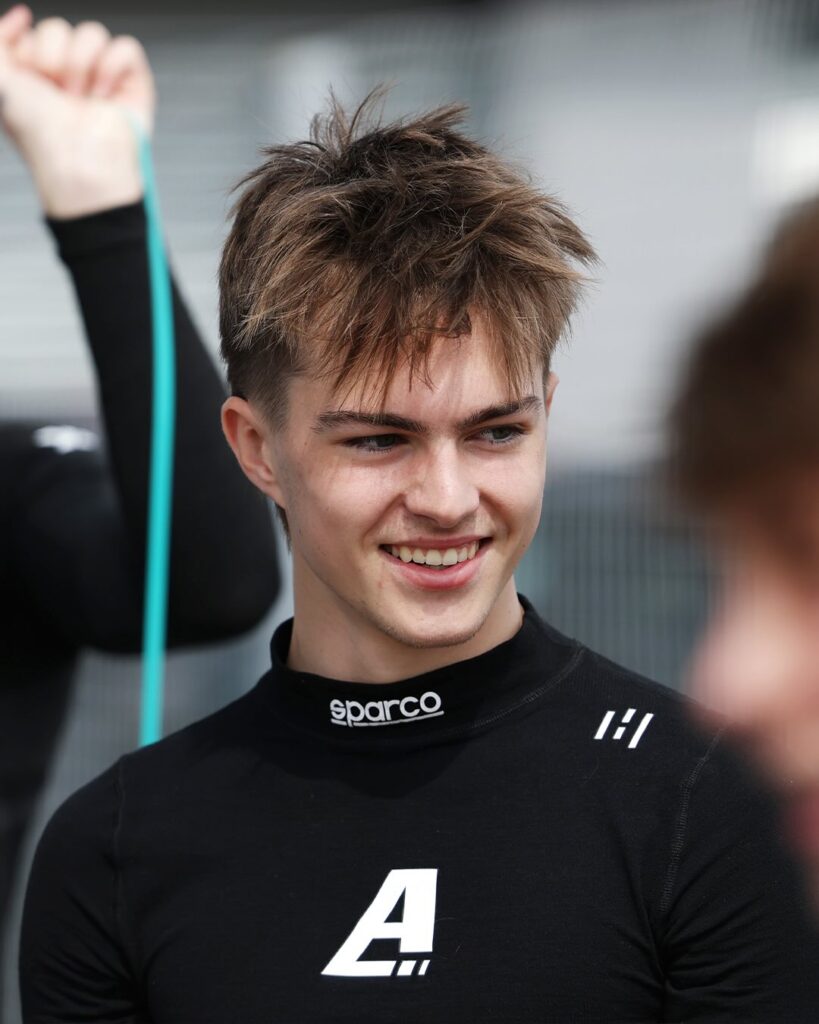
A lasting impact beyond F4: Mercier on legacy and aim to inspire future American talent
Beyond results and career progression, Mercier also reflected on the legacy he hopes to leave within the sport. For him, identity as a driver extends beyond statistics, encompassing character, attitude, and influence on others. He emphasised passion as a defining element of his approach, alongside a calm and composed demeanour both in and out of the car.
“I think as someone who just has a passion for motorsports, of course, and every time I get in the car, enjoying it. I’m not someone who gets bored of the racing. I like to think of myself as quite a calm driver as well, in the car and beforehand.”
This perspective highlights a driver motivated not only by results, but by a genuine connection to the sport itself. At the same time, he expressed a clear ambition to use his platform to inspire others—particularly those considering a similar path from the United States to Europe.
“And ultimately, I want to help specifically more younger Americans come to racing in Europe and all around the world. So being a role model for them is a goal of mine—and for any young driver in the world, not just Americans.”
This broader vision reinforces his role within an evolving motorsport landscape, where representation and accessibility continue to expand.
A journey shaped by perspective, purpose, and progression
Ultimately, Mercier’s reflections present a driver who understands the wider context of his career. While his immediate focus remains on performance and progression, his outlook extends beyond the present, encompassing identity, opportunity, and long-term impact.
Through a combination of self-awareness, adaptability, and ambition, he continues to shape a journey defined not only by results, but by purpose. As he advances through the ranks of international motorsport, this perspective positions him to contribute both on and off the track—reflecting the qualities of a modern driver navigating an increasingly global sport.