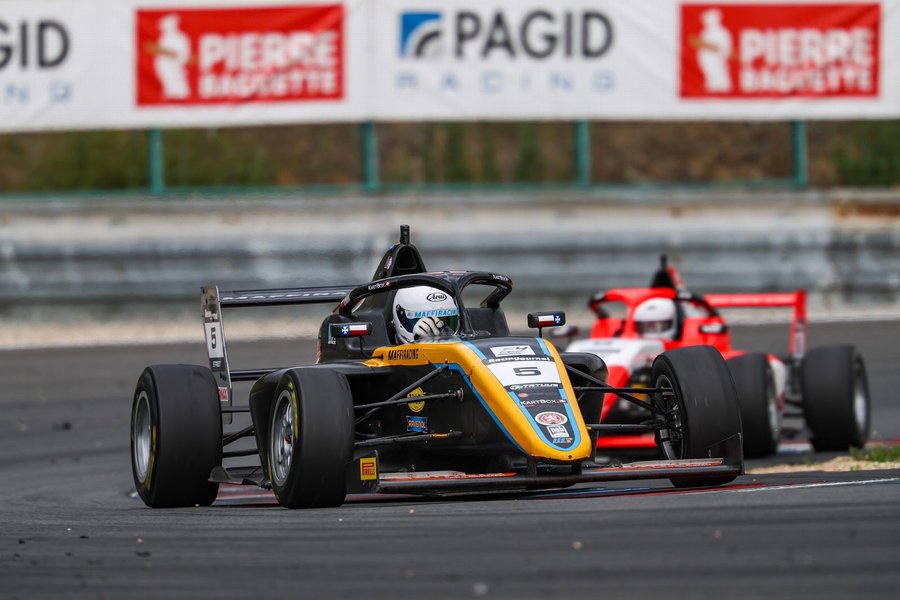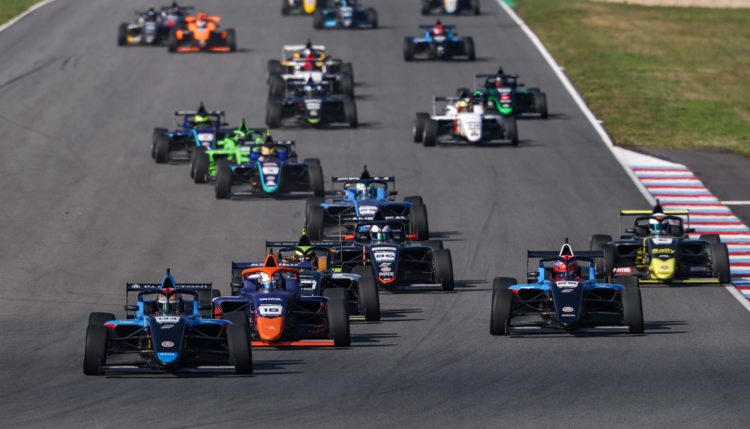
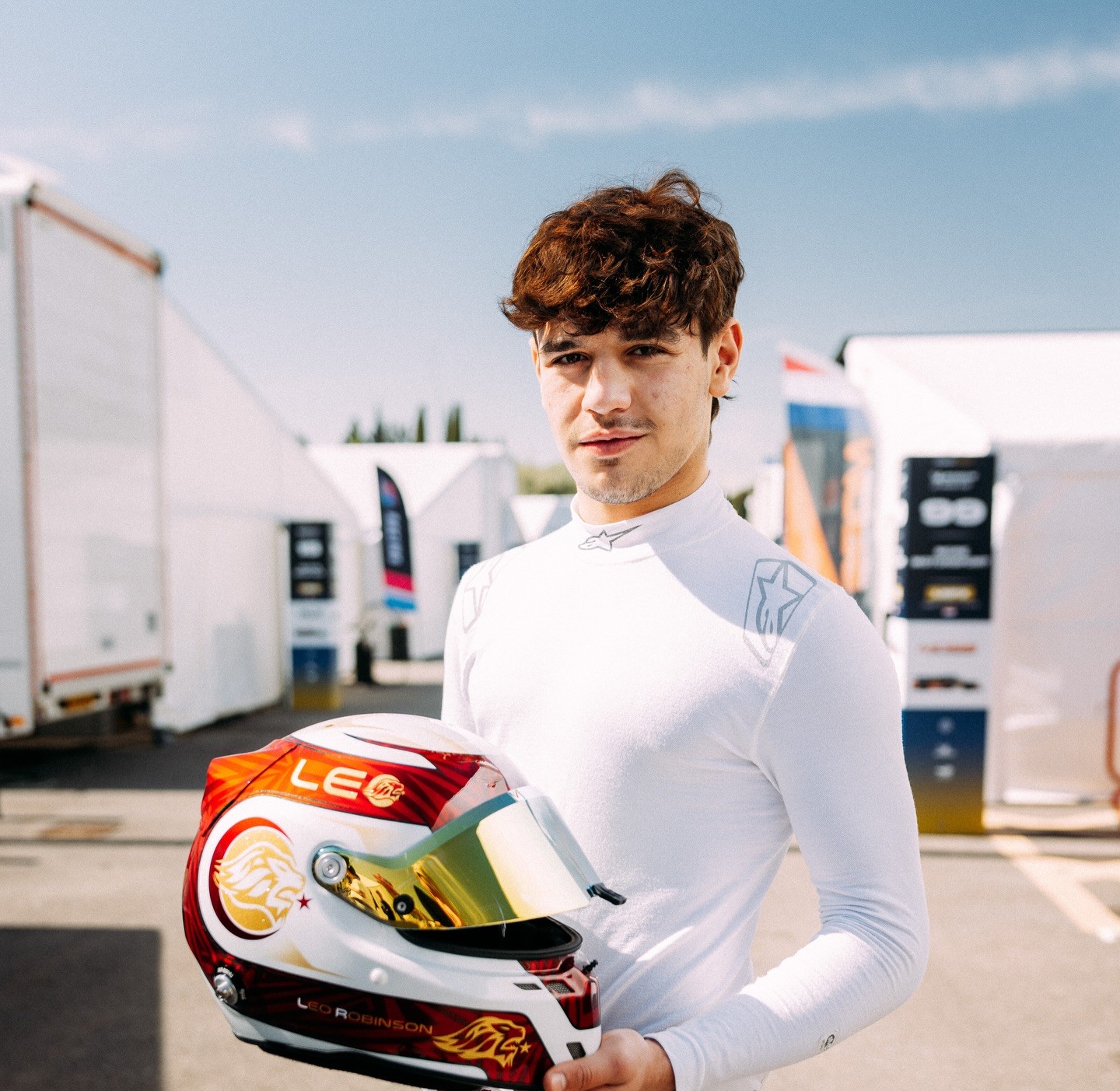
Leo Robinson has quickly ascended the ranks of motorsport, from his early karting days to his newest chapter in the Le Mans Cup. Known for his resilience, adaptability, and laser focus on self-improvement, Robinson has overcome significant challenges in his career. In an exclusive interview with Pit Debrief, he reflected on the key moments of his journey and what it takes to succeed in the fast-paced world of professional racing.
The transition from karting to cars
One of the most pivotal moments in Robinson’s racing career came when he made the leap from karting to car racing. The shift was not just about adjusting to a new vehicle—it required Robinson to adapt to an entirely different sport.
“Going from karting to cars is not the same sport. It’s like saying rugby and football are the same thing. But they’re completely different sports, to be honest,” Robinson explained.
In karting, the focus is on agility and precise cornering. However, in car racing, the challenges become far more technical. Cars are heavier, faster, and require a greater understanding of mechanical elements such as suspension, gears, and clutch control.
“In a car, you’ve got suspension. I’m driving this massive one-tonne car. Yeah, it’s very scary when you go up for the first time because you have gears as well. You have gears, you have a clutch. You have all sorts.”
On top of these technical hurdles, Robinson had to contend with the scarcity of track time. Unlike karting, where drivers get frequent weekends to hone their skills, car racing offered far fewer opportunities to practice, making every track day precious.
“Also, another big difference is in karting, you go out every single weekend. And then when you go to cars, maybe you go out ten times before your first race. That’s it. You don’t go out on track as much in cars. It’s a rare opportunity to go on track, so you have to make the best of it.”
This scarcity of track time taught Robinson the invaluable lesson of making the most out of every opportunity, a principle that continues to guide his career.
Finding consistency in Formula 4 and beyond
As Robinson transitioned into F4, the steep learning curve began to level out. With each race weekend, he grew more comfortable with the technicalities of car racing, and his performances began to show consistency.
“You get used to it. One weekend, that was it. Once you get used to it, the race starts. And everything about the car, from Formula cars to saloon cars to prototypes, it’s not a big deal. So, you just do the same thing in and out. The race starts, or the racing, or how important the Qualifying lap is. It’s quite easy to switch once you get it,” said Robinson.
He quickly realised that while different types of racing had unique challenges, the core principles of the sport remained the same. Whether it was single-seaters or sports cars, the key was to master the fundamentals: the start, the race pace, and crucially, the qualifying lap. His ability to adapt and find consistency allowed him to rise above the competition in F4.
Adapting across disciplines: from karting to F4 to prototypes
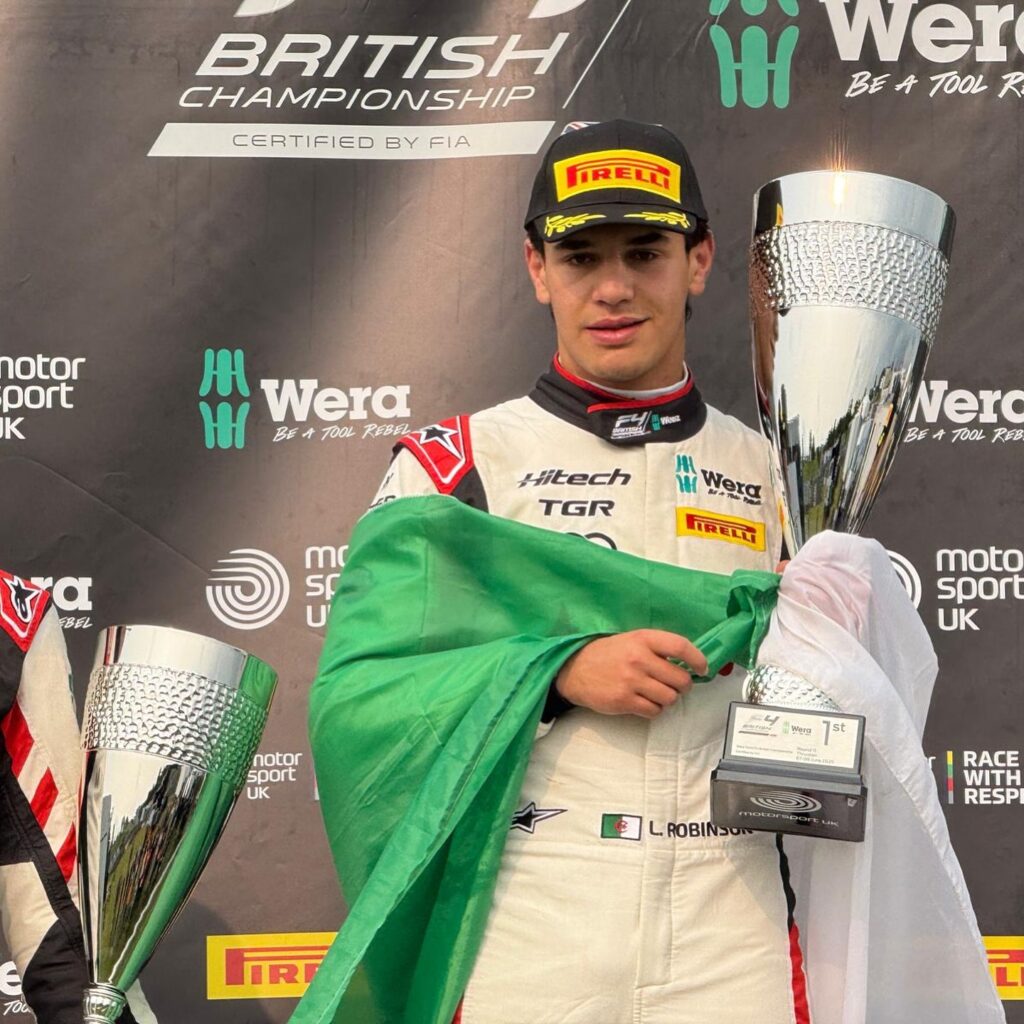
One of Robinson’s standout qualities is his ability to race across a variety of disciplines. From single-seaters to prototypes, each type of racing demands a different skill set, and Robinson has continuously embraced these challenges.
“I’ve done the single-seaters where you’re all by yourself. It’s just, you have to make every moment count in single-seaters. It’s a little bit like the Qualifying,” Robinson explained.
In single-seater racing, every lap counts. The focus is on precision, especially during the all-important qualifying sessions. In contrast, prototype racing introduced Robinson to the dynamics of teamwork, where success is not just dependent on individual performance but also on working effectively with teammates.
“Then there are prototypes where you can win with a teammate. So, if you’re the first driver, you just don’t want to crash the car. If you don’t crash the car, you’ll be fine. No damage. Also, you have the difficulty that sometimes you have a Bronze driver. So, you have to get them up to speed and teach them the way around it. Because, as the Pro driver, you have a big responsibility to get the Bronze driver up to pace,” Robinson elaborated.
These varied experiences have contributed to Robinson’s evolution as a more complete driver, one who excels in both individual and team-oriented environments.
The reality behind the results
As Robinson continues his ascent through the motorsport ranks, he’s acutely aware of the financial dynamics that shape the sport. Wealthier drivers often have access to more resources—more testing, better preparation, and more advanced technology—all of which can impact performance on the track.
“The more money you have, the quicker the car goes, to be honest. Yeah, that’s the main problem for everybody. I don’t know if I would ask anybody, except the richest of the rich, to do the same thing. That’s like most things, isn’t it?” Robinson shared candidly.
As he looks to move up to higher levels of competition, like Formula 3, Robinson knows the financial divide will become even more apparent.
“Yeah, I think once you make it to F3, you’re in a different league of wealth. There’s no one there that can call themselves above my level. Yeah, but it’s the same with most things, isn’t it? The more money you have, the more test days you can go on, the better prepared you can be, the better team you can have. It’s like most things, isn’t it?”
This financial reality is something every driver must navigate, and Robinson is no exception. But despite the disparities, Robinson continues to push forward, determined to make the most of his opportunities and continue climbing the ranks.
Mental toughness: dealing with pressure
With his growing profile, Robinson has learned how to manage the expectations and pressure that come with success. His approach is straightforward—focus on doing his best and not worrying about the outcome.
“It’s always for me, as long as I try my best and I know I’ve done my best, there’s nothing more I can do. So that’s it for me. As long as I do my best, I can’t be upset,” Robinson explained.
This grounded mindset allows him to stay calm and focused, even when the pressure builds. It’s a mentality that helps him remain resilient in the face of setbacks, allowing him to reset and focus on the next challenge.
The value of adaptability: Robinson’s journey from karting to the Le Mans Cup
Robinson’s journey from karting to car racing is a story of resilience, adaptability, and determination. Through each stage of his career, he has learned valuable lessons that have shaped him into a more complete driver. As he moves forward with his sights set on the 2026 Le Mans Cup, it’s clear that Robinson’s racing career is far from over. With his passion, focus, and unwavering commitment to self-improvement, Robinson is a driver to watch in the years ahead.