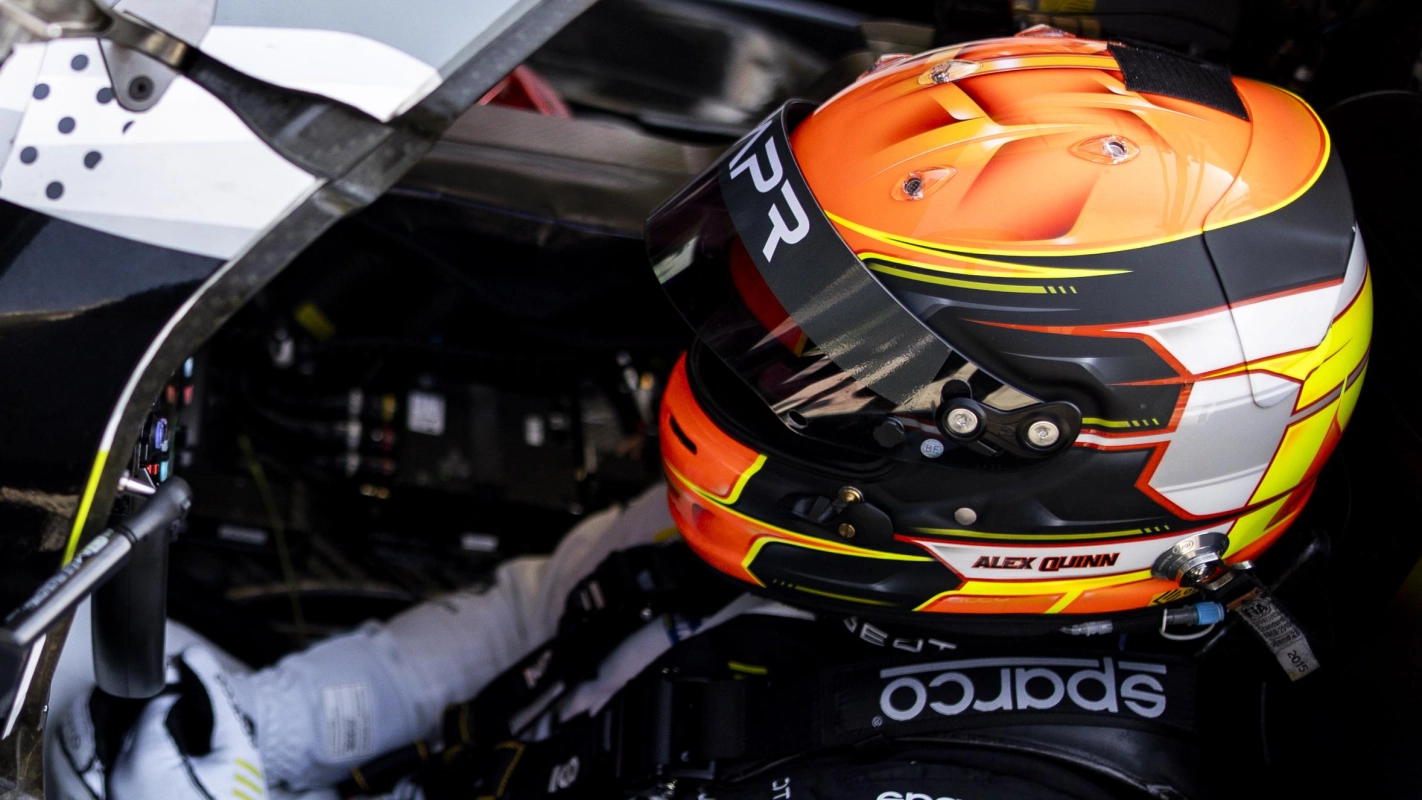
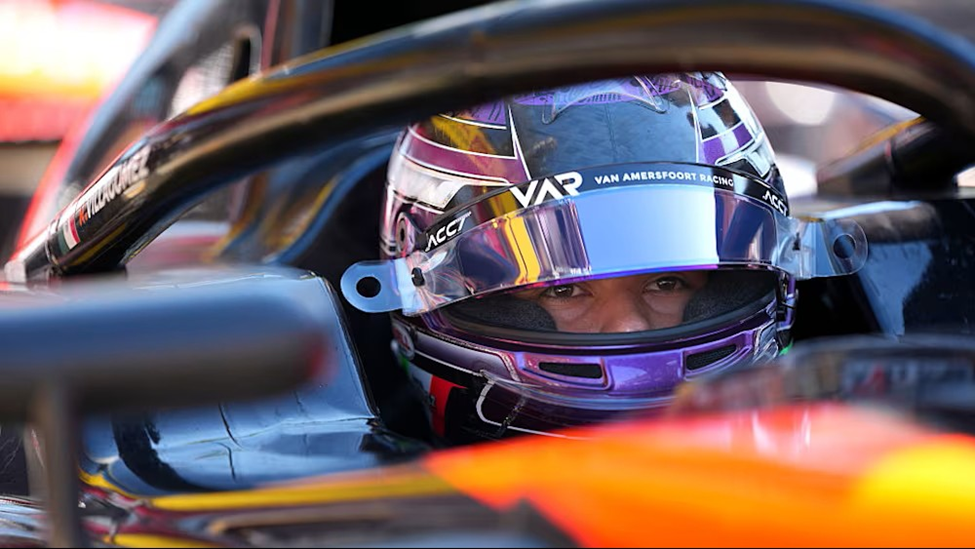
Rafael Villagómez enters the 2026 F2 season with a clear mission: to capitalise on the breakthroughs he achieved in 2025. Last year, his performance peaked during the second half of the campaign, giving both himself and Van Amersfoort Racing tangible evidence of what he is capable of when preparation, pace, and strategy align.
The 21-year-old Mexican driver has competed across FIA Formula 3 and Formula 2, gradually building his technical understanding while strengthening his mental resilience. His growth is emblematic of the modern junior racing environment, where performance relies on more than raw speed. Adapting to varying tracks, optimising tyre performance, and managing pressure are equally crucial.
With this foundation, Villagómez enters 2026 equipped to pursue not only points finishes but also consistent podium contention, blending experience with analytical reflection and strategic foresight.
Villagómez on borrowing lessons from other disciplines to shape approach to 2026 F2 campaign
Villagómez’s development is marked by a willingness to observe and learn from outside the racing world. He draws insights from football, tennis, and even chess, translating strategic thinking into competitive advantages on track.
“I learn a lot from different sports, like football, tennis, even chess. And I try to implement it into racing a little bit because I love the strategy part, like anticipating a little bit.”
This approach demonstrates his ability to see racing as a game of both speed and intelligence. By learning how other athletes approach timing, positioning, and decision-making, Villagómez can refine his own tactics and apply them during race situations.
“So, in racing, I try to use some of that, try to always be a little bit cleverer. I would say in that part is where I’m strong at – adapting. I watch a lot of videos from different drivers, and you learn and you always see that the ones that succeed are the most aggressive ones.”
Aggression within limits
Aggression, he notes, is not merely about overtaking but about timing, precision, and understanding risk versus reward. The challenge lies in knowing when to push and when to conserve, particularly in high-pressure championships like F2 and F3.
“Of course, there’s a limit, but at the end of the day, we’re here to race. Every weekend you learn something. Of course, F2 and F3 are pretty tough championships in terms of the whole package, tyres, the racing, the amount of laps you have to practice. So, of course, over the years, you’re shaping up your driving style, your approach into each session.”
This philosophy has allowed Villagómez to evolve continually, developing a flexible driving style that responds to different circuits, conditions, and race scenarios.
“It’s changed a lot. If I look back, even within a year, how I was driving at the start of last year and how I was driving at the end of last year changed a lot. For me, the most important is to keep on learning and keep on adapting because you can have a great weekend, let’s say, in Qatar, for example, but then within a few days, everything restarts from zero and you got to do it again. That’s also one of the toughest things. Going into the weekend, forgetting what happened before and trying to do better the next weekend.”
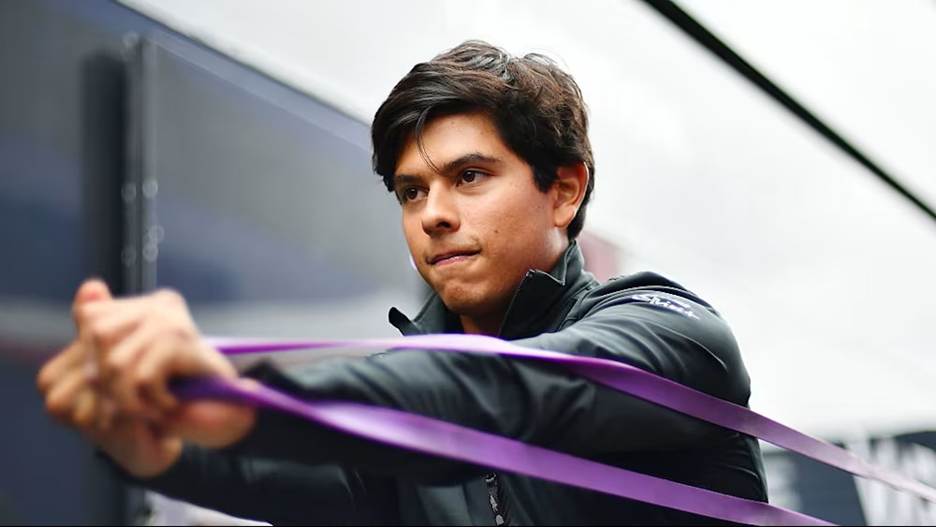
Villagómez on managing the demands of a global calendar for 2026 F2 campaign
Success in junior formulae requires not only pace but also emotional intelligence and self-management. Villagómez emphasises the importance of reflection and mental preparation, particularly during the long periods between races.
“It’s more driven internally. There’s a lot of reflection, you work with people outside of the team that help you be a better human, I would say. And that has helped me a lot. We go travelling all around the world and we go racing, it’s very cool, but there’s a lot of, let’s call it in-between time – on planes or between races and sometimes you’re alone. I would say one of the things that a lot of drivers go through is overthinking.”
This capacity to manage downtime and maintain focus allows him to avoid the common pitfalls of overthinking, which can undermine performance and confidence.
“It’s pretty common. So it’s good to do this kind of stuff, but it’s also a limit. You need to have time away. Otherwise, you’re going crazy. And that’s why working with the right people or having the right people around you is always very good because they can guide you better. They’ve got different perspectives.”
Villagómez’s mental approach is as structured as his technical preparation. By combining self-analysis with external guidance, he ensures that reflection enhances rather than distracts from his racing.
Technical mastery: balancing the car
From a technical standpoint, Villagómez prefers oversteery cars, which he believes offer better lap times when managed correctly. Yet he recognises that each track demands a unique balance between speed and tyre conservation.
“In terms of preference in the car, I like an oversteery car, it’s always quicker. We’ve seen it everywhere, in F1, from Max for instance. There’s a limit, of course and again, you’ve got to adapt. Some tracks are quick and some tracks are not quick. In one lap, that balance might be quick, but maybe over the race, it’s not so quick.”
Barcelona, according to Villagómez, exemplifies the need for compromise between single-lap speed and race-long tyre preservation.
“Barcelona is a perfect example. On a single lap, you cannot have the perfect balance. Because if you’re looking too much for an oversteery car, then you’re not going to make it around the whole lap with tyres in good shape.”
“So that track is a perfect example of how well you need to adapt to a balance. And that preference is something that’s changed, to be honest. Each year it changes. You’ve got to adapt.”
Of course, finding the right setup is never a solo endeavour; it requires collaboration between driver and engineers.
“Sometimes, it’s a combination between the team and the driver. The team believes that this is quicker, but maybe you feel like, okay, I cannot drive it or maybe this way is quicker. So you need to meet in the middle.”
“It’s super important because tyre degradation is big. So you’ve got to adapt within a race to different balances. So, it changes.”
Villagómez on strengthening the partnership with Van Amersfoort Racing for 2026
Consistency in the team environment gives Villagómez an important competitive edge. Years of collaboration foster trust, improve communication, and allow for more effective debriefs.
“It’s easier because we know each other better. There’s also more trust. So all of these things come a little bit easier, all of that stuff is built through the years working with each other. Because we improve the way we debrief and our feedback. Having been with them for so many ears now, we can understand exactly what each other means.”
This level of cohesion between driver and engineers allows for swift decision-making, refined setups, and better adaptation during the dynamic conditions of a race weekend.
Looking forward: The next step
Rafael Villagómez enters 2026 with a wealth of experience, growing maturity, and a clear trajectory. He continues to refine both his technical skillset and mental approach while leveraging a well-established partnership with Van Amersfoort Racing.
If his development continues on this trajectory, Villagómez could emerge not only as a regular points scorer but also as a genuine front-runner capable of challenging the established leaders in Formula 2. His focus on adaptability, strategic insight, and balance between aggression and consistency sets him up for a season where every weekend is an opportunity to learn, adapt, and succeed.