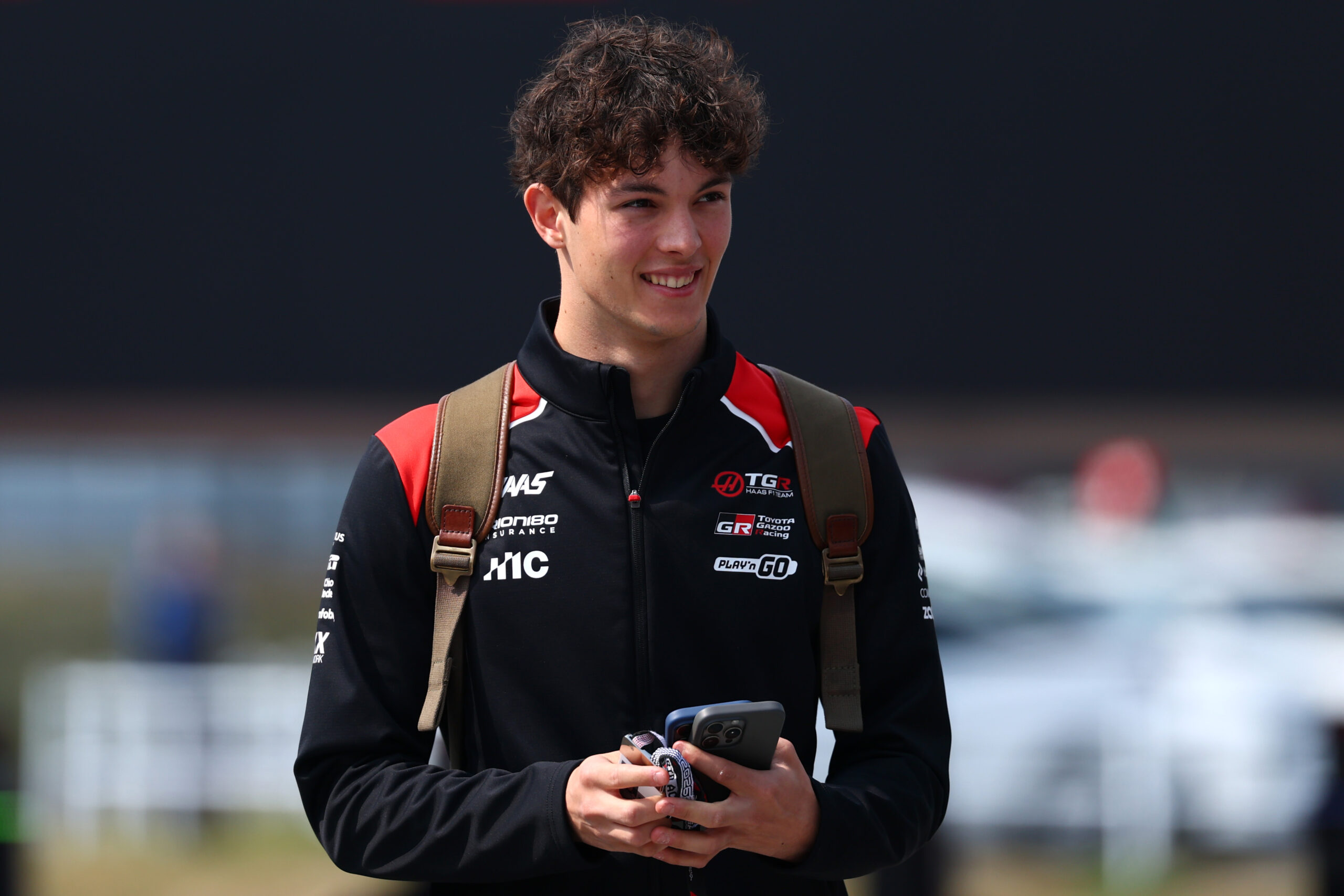
Ollie Bearman spoke about the difference in the demand for time in F1 compared with the feeder series in an interview for Up To Speed after the Suzuka weekend. Specifically, the Brit explained how much time is allocated to media duties and how that time increases significantly in the jump from F2 to F1. As Bearman enters his second year in Formula 1, his memories of Formula 2 and 3 remain fresh, highlighting the current differences between the categories.
Bearman: 90% media and 10% with the engineers in F1
Bearman recently mentioned that after last season’s summer break, he needed to add a 10-minute self-check-in routine to his days. When asked to elaborate on why this was not already included in his busy schedule, the Haas driver delved deeper into his time allocation in F1.
“When you look at the weekend schedule as a whole, it’s so full. Every minute is accounted for, basically. So it’s really tough to get any time to yourself, even on a Thursday. If I compare a Thursday in Formula 2, it would be like 90-10. 90 per cent with the engineers, with the team working on the strategy and the setup and all of these things, and 10 per cent spending on interviews and things like that. So really, if I had like two interviews, that would be a busy day in F2 on Thursday.
“Now in F1, it’s the other way around. It’s 90 per cent interviews, media, and filming. The team loves to do TikToks, which is great, really enjoyable. And 10 percent with the engineers, which is tough because especially as a rookie going to new tracks, experiencing new things every time, if I can only spend like an hour a day, which is really the maximum, if I get an hour with the engineers on Thursday, I consider it a good Thursday. Then it becomes really challenging to be in the right mindset before getting in the car. It’s the same on Friday and Saturday, even when you’re driving.“
The jump from one category to another is already difficult for young drivers. Adding the differences in how their time is allocated and how much time they spend on media can make it even more difficult to adjust.
Gaining experience and improving as a driver
The British driver continued on to explain his check-in session, stating:
“In the summer break, I had a bit of time to sit down with my team, my driver coach, my mental coach, my manager, and we basically said look, we spent all of this time thinking about the strategy and the setup, all of the car things, and I don’t spend any time thinking about myself. So I would basically just spend 10 minutes to calm down, get in the zone a little bit and talk about what I’m planning to do for the session because all of the plans for the run plan, all of these things were set out in stone. Then I would kind of get in the car and be like, okay, what’s my target for the session? So that’s what I tried to improve on. That helped me, along with gaining experience throughout the year, that helped me to have better results.”
There is no denying that Bearman’s results have improved recently. Currently, the driver sits seventh in the Driver’s Standings with 17 points after only three races. Last season, he finished with 41 points overall. Bearman’s 2026 Suzuka F1 weekend ended with no points after a retirement following a significant 50G crash.
When every minute of the schedule planned, taking 10 minutes for himself is understandable to help the driver feel better prepared. Figuring out what he wants from each session, beyond the demands of the car, appears to be working for Bearman. With his renewed focus, talent, and speed, his second F1 season is off to a good start.