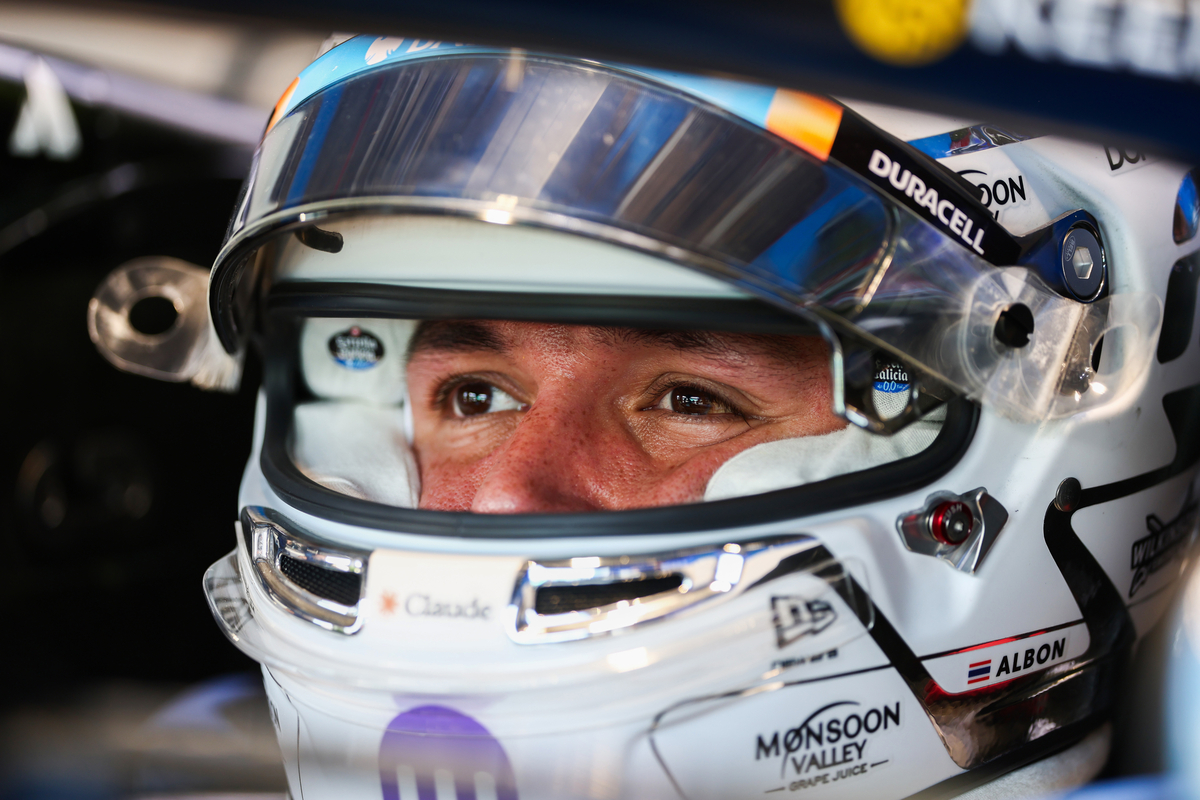
Williams F1 driver Alex Albon opened up about the challenges of energy deployment and navigating through traffic in qualifying under the 2026 technical regulations following his first point-scoring finish of the season at the Miami GP.
After coming home in P18 in the Sprint race, Albon managed to only set the sixteenth-fastest time in Grand Prix qualifying. However, the disqualification of Isack Hadjar meant he lined up fifteenth on Sunday.
Despite becoming the lead FW48 in the early stages of the race, Albon ultimately crossed the line in P10—8.9 seconds behind teammate Carlos Sainz.
How drivers currently handle car set-up
Speaking in the print media pen after the F1 race in Miami, Alex Albon touched on how difficult setting the car up for a flying lap has been in 2026 under the brand-new regulations.
Appearing flummoxed that the qualifying sessions so far haven’t witnessed many incidents of impeding, the two-time podium finisher surmised that all the drivers are maximising their ability to manage the tyres, navigate the traffic, and optimise the power unit’s performance. At the same time, he expressed optimism that the problems will all work out in the near future.
“I am surprised there are not more traffic issues. I think all the drivers, honestly we are absolutely at the top of our capacity to manage the tyres, the traffic, and the PU. It will get better. I know from Canada it will get better, but it is tricky.”
Albon describes the impact of the new rules on midfield teams during qualifying
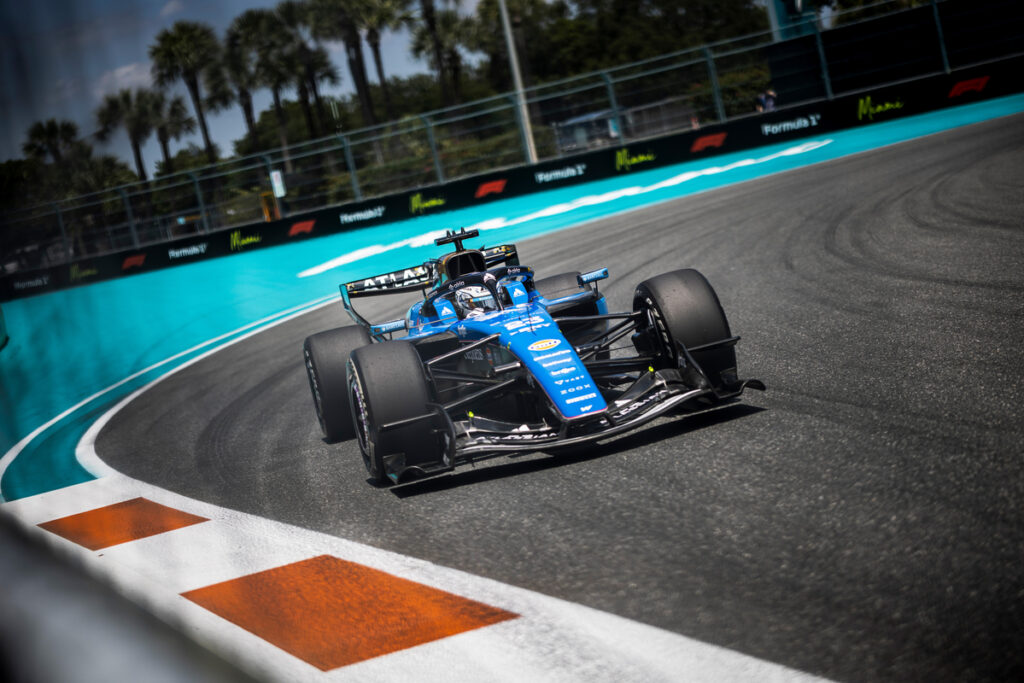
Referring to his starting position for the 2026 Miami GP, Alex Albon also emphasised how the current F1 regulations are prompting drivers to qualify out of place due to mitigating factors beyond their control.
Additionally, the Thai-British driver underlined how tight the gap is among the midfield teams and that bleeding any lap time leads to inevitable Q1 and Q2 exits. He argued that it is significantly more challenging to efficiently manage the run plans with more cars on the track in the first two segments of qualifying than in Q3.
“Obviously it’s frustrating at the moment where qualifying is getting compromised by things that have no reason to compromise the qualifying. I’ve qualified out of position this weekend for not really any fault of my own.
“I think it’s okay for the top teams, they can get away with it. Because by the time Q1 and Q2 happen, if they lose half a second into Turn 1, that’s fine; they’re still through.
“In the midfield it is more painful, obviously half a second is five or so teams, so you just get put to the bottom.
“I think by Q3, because there’s less traffic and less things to worry about, everyone seems to get it together by Q3. But Q1 and Q2 are particularly very difficult.”
Albon on how the 2026 regulations have made F1 qualifying laps tougher to pull off
In terms of whether it was frustrating to have the data confirm that P16 did not accurately reflect his true one-lap pace at the 2026 Miami GP, Alex Albon lamented how letting Sainz pass in the final sector of his preparation lap led to the hybrid system over-harvesting and compromising his last flying lap.
Highlighting how important a clean run into the final corner is for executing the hot laps well in each segment of qualifying, Albon proclaimed that a car slowing down in front to harvest energy can completely undermine the momentum of a driver’s flying lap given the complex deployment algorithms that are part and parcel of the 2026 F1 regulations.
“It’s funny because when we look back at it basically by me letting Carlos [Sainz] pass and backing off, I compromised my own lap myself. You try to be nice to get out of the way. But then by getting out of the way, you over-harvest and you basically ruin your own start.
“It’s then trying to find the perfect gap in Sector 2, to have a clean run into the last corner. But obviously if another car in front slows down, it is game over. So, it’s tough out there.”