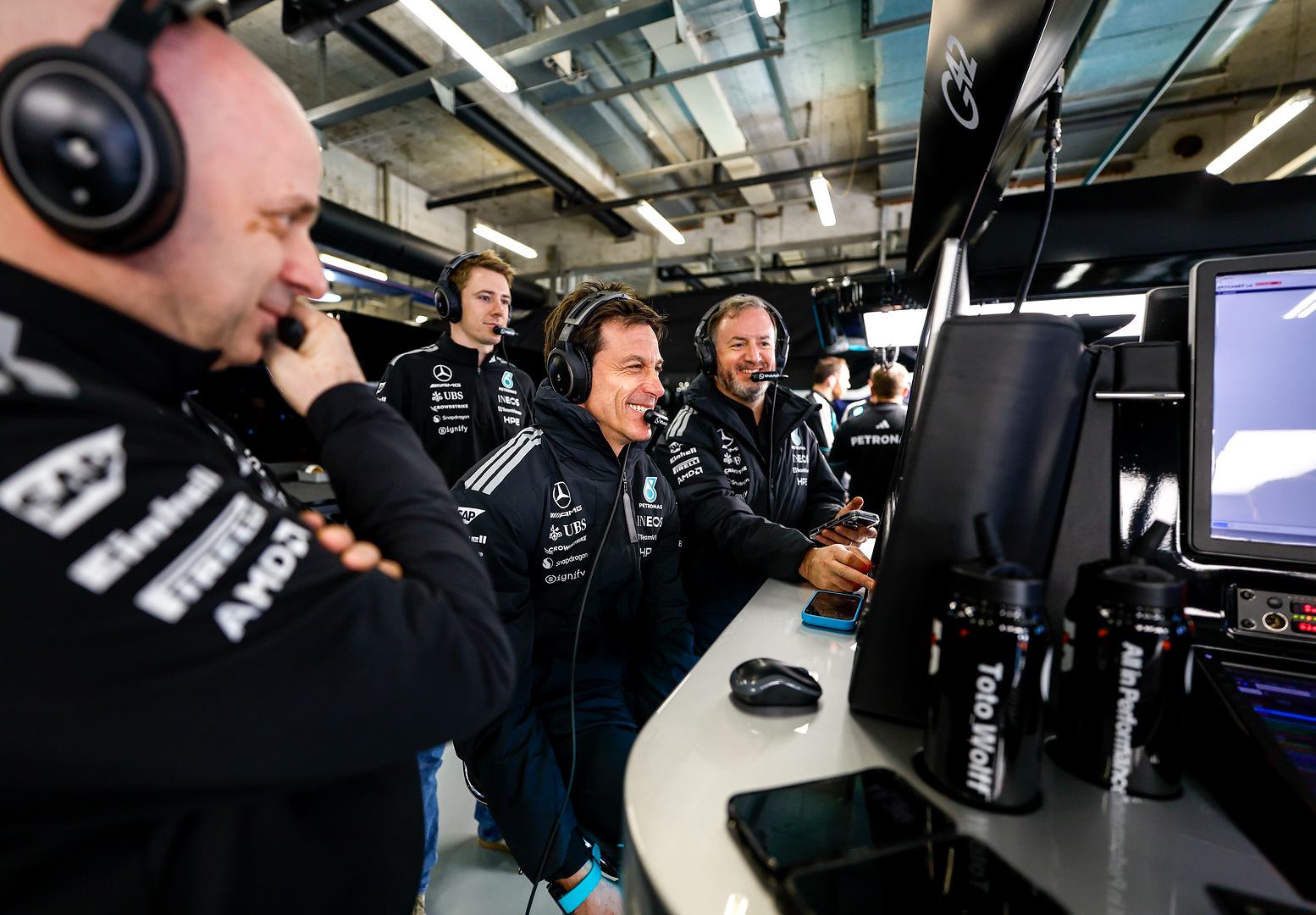
The F1 2026 Miami GP paddock remained a hive of technical debate regarding the sport’s mechanical future after news of V8 engines returning to the sport in 2030. Mercedes Team Principal Toto Wolff admitted he was open to a V8 future for engines if the transition is managed correctly.
This discussion followed a weekend where the field faced specific challenges with the current hybrid regulations under the Florida sun.
Energy management hurdles
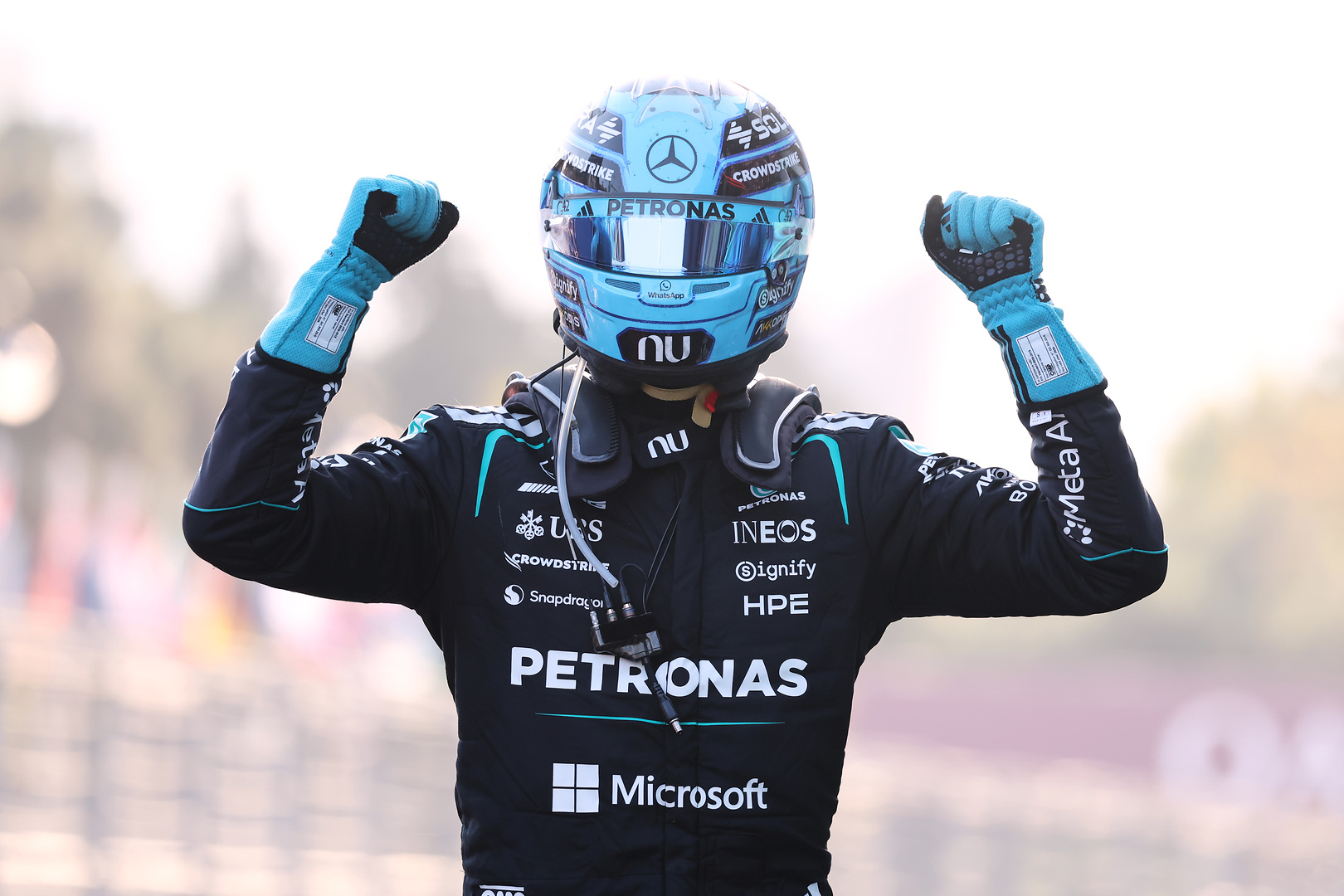
The Miami International Autodrome features several long, high-speed sections that punish inefficient hybrid recovery. During the race, Mercedes drivers George Russell and Kimi Antonelli suffered from significant “clipping” on the straights.
This occurred when the MGU-K ran out of energy prematurely. Consequently, the W17 lost top-end speed before the braking zone, leaving both drivers vulnerable to the surging McLarens.
“I think we were caught on the back foot more than others when it came to energy management and energy deployment. And it’s splendid. There will be tracks that are more energy starved, clearly, where we just need to make sure that’s understood,” Wolff admitted.
The heavy traction demands out of certain turns meant the battery drained faster than the MGU-K could replenish it. The Austrian would not he against further rule tweaks despite the improvement last time out.
“Can we tweak it and optimise it in the midterm? I think absolutely. We would never be against making the show even better.”
Short-term assessment
Debate grew over whether the 2026 regulations need immediate adjustment or not. Many argued that the current fuel flow limits are too restrictive. Furthermore, some suggested a hardware change for 2027.
Wolff noted that while he appreciates the V8 allure, the current F1 engines delivered great racing. He remained philosophically open but prioritised the current spectacle.
“Whoever talks about changing engine [regulations] in the short term should question her or his way of assessing Formula 1 at that stage. We saw a spectacular race, fight for the lead, fights in the midfield,” he argued.
Straight modes and Wolff’s decided future for V8 F1 engines
Wolff proposed an aggressive software deployment to combat the de-rating issues seen in Miami. He believed the “Straight Modes” should be more potent. By increasing energy deployment at high speeds, the FIA could reduce clipping. This would improve side-by-side racing into heavy braking zones.
“I’m thinking about SM modes. I think we need much more straight-line speed with the SM modes. We need to be courageous on doing that,” he explained.
Therefore, he remained open to midterm evolution. “And in the midterm, we are not opposed. Whether we could extract a bit more performance out of the ICE? Great. Give us enough lead time so we can actually do it.”
The 2030 vision
When speaking about the potential return to older configurations for 2030, Wolff remained receptive to a V8 revival for F1 engines while demanding technological relevance. He feared a total abandonment of hybrid systems would look ridiculous to the global automotive industry.
“And then long term, I think from a Mercedes standpoint, we are open to new engine regulations. We love V8s. That has only great memories from our perspective. It’s a pure Mercedes engine. It revs high.”
Transitioning from nostalgia to industrial reality remained the primary hurdle for the Silver Arrows. Wolff insisted that any return to the roar of the past must satisfy the FIA’s requirement for a sustainable, hybrid-aligned future.
“And then how do we give it enough energy from the battery side to not lose connection to the real world? Because if we swing 100% combustion, we might be looking a bit ridiculous in 2031 or 2030. So we need to consider that, make it simpler and make it a mega engine.”
Wolff shares the technical realities of V8 F1 engines
The proposed 1,200bhp power units would require a total chassis redesign. Wolff suggested that a V8 configuration for F1 engines could work if paired with a simplified electrical system. Additionally, the plan must respect the budgets of Original Equipment Manufacturers (OEMs).
“Maybe we can extract 800 horsepower off the ICE and we put 400 on top of it or more in terms of electric energy. We’re absolutely up for it.”
Achieving this high-output balance required a departure from the current cost-intensive complexity. Mercedes was only willing to pursue this “mega engine” if the financial framework allowed for sustainable deployment within the cost cap.
“As long as those discussions happen in a structured way, people’s consideration are being taken on board. We recognise the financial realities of OEMs these days. We don’t have it easy. But if it’s well planned and executed, count us in to come back with a real, real racing engine.”
The prospect of high-revving engines marked a potential shift in philosophy. Mercedes aimed to keep the “mega engine” alive by balancing the past with the future. Wolff believed a V8 platform for F1 engines represented a full circle moment for the brand. Consequently, the journey from Miami’s energy struggles to a new technical frontier remained the defining paddock narrative.