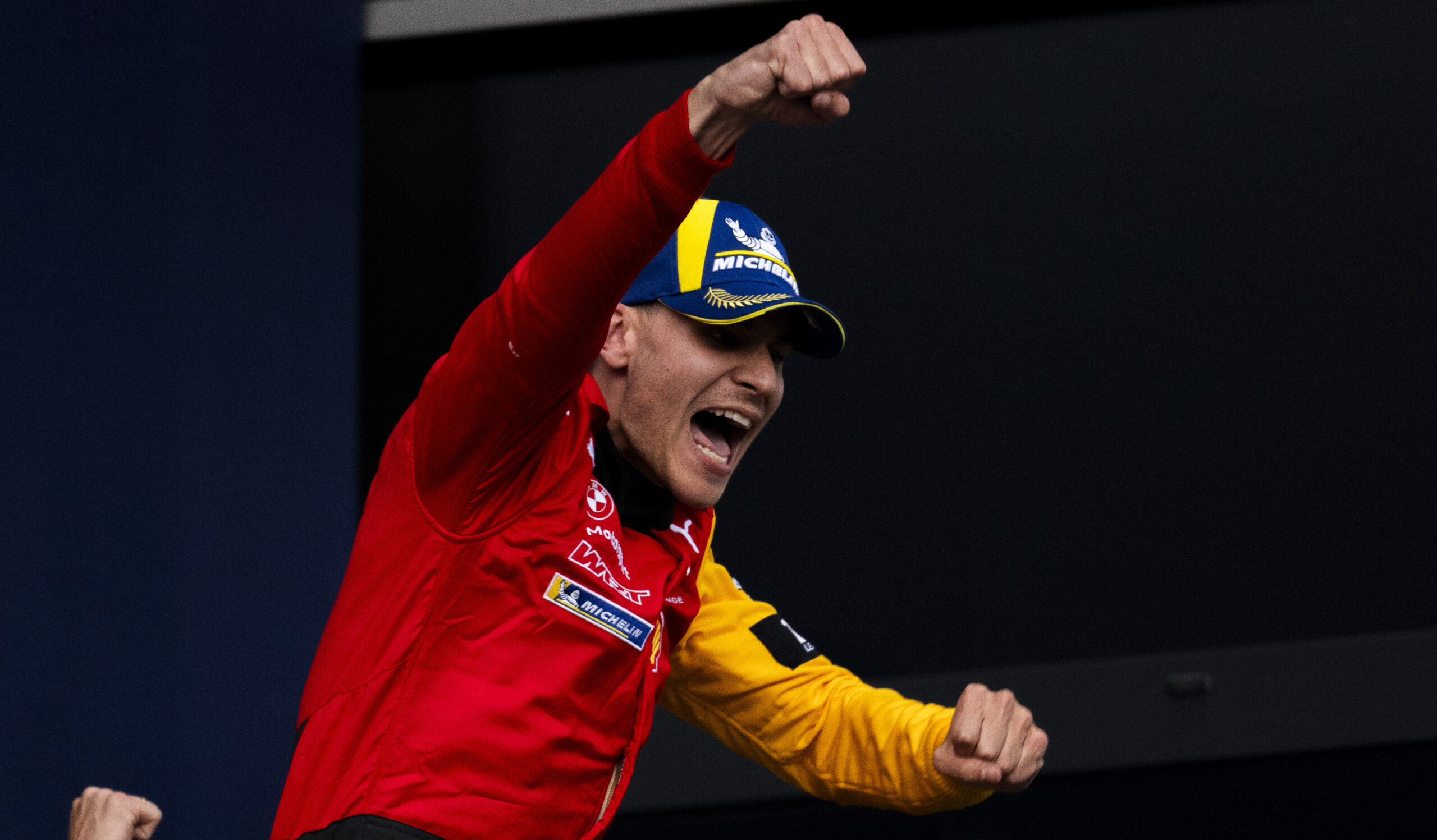
BMW delivered a landmark result at the 6 Hours of Spa-Francorchamps, with Sheldon van der Linde helping lead the manufacturer to its first outright FIA WEC victory after an impressive climb from 10th and 11th on the grid. Through bold strategy and relentless race pace, BMW M Team WRT secured a commanding one-two finish in front of its home crowd.
The #20 BMW M Hybrid V8, shared by van der Linde, René Rast and Robin Frijns, led the race-winning effort, while the sister #15 car completed the dominant result in second place. The breakthrough marked a major milestone for both BMW and Team WRT after months of development in the Hypercar category.
Reflecting on the race, van der Linde told Pit Debrief that the outcome had felt unlikely in the early stages of the weekend, particularly given BMW’s difficult Qualifying position and the challenges of overtaking in WEC competition.
Low expectations after a difficult grid position
BMW did not begin the race from an obvious winning position. After qualifying 10th and 11th, the team faced a difficult task in a Hypercar field where track position can shape an entire six-hour contest.
For van der Linde, that starting point made the eventual result even harder to predict. Although BMW had shown stronger race pace than qualifying speed at previous events, the South African still did not expect a podium fight from so far back.
“Yeah, I never really knew. I mean, I had no expectations to even drive to the podium, to be honest. Because when you start P11 naturally in WEC, it’s very difficult to drive to the front because overtaking is difficult. You rely a lot on pace in the races to get to the front, and obviously, qualifying 11th doesn’t give you confidence that you have the pace to drive to the front.
That uncertainty also reflected the nature of the WEC competition. Unlike some races where cautions and restarts can quickly reshape the field, Spa demanded clean execution, strong pace and a strategy that could move the cars out of traffic.
Van der Linde therefore compared the situation with IMSA, where the rhythm of a race can create different expectations from deeper on the grid.
“If it was an IMSA race, it would have been a different story. I would have expected anything.
Bold strategy unlocks race potential for BMW at Spa
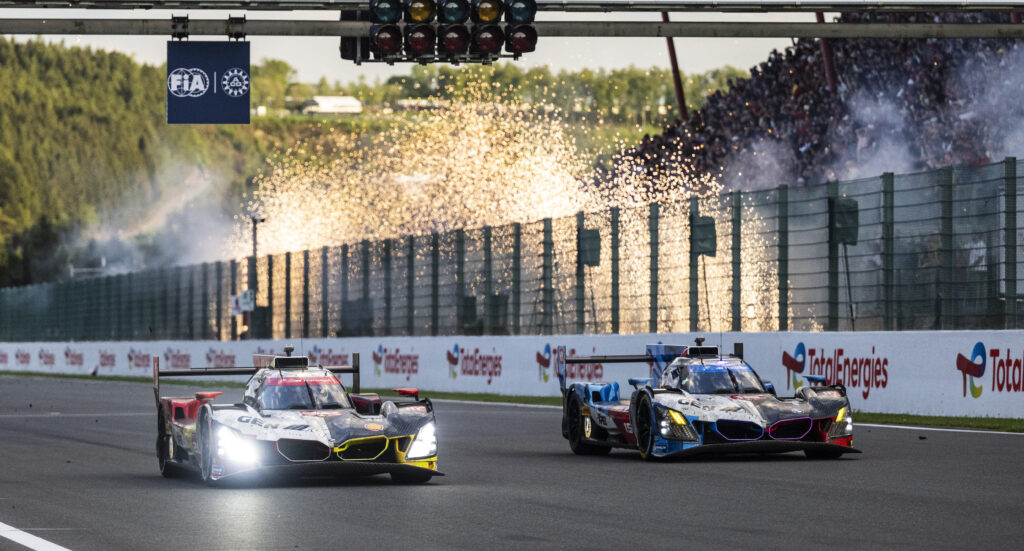
However, BMW quickly found a way to change the shape of its afternoon. The team committed to an aggressive short-fuelling strategy during the opening pit cycle, which allowed the #20 car to jump forward and escape the midfield pack.
That call proved decisive. Once BMW placed the M Hybrid V8 into clean air, the car’s race pace became far more visible. Instead of losing time behind traffic, van der Linde, Rast and Frijns could build rhythm and use the car’s long-run strength.
For van der Linde, the unexpected nature of the charge made the win even more special.
“But that’s what made this win so special for me, is that no one expected it. We went from a risky strategy that, in the end, perfectly paid off, and we got clean air for a few laps or a few stints. Which was the key to success for us.
From that point, BMW no longer looked like a team recovering from a difficult Qualifying. Instead, it became a genuine contender for victory. The car’s performance over the race distance confirmed the progress the manufacturer has made with its Hypercar package.
Van der Linde knew BMW had a stronger race car than qualifying car, but even he felt surprised by the scale of its Spa pace.
“But yeah, the car was flying on race day, and we know this year that we have a much quicker car in the race than in Qualifying. I knew that… I didn’t think it would be that quick to be fair.
Spa delivers redemption after Laguna disappointment
Once BMW reached the front, the race became a test of control. The team had to manage pace, traffic and strategy while protecting its advantage against a highly competitive Hypercar field.
A well-timed safety car later helped BMW preserve track position heading into the closing stages. This time, the timing of the race worked in the team’s favour, offering a sharp contrast to the disappointment van der Linde had experienced at Laguna Seca one week earlier.
There, BMW had shown winning potential but lost the opportunity through race circumstances. Spa, therefore, became more than just a breakthrough WEC win; it became a chance to respond immediately.
“But I feel like we lost the win in Laguna the weekend before, so it was the perfect way to bounce back with this win and really redeem ourselves. And just lift my head up because I thought that we were so close in Laguna, and then to get robbed from it with a strategy call or with a Safety Car that ruined it for us.
This time, BMW stayed on the right side of endurance racing’s fine margins. The team executed its plan, kept the car in clean air and carried its advantage through to the finish.
For van der Linde, that made the victory feel even more rewarding.
“That made it better for us the week after with having that luck of the green flag all the way to the end.”
BMW heads to Le Mans with renewed belief
BMW’s Spa result arrived at an ideal point in the season. With the 24 Hours of Le Mans approaching, the manufacturer now has proof that its Hypercar can win outright in FIA WEC competition.
The one-two finish also highlighted the strength of BMW M Team WRT’s operation. After months of development, the team converted improved race pace and bold strategy into a major result against Ferrari, Toyota, Cadillac, Alpine and Peugeot.
As a result, BMW heads to Le Mans with renewed confidence. Spa showed that the M Hybrid V8 can fight at the front when strategy opens the door and race pace comes alive.