June 11, 2026 marked a significant moment in the history of the 24 Hours of Le Mans, as a liquid hydrogen prototype completed a demonstration lap at Circuit de la Sarthe for the first time.
The Toyota TR LH2 Racing Prototype, driven by Kazuki Nakajima, took to the legendary circuit on Thursday in front of spectators and observers. The run represented another milestone in the Automobile Club de l’Ouest’s long-term commitment to racing innovation and the energy transition.
Moreover, the demonstration underlined the growing role hydrogen could play in the future of endurance racing, as the ACO continues to pursue its ambition of a zero CO2 emissions race.
Toyota makes liquid hydrogen history
The Toyota TR LH2 Racing Prototype became the first liquid hydrogen prototype to run at Le Mans. With Nakajima behind the wheel, the car completed a special demonstration lap on the same circuit that hosts the world’s most famous endurance race.
The moment carried symbolic and technical importance. While hydrogen has already formed part of Le Mans’ future-focused development work, this demonstration showed liquid hydrogen technology in action at the venue itself.
As a result, the run moved hydrogen from concept and testing into a more visible track environment, placing the technology directly in front of fans, industry figures and racing stakeholders.
ACO continues MissionH24 pathway
The demonstration also formed part of a wider hydrogen journey that began several years ago.
Since 2018, the ACO has worked with H24Project through the MissionH24 programme. That initiative has placed hydrogen at the centre of the 24 Hours of Le Mans’ future energy strategy, with the goal of supporting a zero CO2 emissions race.
Several milestones have already followed. These include testing prototypes using gaseous hydrogen, building a gaseous hydrogen station, drafting standards and establishing safety rules.
Therefore, the Toyota demonstration did not stand alone. Instead, it represented the next step in a longer technical and regulatory process designed to prepare hydrogen for future competition.
Liquid hydrogen selected for future prototype category
For the future hydrogen prototype category, the FIA has selected hydrogen stored in liquid form. Liquid hydrogen offers greater density, which makes it especially relevant for endurance racing, where range, packaging and refuelling efficiency matter.
The future category will allow liquid hydrogen to power prototypes through fuel cells or combustion engines. This gives manufacturers more than one technical route while keeping hydrogen at the centre of the platform.
Consequently, Toyota’s Le Mans demonstration gave an early indication of how that future could look on track.
Alpine Alpenglow also joins Le Mans hydrogen showcase
Toyota was not the only hydrogen-powered machine on track during Thursday’s activities.
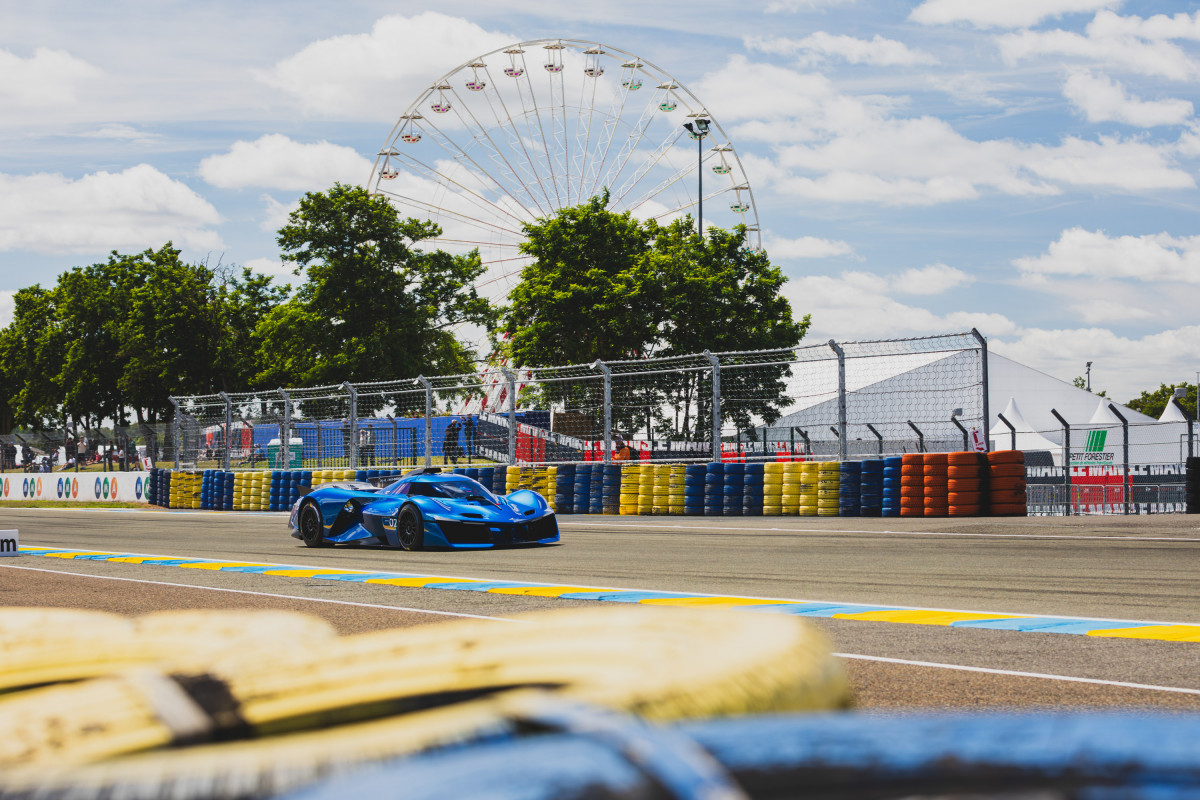
The Alpine Alpenglow, driven by David Praschl, also ran at Le Mans. Alpine will attempt to set a track record on Saturday, targeting a speed of more than 313 km/h.
That effort will add another high-profile moment to the hydrogen showcase at Le Mans. It will also further highlight how manufacturers can use the 24 Hours platform to demonstrate alternative propulsion technologies in a performance setting.
Hydrogen gains momentum at Le Mans
The Toyota TR LH2 Racing Prototype’s demonstration lap marked another important step towards hydrogen’s possible future in endurance racing.
Through MissionH24, the ACO has already laid important foundations around testing, infrastructure, standards and safety. Now, with liquid hydrogen technology appearing on track at Le Mans, the project has reached a new stage.
Ultimately, the demonstration showed that hydrogen can operate within the demanding environment of Circuit de la Sarthe. It also reinforced the ACO’s wider message: zero CO2 emissions racing remains a key target, and hydrogen continues to prove its potential as part of that future.