McLaren will return to the highest level of endurance racing in 2027, more than three decades after its remarkable first-attempt victory at the 24 Hours of Le Mans.
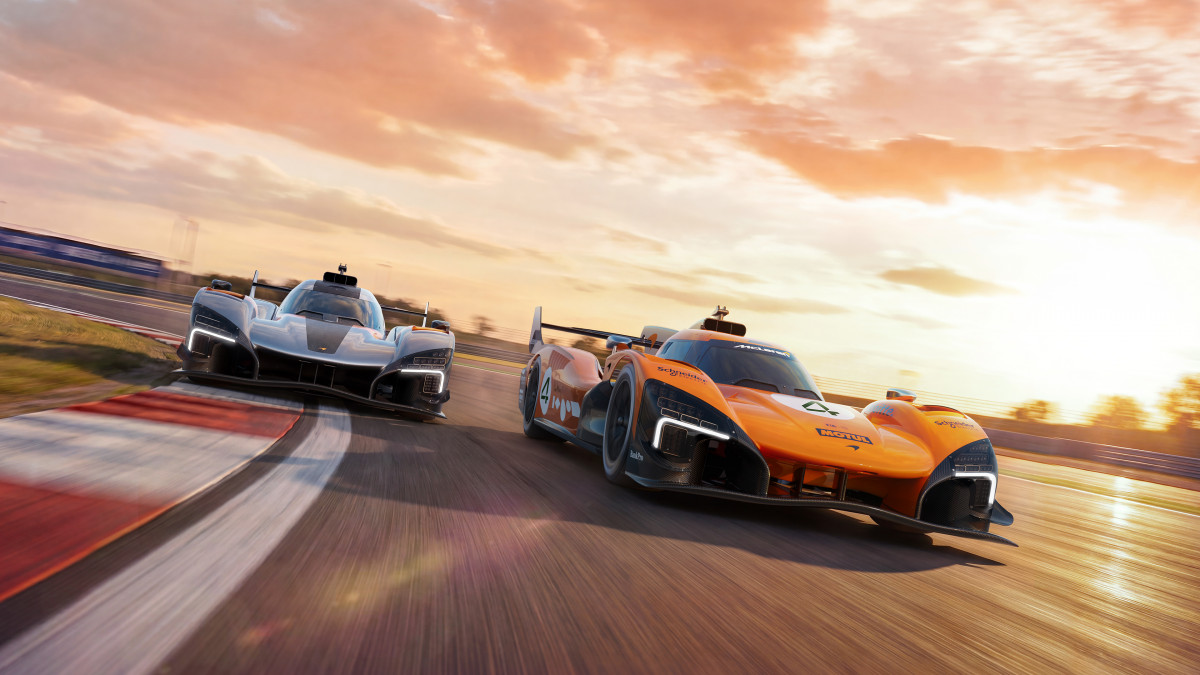
The British manufacturer will enter the MCL-HY in the Hypercar category and pursue a second overall victory at La Sarthe. In doing so, McLaren will reconnect its modern racing programme with a Le Mans ambition that stretches back to founder Bruce McLaren.
The new project combines a purpose-built hybrid prototype, an experienced technical group and a partnership with United Autosports. Meanwhile, its papaya test livery links the MCL-HY to the M6A, the Can-Am machine that helped inspire Bruce McLaren’s original Le Mans vision.
Bruce McLaren sets his sights on Le Mans
Bruce McLaren began to explore a future at Le Mans after he won the race with Ford in 1966. One year later, his M6A claimed the Can-Am title and provided the basis for a more ambitious project.
He developed the closed-cockpit M6GT and planned to produce 250 examples, which would allow McLaren to meet GT homologation requirements. Through that programme, he intended to establish McLaren as a manufacturer and take the company to the world’s most famous endurance race.
However, Bruce McLaren died during a test at Goodwood in 1970. His death halted the programme, although a small number of M6GTs reached completion.
The project never reached Le Mans, but its central ambition survived. Decades later, the McLaren F1 finally carried that dream to La Sarthe.
The McLaren F1 delivers a historic victory
Gordon Murray created the McLaren F1 as an uncompromising road car rather than a competition machine. Nevertheless, several owners recognised its racing potential and encouraged McLaren chief Ron Dennis to develop a GT version.
McLaren therefore introduced the F1 GTR with relatively modest changes. The programme arrived at Le Mans in 1995 with limited preparation and faced a race dominated by relentless rain.
The weather transformed the contest. Rain fell for 17 of the 24 hours, while the F1 GTR had never previously raced in wet conditions. Even so, McLaren placed five of its seven starters at the finish and secured four positions inside the top five.
JJ Lehto, Yannick Dalmas and Masanori Sekiya drove the #59 F1 GTR to overall victory after completing 298 laps. Their success gave McLaren a debut Le Mans triumph and created one of endurance racing’s most celebrated upsets.
Gordon Murray later placed that victory above even his Formula One championship successes. The result showed how deeply Le Mans could shape the legacy of a car, a designer and a manufacturer.
McLaren begins the journey back
McLaren remained competitive at Le Mans until 1998, but it failed to claim another podium before disappearing from the grid.
The marque finally returned in 2024 through the LMGT3 category. That programme allowed McLaren to rebuild its knowledge of the circuit and reacquaint itself with the demands of night running, tyre management, changing weather and long-distance reliability.
However, the GT comeback represented only one stage of a larger plan. McLaren will take the next step in 2027 when it challenges for overall honours with a factory Hypercar entry.
The MCL-HY test car has already appeared in papaya, echoing the colour of Bruce McLaren’s M6A. As a result, the livery connects two defining points in the company’s endurance-racing story: the founder’s original vision and the modern team’s pursuit of victory.
The MCL-HY combines in-house power with Dallara expertise
McLaren has equipped the MCL-HY with an internally developed twin-turbocharged V6 racing engine. A hybrid motor-generator system supports the combustion engine, while the complete powertrain sends up to 520kW, or 707PS, to the rear axle.
Dallara has produced the carbon-fibre chassis. The Italian constructor also supplies chassis technology to the BMW and Cadillac Hypercar programmes, while McLaren already maintains a working relationship with the company through IndyCar.
Through that combination, McLaren will unite its own engine knowledge with Dallara’s prototype experience. The manufacturer must now turn those ingredients into a car that can deliver speed, efficiency and reliability throughout an entire 24-hour race.
McLaren United brings the programme together
McLaren has appointed James Barclay as Executive Director of McLaren Endurance Racing and Team Principal of the McLaren Hypercar Team.
Barclay previously led Jaguar’s Formula E operation and gained experience in developing a competitive programme from its earliest stages. He will now oversee the structure responsible for McLaren’s return to the top class.
The McLaren United name reflects the collaborative approach behind the project. United Autosports will contribute its experience from LMP2 and GT3 competition, while McLaren will provide the factory identity, technical direction and broader racing resources.
Technical Director Chris Dyer will add expertise from the highest levels of motorsport. He played an important engineering role during Michael Schumacher’s dominant period with Ferrari in Formula One and understands how small operational details can decide major races.
Neil Oatley will also support the project as a consultant. Oatley collected Bruce McLaren’s autograph as a child before later designing McLaren Formula One cars during the Alain Prost, Ayrton Senna and Mika Häkkinen eras. His involvement strengthens the link between the manufacturer’s history and its latest challenge.
Mikkel Jensen brings broad Le Mans experience
McLaren has confirmed Mikkel Jensen as one of its first Hypercar drivers. The Dane will arrive with seven previous Le Mans appearances across GTE, LMP2 and Hypercar machinery.
That variety gives Jensen valuable knowledge of how different cars behave around the 13.626-kilometre circuit. It also allows him to contribute experience from established Hypercar programmes as McLaren develops its own challenger.
Jensen believes the team can benefit from the maturity of the current regulations and the knowledge of personnel who have already worked elsewhere in the category.
“We come with more experience this time, because the Hypercar class has been in place for longer. We have drivers, engineers and mechanics that have experience from other places. We’ve got an idea of what to do to get a better car, let’s say.”
His experience should help McLaren accelerate its learning process as testing intensifies ahead of the 2027 season.
Laurens Vanthoor targets the missing overall victory
Laurens Vanthoor will join Jensen in the driver line-up. The Belgian has established himself as one of endurance racing’s leading competitors through factory roles with Audi and Porsche.
Vanthoor won the FIA World Endurance Championship in 2024 and has claimed major victories at the Nürburgring, Bathurst and Daytona. He also secured a Le Mans class victory in 2018 alongside Kévin Estre and Michael Christensen in Porsche’s distinctive ‘Pink Pig’ 911 RSR.
However, an overall Le Mans victory still eludes him. McLaren’s Hypercar programme will offer another opportunity to complete that objective.
His understanding of GT cars, prototypes and long-distance race management will give the new team a proven reference point both during development and in competition.
A new chapter follows an unfinished dream
McLaren will not return to Le Mans simply to celebrate its past. The manufacturer has built the programme around a clear competitive target: another overall victory.
Nevertheless, history gives the project unusual significance. Bruce McLaren first imagined a road-derived GT carrying his name at Le Mans. The F1 GTR fulfilled that ambition in spectacular fashion in 1995, while the MCL-HY will now take McLaren into the modern Hypercar era.
The M6A and the MCL-HY therefore represent more than two racing cars from different generations. Together, they trace the evolution of a long-held ambition.
When McLaren returns to La Sarthe in 2027, it will resume a story that began with Bruce McLaren, reached an extraordinary peak in the rain of 1995 and now enters its most ambitious chapter yet.