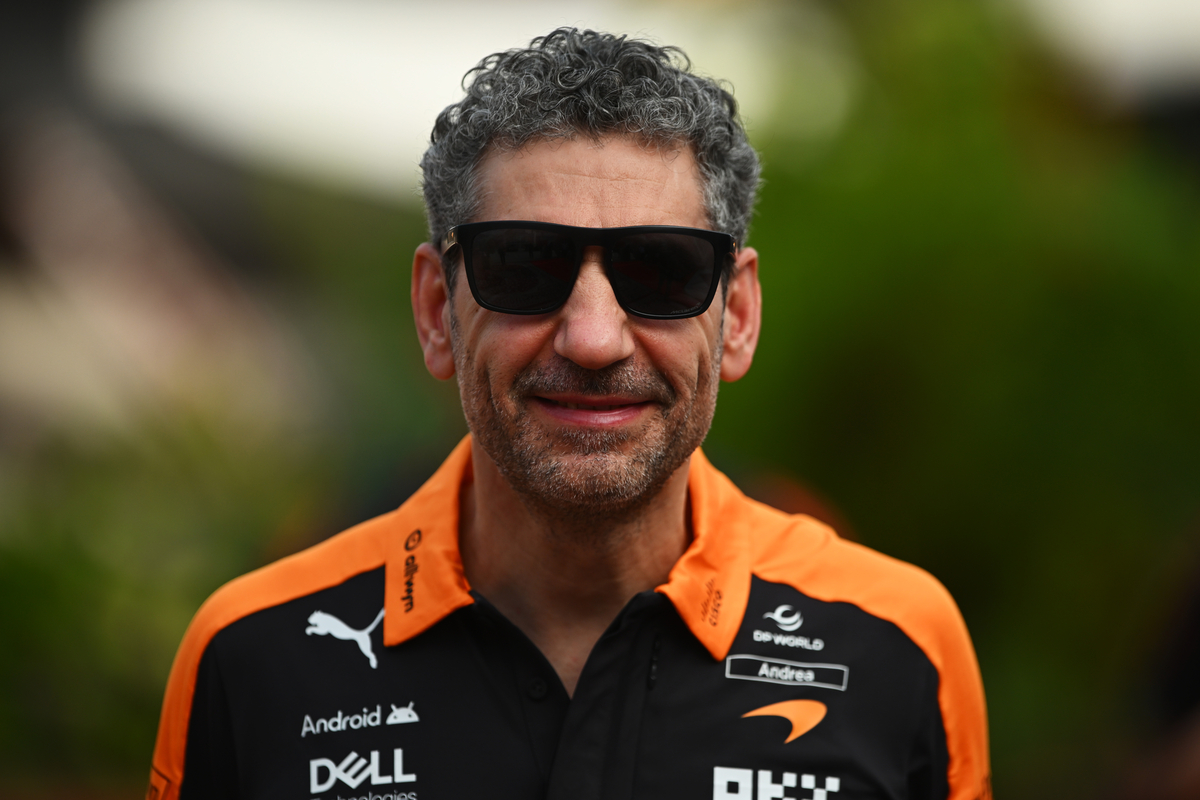
Given that multiple 2026 cars experienced a loss of power and got stranded on the formation lap, Andrea Stella, Fred Vasseur, and Allan McNish shared their thoughts on the unusual software glitch and what it did for the optics of the sport following the chaotic rain-affected F1 race in Malaysia on Sunday.
With a heavy downpour delaying the initial start by 40 minutes, it was announced that the drivers would complete a minimum of two laps behind the Safety Car before lining up for a standing start.
Max Verstappen, who had secured his first pole position of the season in Saturday’s qualifying, slowed down at the front of the field and reported that he was unable to accelerate. Lewis Hamilton also experienced a similar power issue before stopping on the start-finish straight.
Since more cars encountered problems, lapped considerably slower than usual, and were out of position, Race Control had no choice but to abort the starting procedure and throw a red flag.
Nikolas Tombazis, the single-seater director of motorsport’s supreme governing body, clarified that a bug in the software supplied to all teams by the FIA had triggered the chaos.
The FIA issued a software patch for all 11 teams to install during the red flag period, removing the standard wet-weather power delivery restrictions in the affected zones.
The race eventually got underway after a delay of 93 minutes in total, with the drivers in the original starting grid order.
While the F1 drivers didn’t hold back in their criticism of the 2026 power unit regulations, the team bosses were significantly more reserved and tactful in their opinions.
Stella believes F1 deserves credit despite the limitations of the 2026 regulations
Speaking in a print media session after the messy 55-lap race in Malaysia, Andrea Stella weighed in on whether the over-reliance on electronics in 2026 is good optics for F1.
While he acknowledged that the shambolic formation lap—which saw multiple cars ground to a halt due to a software bug—does not bode well for the image of the sport, the Italian argued that F1 merits a little more leniency since the new technical regulations are very complex and Sepang saw the 2026 cars for the first time in wet conditions.
Noting that the 2026 power units have negatively impacted racing at times, Stella, nonetheless, maintained that F1’s efforts to deliver on-track spectacles should be recognised.
“What happened at the start, obviously, is not ideal in terms of presentation of the sport. But at the same time, it’s the first year of new regulations, quite complex from a regulatory point of view.
“And even if it’s not clear to me yet what the problem actually was, it was also the first time that we started it [the race] with some conditions.
“So, I think we have to concede that Formula 1 have done an excellent job in making some new regulations, and regulations which came with some question mark from a power unit behaviour point of view when it came to racing, for instance.
“I think we have to acknowledge that there’s been really good work to make the show work, to make the racing work.”
Stella argues it’s not right to call the F1 race in Malaysia substandard
Reiterating that the 2026 ruleset is still in its nascent stage and that technical problems are commonplace in F1, Andrea Stella accepted that the new regulations need to undergo some fine-tuning.
At the same time, Stella also claimed that it would be unfair to label Sunday’s race in Malaysia as substandard just because the F1 teams encountered some software issues.
“And if there’s some glitches occasionally, then we have to accept that, you know, there’s glitches for everyone.
“If we think for the teams, we have many, and if this is about the sport or some common software issues, I think we have to be in acceptance and be supportive to make sure that it doesn’t happen again.
“But as a competitor, I wouldn’t feel comfortable, considering that as a competitor we have many issues pretty much every weekend, to say that this was not at the right standards.
“I think when there’s this level of novelty, we can accept that there may be some aspects that need some tuning.”
As to whether the McLaren drivers had experienced some power loss as well, the 55-year-old said: “We had some glitches as well going on our car, but probably to a lesser extent than some other cars. But definitely, there were some things that didn’t look right.”
Vasseur says F1 needs to prepare better for racing in the wet after messy formation lap in Malaysia
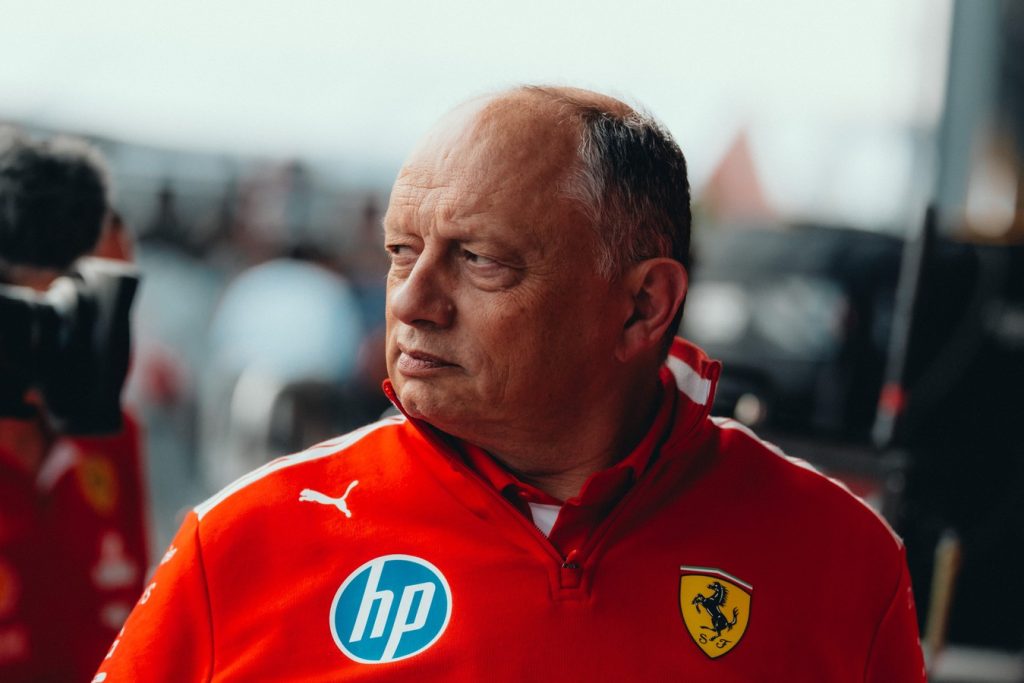
Asked to share his perspective on the software glitch and formation-lap fiasco in Malaysia, Fred Vasseur stated that he didn’t have a definitive answer to why several of the 2026 F1 cars lost power behind the Safety Car on a damp track.
Confirming that the installation of new software issued by the FIA during the red flag stoppage resolved the problem, the Ferrari Team Principal asserted that it’s imperative to grasp what had transpired and put the correct wet-weather power delivery parameters in place before racing in wet conditions the next time.
“Honestly, we need to understand, and I don’t have a clear answer today, now.
“What we know is that the FIA asked us to change all the software of the 22 cars during the red flag. And we all did it, and it was working afterwards.
“For sure, it’s a tough situation, because if it’s only one car, and it was Max [Verstappen] at the beginning, then it was us.
“If it’s only one car, you park the car, and the race is over. Hopefully, I don’t know, if hopefully is the right word, but this impacted 6 or 8 cars, I don’t know. They decided to stop the formation lap.
“But it’s true that we need to understand exactly what happened. It was the first time that we had to load the software with the parameters of the rain conditions.”
McNish says they weren’t worrying about optics at Sepang
With regard to how a software bug leaving cars powerless on the track and leading to an aborted start in Malaysia reflects on F1 and its credibility, Allan McNish acknowledged that it was not an ideal situation.
However, Audi’s Racing Director added that they were concentrating their efforts on resolving the malfunction at the time instead of worrying about optics.
Emphasising how the eleven teams on the 2026 grid had entered uncharted territory at Sepang so far as wet-weather running under the new regulations is concerned, McNish implicitly suggested that the criticism should be toned down.
“Look, I’d say better to resolve it than not resolve it. Obviously, it’s not ideal, and I think everybody’s going to have an opinion on it.
“The reality was we were looking at how to fix the problem and get moved forward as opposed to necessarily the optics of it at the time, very transparently.
“Certainly, I don’t think anybody wants to have a situation where we have to come into the pit lane. We had a delayed start anyway because of the weather and everything else and then to have a further delay from there.
“But it is charting into a little bit new, I would say, environment where the weather, the wet running. So, it was the first time we really ran in the wet. No one’s ever been in that position before. And so, there was an element of going into the unknown a wee bit.”