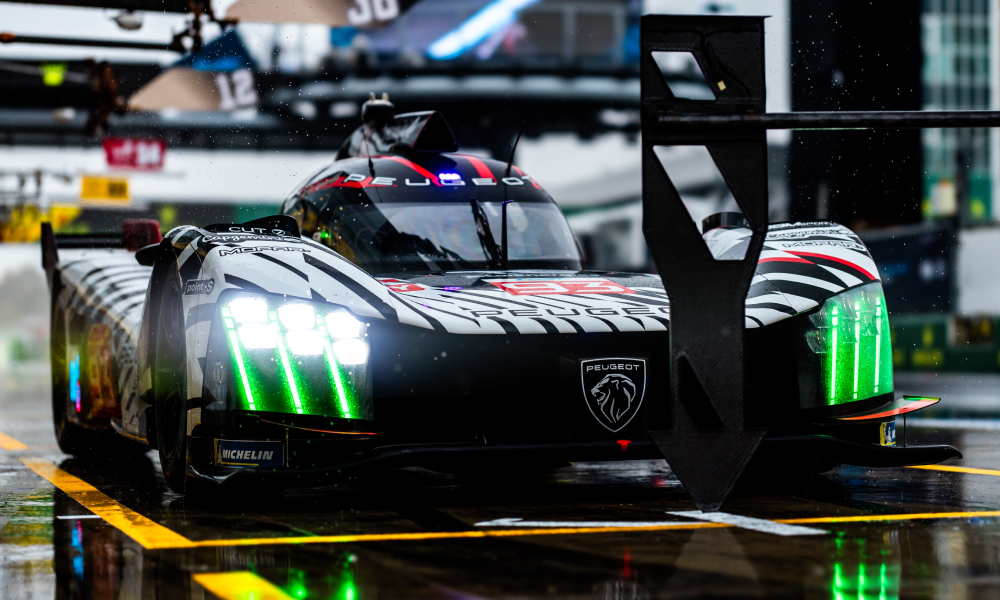
Stellantis has confirmed a major restructuring of its motorsport activities, ending Peugeot’s involvement in the FIA World Endurance Championship (WEC) and bringing its Citroën and Opel Formula E programmes to a close. The decision will take immediate effect for Peugeot following the conclusion of the 2026 WEC campaign, while both Formula E operations will continue until the end of Season 13 in summer 2027.
The announcement, made on 23 November 2026, marks a significant reversal of the group’s recent investment in international motorsport. In particular, Peugeot had already committed substantial resources to developing its 9X8 Hypercar for 2027, while Citroën and Opel had prepared for the introduction of Formula E’s new GEN4 regulations.
Stellantis will now redirect its resources towards customer racing and high-performance road-car development as part of its wider FaSTLAne 2030 strategic plan.
Peugeot ends WEC involvement despite extensive 2027 preparations
Peugeot’s departure brings its latest endurance racing programme to an abrupt conclusion. The French manufacturer returned to the WEC Hypercar category in 2022 with the 9X8, marking its first top-level endurance racing campaign since its previous withdrawal ahead of the 2012 season.
However, the four-year programme never delivered the results Peugeot had hoped to achieve. Despite several podium finishes and occasional displays of competitive pace, the manufacturer failed to secure an outright WEC victory with the 9X8.
The decision also comes at a particularly surprising time because Peugeot had invested heavily in an extensive evolution of its Hypercar for 2027. The revised machine had already completed considerable testing, covering close to 3,600 kilometres during its development programme and undertaking a 24-hour simulation.
The manufacturer had previously expressed confidence that the updated package could address several longstanding weaknesses and improve its competitiveness against the leading Hypercar manufacturers. Its 2027 9X8 development programme represented one of its most ambitious technical efforts since the original car’s redesign in 2024.
Furthermore, Peugeot had already completed its six-driver line-up for 2027. Robert Shwartzman and Alex Quinn had joined the programme, with Quinn earning promotion from his test and development role to a full-time race seat. Jean-Éric Vergne, Nick Cassidy, Loïc Duval and Paul di Resta completed the planned line-up.
Consequently, the withdrawal leaves several drivers without the factory Hypercar programme they had expected to contest next season. It also ends the development of a revised car that had reached an advanced stage ahead of its planned competitive debut.
Citroën and Opel to leave Formula E after GEN4’s first season
Stellantis will also end its involvement in Formula E, although the two affected manufacturers will complete one final campaign before withdrawing.
Citroën joined the championship for the 2025/26 season, taking over the group’s existing Formula E involvement under a different brand identity. The manufacturer retained Nick Cassidy and Jean-Éric Vergne for its second campaign after the pair helped establish a competitive foundation during its debut season.
Cassidy particularly impressed by securing Citroën’s maiden victory in only the team’s second race. However, the French manufacturer will now leave the championship after Season 13, ending its factory-backed involvement after just two seasons under the Citroën name.
Opel faces an even shorter commitment. The German manufacturer had announced its Formula E entry for 2026/27, positioning the programme as an important part of its GSE performance identity.
The company had committed considerable resources to creating an entirely new factory operation rather than joining an existing team. It also recruited experienced Formula E competitor Mitch Evans, who left Jaguar after a decade, to partner 2023 Formula 2 champion Théo Pourchaire.
Their announced driver partnership represented a significant statement of intent ahead of Opel’s debut.
However, Stellantis will now close the programme after its inaugural season. The decision means Opel will spend only one season competing in Formula E despite the resources it has invested in establishing the operation and preparing for the GEN4 regulations.
Stellantis’ Formula E exit creates uncertainty over two team entries
The withdrawal also raises important questions about Formula E’s future grid, particularly because Citroën and Opel have different ownership arrangements.
Monaco Sports Group (MSG Racing) owns the entry currently competing under the Citroën name, rather than Stellantis itself. Consequently, the existing operation could potentially remain in Formula E if MSG secures another manufacturer partnership and an alternative powertrain supplier.
This distinction gives the Citroën team a possible route to survival, even after Stellantis ends its factory involvement. However, the organisation would need to establish a new technical and commercial arrangement before the 2028 season.
Opel’s situation looks considerably more complicated because Stellantis owns its Formula E entry. Unlike the Citroën operation, the German manufacturer’s project does not have an independent team entry that could simply transfer to another manufacturer.
The distinction could therefore have significant consequences for the championship’s grid. Formula E currently has a capacity of 24 cars, but the 2028 field could shrink to just 20 if the affected entries cannot secure alternative arrangements.
The timing also makes the withdrawals particularly damaging because Stellantis had developed an entirely new powertrain for the GEN4 regulations. Both manufacturers had prepared to compete under the new technical framework, which introduces a substantial increase in performance and introduces permanent all-wheel drive.
Consequently, Formula E will lose a major manufacturer’s engineering commitment just as its latest generation of machinery enters competition.
WEC and Formula E face significant consequences
Stellantis’ decision represents another major change for the WEC Hypercar category, which will lose Peugeot following Alpine’s previously announced departure.
Nevertheless, the championship will welcome McLaren and Ford into its top class in 2027. Their arrivals should help offset the loss of two established manufacturers, although the Hypercar field will still face a significant change in its competitive composition.
For Peugeot, this withdrawal also marks its second departure from top-level endurance racing. The manufacturer previously left the championship before the 2012 season because of financial pressures before returning a decade later. Its latest exit therefore raises further questions about the long-term sustainability of major factory-backed endurance programmes.
Formula E, meanwhile, will feel the impact of losing two manufacturers that had committed to its future. Stellantis had remained one of the championship’s major automotive supporters, particularly following the earlier departures of Audi, BMW, Mercedes and McLaren.
The Citroën and Opel programmes had provided valuable manufacturer involvement ahead of GEN4. Their departure will consequently leave Porsche, Jaguar and Nissan among the championship’s most recognisable remaining automotive manufacturers.
Stellantis redirects resources towards customer racing and road-car development
The withdrawals form part of Stellantis’ wider effort to reduce costs and prioritise its core automotive operations. The group has aligned the restructuring with its FaSTLAne 2030 strategic plan, which aims to strengthen product development, improve quality and expand market coverage.
The five-year plan includes 50 product introductions and updates in Europe, with 25 entirely new products. Stellantis therefore intends to redirect the engineering expertise and resources previously dedicated to factory racing towards activities that offer a more direct connection with its road-car customers.
Customer racing will remain a central part of the group’s motorsport strategy, particularly through its multi-brand rally car offering. The company also plans to continue developing exclusive high-performance models for Alfa Romeo and Maserati, alongside Veloce, GTi, HF and GSE derivatives for Alfa Romeo, Peugeot, Lancia and Opel respectively.
Importantly, the announcement does not represent a complete withdrawal from motorsport. Lancia’s customer-focused rally activities will continue, while Dodge’s planned return to the NASCAR Cup Series in 2027 remains unaffected because Stellantis North America operates that programme independently.
The restructuring will nevertheless affect a substantial number of employees. Reports indicate that around 300 positions could fall within the changes, including up to 220 permanent roles. Stellantis has stated that it intends to retain and redeploy affected employees, identifying opportunities across customer racing, high-performance vehicle development and other core activities.