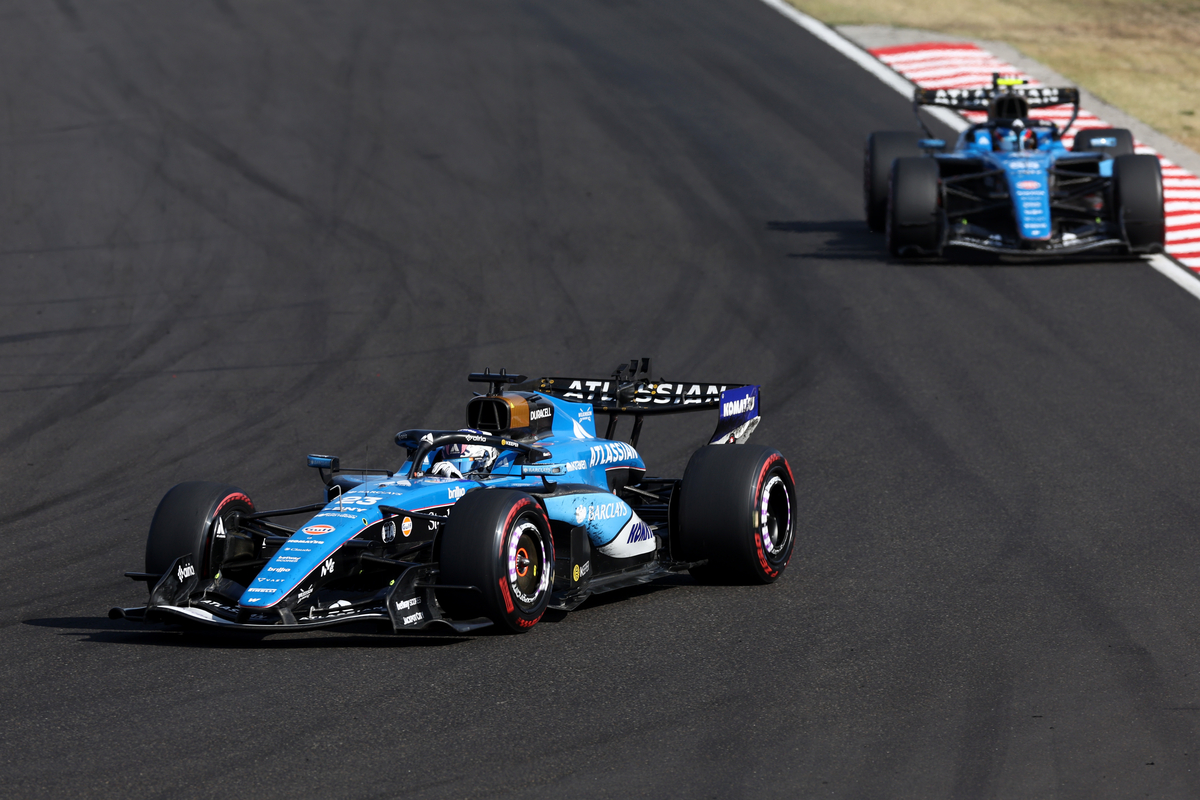
Williams entered 2026 with more optimism than it had carried into an F1 season in years.
After finishing fifth in the 2025 Constructors’ Championship, the Grove-based team looked ready to turn progress into position. It had Alex Albon, Carlos Sainz, James Vowles’ long-term rebuild, and a new regulation cycle that should have rewarded teams with strong direction and clear development.
Instead, Williams reached the summer break ninth in the Constructors’ Championship with 11 points, marking one of the sharper regressions on the grid.
The issue was not only the points total. Williams scored with both drivers, but it rarely looked like the consistent midfield force it had hoped to become under the new regulations. More importantly, the team spent the opening half of the season trying to understand why the FW48 had not delivered the step it expected.
Williams 2026 F1 Mid-Season Review: 4/10
A 4/10 feels fair for Williams’ first half of 2026.
There are mitigating factors. The FW48 missed its planned Barcelona shakedown, started the season overweight, and has not been easy to understand or develop. Williams also still has strong leadership, two capable drivers and a long-term project that remains intact.
However, 2026 was supposed to show a step forward. Instead, Williams reached the summer break ninth, behind Audi, Haas, Alpine and Racing Bulls in the midfield fight. For a team that finished fifth in 2025, that is a painful drop.
A season that started on the back foot
The trouble began before a single racing lap counted.
Williams missed its planned Barcelona shakedown after delays to the FW48 programme. In any season, that would hurt. Under a full regulation reset, it mattered even more.
The 2026 rules brought new cars, new power units and new tyres. Teams needed track time to understand cooling, energy deployment, aerodynamic behaviour and tyre windows. Williams got less of it than it needed, and that early deficit never fully disappeared.
Once the season began, the FW48 quickly showed that Williams had more than one problem to solve.
A car born overweight
The FW48 did not give Albon and Sainz the platform Williams had promised itself for 2026.
The car started the year overweight, and while the team spent months reducing that issue, weight never explained everything. Balance, downforce and consistency also proved difficult to pin down.
At times, Williams showed real pace in isolated sessions or race stints. However, it struggled to carry that form across a full weekend. By the summer break, the FW48 looked less like a car suffering from a slow start and more like the centre of a recovery project.
Melbourne set the tone
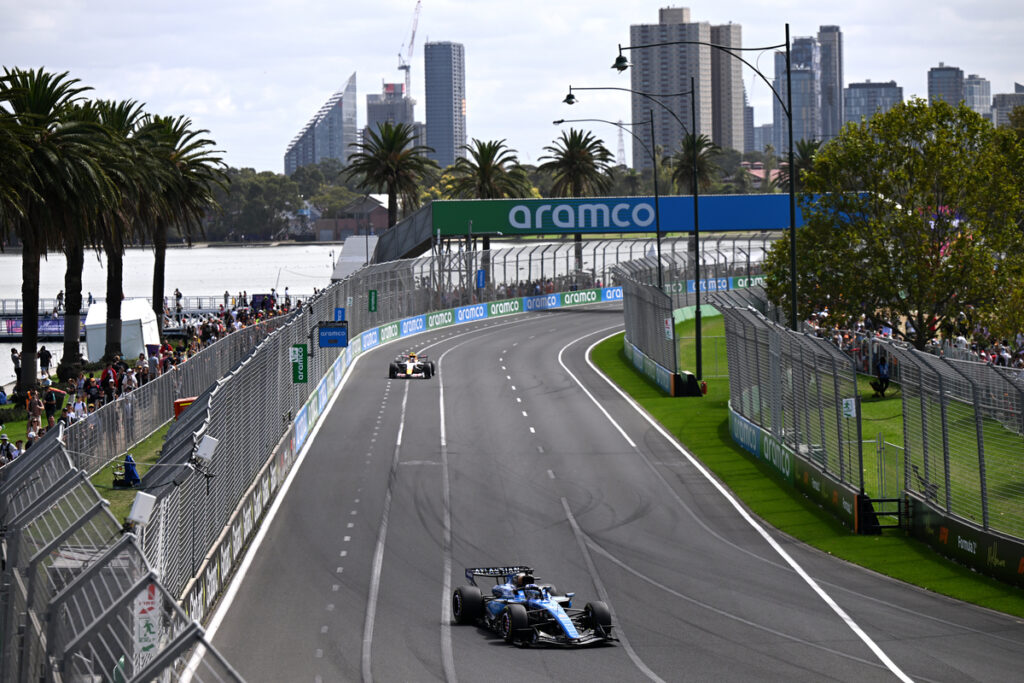
The Australian GP quickly showed the scale of the task.
Albon finished 12th and Sainz came home 15th, while several midfield rivals scored immediately. Haas, Racing Bulls, Audi and Alpine all put cars in the points at the opening race.
That mattered because Williams did not simply miss out. It watched the teams it expected to fight make stronger starts under the same new rules. After missing its planned shakedown, Melbourne confirmed that Williams had begun the season behind the curve.
A year earlier, Williams had looked like one of F1’s cleanest rebuild stories. Nobody expected podiums in 2026, but the team did expect to close in on the front of the midfield. Instead, it spent the first half trying to stop a bad start from becoming something worse.
Development became the real test
Williams brought upgrades through the first half, but the central question became whether those updates taught the team enough.
Development in F1 is not only about producing new floors and wings. It is about understanding why parts work, why they do not, and whether the tools at the factory match what happens on track. A team can bring updates and still fail to move forward if correlation remains weak.
That has made Williams’ 2026 struggles more concerning than a simple lack of pace. A heavy car gives a team a clear target. A balance issue can sometimes be managed through set-up. But if the car’s aerodynamic behaviour is inconsistent, or if upgrades do not behave as expected, the process becomes longer and more difficult.
That is why the second half matters for more than results. Williams needs lap time, but it also needs proof that it has found a clearer development direction.
Why Sainz’s frustration matters
Sainz’s concern carries extra weight because he did not join Williams as a short-term stopgap. He joined for the project.
He arrived with race-winning experience from Ferrari and a clear understanding of what effective in-season development can look like. That makes his frustration more important than a driver simply reacting to a difficult car.
After Hungary, Sainz pointed to McLaren as proof that teams can make major gains during a season when they understand exactly what their car needs. His point was not simply that Williams needed more parts. It was that Williams needed a clearer understanding of what was missing.
For Williams, that is the real warning. The FW48 needs upgrades, but the team also needs to prove that it knows which upgrades will unlock performance.
That question links directly to Sainz’s future. With his contract situation set to be reviewed during the summer break, Williams needs to convince him that 2026 is a painful detour rather than a sign that the project has lost direction.
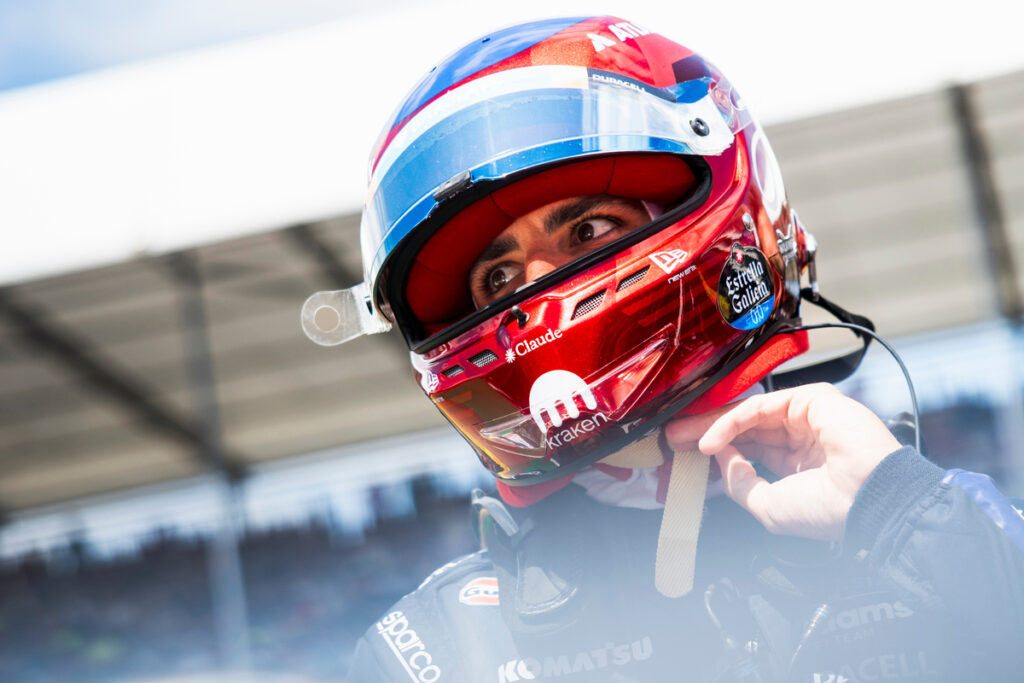
Carlos Sainz Mid-Season Review: 6.5/10
Sainz led Williams in the Drivers’ Championship at the summer break, sitting 15th with six points.
His rating reflects two sides of his first half. On one hand, he often looked like Williams’ stronger all-round performer across qualifying, race starts and race execution. He also gave the team direct feedback about where it was falling short, which matters for a rebuild that needs clarity.
On the other hand, his season has not been clean, mostly out of his hands. Monaco ended in retirement, Austria ended with a loss of power, and Hungary featured contact with Oscar Piastri as the Aussie tried to put a lap on him, leading to a five-second penalty and a late pit stop he questioned. His frustration made sense, but the final results remained thin.
The wider question now concerns his future. Sainz joined Williams on a two-year deal with an option to extend, and the first half of 2026 has left him with plenty to consider during the summer break.
“I honestly don’t know.
“I cannot give you a date, but I imagine, as I always said, that I was going to wait until the summer to sit down with my team and think about this.
“Discuss with them, with James [Vowles] and everyone, the future of the team and my future in it.”
Sainz added that he expected those conversations to begin during the break, even if he could not place an exact date on a decision.
“I expect that during the summer we will start to take a decision and start to see a bit more of the situation, but the exact timing, I don’t know.”
Keeping Sainz convinced may become one of Williams’ biggest second-half challenges. His points total leads the team, but his future will likely depend more on whether Williams can show that 2026 is a setback rather than the direction of travel.
Alex Albon Mid-Season Review: 6/10
Albon reached the summer break 16th in the Drivers’ Championship with five points, one behind Sainz.
His season has been difficult to judge because Williams has rarely given him a car capable of fighting for points on merit. At his best, Albon remains one of the team’s most valuable assets: experienced, resilient and deeply embedded in the rebuild. His 100th Williams race at Hungary also underlined how central he has become to the team’s modern era.
However, his first half also included costly moments. Silverstone summed that up. Starting 16th at what could be considered a home race for the London-born Thai-British driver, Albon’s afternoon effectively ended on the opening lap after contact with Oliver Bearman. He had to pit for a new front wing, received a time penalty, and Williams later used the race to test upgrades before he retired after 43 laps.
Albon took full responsibility afterwards.
“That was my mistake. I didn’t get off to a good start and then my wheels locked up. Unfortunately, that was it. It ruined my race, and after that we took the opportunity to test the new front wing and sort out a few things we don’t usually have time for during a normal race weekend.”
He also accepted that Silverstone reflected the stop-start nature of his season.
“That sums up the season so far quite well – basically, we just need a race that goes smoothly.
“This race was down to me; the first lap wasn’t good enough.”
That self-criticism matters. Albon has not collapsed under the pressure, but he has not always extracted the opportunistic results that defined some of his strongest Williams seasons. With the FW48 already difficult enough, Williams needs cleaner weekends from both sides of the garage for the rest of the 2026 F1 season.
Two drivers, one diagnosis
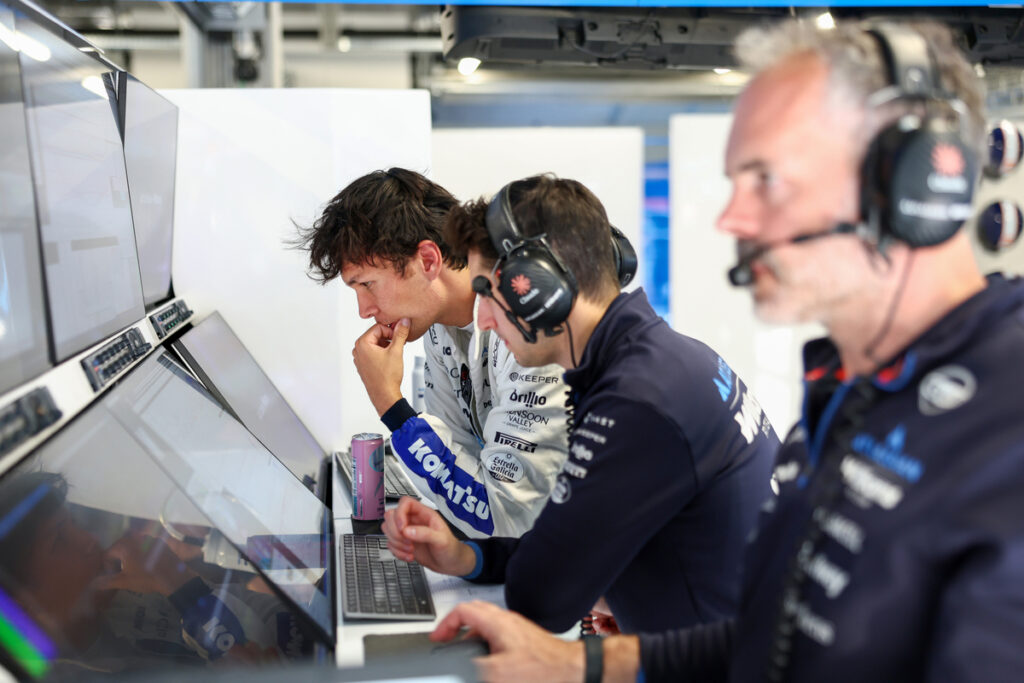
If Williams lacks anything right now, it is not feedback.
Albon has been part of every phase of Vowles’ rebuild and understands how the team has changed. Sainz brings an outside reference point from Ferrari and McLaren, along with direct experience of strong in-season development.
Together, they remain one of the sharper driver pairings outside the top teams. That matters because Williams cannot afford to chase the wrong fix.
But diagnosis only helps if the team can act on it. So far, turning feedback into lap time has been the hard part.
Hungary captured the situation
Hungary captured the shape of Williams’ season almost too neatly.
Sainz looked competitive and felt his race was building well before contact with Piastri, a penalty and a late pit stop he later questioned. He still finished outside the points.
That pattern appeared too often in 2026: a strong stint, a driver finding pace, a strategy window briefly opening, and then a result that did not reflect the promise.
That gap between potential and outcome separates a team with occasional pace from one genuinely established in the midfield fight.
Vowles still points to the long game
Vowles has continued to frame 2026 within Williams’ wider rebuild in F1, and that context is real.
Williams is not only fixing a car. It is still rebuilding the systems, processes and culture behind it. Progress was never guaranteed to be linear, especially under a regulation reset.
But long-term framing has a shelf life.
Drivers, staff and fans can accept a difficult season if they can see it building towards something. The first half of 2026 made that harder to see. The second half needs to provide evidence.
One question for the second half
Williams does not need to become a regular points scorer overnight. After a setback this size, that is not a realistic bar.
What it needs to answer is simpler and harder: does the team understand why 2026 went wrong?
A clearer development direction, stronger correlation, better balance and a more dependable base for 2027 would make the second half worthwhile regardless of the final points total. More of the same would make the season genuinely worrying, not just difficult.
A setback, not yet a verdict
None of this erases what Williams had built in F1 before 2026. The leadership, the driver pairing and the long-term ambition are all still there.
But the first half of 2026 showed how quickly momentum can disappear when a team misses the start of a regulation reset.
The summer break is not just a pause. It gives Williams a chance to establish whether it truly understands the FW48’s problems, and whether that understanding can become a stronger platform going forward.
The project that looked so promising at the end of 2025 now faces its toughest test yet under Vowles. Williams does not need a miracle in the second half of the 2026 F1 season. It needs proof that the pain of the first one meant something.