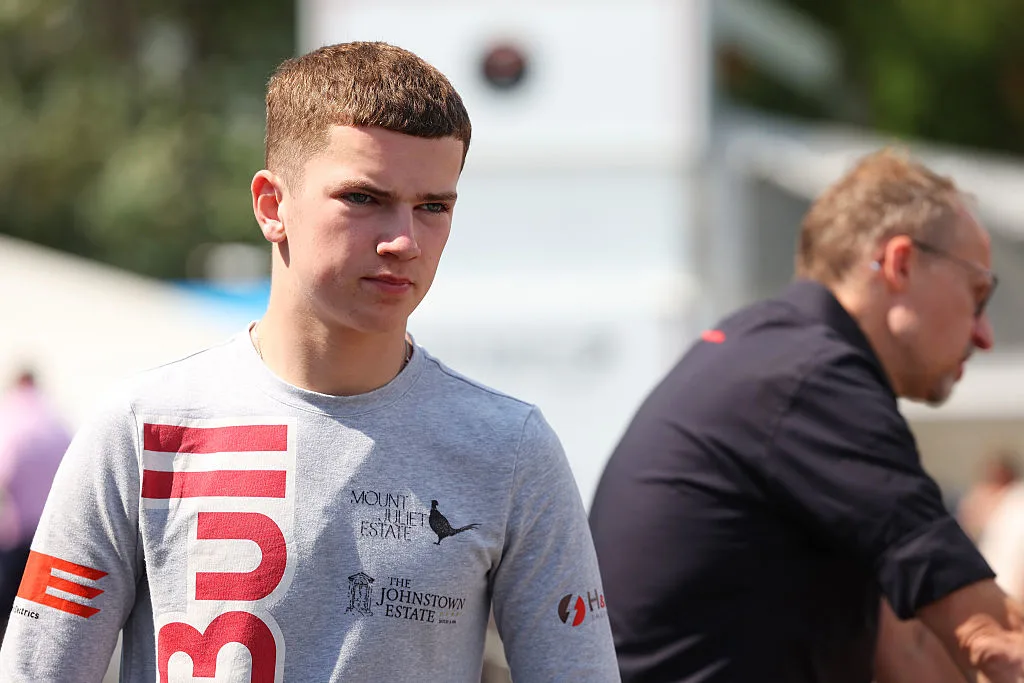
Fionn McLaughlin faced one of the steepest learning curves on the 2026 FIA Formula 3 grid. Just one year after making his single-seater debut, the reigning British F4 champion stepped directly into F3 with Hitech and faced a considerable increase in both machinery and competition.
McLaughlin never underestimated that challenge, describing the transition as a significant step before the season began. His rookie campaign ultimately reflected it. Qualifying frequently left him with too much ground to recover, and he scored just two points on his way to 27th in the Drivers’ Championship. However, several recovery drives and a more competitive conclusion in Madrid provided signs of development during a season focused heavily on learning.
McLaughlin makes the significant jump from F4 to F3
McLaughlin’s progression through the junior categories moved remarkably quickly. He only made his single-seater debut in 2025, finishing third in the Formula Winter Series before winning the British F4 Championship with Hitech at his first attempt. That success earned the Red Bull Junior Team driver an immediate promotion as he continued with Hitech for his 2026 F3 campaign.
Despite his rapid rise, McLaughlin understood that F3 required a significant adjustment. He spent the winter testing, working in the Red Bull simulator and competing in the Formula Regional Oceania Trophy, but still described the move as a “very, very, big jump” from F4. Before the season, he identified extracting the maximum from qualifying as one of his main areas for development, while he already considered racecraft and tyre management among his strengths.
That assessment would prove particularly relevant as the season unfolded. McLaughlin occasionally showed an ability to recover during races, but his starting positions repeatedly limited how much those drives could deliver.
Early rounds underline the learning curve
McLaughlin’s debut in Melbourne provided his first experience of an F3 race weekend and left him with plenty to analyse during the lengthy break before Monaco. Rather than viewing the difficult opening round solely through the results, he used the gap to work in the simulator and better understand where he needed to improve. Ahead of the European leg, McLaughlin told Pit Debrief that he felt refreshed and better prepared following his Melbourne debut.
However, Monaco quickly reinforced the importance of qualifying. McLaughlin qualified 28th around a circuit where overtaking opportunities remained limited, leaving him with little chance to recover through the races. He eventually finished 21st in the Feature Race, while teammate Jin Nakamura also struggled and crossed the line 23rd.
Barcelona produced another weekend outside the points. McLaughlin finished 20th in the Sprint Race, one place ahead of teammate Woohyun Shin, but again lacked the starting position and outright pace required to fight towards the front. By this stage, the transition from F4 to F3 remained evident, particularly over one lap.
Race pace offers encouragement despite qualifying struggles
The middle portion of the campaign began to provide clearer signs of where McLaughlin could make progress. Silverstone offered one example as he ran inside the top 10 during the Sprint Race and battled with drivers who had already established themselves as regular points contenders. Théophile Naël eventually passed him for eighth at Brooklands, but McLaughlin showed greater competitiveness than his early-season results suggested.
Spa-Francorchamps provided an even clearer demonstration of his race pace. McLaughlin endured a particularly difficult qualifying session and started the Feature Race from 29th, leaving another points finish highly unlikely before the lights went out. However, he produced one of his strongest drives of the year, making several overtakes as he climbed 16 positions to finish 13th.
McLaughlin subsequently described Spa as a “learning weekend” after his Sunday fightback, particularly because he had never previously raced at the circuit. Although 13th brought no points, the recovery supported his pre-season belief that his racecraft represented one of his stronger attributes. At the same time, starting 29th reinforced how much qualifying continued to restrict his opportunities.
Progress remains difficult to convert into points
Budapest provided another opportunity to build on his Spa performance, but McLaughlin remained unable to establish himself as a consistent points contender. Hitech, meanwhile, showed what its package could achieve through Nakamura, whose performances increasingly provided the benchmark within the team.
That comparison became particularly significant when Nakamura won the Spa Sprint Race and eventually accumulated 53 points across the season. McLaughlin and Shin managed only two points between them. While the Japanese driver’s success demonstrated the competitiveness available within the Hitech package, McLaughlin’s limited experience remained an important distinction. Nakamura entered F3 after competing in Formula Regional Europe, whereas McLaughlin had moved directly from F4 after just one season in cars.
Monza brought further frustration when McLaughlin missed his braking point at Turn 1 during the Feature Race and made contact with Nandhavud Bhirombhakdi. The incident added another difficult weekend to a campaign where encouraging signs rarely developed into sustained momentum.
Madrid provides a more encouraging conclusion
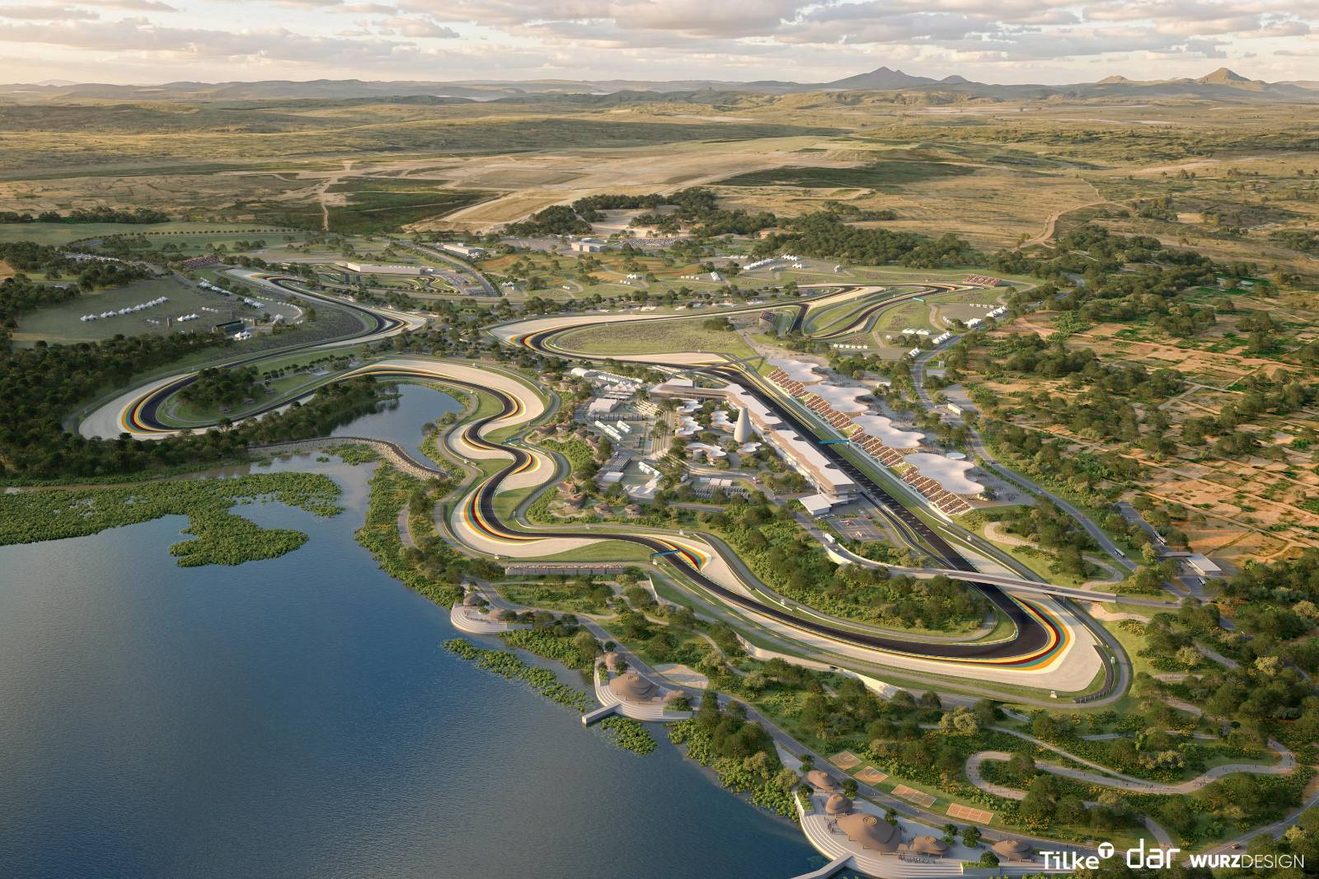
McLaughlin arrived at the Madrid finale with little to show statistically for the experience accumulated throughout the year, but his pace offered signs that the lessons of his rookie campaign had begun to translate. He had already finished sixth during the opening morning of the in-season test at the new circuit, placing him behind Nakamura but comfortably inside the top 10.
That progress became visible again during the final race weekend. McLaughlin produced a strong Free Practice session before finishing seventh, while Qualifying 2 in Madrid left him 16th. Although neither result transformed his championship position, they represented a more competitive baseline than the one he had regularly occupied earlier in the season.
McLaughlin eventually ended the year 27th in the 2026 F3 Drivers’ Championship with two points. The final tally remained modest, particularly alongside Nakamura’s 53, but the championship standings alone do not fully capture the scale of the step he attempted.
A difficult season provides a foundation for McLaughlin
McLaughlin’s rookie campaign ultimately showed why moving directly from F4 to F3 presents such a demanding challenge. Qualifying proved to be the weakness he anticipated before the season began, and poor starting positions too often required him to spend races recovering rather than fighting for points. His limited experience also meant that he had to learn several circuits while simultaneously adapting to a faster and more complex car.
However, his season also contained evidence of development. The drive from 29th to 13th at Spa demonstrated his ability to race through the field, while his pace in Madrid suggested greater confidence by the closing stages of the campaign. Those performances did not compensate for a two-point season, but they provided a clearer indication of progress than the final standings alone.
For McLaughlin, 2026 therefore represented the difficult first stage of an unusually rapid progression through single-seaters. His next step will require turning the racecraft he occasionally demonstrated into complete weekends, particularly by improving the qualifying performance that restricted him throughout his rookie year.