The 94th running of the 24 Hours of Le Mans will feature two female drivers on the grid, with Doriane Pin and Lilou Wadoux both set to tackle the world’s most famous endurance race.
Pin will compete in the LMP2 class with Duqueine Team, sharing the No. 30 Oreca 07-Gibson with Julien Andlauer and Richard Verschoor. Meanwhile, Wadoux will race in LMGT3 with Richard Mille AF Corse, joining Custodio Toledo and Riccardo Agostini in the No. 150 Ferrari 296 LMGT3 Evo.
Their presence gives the 2026 edition two very different but equally compelling storylines. Pin arrives as one of the most highly rated young talents in world motorsport, while Wadoux returns as an established Ferrari GT driver and one of the most significant female figures in modern endurance racing.
Pin returns to Le Mans with Duqueine Team
Doriane Pin heads back to Le Mans three years after making her race debut at La Sarthe with Prema Racing in 2023. For 2026, the French driver returns in LMP2, where she will race the No. 30 Duqueine Team Oreca alongside Andlauer and Verschoor.
The entry places Pin in one of the most competitive categories on the grid. LMP2 rewards outright pace, traffic management and consistency across long stints, while also demanding precision in a class where identical Oreca machinery keeps the field closely matched.
Pin’s 2026 programme also marks another step in her return to endurance racing. After building her reputation across single-seaters and sportscars, she now returns to Le Mans with a line-up capable of fighting in a highly contested prototype field.
Pin brings single-seater momentum to endurance racing
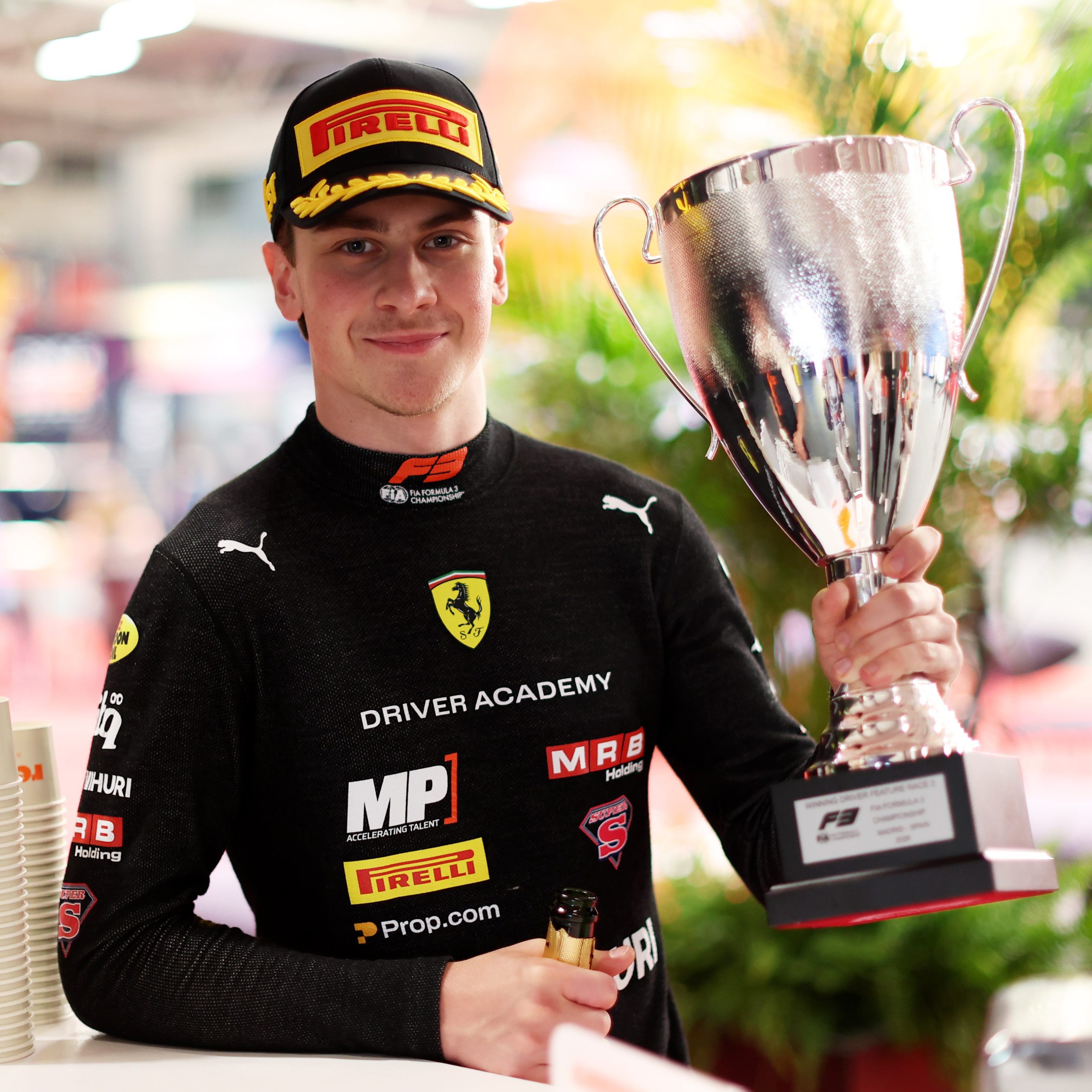
Pin arrives at Le Mans with major single-seater momentum behind her. The French driver won the 2025 F1 Academy title, adding another major achievement to a career already shaped by versatility.
That combination makes her one of the most interesting young drivers on the Le Mans entry. Although F1 Academy sharpened her racecraft in short-format single-seater competition, endurance racing requires a different rhythm.
Pin must balance aggression with patience, particularly when sharing the car across 24 hours and working through multi-class traffic. However, she already knows the discipline well. Before her F1 Academy title, Pin built significant GT and endurance experience, giving her a strong foundation for another Le Mans attempt.
Wadoux returns for fourth Le Mans start
Lilou Wadoux will make her fourth career appearance at the 24 Hours of Le Mans in 2026, continuing her association with Ferrari and AF Corse.
The French driver will contest the LMGT3 class in the No. 150 Richard Mille AF Corse Ferrari 296 GT3 Evo. Wadoux will share the car with Bronze-rated Brazilian driver Custodio Toledo and Italian racer Riccardo Agostini.
The LMGT3 category presents a different challenge from LMP2. While the cars are slower than the prototypes, the class battle can become just as intense because traffic works both ways. LMGT3 drivers must fight their own rivals while constantly managing faster Hypercar and LMP2 traffic from behind.
Wadoux remains a pioneering Ferrari figure
Wadoux has already secured her place in endurance racing history. In 2023, she became the first woman to win an FIA World Endurance Championship race after taking LMGTE Am victory at Spa-Francorchamps with Richard Mille AF Corse.
That breakthrough result underlined why Ferrari has continued to support her. Wadoux combines GT experience with race-winning pedigree, and her continued presence at Le Mans adds another important chapter to a career that has already helped widen female representation in top-level sportscar racing.
Her 2026 entry therefore carries added significance. She arrives not only as one of two women on the grid, but also as a proven winner in international endurance competition.
Two French drivers, two different Le Mans routes
Pin and Wadoux both represent France at Le Mans, but they arrive through different racing pathways.
Pin has moved between GT racing, single-seaters and prototypes, building her profile through F1 Academy while also maintaining clear endurance ambitions. By contrast, Wadoux has become increasingly associated with Ferrari’s GT structure and has already delivered landmark success in FIA WEC competition.
Together, they show the different routes available to female drivers in modern endurance racing. One returns to La Sarthe as a young multi-discipline prospect in LMP2. The other comes back as a proven GT winner in LMGT3.
Female representation remains limited but significant
The 2026 Le Mans entry list includes only two female drivers across the grid. That makes Pin and Wadoux’s appearances important beyond their individual programmes.
Women have competed at Le Mans across several eras, from early pioneers to modern factory-linked drivers. However, female representation has remained limited, particularly in the top categories.
According to the historical list of female 24 Hours of Le Mans drivers, 68 women had started the race up to and including the 2025 edition. For 2026, Pin and Wadoux are set to add to their existing Le Mans records, with Pin returning for her second appearance and Wadoux preparing for her fourth.
Their participation also comes during a period of increasing visibility for women in motorsport. Pin’s F1 Academy success has given her a major platform, while Wadoux’s Ferrari role and FIA WEC achievements have shown how female drivers can build long-term careers in endurance racing.
Female drivers in 24 Hours of Le Mans history
The history of female participation at Le Mans stretches back to 1930, when Odette Siko and Marguerite Mareuse became part of the race’s early story. Since then, women have raced at La Sarthe across different periods, categories and competitive eras.
Several names stand out. Siko remains one of the most significant early figures after finishing fourth overall in 1932, which remains the best overall result by a female driver at Le Mans. Anny-Charlotte Verney became one of the event’s most experienced female competitors, while modern drivers such as Rahel Frey, Michelle Gatting, Sarah Bovy, Wadoux and Pin have helped carry representation into the FIA WEC and Hypercar-era landscape.
Female 24 Hours of Le Mans drivers
- Odette Siko — France — 1930–1933
- Marguerite Mareuse — France — 1930–1931
- Joan Chetwynd — United Kingdom — 1931
- H.H. Stisted — United Kingdom — 1931
- Elsie Wisdom — United Kingdom — 1933, 1935, 1938
- Marie Desprez — France — 1933
- Dorothy Champney — United Kingdom — 1934
- Kay Petre — Canada — 1934–1935, 1937
- Anne-Cécile Itier — France — 1934–1935, 1937–1939
- Gwenda Stewart — United Kingdom — 1934–1935
- Eva Gordon-Simpson — United Kingdom — 1935
- Joan Richmond — Australia — 1935, 1937
- Doreen Evans — United Kingdom — 1935
- Barbara Skinner — United Kingdom — 1935
- Colleen Eaton — United Kingdom — 1935
- Margaret Allan — United Kingdom — 1935
- Dorothy Stanley-Turner — United Kingdom — 1937
- Joan Riddell — United Kingdom — 1937
- Marjorie Eccles — United Kingdom — 1937
- Fernande Roux — France — 1938
- Suzanne Largeot — France — 1937–1939
- Marjorie Fawcett — United Kingdom — 1938
- Germaine Rouault — France — 1938, 1950
- Viviane Elder — France — 1949
- Régine Gordine — France — 1950
- Yvonne Simon — France — 1950–1951
- Betty Haig — United Kingdom — 1951
- Marie-Claude Beaumont — France — 1971–1976
- Christine Beckers — Belgium — 1973–1974, 1976–1977
- Anny-Charlotte Verney — France — 1974–1983
- Yvette Fontaine — Belgium — 1974–1975
- Marie Laurent — France — 1974
- Martine Rénier — France — 1974, 1976
- Corinne Tarnaud — France — 1975
- Christine Dacremont — France — 1975–1978
- Michèle Mouton — France — 1975
- Marianne Hoepfner — France — 1975, 1977–1978, 1980
- Lella Lombardi — Italy — 1975–1977, 1980
- Anna Cambiaghi — Italy — 1977
- Juliette Slaughter — United Kingdom — 1978
- Desiré Wilson — South Africa — 1982–1983, 1991
- Margie Smith-Haas — United States — 1984–1985
- Lyn St. James — United States — 1989, 1991
- Cathy Muller — France — 1991
- Tomiko Yoshikawa — Japan — 1992–1995
- Lilian Bryner — Switzerland — 1993–1995, 1997
- Claudia Hürtgen — Germany — 1997–1999, 2001
- Vanina Ickx — Belgium — 2001, 2003, 2005, 2008–2011
- Milka Duno — Venezuela — 2001–2002
- Liz Halliday — United States — 2005–2007
- Amanda Stretton — United Kingdom — 2008
- Natacha Gachnang — Switzerland — 2010, 2013
- Cyndie Allemann — Switzerland — 2010
- Rahel Frey — Switzerland — 2010, 2019–2025
- Andrea Robertson — United States — 2011
- Keiko Ihara — Japan — 2012–2014
- Christina Nielsen — Denmark — 2016–2018
- Inès Taittinger — France — 2016
- Michelle Gatting — Denmark — 2019–2024
- Manuela Gostner — Italy — 2019–2020
- Tatiana Calderón — Colombia — 2020–2021
- Sophia Flörsch — Germany — 2020–2022
- Beitske Visser — Netherlands — 2020–2021
- Sarah Bovy — Belgium — 2021–2025
- Lilou Wadoux — France — 2022–2023, 2025, 2026
- Doriane Pin — France — 2023, 2026
- Jamie Chadwick — United Kingdom — 2025
- Célia Martin — France — 2025
Le Mans offers a major stage for both drivers
The 24 Hours of Le Mans places every driver under pressure, regardless of category. It tests pace, discipline and adaptability across daylight, darkness, changing temperatures and constant traffic.
For Pin, the race offers another chance to prove herself in LMP2 machinery against a deep prototype field. For Wadoux, it provides a platform to chase LMGT3 success with Ferrari and add to an already important endurance racing career.
Although only two women will start the 2026 edition, both bring serious credentials to La Sarthe. Pin and Wadoux are not simply part of the entry list; they are two drivers with the pace, racecraft and experience to shape their respective class battles.
See the full schedule for the 2026 edition of the 24 Hours of Le Mans, and you can get live updates on race day from our blog.
24 Hours of Le Mans entry list