Mercedes F1 driver Kimi Antonelli believes the FIA’s recent ban on an engine mode used by Mercedes and Red Bull to “trick” the system in qualifying for the first few races of 2026 has been a positive change in terms of safety.
The two teams exploited an ’emergency shutdown’ mode for the MGU-K, which would then override the normal electrical energy ramp down at the final dash to the finish line in a hot lap, and thus would give a slight but significant advantage compared to those who didn”t use it.
Why the FIA has moved to block Mercedes and Red Bull F1 engine trick
And whilst it wasn’t illegal at the time, the biggest consequence came afterwards, as the car would run completely out of any electrical deployment for a minimum of 60 seconds, leaving only the combustion engine to do the work during that time.
That meant drivers having an incredibly low power delivery for a minute, which could’ve led to incidents due to the differential of speed between cars – and in some cases, it could completely shut the car off, as the new self-learning machines weren’t originally meant to be used like that, causing unprecedented software glitches.
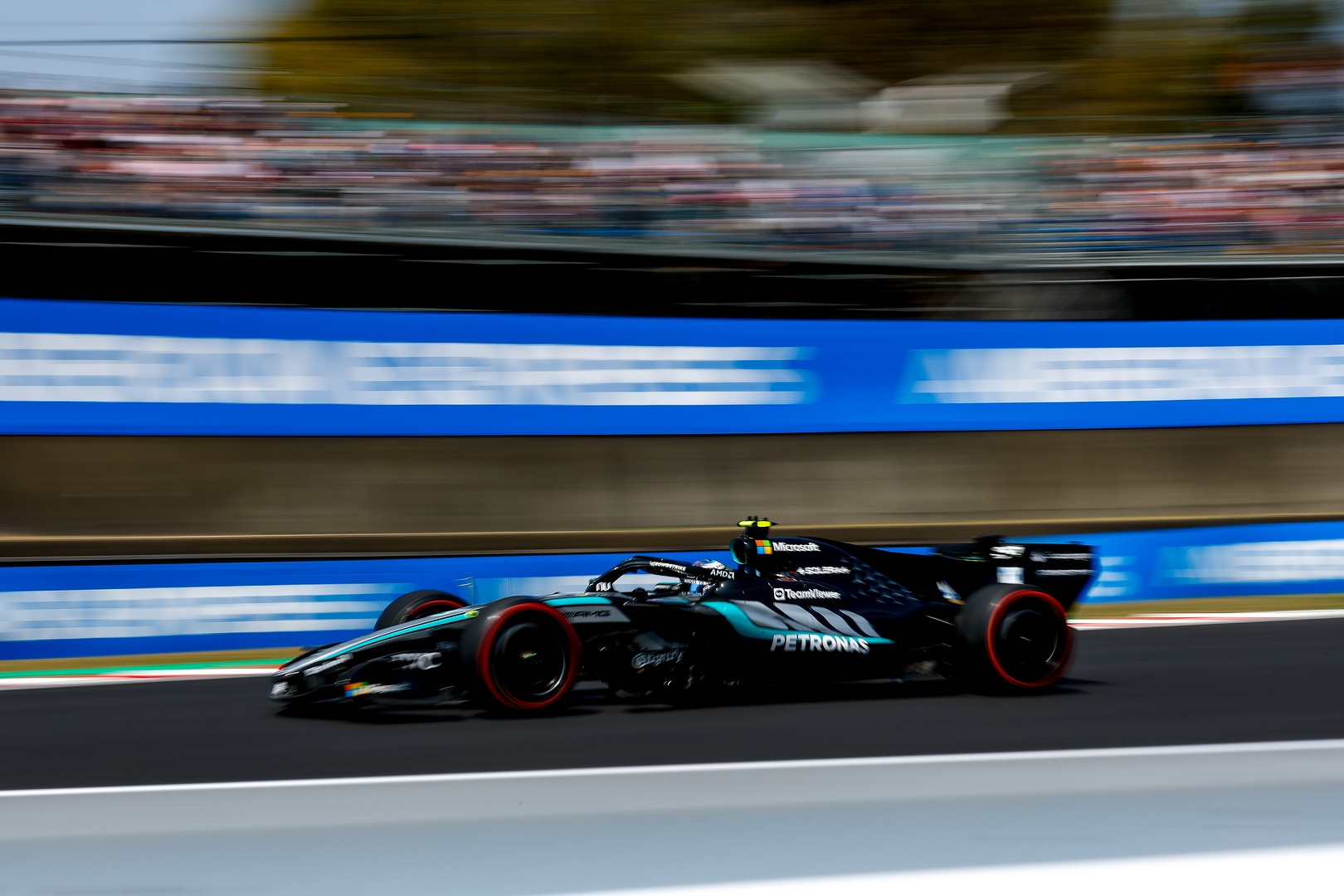
Mercedes F1 opted not to use this engine mode in qualifying for the Japanese GP after Antonelli’s scary moment in practice at Suzuka, when he ran out of energy for the entirety of the first sector, leaving him vulnerable to fast-approaching traffic in the esses.
“Yeah, I mean, obviously, it wasn’t like the nicest of feelings [npt having any electrical energy for 60s].
“Of course when you try to squeeze every bit of performance on one side, [that] can come with facing some issues or some unexpected situation,” the current F1 championship leader said in a media call earlier this week.
“Not so safe” – why the negatives outweighed the gains
Antonelli pointed out that the balance between the pros and cons of using the system were greatly disbalanced, as a gain of just a “couple” hundredths of a second would mean a full minute of potentially being a “sitting duck” on the track, which is very dangerous at circuits like Suzuka, as he experienced in practice after the end of a qualifying simulation run:
“I was aware that [it] could have happened, but obviously, I didn’t really experience it up until, you know, obviously Melbourne and Suzuka.
“First of all, it’s not so safe, because especially in Suzuka, I was sitting duck in the esses, and knowing that the track is also not very wide, there’s not a lot of space – it was quite stressful, for sure.
“Not being able to do anything, because obviously, the car was not responding to any input. And I just, you know, I just was rolling very slowly on track. And it was, yeah, it was a stressful moment.”
Risk of “easily” impeding other cars and getting a penalty
Another issue that drivers could face whilst using the engine trick is that with so little power at their disposal, there wouldn’t be much they could do to avoid impeding other cars in qualifying, which would then massively ouweigh the marginal gain in lap time, if the price to pay is risking a collision or even a three-place grid drop for the grand prix:
“But now it’s good to know that obviously, we probably won’t face this thing again,” Antonelli said of Mercedes’ engine trick. “Because also in qualifying, you could easily get a penalty for this.
“You can easily impede someone on a lap, and then you can easily get a penalty. And that’s not what you want.
“So of course, you know, this comes with giving up maybe a couple of hundreds of a second, so very little time. But at least it gives the confidence that this thing is not going to happen again.”