In GT racing, the smallest inefficiencies can quickly define the outcome of a race. Every movement, decision, and second carries weight. Therefore, teams constantly search for tools that can sharpen execution and eliminate wasted time. Against this backdrop, CieloVision has entered the paddock through a new partnership with JMF Motorsports, beginning at Circuit of The Americas (COTA) and continuing throughout the 2026 GT World Challenge (GTWC) America season.
A strategic collaboration between CieloVision and JMF Motorsports takes shape for 2026 GTWC America
The collaboration brings together advanced spatial intelligence technology and a front-running GT programme. JMF Motorsports competes across multiple SRO America categories, including a championship-leading effort with the Mercedes-AMG GT3 platform.
As part of the agreement, CieloVision will operate as both sponsor and technical partner. Its branding will appear on race cars, while its system will integrate directly into live pit operations.
Consequently, the partnership moves beyond traditional sponsorship. Instead, it focuses on applying technology in real-time, high-pressure racing scenarios.
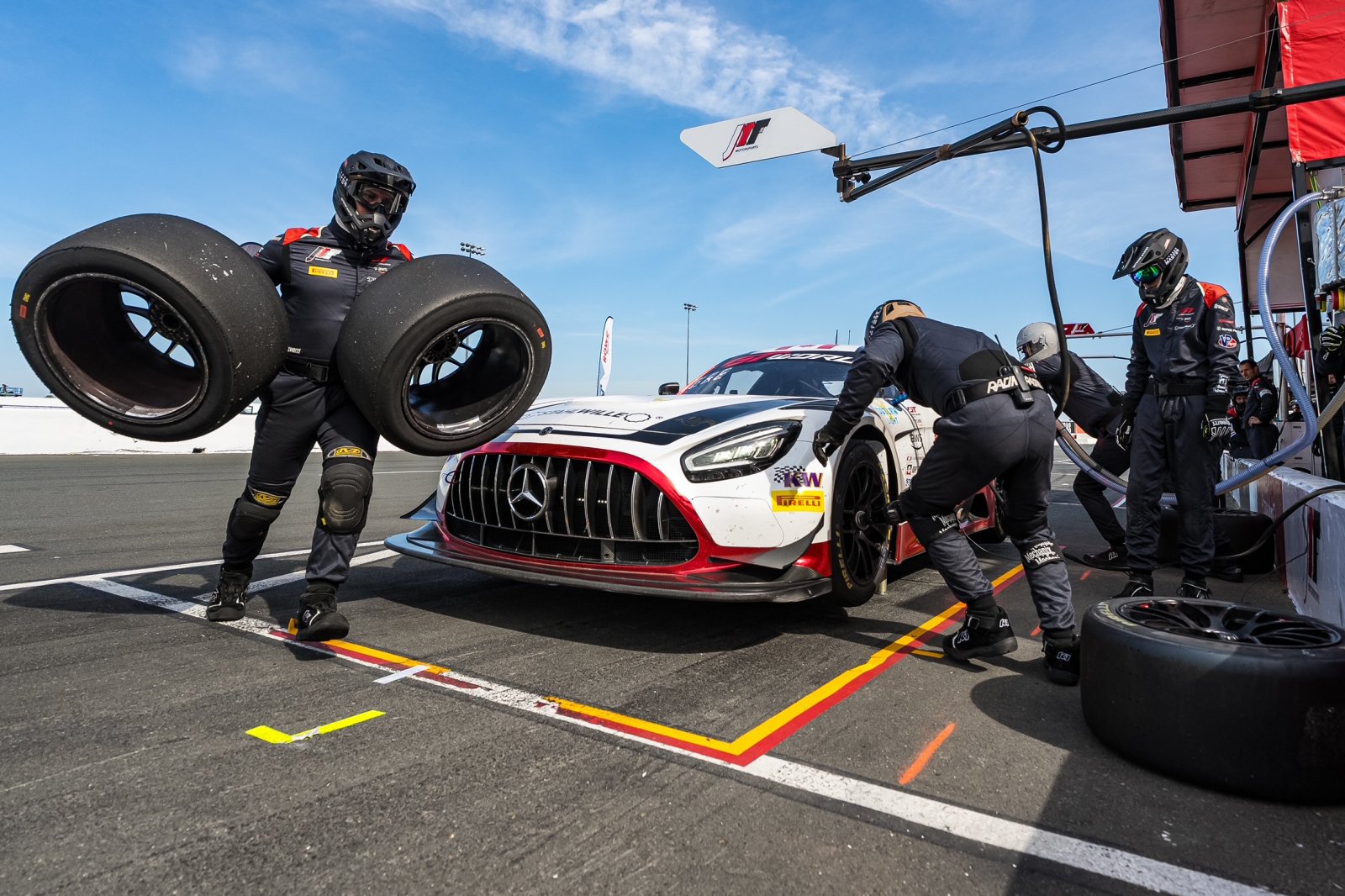
Initially, the project targets a specific yet crucial aspect of race execution: pit stops. CieloVision’s system will analyse how cars enter and position themselves within the pit box.
Although this detail may seem minor, it directly impacts several critical elements, including fuelling efficiency, crew coordination, and overall stop time. Even slight misalignment can create delays that cost valuable track position.
By capturing real-time data, the system enables the team to understand exactly what happens during each stop. Over time, this insight will help refine processes and improve consistency.
Learning in a high-speed environment
For CieloVision, motorsport offers a unique testing ground. The pace, pressure, and precision required create an ideal environment to evaluate the effectiveness of its technology.
Imre Szenttornyay, CEO of CieloVision, emphasised this opportunity, saying, “This is the kind of environment where you learn quickly. When timing matters and everything is happening at speed, you can see where technology adds value. We are putting our platform into a live setting and letting it show us where it works best.”
From the team’s perspective, the collaboration introduces an additional layer of analysis. JMF Motorsports already evaluates its operations in detail, but this technology offers a fresh perspective.
Danny Kok, CEO of JMF Motorsports, explained the benefit, saying, “We already review everything we do, but this gives us a different lens. It allows us to examine our processes more closely and confirm what we believe is working.”
As a result, the team can validate its existing methods while identifying new opportunities for improvement.
Looking ahead, both organisations expect the partnership to evolve. As more data becomes available, additional applications will likely emerge, extending beyond pit stops into other operational areas.
This iterative approach ensures that the collaboration remains dynamic. Rather than applying a fixed solution, both sides will adapt and refine the technology based on real-world insights.
Beyond motorsport: A broader vision
Currently, CieloVision applies its spatial intelligence platform across industries such as retail and quick-service restaurants, where it tracks behaviour, improves efficiency, and enhances customer engagement.
However, motorsport introduces a new dimension. The rapid feedback loop and performance-driven environment push the technology to operate at its limits. For JMF Motorsports, this aligns perfectly with its philosophy of continuous improvement. By embracing innovative tools, the team strengthens its ability to compete at the highest level.
Ultimately, this partnership highlights a broader trend within motorsport: the increasing role of data and technology in gaining competitive advantage.
By combining racing expertise with spatial intelligence, CieloVision and JMF Motorsports aim to transform small operational details into measurable performance gains. If successful, their collaboration could redefine how teams approach execution in GT racing.