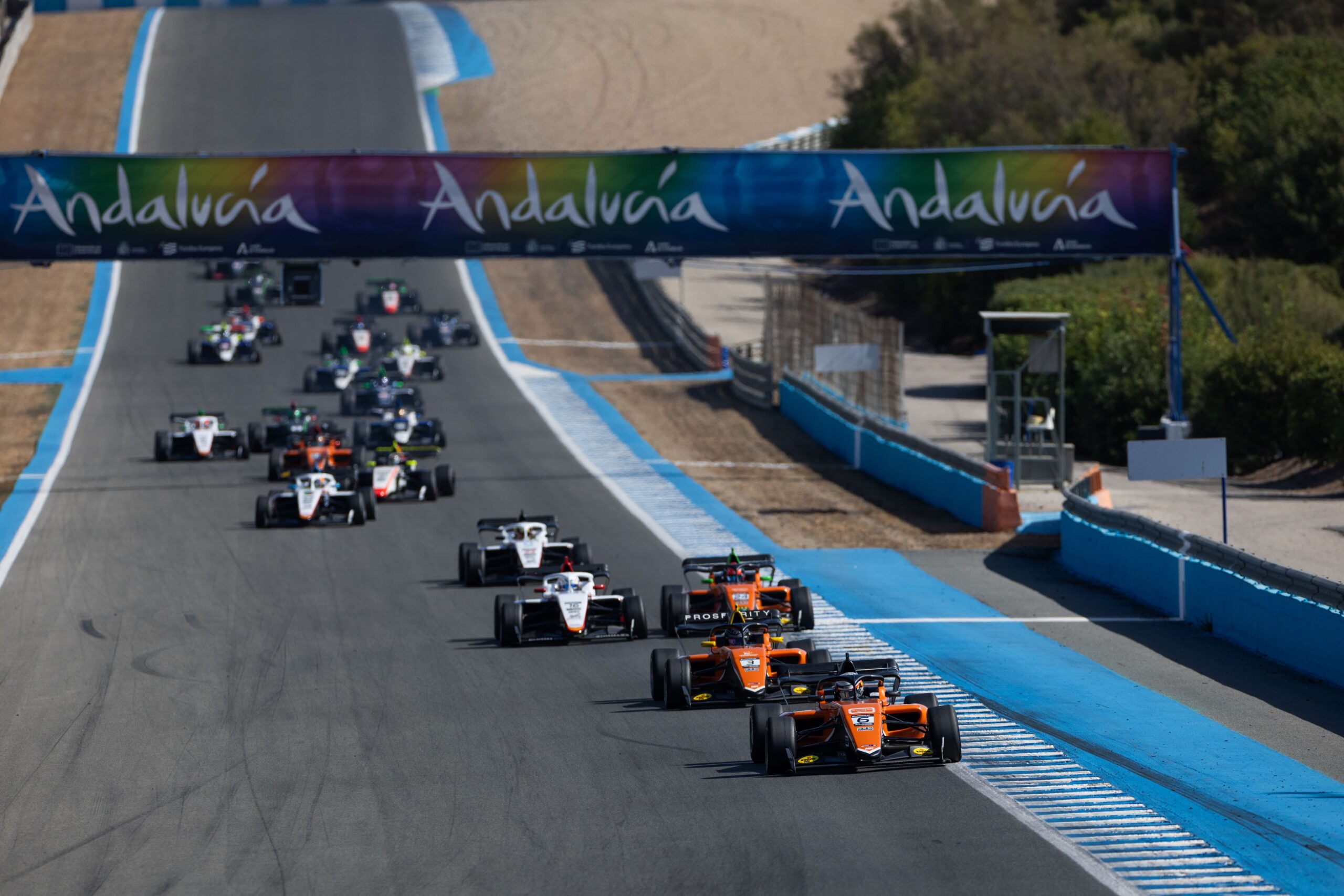
The fourth season of Eurocup-3 begins at Circuit Paul Ricard, marking the start of an eight-round campaign defined by technical evolution and a shifting competitive order. Following the Spanish Winter Championship, several teams and drivers have already established early momentum, setting the stage for a closely contested season.
At the same time, the introduction of new machinery signals a clear step forward for the championship, aligning it more closely with higher levels of single-seater racing. As a result, both performance and driver development will take on increased significance throughout the year.
What is Eurocup-3?
Eurocup-3 is a single-seater racing championship positioned at Formula Regional level, designed to provide a cost-controlled and competitive environment for drivers progressing through the junior ladder. The series operates with strict financial regulations, with teams working within a maximum seasonal budget to ensure accessibility while maintaining a high standard of competition.
The championship launched in 2023 as an alternative pathway within European single-seater racing. At the time, it offered a viable platform for drivers seeking consistent track time and competitive grids, particularly as other regional series faced fluctuating entry levels. Since then, Eurocup-3 has established itself as a structured and reliable step between Formula 4 and higher-tier championships.
Evolution and technical direction
Initially, the series utilised a modified version of the Tatuus F3 T-318 chassis, adapted specifically for Eurocup-3 competition. This package featured updates to aerodynamics and cooling systems, alongside a lightweight configuration and a push-to-pass system that added an additional layer of race strategy.
However, from 2026 onwards, Eurocup-3 enters a new phase with the introduction of the Dallara 326 chassis. This car shares its structural design with machinery used in Euroformula Open and Super Formula Lights, marking a clear step forward in performance and technical alignment. At the same time, the series adopts a more powerful Toyota-sourced turbocharged engine, further enhancing the overall package.
As a result, Eurocup-3 now offers drivers experience with machinery that more closely reflects the demands of higher-level competition, strengthening its role within the single-seater pathway.
A proven platform for progression
Despite its relatively short history, Eurocup-3 has already produced a competitive list of champions and frontrunners. Campos Racing secured early success in the championship’s inaugural seasons, while MP Motorsport has since emerged as a dominant force in both drivers’ and teams’ standings.
This evolving competitive landscape highlights the series’ role as a development platform. Drivers not only gain experience across varied circuits, but also learn to adapt to different race formats and technical demands. Consequently, strong performances in Eurocup-3 increasingly serve as a stepping stone towards higher categories such as FIA Formula 3 and beyond.
Position within the racing ladder
Eurocup-3 occupies a key position within the European junior single-seater structure. It bridges the gap between entry-level Formula 4 championships and more advanced international series, offering a balance between performance, cost and exposure.
Moreover, the introduction of new circuits and alignment with established racing categories further enhances its relevance. By combining technical progression with competitive depth, the series continues to attract both emerging talent and established junior drivers aiming to refine their racecraft.
A series in transition
As the 2026 season begins, Eurocup-3 stands at a pivotal stage in its development. The shift to new machinery, combined with an increasingly competitive grid, signals a move towards a more technically demanding and strategically complex championship.
Therefore, the series no longer serves solely as a developmental platform. Instead, it now represents a critical proving ground where drivers must demonstrate consistency, adaptability and performance under pressure.
Changing dynamics after the Winter campaign
The Spanish Winter Championship has already reshaped expectations ahead of the main season. Hitech and Palou Motorsport emerged as early benchmarks, with Keanu Al Azhari and James Egozi securing the majority of race victories and demonstrating consistent front-running pace.
However, Campos Racing and MP Motorsport maintained a strong presence throughout the standings, ensuring that the competitive balance remains tight. Although Hitech claimed the drivers’ title and Campos secured team honours, the margins between the leading outfits remained narrow. Consequently, no single team enters the season with a decisive advantage.
This competitive spread suggests that the 2026 campaign will likely feature multiple race winners, with consistency playing a decisive role in the championship battle.
Revised 2026 Eurocup-3 calendar introduces new challenges
For 2026, Eurocup-3 introduces several changes to its calendar, replacing a number of established venues with a mix of technical and high-speed circuits. Notably, the championship will no longer visit the Red Bull Ring, Assen, Spa-Francorchamps or Jerez, instead adding Imola, Silverstone and the Hungaroring.
The season will unfold across eight rounds:
- Round 1: Circuit Paul Ricard (1–3 May)
- Round 2: Portimão (5–7 June)
- Round 3: Imola (3–5 July)
- Round 4: Monza (31 July–2 August)
- Round 5: Silverstone (11–13 September)
- Round 6: Jerez (25–27 September)
- Round 7: Hungaroring (23–25 October)
- Round 8: Barcelona (6–8 November)
In addition, several rounds will support the European Le Mans Series, integrating sprint races into the weekend structure. This variation introduces different race dynamics and strategic considerations, further testing driver adaptability across the season.
Weekend format rewards consistency
Eurocup-3 retains a structured yet demanding weekend format. Each round begins with two 40-minute test sessions, followed by two qualifying sessions that determine the grids for the feature races. Both races run to 30 minutes plus one lap.
During selected events, a sprint race sits between the two main races. This race reverses the top 12 from the first qualifying session, creating additional overtaking opportunities and strategic complexity.
Points allocation reinforces the importance of consistency. While feature races follow the standard FIA system, sprint races award points to the top ten finishers on a reduced scale. Furthermore, drivers can score additional points for pole positions and fastest laps, ensuring that performance across all sessions contributes to the championship outcome.
The machinery: A new era for Eurocup-3 starts in 2026
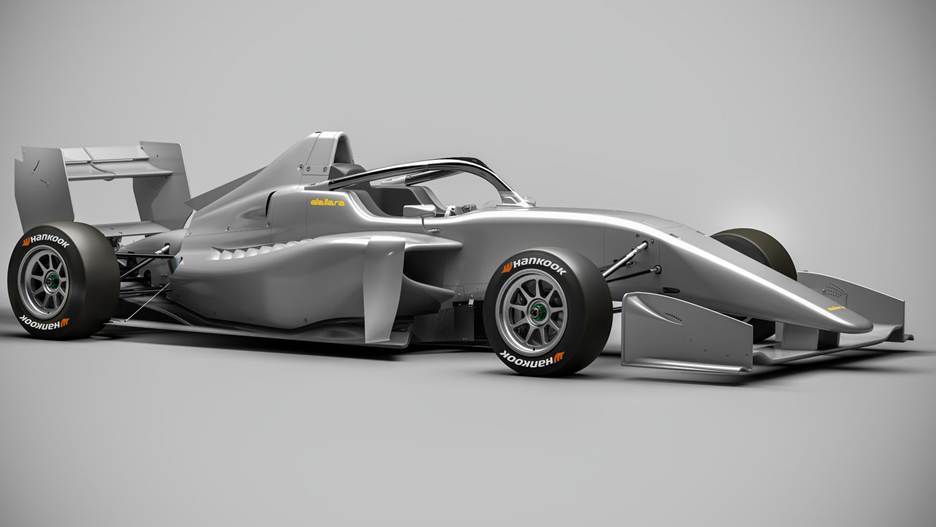
The 2026 season introduces a major technical shift with the arrival of the Dallara 326 chassis, replacing the previously used Tatuus F3 T-318. This transition aligns Eurocup-3 more closely with Euroformula Open and Super Formula Lights, providing drivers with machinery that reflects the next step in their development.
Dallara 326 chassis: Performance meets safety
The Dallara 326 delivers improvements in both performance and safety. Engineers have refined the aerodynamic package to increase downforce and efficiency, while structural enhancements improve overall rigidity and driver protection.
Key developments include:
- More efficient aerodynamics to improve grip and cornering performance
- Reinforced crash structures and a titanium Halo to meet current safety standards
- Increased chassis stiffness for improved balance and responsiveness
As a result, drivers benefit from a more precise and demanding platform, which places greater emphasis on technical skill and consistency.
Toyota TGE33 engine: Power and efficiency
The new chassis pairs with a Toyota-sourced, TOM’S-developed turbocharged engine. This three-cylinder unit delivers improved power and efficiency compared to previous configurations, while maintaining a strong focus on reliability.
In addition, the engine integrates seamlessly with the chassis, creating a balanced and responsive package. Consequently, teams can focus more on performance optimisation rather than reliability concerns.
Transmission and electronics
The championship also adopts a HEWLAND gearbox and ZF-SACHS clutch, ensuring precise and consistent gear shifts under competitive conditions.
Meanwhile, updated electronic systems enhance race control and communication. The introduction of advanced ECUs and electronic marshalling improves real-time monitoring of track limits and incidents, allowing for more efficient race management.
2026 Eurocup-3 Teams and drivers: Depth across the grid
The 2026 Eurocup-3 Championship features a highly competitive grid, with a mix of experienced teams and exciting new entries. For this season, the series has introduced a hard limit of 30 cars across all teams, with each squad being allocated a maximum of four entries. This ensures a tightly controlled field, with a high level of competition and close racing throughout the winter series.
Some familiar faces return to the grid, alongside new teams looking to make an impact.
Campos Racing
Campos Racing enters the 2026 season as one of the leading contenders after finishing as runners-up in the 2025 championship. With a balanced and experienced line-up, the Spanish team combines proven race winners with emerging talent.
- Patrick Heuzenroeder (#5) – The GB3 race winner brings strong single-seater experience and consistent front-running pace. After solid winter performances, he will aim to convert that into podiums.
- Thomas Strauven (#9) – The reigning Spanish F4 champion arrives with an impressive record of victories and podiums. He will look to translate that dominance into Eurocup-3 success.
- Enzo Tarnvanichkul (#10) – The Red Bull junior showed strong form in the winter series, including a race win. His experience in both Eurocup-3 and GB3 makes him a key contender.
- Alex Powell (#41) – One of the most promising drivers on the grid, Powell continues his progression after multiple podium finishes across F4 and FR-level competition.
Hitech
Hitech enters the main season with significant momentum after securing the winter series drivers’ title. With a well-rounded line-up, the team combines proven race-winning ability with developing talent.
Keanu Al Azhari (#14) – The winter series champion leads the team after a breakthrough campaign featuring multiple wins and podiums. He enters the season as one of the favourites.
Stefan Bostandjiev (#23) – The Bulgarian driver showed strong potential with a sprint race victory and will look to build consistency in 2026.
Santino Panetta (#30) – The Argentine continues his development after gaining experience in Spanish F4 and Eurocup-3, aiming to move into regular points contention.
Gino Trappa (#84) – The reigning F4 CEZ champion brings a winning pedigree and will look to establish himself at this level.
MP Motorsport
MP Motorsport enters the 2026 season as one of the most successful teams in recent years, having secured the 2025 teams’ title. With a strong and consistent line-up, the Dutch outfit remains a major contender.
- Ean Eyckmans (#4) – The Spanish F4 runner-up impressed with multiple victories and podiums. He will aim to carry that momentum into Eurocup-3.
- Alceu Feldmann Neto (#8) – The Brazilian continues his development after gaining experience across multiple championships and will look to progress into the points regularly.
- Gianmarco Pradel (#12) – The Australian arrives with strong GB3 form, including multiple wins and podiums. He already showed his pace with a winter series victory.
- René Lammers (#99) – A consistent performer, Lammers secured multiple podiums in the winter series and will aim to challenge at the front throughout the season.
Palou Motorsport
Palou Motorsport continues to build on its competitive foundation with a line-up that blends race-winning experience and emerging talent. The team remains a strong presence in the midfield and at the front.
- Bianca Bustamante (#16) – The Filipina driver brings experience from GB3 and will look to improve consistency in Eurocup-3.
- Heitor Dall’Agnol (#27) – The Brazilian F4 champion arrives with strong credentials and will aim to quickly adapt to the category.
- Rafaël Pérard (#33) – The French driver demonstrated solid pace in F4 and will look to challenge for regular points finishes.
- James Egozi (#48) – One of the standout performers in the winter series, Egozi secured multiple victories and enters the season as a key contender.
Drivex
Drivex continues its steady progression with a line-up that combines experience and developing talent. The team aims to establish itself firmly within the midfield battle.
Édouard Borgna (#3) – The French driver brings Formula Regional experience and adds depth to the line-up.
Stylianos Kolovos (#6) – The Greek driver continues his transition into single-seaters after building experience last season.
Christopher Feghali (#7) – A consistent performer, Feghali showed strong pace in both F4 and Eurocup-3 and will target regular points finishes.
Filippo Fiorentino (#37) – The Brazilian continues to develop after competing across multiple championships and will aim to progress further up the grid.
GRS Team
GRS Team adopts a fresh approach for 2026 with an entirely new driver line-up, focusing on development and long-term progression.
- Rayan Caretti (#44) – The French driver arrives after a strong F4 campaign that included multiple wins and podiums.
- Andre Rodriguez (#70) – The American continues to build experience across multiple series and will focus on steady development.
Double R Racing
Double R Racing returns with a mix of experience and youth, aiming to strengthen its competitiveness after a solid winter campaign.
- Linus Lundqvist (#26) – The experienced Swede joins as a substitute for the opening round, bringing valuable knowledge from higher categories.
- Bart Harrison (#77) – The British driver continues his development after gaining experience in Italian F4 and GB3.
- Lorenzo Campos (#91) – The Angolan driver builds on his Eurocup-3 experience and will aim for consistent improvement.
TC Racing
TC Racing enters its first full Eurocup-3 season after debuting in the winter series, focusing on development and consistency.
Luca Viişoreanu (#11) – The Romanian driver continues to gain experience across multiple categories and will aim to move into the points.
Renzo Barbuy (#31) – The Argentine driver builds on his F4 experience and looks to establish himself in the series.
Tecnicar
Tecnicar returns with an expanded line-up as it looks to improve on a challenging winter campaign.
- Kacper Sztuka (#2) – A former Eurocup-3 podium finisher, Sztuka brings valuable experience and will aim to return to the front of the field.
- Benjamin Beckley (#20) – The Costa Rican continues his transition into single-seater racing and will focus on development.
- Andrej Petrović (#22) – The Serbian driver joins with strong results from Eurocup-4 and will look to make an immediate impact.
A season defined by evolution
As the 2026 season begins, Eurocup-3 enters a period of transition shaped by technical innovation and competitive balance. The introduction of the Dallara 326 chassis raises the level of performance, while the revised calendar and format create new challenges for teams and drivers alike.
Ultimately, the championship now places greater emphasis on adaptability, consistency and technical understanding. With multiple teams capable of fighting at the front, the outcome of the season will likely depend on who can sustain performance across all eight rounds.
As a result, Eurocup-3 stands poised to deliver one of its most competitive and strategically complex seasons to date.