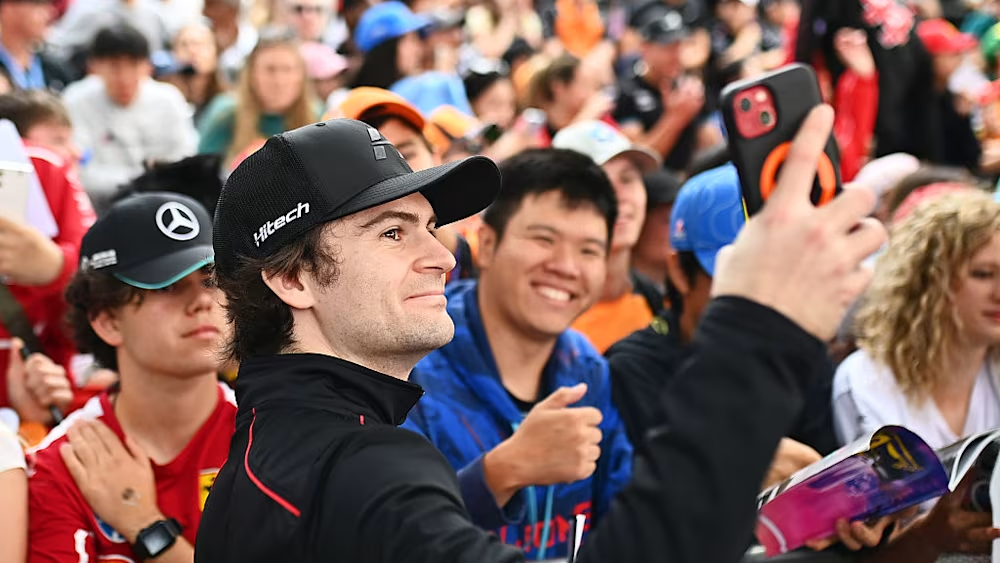
F2 enters new territory this weekend as the 2026 championship makes its long-awaited North American debut at the Miami International Autodrome. The event replaces one of the cancelled Middle East rounds and signals a major step in the series’ global expansion. With Campos Racing and Nikola Tsolov leading the standings after Melbourne, anticipation continues to build for an unpredictable second round on unfamiliar ground.
Herta embraces surprise home advantage at 2026 Miami F2 Round
Colton Herta arrives in Miami with a renewed sense of excitement, particularly because he had not initially expected to race on home soil during his rookie Formula 2 campaign. At the start of the year, his focus centred on a potential Indianapolis 500 appearance as his only North American outing. However, the addition of Miami and Montreal to the calendar has reshaped that outlook, giving him a rare opportunity to connect with a home audience while continuing his development in Europe’s premier junior category.
This unexpected shift not only boosts his morale but also presents a valuable platform to showcase both his talent and the championship itself to a new market. Furthermore, racing in front of familiar fans often brings an added emotional edge, which can translate into improved on-track performance.
Speaking to Formula 2, he said, “I love it. I think for me at the beginning of the year thought my only North American race was going to be the Indy500. So it’s cool to have two F2 race weekends in two places that look really interesting and are very enjoyable tracks. I didn’t have it on my bingo card, but I’m glad that I get to be in Miami and Montreal.
“I hope we have a great showing and people enjoy it and it opens doors to have F2 back because it would be awesome if that was another thing that F2 did consistently.”
As a result, Herta heads into the weekend with heightened motivation, determined to deliver a performance that resonates both competitively and commercially.
Learning curve continues after Melbourne
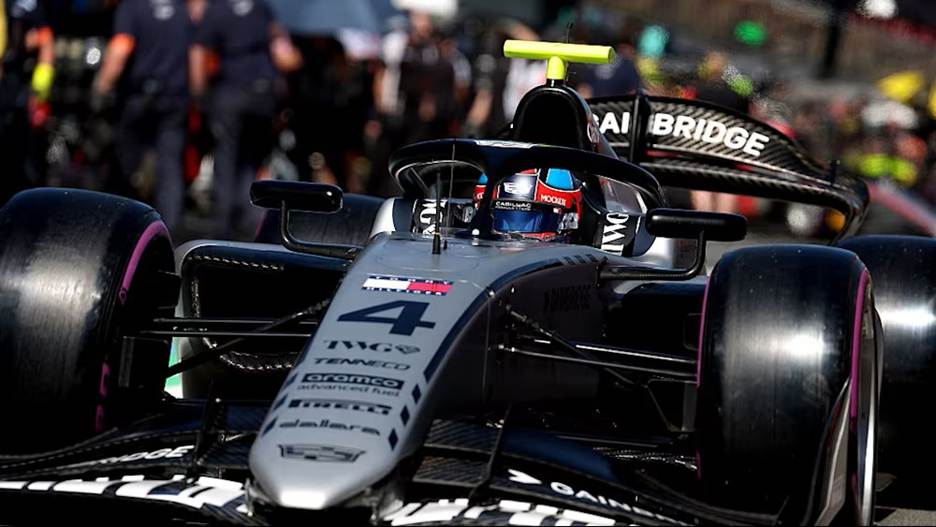
Following a mixed yet encouraging debut in Melbourne, Herta has devoted significant time to preparation with Hitech. While his opening weekend featured an early setback with a crash in Free Practice, his ability to recover and secure points highlighted both resilience and adaptability under pressure. That experience has since shaped his approach heading into Miami.
In particular, the lack of historical data for the Miami circuit presents a unique challenge. Unlike more established venues, teams cannot rely on past setups or performance trends, which means drivers must quickly interpret feedback and adapt in real time. Consequently, simulator work and post-race analysis from Melbourne have become critical tools in bridging that knowledge gap.
Herta recognises that the limited track time available during a race weekend will place added emphasis on efficiency, especially when transitioning from practice to Qualifying. Teams must react swiftly to changing conditions, while drivers must build confidence rapidly on a completely new layout.
“I’ve been over here doing some work with Hitech, kind of going through stuff. It’s hard because we don’t have any previous data to learn from with Miami. So, really, I think for a lot of people, it’s going to be a little bit of a guessing game to start off with.
“You’re going to have to be quick on your feet with the changes that you’re going to make between the one practice and Qualifying. But I think simulator models have been good and seems pretty representative, but I guess time will tell.”
Therefore, adaptability and quick decision-making will prove essential as teams tackle the unknowns of a brand-new circuit.
Adjusting to F2 machinery
Transitioning from IndyCar machinery to F2 has required Herta to significantly refine his driving style. While both categories demand precision, the methods used to extract performance differ considerably. In IndyCar, drivers can often adopt a more aggressive approach, relying on forceful inputs to generate lap time. In contrast, F2 rewards a smoother, more measured technique, particularly when managing grip and balance through corners.
This adjustment has not happened overnight. Instead, it has involved a gradual process of understanding how the car responds to different inputs and how to optimise performance across varying conditions. Encouragingly, Herta has embraced this challenge and continues to make steady progress as he builds confidence behind the wheel.
“The IndyCar, you get lap time out of it, and you can be very forceful with your inputs, with your feet and your hands. Whereas F2, you kind of have to massage it a little bit more, you have to be a little bit more delicate with it. And the way you get lap time out of the two are not similar. So I think there’s been a little bit of a learning curve with that. But, I think it’s been enjoyable so far, I’ve been having fun with it.”
Tyre management a critical factor for Miami
Beyond driving style, tyre management has emerged as a crucial area of focus. F2 tyres require careful handling to maximise performance over a stint, and understanding their behaviour often separates competitive drivers from the rest of the field. Herta has identified this as a key development area and continues to refine his approach.
He acknowledged that early in his F2 journey, he searched for lap time in less effective ways. However, through experience and analysis, he has begun to shift his focus towards tyre behaviour and degradation patterns, which play a decisive role in race outcomes.
“I think the biggest thing is just understanding the tyres. When I first got into the car, it was quite difficult to maximise lap time out of it and I was looking for lap time in probably the wrong places. So that’s kind of where the biggest growth has been, is understanding the tyres and how it likes to be worked. And I think going forward, it’s still something that I’m still not quite exactly where I want to be at with it. But, I’m making pretty big progression from the first day in the car until now. So I’m happy about that.”
Herta expecting a level playing field in 2026 Miami F2 Round
Unlike Melbourne, where several drivers benefited from prior experience in junior categories, Miami presents a completely fresh challenge for the entire grid. This shared lack of familiarity effectively resets the competitive order, placing greater emphasis on adaptability, instinct, and preparation.
For Herta, this scenario could prove advantageous. Without rivals holding prior knowledge of the circuit, the gap between experienced drivers and newcomers narrows significantly. As a result, opportunities arise for those who can quickly interpret conditions and extract performance from the outset.
Moreover, the evenly balanced playing field enhances the unpredictability of the weekend. Small margins in setup or decision-making could have a significant impact on Qualifying positions and race outcomes, making every session critical.
“I think it’s not going to hurt. I think everybody’s pretty gifted in this series, so I don’t think it’s going to be a difficult thing to get up to speed for them. But, I think it’s definitely going to be more advantageous to me than maybe a place like Melbourne, where a lot of those guys have been to before, whether in F3 or F2. So yeah, I think it will probably be a little bit better for me.”
Thus, with no established benchmark and all drivers starting from scratch, Miami offers a rare opportunity for Herta to gain ground and potentially deliver a standout performance in front of his home crowd.