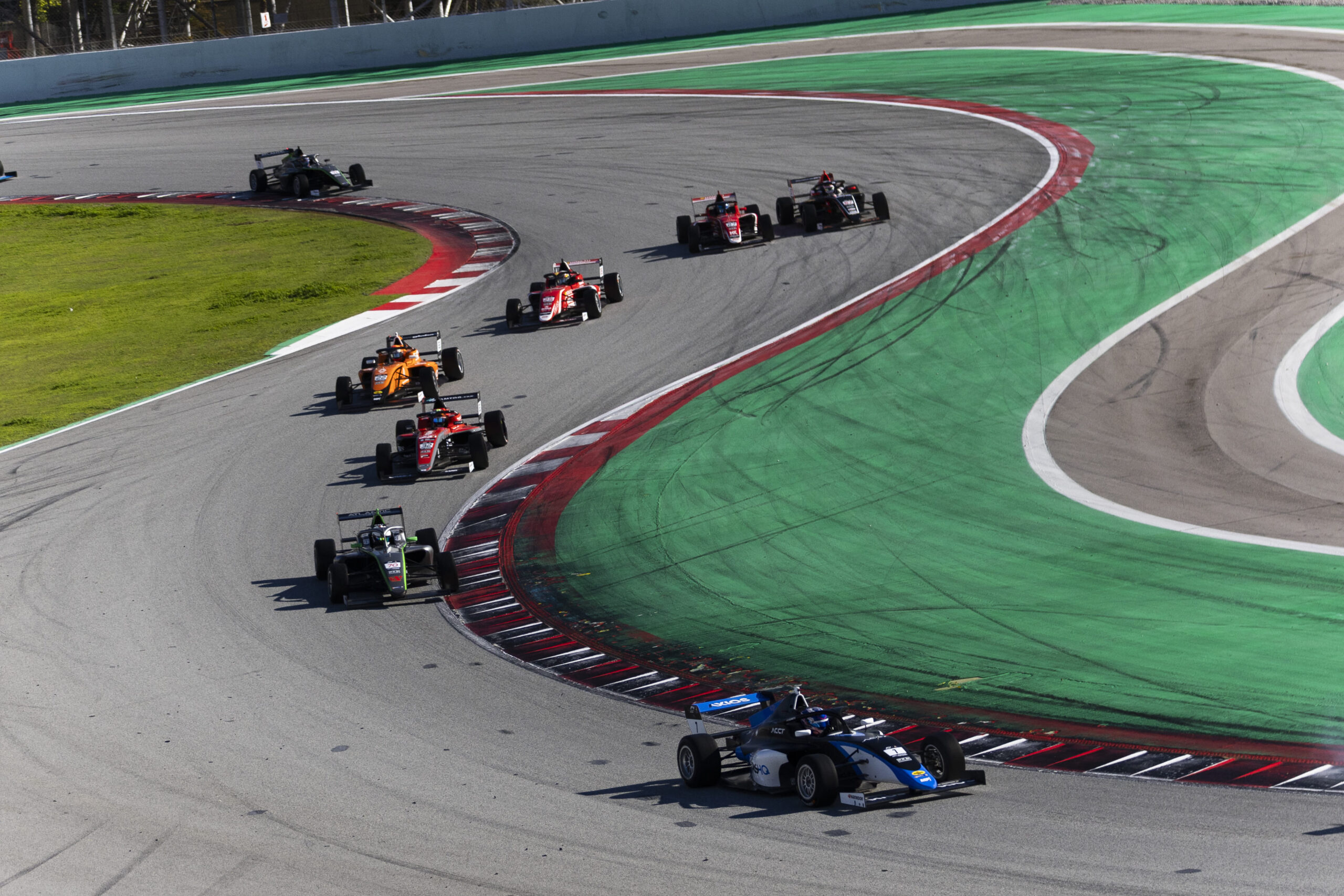
Spanish Formula 4 (F4) enters its 2026 season as it celebrates a major milestone, marking ten years since its inception in 2016. Over this period, the championship has developed from a regional entry-level series into one of the most competitive FIA Formula 4 platforms in Europe. As a result, it now attracts a broad international grid and serves as a key stepping stone for drivers progressing through the junior single-seater ladder.
Furthermore, the series continues to provide young drivers with a structured, cost-controlled environment that bridges the gap between karting and higher formula racing. This role has strengthened its reputation within the global motorsport ecosystem.
Evolution of Spanish F4
Since its launch, Spanish F4 has undergone significant transformation. Initially, the championship focused primarily on Spanish and nearby European talent. However, as teams increased investment and professionalism grew, the series expanded its reach across continents.
In recent years, international drivers from Europe, the Americas, and Asia have joined the grid in increasing numbers. Consequently, the championship now delivers a highly diverse and competitive field each season. In addition, leading junior teams such as Campos Racing, MP Motorsport, and Drivex have established strong development programmes within the series, further elevating its standard.
Moreover, the introduction of satellite and academy-linked teams has deepened the competitive structure, creating multiple layers of performance across the grid.
Role in the junior single-seater ladder
Spanish F4 plays a crucial role within the FIA progression system. Drivers typically enter the championship directly after karting before advancing to Eurocup-3, Formula Regional, FIA Formula 3, and eventually Formula 1.
Importantly, the series offers a balance of affordability and competitiveness, which encourages high entry numbers and sustained participation. In contrast to some other junior championships, Spanish F4 consistently delivers large grids and multiple race winners throughout a season.
Therefore, teams often use the championship as a development ground to assess raw talent and prepare drivers for higher categories.
Competitive identity and racing characteristics
Spanish F4 has developed a distinct identity defined by close racing and unpredictable results. Unlike championships dominated by a single team or driver, the series regularly produces multiple winners across a season. Consequently, championship battles often remain open until the final round.
In addition, the reverse-grid element in Race 2 adds further variability, while the consistent presence of strong midfield teams increases overall competitiveness. As a result, even rookie drivers frequently find opportunities to score points and challenge established competitors.
2026 Spanish F4 season context and significance
The 2026 season carries added significance as the championship celebrates its tenth anniversary. This milestone highlights a decade of continuous development and increasing international relevance.
Furthermore, the calendar introduces new challenges, including the addition of the Madring circuit. This new venue adds variety to the established mix of Spanish and Portuguese tracks and introduces a different technical and strategic dimension.
At the same time, established teams continue to dominate the competitive structure, particularly through multi-car operations and structured driver development programmes. Therefore, the balance between team strength and individual driver performance will play a key role throughout the season.
2026 Spanish F4 season calendar overview
The 2026 Spanish Formula 4 season features seven rounds across Spain and Portugal, with the championship continuing to balance traditional circuits with newer additions. Importantly, the series opens at a new venue for the first time in several years, as the Circuit Ricardo Tormo in Valencia hosts the season opener.
The calendar then moves through a mix of Iberian circuits, including international trips to Portugal and a return to established Spanish venues. In addition, the inclusion of the Madring circuit introduces a new strategic and technical challenge ahead of the Spanish Grand Prix weekend.
The full 2026 calendar is as follows:
- Round 1: Circuit Ricardo Tormo (10–12 April)
- Round 2: Algarve International Circuit (5–7 June)
- Round 3: MotorLand Aragón (19–21 June)
- Round 4: Circuito de Madrid Jarama-RACE (22–23 August)
- Round 5: Circuito de Jerez (25–27 September)
- Round 6: Circuito de Navarra (9–11 October)
- Round 7: Circuit de Barcelona-Catalunya (6–8 November)
Barcelona once again concludes the season, continuing its long-standing role as the championship decider.
2026 Sanish F4 race weekend format
Spanish F4 retains its established race weekend structure in 2026, with only a minor adjustment to Friday practice running. This format continues to prioritise both driver development and competitive racing across three races per event.
Each weekend begins with a one-hour official test session, followed by two Free Practice sessions on Friday. However, organisers have reduced each practice session to 30 minutes, replacing the previous 40-minute format. This change increases track density and places greater emphasis on efficient preparation.
On Saturday, the championship runs a single 20-minute Qualifying session. This session sets the grid for the first two races of the weekend. The fastest lap times determine the grid for Race 1, while the second-fastest laps define the grid for Race 2.
Race 1 lasts 30 minutes and awards full FIA points from 25 to 1. Race 2 runs for 25 minutes plus one lap and uses a reduced points system, with the winner scoring 18 points instead of 25. This structure encourages different strategic approaches across the two Saturday races.
On Sunday, drivers compete in a second 20-minute Qualifying session, which sets the grid for Race 3. This final race lasts 30 minutes plus one lap and returns to the full FIA points allocation.
If qualifying sessions cannot take place, organisers use contingency rules. In such cases, Race 1 grids derive from the final free practice classification, while Race 2 and Race 3 grids depend on previous race results and fastest lap times.
In addition, drivers can earn bonus points. Each pole position awards two points, while fastest laps in any race grant one point. However, guest drivers remain ineligible for championship points if they only enter selected rounds.
Where to watch
Fans can follow every session of the 2026 Spanish Formula 4 season through official broadcast platforms. The championship streams all races live on its official YouTube channel, offering commentary in both English and Spanish. This approach ensures global accessibility and allows international audiences to follow the full season without restriction.
Alongside the live broadcast, organisers provide real-time timing through Al Kamel Systems, which delivers detailed session data including lap times, sector performance, and live classification updates. As a result, teams, media, and fans can track every development throughout the weekend.
Teams and drivers for the 2026 Spanish F4 season
The 2026 Spanish F4 season brings together one of the largest and most competitive grids in the championship’s history. With a capped 36-car entry spread across established junior single-seater programmes and emerging national teams, the field combines proven race winners, rising rookies and a growing number of drivers stepping directly from karting. As a result, the competitive depth stretches from front-running title contenders to developing talents aiming simply to score their first points.
Campos Racing
Campos Racing enters the 2026 Spanish F4 season as a leading benchmark within the championship, combining proven junior formula pedigree with a stable and highly competitive driver line-up. The team continues to build on its reputation for developing front-running talent while maintaining consistent podium potential across the season.
- Jacob Micallef – The Maltese driver continues his progression after a solid Eurocup-4 campaign, where he regularly scored points and recorded a best finish of fifth. He now aims to convert that consistency into regular top-ten finishes in Spanish F4.
- Luna Fluxá (R) – The Mercedes junior enters her first full Spanish F4 season after a promising winter series debut, which included a reverse-grid podium at Portimão. She focuses on adapting quickly while targeting frequent points finishes.
- Daniel Kelleher (R) – The Irish driver brings strong Eurocup-4 experience, having finished inside the top ten overall with multiple top-five results. He enters the season as Campos’ most immediate podium contender in the main team entry.
Griffin Core by Campos
Griffin Core by Campos remains one of the strongest satellite operations on the grid, having delivered multiple championship successes across recent seasons. The team combines race winners with a winter series champion, giving it clear title-contending potential.
- Vivek Kanthan – The American driver continues after a strong Eurocup-4 season, where he claimed a race win at Aragón and secured multiple podiums. He looks to establish himself as a consistent race winner in 2026.
- Ty Fisher (R) – The Canadian driver steps up after a competitive USF Juniors campaign, where he finished fourth overall with multiple victories. He focuses on adapting quickly to European circuits and challenging for podiums.
- Noah Monteiro – The Portuguese driver arrives as Eurocup-4 champion, having sealed the title early with multiple wins and podiums. He enters Spanish F4 as one of the clear title favourites.
MP Motorsport
MP Motorsport continues as a consistent front-running presence, building on strong recent performances across Spanish F4 and Eurocup-4. The team’s all-Dutch line-up combines proven race pace with emerging single-seater talent.
- Felipe Reijs – The Dutch driver continues his development after a challenging rookie Eurocup-4 season. He aims to convert improved qualifying pace into regular points finishes.
- Rocco Coronel (R) – The Ginetta Junior champion brings strong karting and winter series form, including race wins and podiums. He enters the season as one of MP’s key front-running prospects.
- Kasper Schormans (R) – The Dutch rookie arrives as a Richard Mille Young Talent Academy graduate after winning the shootout. He already demonstrated strong pace in winter testing, including a race win in Aragón.
KCL by MP
KCL by MP continues to operate as MP Motorsport’s junior development arm, focusing on rookie integration and long-term progression. The team features a mix of race winners and first-year drivers aiming to establish themselves.
- Jensen Burnett – The Canadian driver steps up after a competitive Eurocup-4 campaign, where he regularly fought inside the midfield and recorded a best finish of sixth. He targets further consistency in 2026.
- Borys Łyżeń – The Polish driver enters his second season after taking a sprint race win and multiple podiums in Eurocup-4. He now aims to fight consistently at the front of the midfield.
- Louis Cochet (R) – The French rookie continues his development after a difficult debut season in Eurocup-4. He focuses on building race experience and closing the gap to the midfield pack.
Drivex
Drivex enters the 2026 season with strong momentum following competitive performances across multiple junior formula series. The team brings together a race winner, an established midfield runner and a promising rookie.
- Nathan Tye – The British driver remains the team’s leading contender after a strong Eurocup-4 campaign, where he secured multiple wins and podiums. He targets a championship challenge in Spanish F4.
- Simón Bulbarella – The Argentine driver continues after a solid winter series campaign, where he showed consistent midfield progress and occasional top-five pace. He aims to convert that into regular points.
- Elliot Kaczynski (R) – The Swedish driver joins from DX Racing Team after a competitive Eurocup-4 season. He focuses on adapting to a new team environment and building consistency.
DX Racing Team
DX Racing Team continues its development-focused approach, combining rookies and emerging talents within a structured environment aimed at progression through the field.
- Max Radeck (R) – The Portuguese driver continues his development after a challenging Eurocup-4 season, where he steadily improved across the year. He aims to fight for consistent midfield finishes.
- Sam Urus (R) – The Monégasque driver makes his single-seater debut this season. He focuses on learning racecraft and adapting to the demands of F4 machinery.
- Sebastián Frigolet (R) – The Mexican driver builds on a modest Eurocup-4 campaign, where he scored occasional points. He aims to progress towards regular top-20 finishes.
Tecnicar
Tecnicar continues its presence in Spanish F4 with a development-focused line-up combining returning drivers and a rookie stepping up from karting. The team prioritises gradual improvement and race-by-race learning.
- Rodrigo Martínez (R) – The Mexican rookie makes his single-seater debut after stepping up from karting. He focuses on adaptation and completing a full rookie season.
- Zoe Florescu – The Romanian driver continues her development after a mixed Eurocup-4 season, where she gained valuable experience across multiple circuits. She aims to move closer to the midfield pack.
- Aleix Piñera – The Spanish driver builds on a solid Eurocup-4 campaign, where he scored a best finish of seventh. He targets regular points finishes in front of home fans.
T-Code
T-Code continues as one of the most competitive satellite operations on the grid, with a proven record of producing strong midfield and podium-level results. The team retains its established core pairing.
- Nacho Tuñón – The Spanish driver continues after a steady Eurocup-4 season, where he scored consistent points and occasional top-five finishes. He aims to convert that into podium contention.
- Andrej Petrović – The Serbian driver enters the season after a strong winter series, where he secured multiple wins and podiums. He remains one of T-Code’s leading race-winning prospects.
TC Racing
TC Racing continues its steady development in junior formulae, combining experienced rookies with strong karting graduates transitioning into single-seaters.
- Sandro Pérez (R) – The Spanish driver makes his F4 debut while balancing commitments in GT racing. He focuses on adaptation and gaining experience across varied racing categories.
- Beau Lowette (R) – The Belgian driver enters after a breakthrough Eurocup-4 season, where he scored a landmark podium. He aims to build consistency across the season.
- Maria Germano Neto (R) – The Portuguese driver continues her development after a challenging Eurocup-4 campaign, focusing on improved race pace and consistency.
G4 Racing
G4 Racing maintains its consistent midfield presence with a blend of experienced returnees and drivers continuing their development in F4 machinery.
- Jean-Paul Karras – The Greek driver continues after a steady Eurocup-4 campaign with multiple top-ten finishes. He aims to push further into consistent points-scoring positions.
- Philippe Armand Karras – The twin brother of Jean-Paul continues his development after scoring points in Eurocup-4. He focuses on improving qualifying performance and race consistency.
- Jorden Moodley – The South African driver returns after part-season appearances, aiming to convert experience into stronger overall results across a full campaign.
Monlau Motorsport
Monlau Motorsport continues to develop young talent through a broad four-car line-up, focusing on progression and experience-building across the season.
- Rahim Alibhai (R) – The American driver continues after a mixed Eurocup-4 season, where he scored occasional points. He aims for more consistent midfield finishes.
- Alexander Chartier (R) – The Canadian rookie steps up after strong karting performances and F4 testing. He focuses on adapting quickly to race conditions.
- Fausto Arnaudo (R) – The Argentine driver continues his development after a solid winter series campaign, where he regularly fought inside the midfield pack.
- Miki Blascos (R) – The Spanish driver builds on prior Spanish F4 experience, aiming to convert occasional points into consistent results.
GRS Team
GRS Team continues its steady midfield programme with a focus on consistency and driver development, particularly through experience-building in Spanish circuits.
Pablo Riccobono Bello – The French driver continues after a challenging Eurocup-4 season, where he scored occasional points. He aims for improved consistency.
Alfons Miettinen (R) – The Finnish rookie makes his single-seater debut after a strong karting background. He focuses on adaptation and race completion.
A milestone 2026 season for Spanish F4 as competition reaches new depth
The 2026 Spanish F4 season marks the championship’s tenth anniversary, highlighting its growth into one of Europe’s most competitive FIA F4 platforms. Over the past decade, it has evolved from a regional series into a globally diverse championship that consistently attracts top junior talent from karting and lower formula categories. The 2026 grid features a strong mix of established teams such as Campos Racing, MP Motorsport, and Drivex, alongside expanding satellite and independent entries, creating one of the deepest fields in its history.
The season will feature seven rounds across Spain and Portugal, including the new Madring circuit, adding fresh technical challenges. With its reverse-grid format, varied points system, and highly competitive structure, Spanish F4 continues to produce unpredictable racing and multiple winners. As a result, the championship remains a key stepping stone in the FIA ladder, shaping future Formula 1 prospects through intense, closely fought competition.