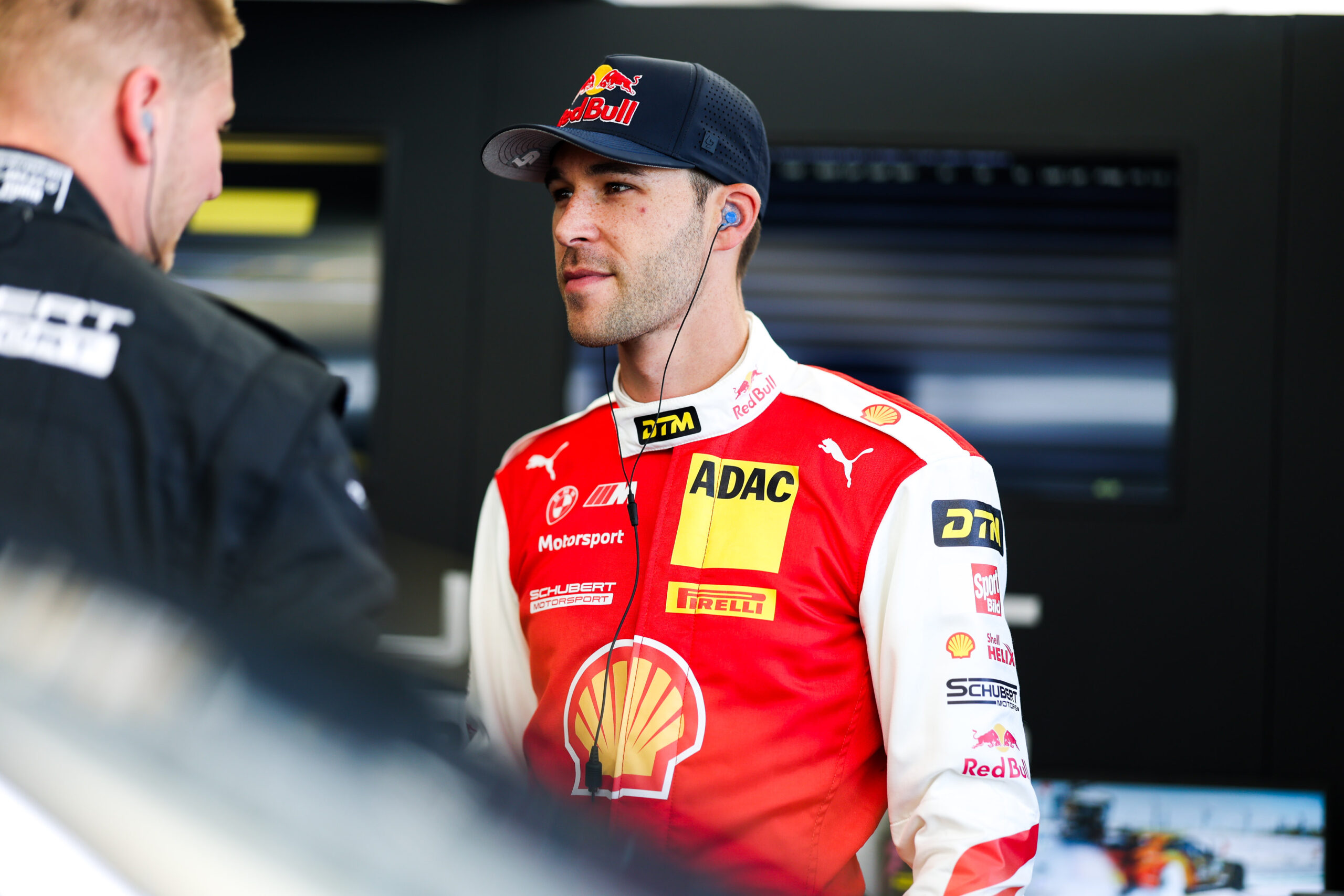
Kelvin van der Linde’s 2026 DTM season has already demonstrated why outright speed does not always guarantee a strong result in one of motorsport’s most closely contested championships.
As the 2026 DTM season reaches the fourth of its eight rounds at the Norisring, the Schubert Motorsport driver has experienced both ends of the competitive order. He has taken pole positions, claimed his first victory for BMW and endured races in which strategy, tyre management or circumstances prevented him from converting his pace.
Van der Linde retired from the opening race at the Red Bull Ring before taking pole for Sunday’s contest. Although he led the early stages, Maro Engel moved ahead through the first pit-stop cycle, while Marco Wittmann’s early stop helped him climb to second. Van der Linde eventually finished sixth.
The South African responded at Zandvoort, where he secured another pole and converted it into his first DTM victory as a BMW driver. His ninth series win came after an eventful race in which Schubert Motorsport’s pit-stop work and strategic decisions proved as important as his speed.
That combination of highs and setbacks has shaped his view of what determines success in modern GT racing.
Zandvoort victory highlights the complete challenge
Van der Linde controlled the opening half of Zandvoort’s second race but came under pressure as his Pirelli tyres began to deteriorate.
Thierry Vermeulen moved ahead on lap 20, prompting Schubert Motorsport to bring van der Linde in for his second stop earlier than the Ferrari driver. The decision allowed him to warm his fresh tyres before Vermeulen stopped.
Van der Linde then reclaimed the position while his rival struggled for grip on cold tyres and went on to win ahead of Ben Dörr and Wittmann.
The race required more than qualifying pace. Van der Linde and Schubert had to recognise the tyre drop-off, react at the correct moment and execute the pit stop before he could complete the move on track.
The result contrasted with Race 2 of the season opener, where he had also started from pole but could not remain at the front after the strategy unfolded.
His Lausitzring weekend provided another example of how quickly external factors can reshape a DTM race. A late rain shower, tyre choices and a Full Course Yellow transformed Saturday’s order, with van der Linde finishing tenth. He followed that with seventh place in Sunday’s race.
Van der Linde: Strategy has a “much bigger role” in GT racing
Pit Debrief spoke exclusively to van der Linde and asked how much a final race result comes from a driver’s pure performance compared with strategy, race management and other external influences.
“I would say it’s a good mix.” He continued, “I think nowadays in racing it’s not one particular thing that makes a difference. I think also in DTM, because we have two pit stops on Sunday, I think the strategy is probably more important.”
“In GT racing, we have a Balance of Performance. In GT racing, we have a lot more variables, I would say. I think in Formula 1 there are also bigger differences between the cars.”
He admitted, “I always use F1 as a comparison because I think it’s something everyone knows and also the readers of the podcast will understand best. I think the gaps are much bigger in F1. So typically, if you have a good car and you have a good driver, your chances of winning are pretty high.”
Crucial strengths to have
“In GT racing, because everything is so close together and through balanced performance, through different factors, the cars are very close together and therefore it doesn’t always just come down to the pure pace. Because if you’re fast, obviously it gets adapted and so on.”
“So I think strategy and being clever in wheel-to-wheel combat are very important in GT racing, especially DTM.”
“If you can be good at race starts, be good at racing side-by-side, making the right calls, I think you have much more to gain. I would say that side of it has a much bigger role to play in GT racing than just being fast. Because being fast and being a second quicker than your competition is going to ultimately be punished, if that makes sense.”
“So you’ll never see someone being a second quicker than the next car in GT racing, which is also why we love it. But generally, the speed or the ultimate pace in GT racing is almost very secondary.”
“So I think the drivers that typically have a lot of success are the ones that consistently are able to make the right decisions in race scenarios, and also the teams that make the least amount of mistakes in strategy and so on.”
“I would say that’s the main decider in GT racing.”
Balance of Performance increases the importance of execution
Balance of Performance aims to keep different GT3 models competitive despite their contrasting engines, dimensions and technical characteristics.
That produces a tightly matched field in which drivers rarely hold a significant pace advantage over their rivals. Qualifying remains important, but outright speed alone cannot recover the time lost through a poor strategy, a slow pit stop or an on-track mistake.
Starts, pit-stop timing and wheel-to-wheel judgement therefore carry greater weight. Drivers must know when to attack, when to protect the tyres and when avoiding contact matters more than forcing a move.
Teams face the same pressure. One mistimed call or operational error can undo the advantage gained by qualifying near the front.
Sunday’s two mandatory pit stops add another strategic layer, creating more opportunities to gain or lose positions through undercuts, extended stints and reactions to Safety Car periods.
Van der Linde leaves Friday with work to do
Van der Linde began the halfway round of the 2026 DTM season at the Norisring towards the lower end of the order in both Friday practice sessions.
The Schubert Motorsport driver finished 19th in FP1 with a 49.901s before improving to 16th in FP2 with a 49.247s. Teammate Marco Wittmann placed 21st in both sessions, leaving the team searching for more performance before qualifying.
Different run plans mean practice results rarely provide a complete picture of the competitive order. However, the Norisring’s short lap leaves little room for error, with traffic, track position and small setup changes capable of deciding several places.
Van der Linde has already shown that the BMW can take pole positions and win races this season. His challenge now is to turn an uncertain Friday into a competitive weekend by applying the judgement and execution he believes matter just as much as outright pace in the DTM.