Following what was yet another weekend to forget for Aston Martin and Honda at the Barcelona-Catalunya GP, with both cars beginning from the last row and failing to finish, the Silverstone outfit heads to the F1 Austrian GP for another double-header weekend and a rookie FP1 session with Jack Crawford set to race in place of Lance Stroll.
Looking forward to the weekend, Honda has revealed a set of potential power unit challenges they can expect ahead of the 2026 F1 Austrian GP.
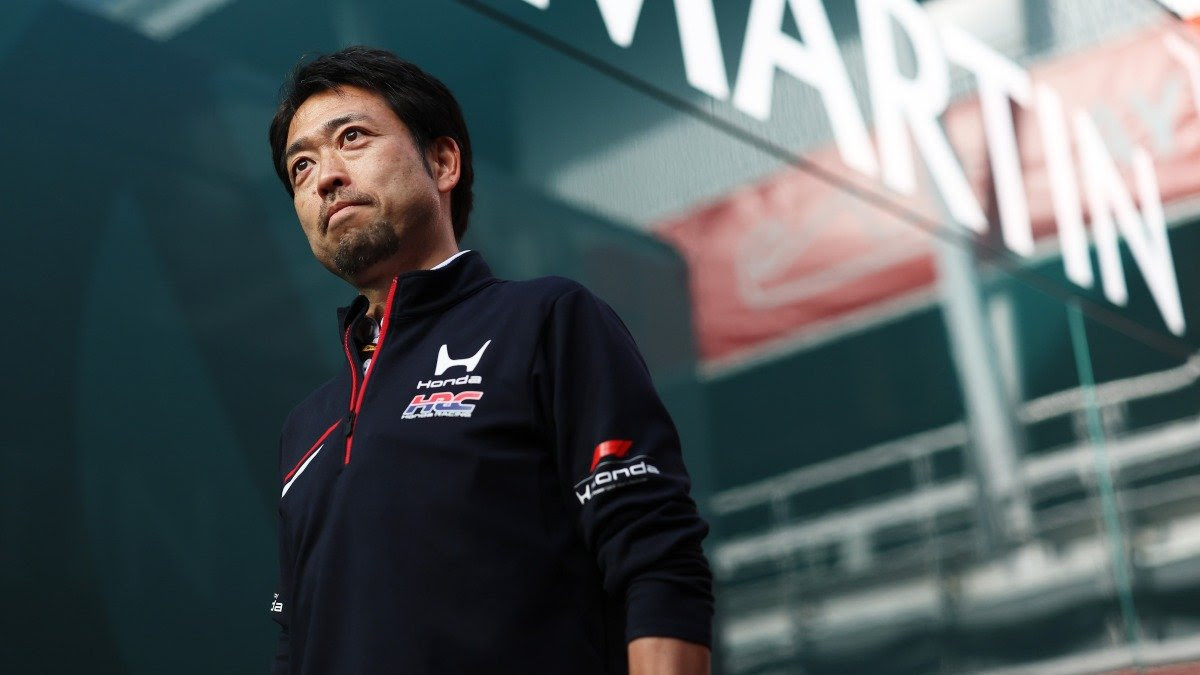
Shintaro Orihara — Trackside General Manager and Chief Engineer for Honda Racing — emphasided cooling, energy management and higher altitudes as the vital areas of focus for Aston Martin and Honda at the Red Bull Ring in Austria.
Honda expects greater strain on turbochargers due to higher altitude at Red Bull Ring
Geographically, the Red Bull Ring is located in the Styrian mountains, which means teams will face a weekend of higher altitude and reduced air density. For Honda’s power units, this means a greater strain on the turbochargers, with Orihara anticipating the early problems where the turbochargers would have to work twice as hard compared to other races.
“The Red Bull Ring is in the mountains, located at a high altitude. This means that the turbocharger is required to work harder compared to other races.”
Orihara shared that in the previous years, Honda had a solution to mitigate this issue in the form of the MGU-H, which assisted by using energy from the exhaust to support the turbocharger and improve responsiveness. However, under the 2026 regulations, this system is no longer in use — creating a disbalance between the engine and the turbocharger at higher altitudes.
“When we had the MGU-H, we had an impact on the harvesting power at this circuit. However, as this component is no longer part of the 2026 regulations, we no longer have the MGU-H to assist the turbocharger, which may make it more challenging to operate both the turbocharger and the engine correctly at high altitude.
“The first thing we will do in FP1 is to check the behaviour of both the turbocharger and the engine.”
Heat to test cooling systems at the 2026 F1 Austrian GP
Apart from the higher altitudes, Orihara highlighted that cooling will be another key component that Honda and Aston Martin will closely monitor. With high ambient temperatures throughout the weekend, the Honda power unit will face the test of time by managing its cooling systems to avoid any overheating issues.
“Moreover, this week, we will expect high temperature at the track so cooling will also be an important topic to factor in.”
Orihara points “deficit” to rivals as track adds additional stress on PU
Giving a candid forecast, Orihara presumed that the Red Bull Ring places Honda at a disadvantage compared to their opponents. While it’s a short track in terms of lap distance, it holds three major straights that are a “demand on the power unit” itself, specifically in terms of power.
“Another characteristic of the circuit is its short layout. Despite its length, there are three fairly significant straights, and these are a demand on the power unit. The reality is that we may see a deficit here to other PU manufacturers,”
However, he stressed that Honda will look to compensate for this disparity through detailed energy management strategies and improvements in driveability, aiming to extract the maximum possible performance from the package over the course of the weekend.
“But we will adapt elements like our energy management strategy and driveability to maximise our package for the weekend.”