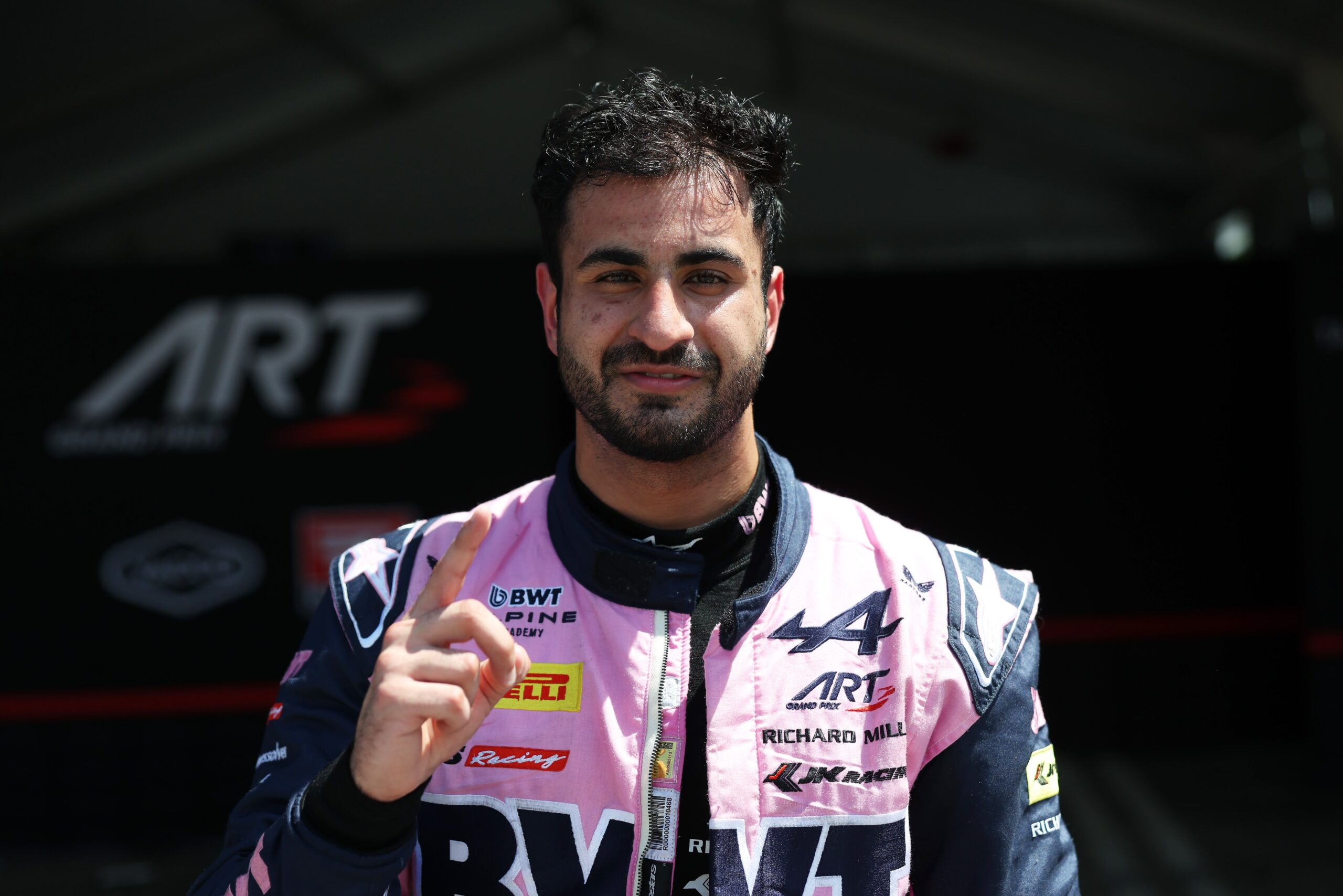
Kush Maini delivered an eye-catching performance in F2 Qualifying in Miami, securing his second career pole position. Speaking at the post-Qualifying press conference attended by Pit Debrief, he reflected on the journey behind the result and the work that led to this breakthrough. The pole marked a significant step forward after a difficult period in the championship, where consistency and confidence proved elusive. Now with ART, Maini appears revitalised, combining improved preparation with a stronger connection to his team. As a result, his Miami performance not only underlined his raw pace but also highlighted a driver who has rediscovered both belief and enjoyment behind the wheel.
Maini reflects on a rewarding return to the front after topping 2026 F2 Qualifying in Miami
After stepping out of the car, Maini reflected on what this pole meant in the wider context of his journey. While he avoided singling it out as his best, he made it clear that the circumstances surrounding this achievement gave it particular weight. His comments naturally set the tone for understanding how far he has come.
“I would say all poles are great. It’s not like a favourite son—I’m not going to pick one. But I would say, considering the tough few years we’ve had, knowing that every time I’ve jumped in the F1 car, it’s always been back on it, and I’ve always struggled in Formula 2—you know the frustration from those two years—to do pole now at a new track with my new team, where I feel back at home, definitely is very satisfying.”
This sense of satisfaction did not emerge in isolation. Instead, it built on a foundation of recent preparation and growing confidence, which became evident as he discussed his approach to the Miami weekend.
Building confidence through preparation
Heading into Miami, Maini carried momentum from recent testing, which allowed him to reset both mentally and technically. Consequently, he arrived better equipped to extract performance when it mattered most in Qualifying.
“Yeah, obviously we did the two days of testing in Zandvoort. It came at a great time, there was quite a big break. So like I’ve said in the past, I think every time I jump into an F1 car it’s always been quite straightforward, and we’ve been very strong even in the rookie test last year.”
He then broadened the point, explaining how his previous struggles in F2 had shaped his current mindset. Rather than ignoring those challenges, he used them as motivation to improve.
“F2 has been a hard nut to crack for me. We’ve obviously had our moments, but it’s been very tough to stay consistent, especially last year. But I always knew that with everything around me working well, with the right team believing in me and pushing me forwards, that this is where we can be and where we should be.”
Importantly, his move to ART has played a crucial role in reigniting his passion for racing, which in turn has translated into performance.
“And I’m just glad I found a new home in ART, which makes me feel like I enjoy racing in F2 again and I enjoy driving the car, which I feel like I fell away from a bit the last two years. So I’m just in a good place right now, and yeah hopefully we can keep it like that.”
With this renewed confidence established, Maini then pointed to how lessons from earlier setbacks, including those in Melbourne earlier this year, directly influenced his Miami result.
Learning from setbacks
Although Australian opener proved frustrating, it also offered clarity—something Maini had often lacked in previous seasons. Therefore, instead of dwelling on disappointment, he and his team used the experience constructively.
“Yeah I think obviously Australia was a tough one. Quali was decent but I couldn’t really put it together in the races.”
Crucially, he emphasised that understanding the root of the issues made all the difference this time around.
“But yeah I always, the thing is like leaving Australia we knew what had gone wrong, where I would say the last two seasons of F2 sometimes I’d leave without having any answers, so we put that into work, we had a bit of time to reset, and you know I trained quite hard physically mentally, and I think it all paid off.”
As a direct result of that focused work, he arrived in Miami with a clearer direction and a stronger package.
“And yeah I’m just happy that from Australia we sort of knew what went wrong and we could rectify it and work with the team for them to give me the best car possible to fight for pole, so really happy with that.”
That preparation proved vital when tackling the unique demands of a brand-new circuit.
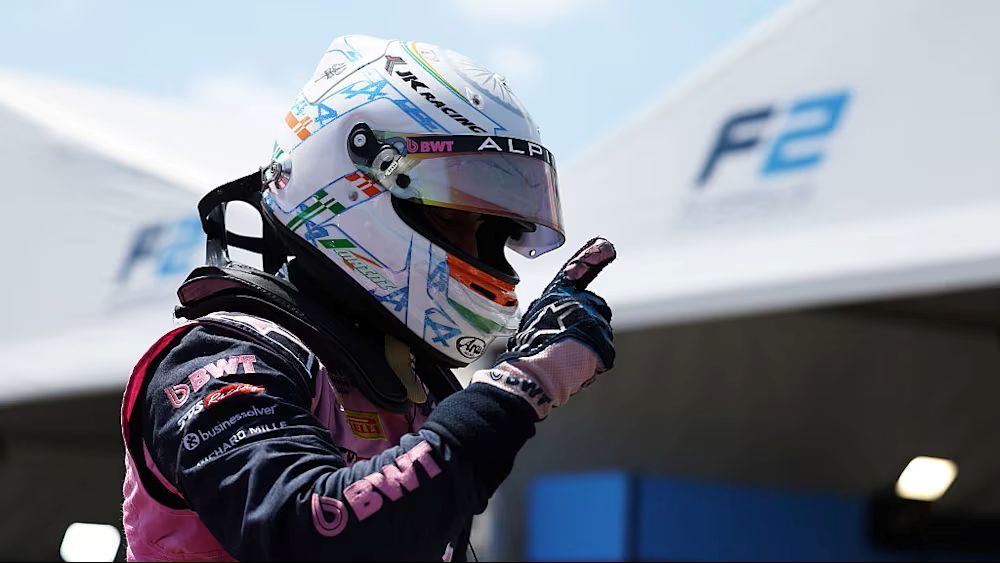
Maini on mastering the lap that saw him top F2 Qualifying at the 2026 Miami GP
The Miami track presented a fresh challenge for every driver, with no prior data to rely on. Consequently, adaptability and tyre management became decisive factors during Qualifying, particularly under hot conditions.
“Yeah, I think obviously we go from the medium to the super soft compound, so it’s much less durable. So, through the lap, with the heat we had on track, you definitely had to manage your rears a bit and not ask too much of them, because as soon as you ask too much and you have a micro slide, it just goes downhill. So I think that was the main thing: trying to drive just under the limit, not going past it.”
At the same time, Maini embraced the unpredictability that comes with a new venue, seeing it as an opportunity rather than a disadvantage.
“I always love new tracks. I think it’s a great challenge for every driver and team, and it really shows how you work with your team, because a lot of simulation goes into these races. And obviously, not having an onboard or data of a lap, you know you’re almost a guinea pig [on] the first laps, and you try and figure out the best way.”
This careful balance between restraint and exploration ultimately allowed him to extract the lap time needed for pole.
Margins that make the difference
In a tightly contested session, Maini’s response to a question from Pit Debrief highlighted just how fine the margins were in securing pole position. He carefully broke down the lap and pointed to specific areas where he managed to extract the crucial time advantage. At a circuit where drivers and teams started with limited information, even small strategic decisions had a significant impact on the final result.
“I think obviously Rafa [Câmara] mentioned he was on high downforce, so that means his Sector 1 was very quick, but then he’d lose out on the straight. So compared to him, I think obviously Sectors 2 and 3 were where I made the difference. But I think in general, with being a new track, putting it together, and also trying to just understand what the tyres are going to be like through the lap.”
His explanation underlined how compromises in setup can shape an entire lap, especially on a new track where no one holds a clear reference point. While some drivers prioritised cornering performance early in the lap, others, like Maini, found gains in maintaining balance across all sectors.
Furthermore, changing expectations around tyre behaviour added another layer of complexity to the session, forcing teams to adapt quickly as conditions evolved.
“I think we came into this race thinking that it’s going to need a lot of warm-up because it’s quite a low energy track, but in the end, because of the heat, we actually toned it down a lot to keep the rears alive for the whole lap.”
This adjustment proved decisive, as managing thermal degradation became more important than initially anticipated. Drivers who pushed too hard risked losing performance before completing the lap.
The value of preparation
Ultimately, Maini credited meticulous preparation and execution for putting him on the right side of a tightly contested battle. In a field as competitive as F2, he stressed that the smallest details often determine the final outcome, especially in Qualifying where margins are razor-thin.
“So I think the level in F2, I think there’s probably seven, eight people who are always capable to do pole, and in the end it’s always little things and preparations that sets it apart. So I’m glad we were on the right side today.”
Even so, perfection remained just out of reach, as is often the case in such demanding and unpredictable conditions. Minor slides or tiny misjudgements can cost valuable time, yet Maini’s ability to minimise those errors ultimately made the difference.
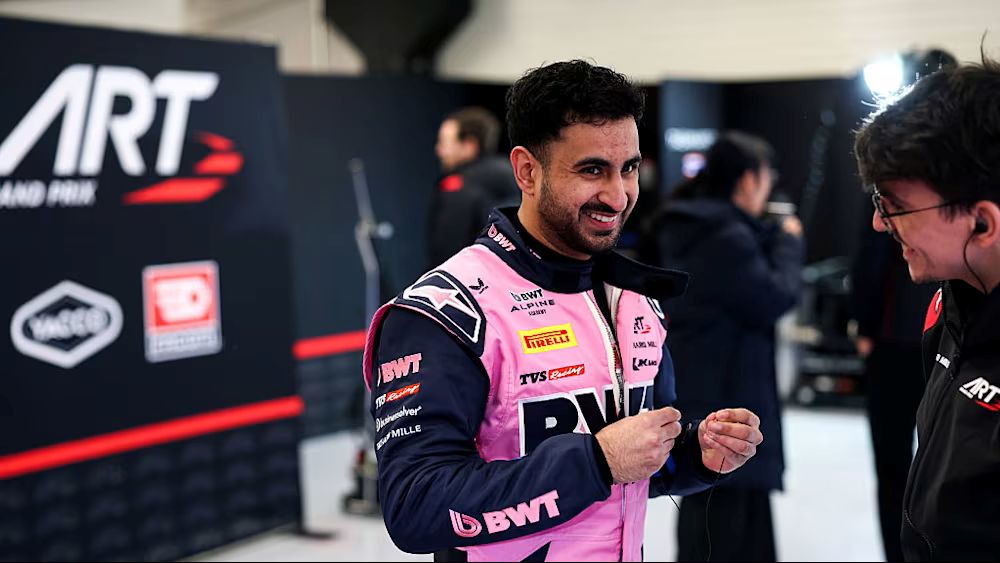
Maini on the near-perfect effort in F2 Qualifying that earned him pole in Miami
Despite securing pole, Maini remained realistic about the challenges of delivering a flawless lap in F2. The demanding conditions meant that small imperfections were almost inevitable.
“I think it’s too difficult in Formula 2 with these conditions to nail every single sector. I think you’re always going to have that occasional slide or whatever. But I think with the conditions what they were, I think I’m very happy with the lap we did.”
This pragmatic outlook reflects a driver who understands the nuances of performance—an understanding that becomes even more valuable on unfamiliar circuits.
Maini thriving on new challenges
New tracks continue to play to Maini’s strengths, as they remove historical advantages and reward adaptability. Consequently, he views such situations as ideal opportunities to showcase both skill and teamwork.
“I would say new tracks are always cool because it levels out the playing field. You go in very much in the unknown, and you’ve almost got to figure it out as you go. It also shows the amount of work you put in with your team, and if your engineer gets you, and the work you do on the sim, so it’s a lot of things.”
He reinforced this point by underlining the achievement of taking pole in such a competitive and uncertain environment.
“But yeah, I would say definitely a challenge today to be at a new track, especially in Formula 2 with great drivers on the grid, and to take pole. It definitely feels great.”
These experiences, in turn, contribute to his long-term development as a driver.
Maini discusses preparing for the future after strong showing in F2 Qualifying in Miami boosts confidence
Looking beyond Miami, Maini framed weekends like this as more than just opportunities for immediate results. Instead, he views them as essential steps in his long-term development, particularly in a championship as competitive and unpredictable as F2. By tackling unfamiliar circuits and high-pressure situations, he continues to refine both his technical understanding and mental approach. As a result, each experience contributes to building a more complete and adaptable driver.
“No, I think anytime you get put, especially in a competitive championship like F2, in a new track, it’s very interesting to see how everyone does, and I think the fact that after FP1 everyone was so close in the top 12, it really shows the level of F2.”
This level of competition, he suggested, forces drivers to raise their performance immediately, leaving little room for hesitation. Consequently, adaptability becomes one of the most valuable skills a driver can develop, particularly when there is no prior data to rely on.
Moreover, he highlighted how quickly drivers must adjust their approach in order to remain competitive from the very first laps.
“And also, you know, going into a new track and already being on it from the first lap is always a great challenge for your driving and for your own skill set, and it improves your confidence, like I’m sure going into Canada now the people that have the doubts in Miami are probably… it’s gone into Canada and in the future.”
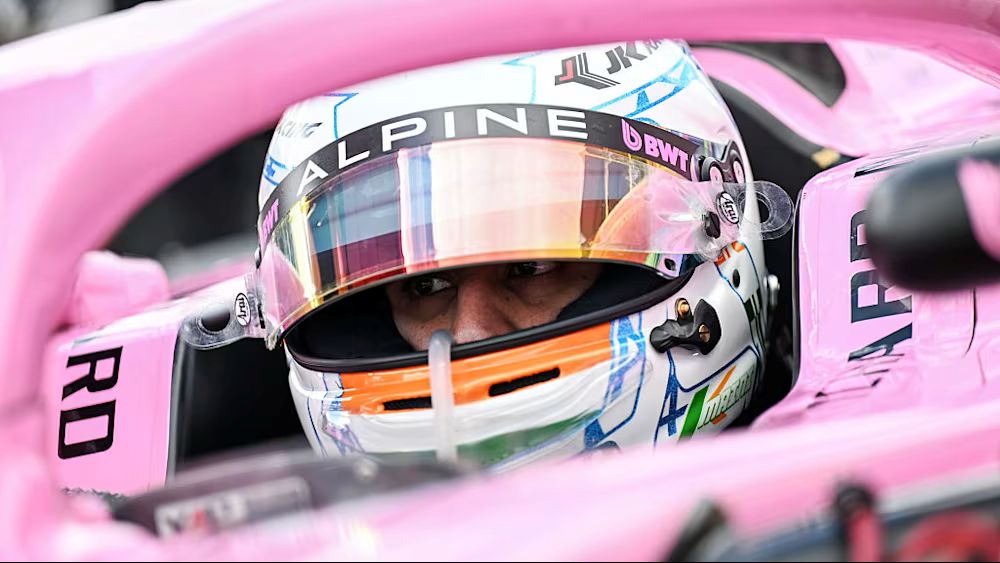
Growth driven by adaptability and team trust
As the conversation continued, Maini expanded on how these challenges directly contribute to his future ambitions. Rather than viewing new environments as obstacles, he embraces them as opportunities to accelerate his growth and strengthen his overall racecraft.
“So I think to prepare you for the future, any new challenge is great, and this is almost, you know, when you go from a different car, this is a different track we’ve never driven here, no onboards, so I think for sure any challenge just builds your skill set as a driver.”
In this context, his Miami performance represents more than a single strong Qualifying result. It reflects a broader process of development, where each lesson learned feeds into future performances. Ultimately, Maini made it clear that consistent progress at this level relies not only on individual skill, but also on the environment around him.
That growth also depends heavily on trust within the team, which continues to play a crucial role in unlocking his potential as he looks ahead to the next challenges on the calendar.
Trust in the team
Maini’s confidence in ART has played a central role in his recent resurgence, giving him both stability and belief after a difficult period in F2. Since joining the team, he has found an environment that allows him to focus on extracting performance, particularly in Qualifying where fine margins often decide the outcome. While he acknowledged the team’s strength in this area, as shown in 2025 by Victor Martins, he stressed that success still depends on execution.
“Yeah, I would say for sure ART have been very strong in Quali, and like you’ve seen last year, I think Victor’s a great driver as well.”
He also recognised that every new weekend presents a fresh challenge, especially at unfamiliar circuits where teams must adapt quickly without reliable reference points.
“So overall, in a new track, it’s a very level playing field—almost everything. I mean, you have your simulation and it does matter how good it is, but in the end, as you’ve seen, you know someone like Rafa was on high downforce versus us on medium, and in the end, it was two-hundredths. So in the end I would say it’s a great leveller, a new track. You know you don’t even know what ride heights to run in the first run, you’re always learning more and more.”
This constant learning process highlights the importance of trust between driver and team, which has become key to Maini’s improved performances.
“So yeah, I would say I definitely have confidence in my team because they’re hard working and they’re great, but nothing taken for granted where it’s just given that I’ll be on pole.”
With Qualifying complete, attention now turns to race day, where converting one-lap pace into strong results will be the next challenge.
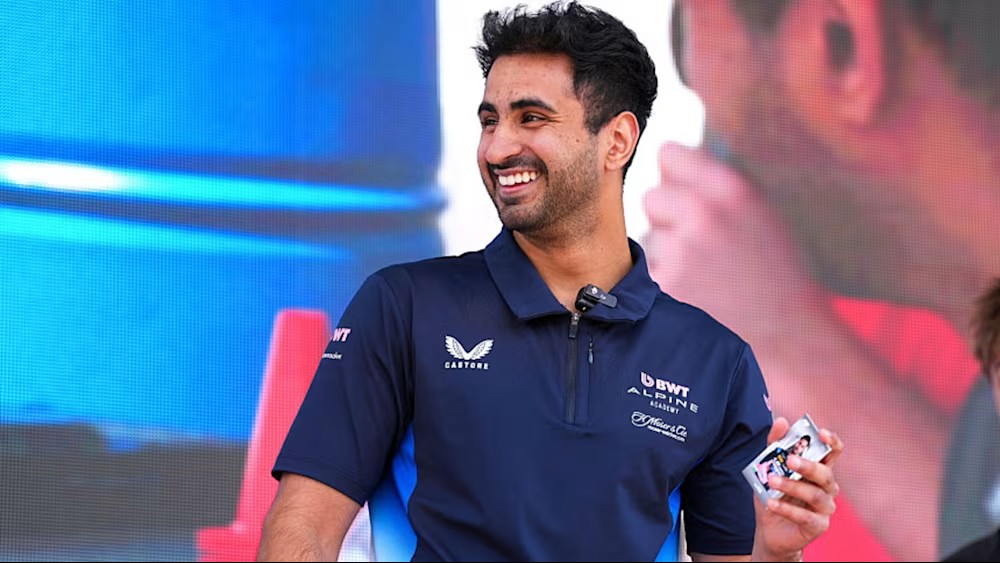
Maini turns eyes to race day action after topping 2026 F2 Qualifying in Miami
Starting further back for the Sprint Race, Maini anticipates a complex contest shaped by tyre behaviour and overtaking opportunities. Therefore, managing race pace will be just as important as raw speed.
“I think for sure going into a new track and not doing a long run at all, what we saw was definitely the heat was affecting the tyres, but not in a deg. way, it was almost like a thermal way. So yeah, I think those small slides etc. are really going to harm you, so if you’re fighting quite early on in the race it could really mean that you sort of lose your grip.”
However, he remains optimistic about the potential for progress through the field.
“But in the end, I think having the DRS zones extended and very long straights, overtaking is definitely going to be possible. It’s probably going to be very exciting to watch, and I think with good pace you can definitely do stuff on this track and move forwards.”
Even so, external factors could still influence the outcome of the weekend.
Weather uncertainty looms
As the weekend unfolds, uncertainty around the weather continues to linger. While Maini remains focused, he acknowledged that the situation sits in the back of every driver’s mind.
“Yeah, you know, unfortunately it’s definitely in the back of everyone’s mind, but unfortunately, I don’t have God’s number, so it would be nice if I did, but like Martinius said, I think we just need to wait and see what happens, but for sure it would be a shame to come all the way to Miami to do a Sprint Race, so let’s see though.”
Kush Maini’s Miami pole represents more than just a strong Qualifying result in F2. It signals a renewed sense of purpose, built on resilience, preparation, and trust in his team. As he looks ahead, this performance could mark the beginning of a more consistent and competitive phase in his career.