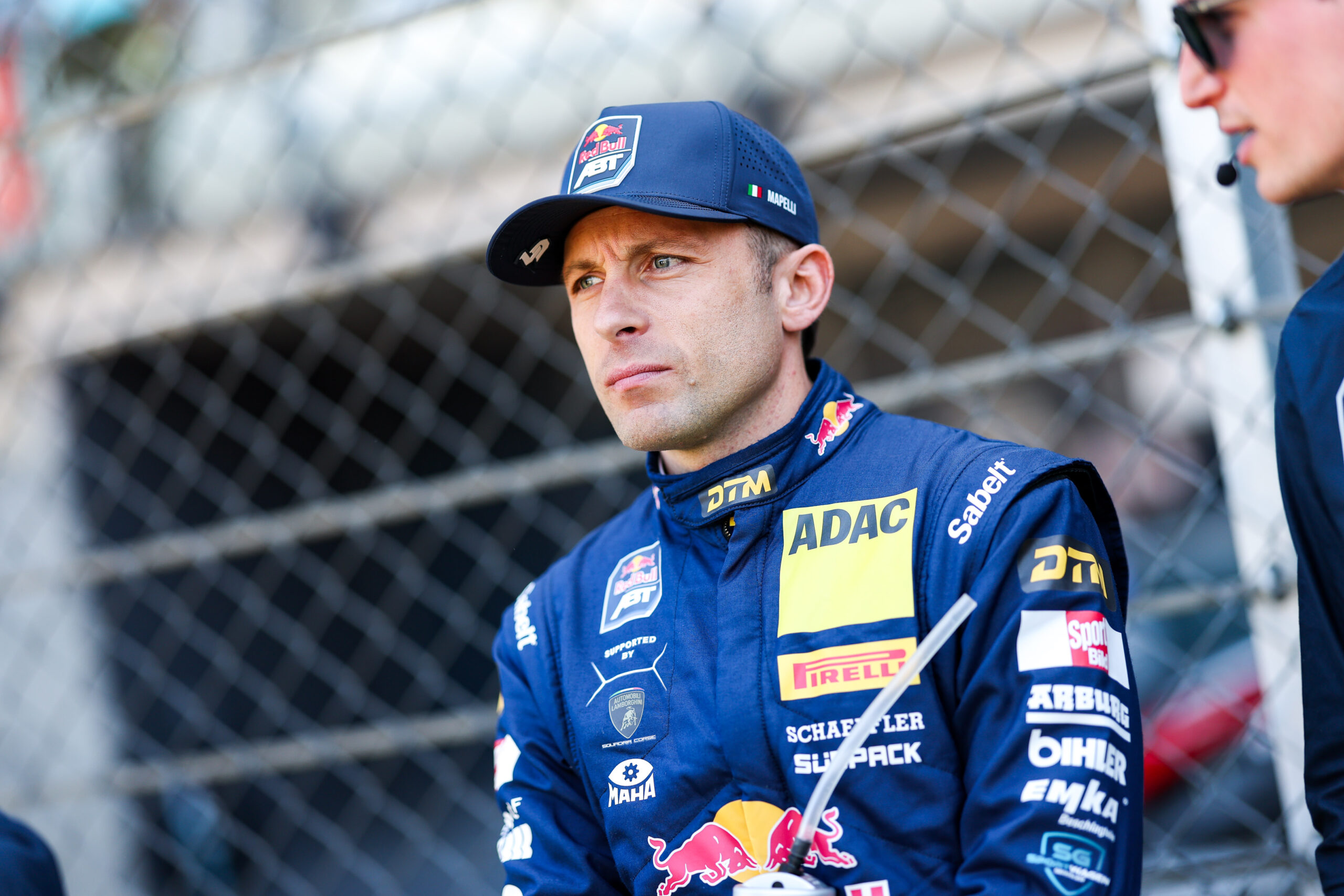
Marco Mapelli entered the 2026 DTM season as a rookie, but only by name, at 38, the Italian brought vast GT3 experience to ABT Sportsline. He had already raced across Europe, Asia, Japan, the United States and Australia. He had competed in major endurance events, including the Nürburgring, Bathurst and several 24-hour races. Few drivers arrived in the DTM with a wider GT3 background.
Yet, the move still marked a clear change. After years of sharing cars in endurance racing, Mapelli prepared for a series built around short races, decisive qualifying sessions and direct fights. In the DTM, he had a Lamborghini all to himself.
For ABT Sportsline, Mapelli’s arrival also marked a fresh start after a difficult first DTM season with Lamborghini. Now, the team enters a new chapter with the Lamborghini Temerario GT3, Mapelli and Luca Engstler.
In an interview with Motorsport-Magazin, Mapelli discussed his DTM debut, the challenge of adapting to a new format, and ABT Sportsline’s hopes of returning to the front.
Mapelli ready to embrace DTM’s fierce GT challenge
Mapelli knew he had not chosen an easy championship for his first full DTM campaign. With its strong grids, intense preparation and tiny margins for error, the series was set to demand a high level from the very first session.
“I expect an extremely high level, from the drivers, the teams and also in terms of preparation. The DTM is probably the highest level in GT racing. I also expect many battles, a lot of hard work, sometimes headaches too, but definitely a lot of fun. It will be a form of motorsport that demands a lot of commitment.”
That challenge did not put him off. Instead, it matched the kind of racing he enjoyed. Mapelli had spent much of his career in GT cars, where close contact and tough wheel-to-wheel fights often shaped races. He understood that the DTM demanded respect, but he also believed hard racing formed part of the appeal.
“I like battles on track. Of course, many series today try to make racing ‘fairer’, but that does not mean you cannot fight hard. Contact is part of GT racing. That is exactly what makes it so attractive to watch from the outside.”
Mapelli embraces greater responsibility in DTM switch
The DTM also changed Mapelli’s daily work inside the team. In endurance racing, he was used to sharing the car, which meant compromises on set-up, strategy and feedback, with every decision having to suit more than one driving style.
In the DTM, the car centred around him. His engineers could focus more closely on his needs, and his feedback carried greater weight. That gave him more freedom, but also brought more responsibility.
“I have raced in endurance for 15 years, and there you basically share everything: set-up decisions, strategy decisions, the work with the engineers. In the DTM, everything is focused on me, and that is really cool. At the start, you have to get used to it, but I am not worried about that. You have your own group around you, one that supports you, understands you, your language, your feedback, and you build trust day by day when you work together at the track.”
That trust could become one of the most important parts of his adaptation. Mapelli had to build a strong working rhythm with ABT Sportsline quickly, as the DTM calendar leaves little time for slow progress. Clear communication with the crew would therefore matter from the opening rounds.
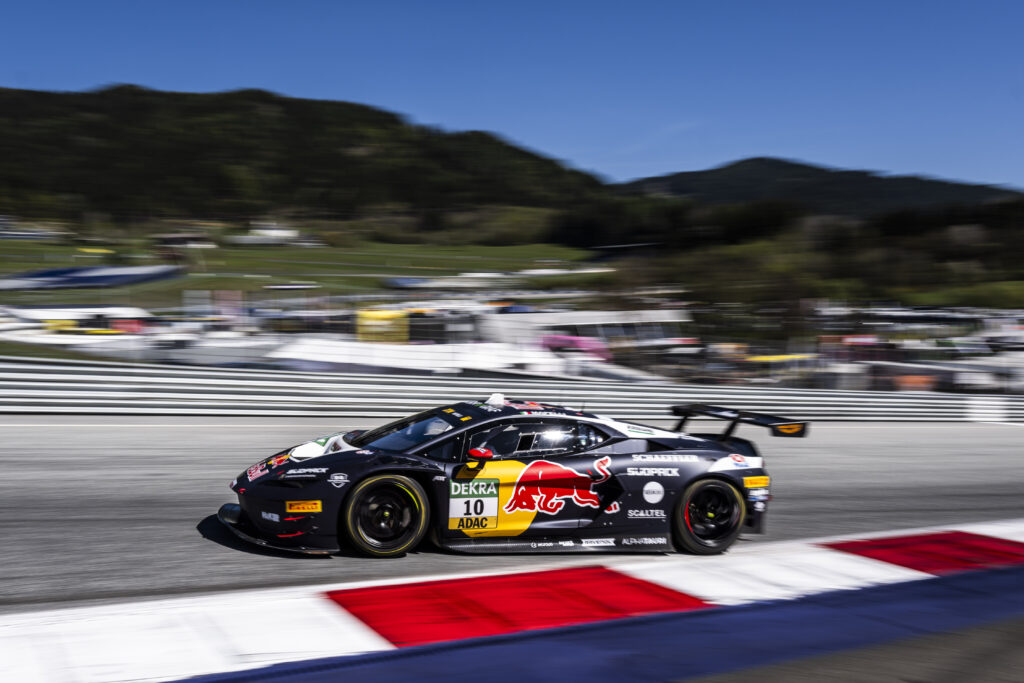
Mapelli targets DTM precision in qualifying and pit stops together with ABT Sportsline
One of the most significant adjustments came in qualifying. While a single lap can still matter in endurance racing, the race length often offers more chances to recover. In the DTM, track position carries far greater importance, meaning a strong qualifying result can shape the entire weekend.
Mapelli accepted that he had to sharpen that side of his driving again. He already had experience of pressure laps from events such as the Nordschleife and Bathurst, but the DTM brought a more specific demand: delivering at the right moment, every time.
“In the DTM, you really have to be a good qualifier. You have to deliver exactly when it matters. I certainly have to find my way back into that a little. I know the principle from shootouts, such as on the Nordschleife or in Bathurst, but the DTM is even more specific in that respect. It is something I have to work on.”
Pit stops added another area where small details could decide results. The DTM does not give teams a minimum stop time, so precision matters. The driver has to hit the marks, stop cleanly and leave without losing tenths.
Mapelli had already faced similar demands in endurance racing. Still, the DTM gave him more chances to practise because he did not have to share the car. That allowed him to focus closely on every phase of the stop.
“In endurance racing, you also have to place the car perfectly in the pit box, otherwise you lose time, especially in series without a prescribed minimum stop time. The advantage in the DTM is that you drive alone. That gives you more opportunities to practise than in endurance racing. Here, you can focus much more on finding those small tenths everywhere, on pit entry, when stopping, and when driving out.”
Mapelli looks to turn pressure into performance
Mapelli joined one of the most successful teams on the DTM grid. ABT Sportsline carried history, expectation and a clear winning culture. After a difficult Lamborghini debut season, the team needed a response.
For Mapelli, that environment created pressure. But it also gave him motivation. He had worked with many Lamborghini customer teams around the world, but ABT Sportsline left a strong impression on him from the moment he entered the workshop.
“Yes, I was lucky enough to race in many Lamborghini customer racing environments, in the USA, Japan, Europe and the United Kingdom. But ABT Sportsline is definitely special. You notice it as soon as you walk into the workshop: the trophies, the structure, the way people work here. It has a special aura. And yes, that also brings pressure. But I would say I can turn that pressure into performance.”
That mindset could prove vital. ABT Sportsline did not sign Mapelli only for experience. The team also gained a driver who understood Lamborghini machinery deeply and had already helped shape its next GT3 car.
Mapelli sees Temerario as key to ABT Sportsline’s DTM reset
The new Lamborghini Temerario GT3 formed a major part of ABT Sportsline’s reset. Mapelli had worked on the car from the start, so he arrived with useful knowledge before its first DTM season.
The Temerario marked a major step forward from the Huracán GT3, with its new twin-turbo engine changing the car’s behaviour and requiring an adjusted driving style. Still, Mapelli felt the core Lamborghini identity remained intact, particularly through its mid-engine layout.
“The Temerario is a different car, a modern racing car. That is also because of the engine: twin-turbo instead of naturally aspirated. That requires a slightly different driving style. But the philosophy remains Lamborghini. It is still a mid-engine concept, not a front-engine car. That is why there are characteristics you recognise.
“Even so, the Temerario is a big step, in performance, but above all in the working window. With the Huracán, we were recently in a very narrow set-up and driving-style window. It was difficult to get there, and even more difficult to keep it on every track and in every condition. We are working to make the Temerario easier to set up and more reliable, from gentleman drivers to professionals.”
That wider working window could become important for ABT Sportsline. The team had struggled with the Huracán, which often demanded a narrow set-up direction. A more forgiving car would help both Mapelli and Engstler build confidence across different circuits and conditions.
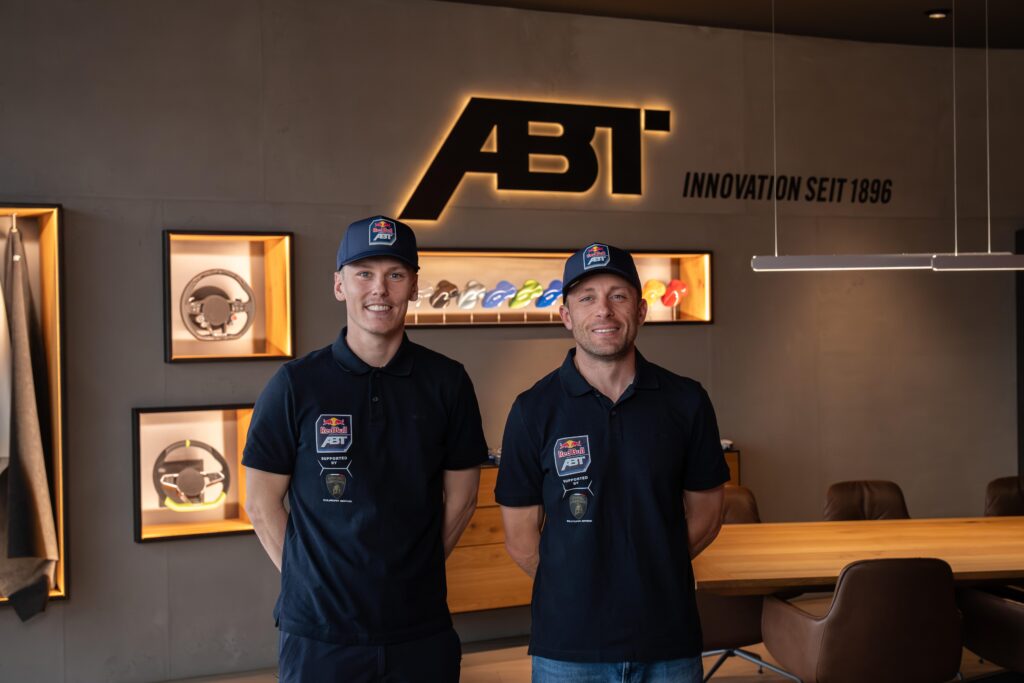
Focus on finding Temerario’s final edge for DTM
However, Mapelli did not see his development role as a shortcut to instant success. Lamborghini had laid the foundations, but every championship brings its own demands, and the DTM required a precise final layer of performance work.
“We are very open at Lamborghini. Everyone gets the chance to understand what we did and why we made certain decisions. Of course, knowing how the car reacts to certain changes helps. But in development, we mainly laid the foundations. We did not develop the performance down to the smallest detail, whether for the DTM, GT World Challenge or IMSA.
“Those are different development directions, and we were limited by time. The final ten per cent is still missing. That depends heavily on drivability and on how a driver wants to sharpen the car exactly to his style. Especially in the DTM, where you have your own car and can set it up very specifically, that is crucial.”
Those final details would likely define the team’s early progress. Mapelli could bring direction, but ABT Sportsline still had to adapt the Temerario to the DTM format. That meant learning quickly, reacting well and turning the car into a consistent contender.
Mapelli targets ABT Sportsline return to DTM winning ways
Mapelli did not hide his ambition, as he and Engstler joined ABT Sportsline at a time of change, with the team determined to return to the level expected of it. For Mapelli, podiums and wins would be the first step towards that goal, and if ABT Sportsline could fight at the front regularly, a title challenge could follow, although he knew the team still had to earn that position again over the course of the season.
“The goal is clear: together with Luca, we want to bring the team back to where it belongs, fighting for podiums and wins. If you can fight for wins, then you can also fight for the championship. We have to get back to the level we need for that, and then we will see during the season where we stand and whether we are really able to fight for the title.”
Mapelli’s DTM debut therefore carried two stories at once. He arrived as a rookie in the series, but not as an inexperienced driver. He brought years of Lamborghini knowledge, a long GT3 record and a clear understanding of what ABT Sportsline expected. Now he had to turn that into results in one of the toughest GT championships in the world.