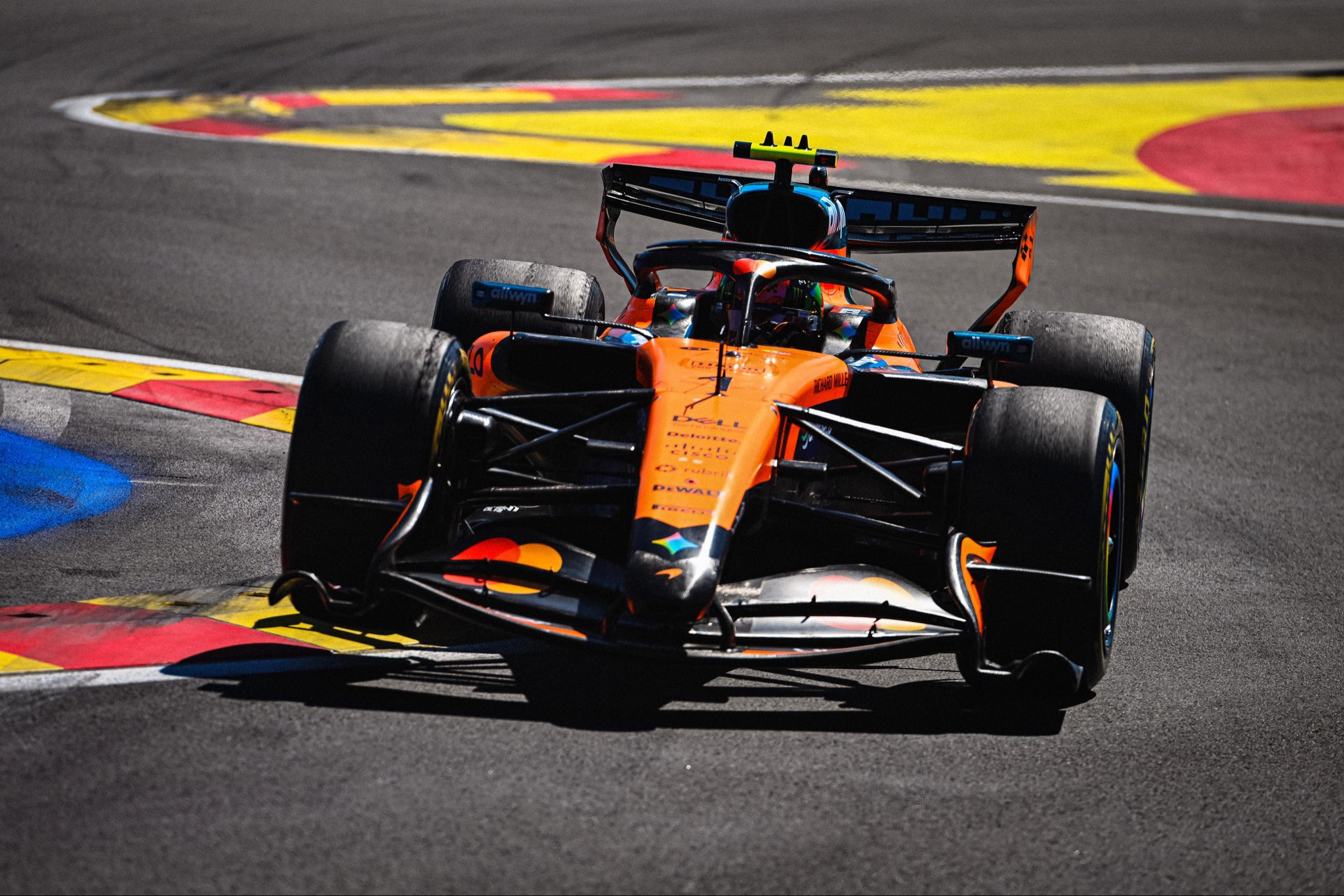
McLaren F1 Team Principal Andrea Stella has admitted the Virtual Safety car rules have left him “puzzled” after the Spanish GP. The timing of the VSC at the Madring cost McLaren an easy victory for reigning world champion Lando Norris. Stella questioned whether the system was fair.
Stella on race control and the existing rules
The McLaren team principal avoiding criticising race direction. Instead, he framed the issue as a broader question. Are the current regulations fit for purpose?
“Honestly, I am puzzled first of all, like offering a personal opinion. I am puzzled myself as to what’s right — is it correct to give enough duration such that everyone will be subject to the same track conditions. So, for instance, the Virtual Safety Car lasts at least one full lap, or you just keep it in the hands of the gods? And, sometimes, you are lucky, sometimes, you are not. I am not sure myself.”
Stella’s uncertainty was palpable. Norris had built a six-second lead before the VSC came out. The timing of the FIA calling the VSC after Aston Martin’s Lance Stroll had stopped in the run-off area at turn 20 had been five seconds. This had handed the advantage to his rivals, Kimi Antonelli and Max Verstappen in P2 and P3 respectively. Norris had already passed pit entry. As a result, he could not gain the reduced time loss that others did.
Why that timing changed everything for McLaren and Stella at the F1 Spanish GP
The incident exposed a quirk in how VSC periods work. Drivers approaching the pit lane when a VSC is called can pit and lose far less time. Those who have already gone past cannot. At the Madring, overtaking was almost impossible. That swing proved decisive.
Stella accepted that race control cannot factor in the competitive situation. Safety calls must come first. However, he saw that as the reason the rules deserve scrutiny.
“But in general, there is the right place where this is sort of a conversation which is the Strategy Advisory Committee – the famous SAC – and this is a topic that may be added to the agenda I discussed over there. But, if it’s a change, it will have to be change it goes through to the SAC, then we have confirmation, and then we have to go at some stage in the sporting regulations.”
What a change could look like
Stella stopped short of endorsing a fix. A longer VSC would protect fairness between drivers. At the same time, it extended the safety intervention itself. That intervention exists to protect marshals and recovery crews.
“I would do research that this is a relatively lengthy process, unless, there is a big push from F1, from the institutions, FIA or F1 to say we need to make this different. As a competitor if then all, I would have to be careful.”
The discussion could now head to the Sporting Advisory Committee. Any formal proposal needs traction there first. After that, it would reach the F1 Commission and the regulations. Stella made it clear that he was aware the process would be slow. However, the urgency would need to come from the institutional bodies itself, whether that is the FIA or F1’s commercial rights holder.
For Stella and McLaren, the F1 Spanish GP was a painful lesson. A system built for safety still shaped a race result. No team could control it. The question is whether the sport accepts that it will inevitably screw a driver or drivers over, or attempts at a solution to fix it.