As reported by Sportscar365, Peugeot has begun testing a revised version of its 9X8 Hypercar as the French manufacturer prepares a proposed Evo package for the upcoming 2027 FIA World Endurance Championship (WEC) season.
The team ran the upgraded car at Circuit Paul Ricard on Tuesday and scheduled further testing at the French venue on Thursday. Peugeot aims to improve the prototype’s performance, efficiency and overall competitiveness after a difficult first half of the 2026 campaign.
However, the manufacturer must still secure approval for its planned changes. Peugeot has already used the five Evo jokers allocated under the LMH regulations, alongside its permitted re-homologation, which leaves the regulatory route towards another major update uncertain.
Peugeot begins next stage of 9X8 development
Peugeot has continually revised the 9X8 since introducing the Hypercar to FIA WEC competition.
The manufacturer replaced its original wingless concept with a significantly updated version during the 2024 season. Nevertheless, the programme has continued to struggle for consistent front-running results against the championship’s growing manufacturer field.
Team principal Emmanuel Esnault described the 9X8 as an ongoing development platform and outlined Peugeot’s ambition to return to regular contention.
“Since its debut, the Peugeot 9X8 has been a platform in constant evolution — competing at the highest level of endurance racing means continuously learning, adapting and progressing,” said Peugeot team principal Emmanuel Esnault.
“The intensity of competition at a world championship level reinforces our determination to keep evolving.
“Our objective is clear: to position the 9X8 consistently among the top contenders.
“As we look ahead to 2027, the team is taking the next step in its development, focused on a revised approach to performance, efficiency and design.
“This work is a key milestone in preparing the next chapter of the Peugeot 9X8 story and perpetuating the legacy of Peugeot in endurance racing.”
Consequently, the Paul Ricard programme represents more than a routine test. Peugeot has started evaluating the technical direction that it hopes to introduce during the final three seasons of the current Hypercar rules cycle.
Revised car targets performance and efficiency gains
Peugeot has described the planned modifications as measures aimed at enhancing the 9X8’s performance, efficiency and competitiveness.
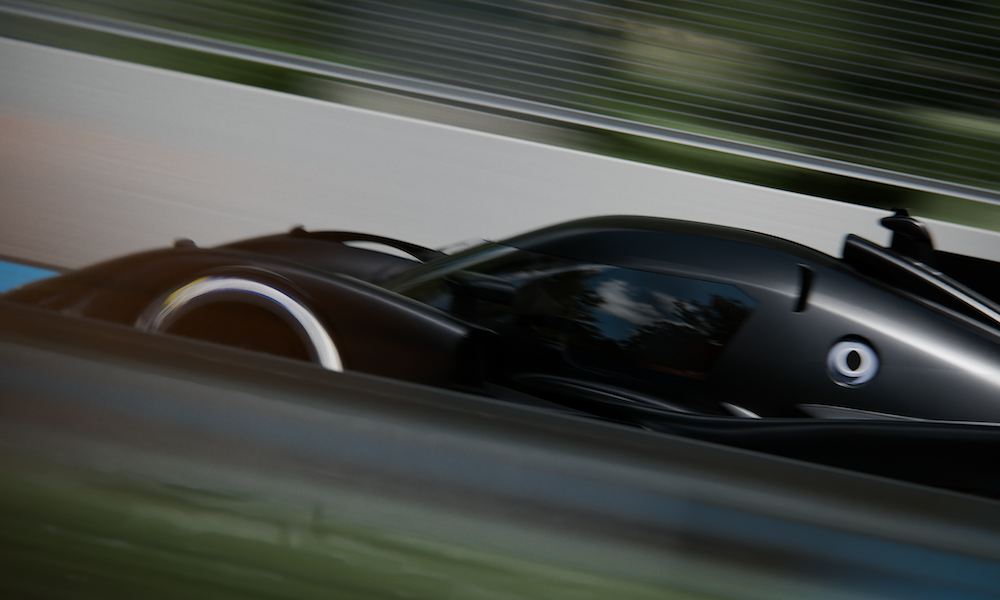
However, the manufacturer has not revealed the extent of the changes. Peugeot has released only one teaser image, which provides few clear details about the revised aerodynamic or mechanical package.
The development programme could address several areas of the car. Nevertheless, Peugeot has not confirmed whether it plans to alter the bodywork, suspension, cooling configuration or other elements of the Hypercar.
Instead, the team has characterised the Paul Ricard running as progress towards securing approval for its intended 2027 evolutions.
Therefore, the test allows Peugeot to evaluate its proposed solutions while continuing discussions with the championship’s technical authorities.
Regulatory approval remains uncertain
The LMH regulations allocate each manufacturer five Evo jokers across a car’s homologation period.
These jokers allow manufacturers to introduce approved changes after homologation, although the governing bodies control their scope and timing. Peugeot has already used its full allocation, as well as the single re-homologation permitted under the regulations.
As a result, the manufacturer cannot automatically introduce another major update for 2027.
However, Peugeot hopes to use a clause added to the 2026 FIA WEC Sporting Regulations. That provision allows organisers to approve additional changes when they consider a car to face a significant performance disadvantage.
Peugeot must therefore demonstrate that the 9X8 requires further development outside the standard Evo-joker allocation.
Meanwhile, the manufacturer’s reference to progress towards approval confirms that the FIA and Automobile Club de l’Ouest have not yet authorised the complete package.
Difficult 2026 season increases pressure for change
Peugeot entered the second half of the 2026 season seventh in the Manufacturers’ Championship.
The French marque has scored more points only than newcomer Genesis during the opening half of the campaign. Consequently, Peugeot has remained behind several established Hypercar rivals despite previously revising the 9X8 concept.
The results have increased the importance of the proposed 2027 evolution. While Balance of Performance aims to equalise the potential of competing cars, manufacturers must still produce machinery that operates effectively across different circuits and conditions.
Peugeot therefore wants to improve the underlying platform rather than rely solely on championship-level performance adjustments.
Furthermore, a more competitive package would strengthen the programme as the current regulations approach their planned conclusion in 2029.
Peugeot maintains long-term WEC commitment
Peugeot confirmed its development plans during the 2026 24 Hours of Le Mans.
At the event, the manufacturer also reiterated its commitment to FIA WEC until at least the end of the existing rules cycle in 2029. That decision provides the programme with several seasons to apply the lessons from its current struggles.
The revised 9X8 will form a central part of that commitment. Instead of abandoning the project after a difficult campaign, Peugeot intends to pursue another technical step and strengthen its position within the Hypercar category.
However, regulatory approval will determine how extensively the manufacturer can modify the car.
Therefore, Peugeot must balance its performance objectives with the technical framework governing LMH development.
Paul Ricard running offers limited public clues
Peugeot selected Paul Ricard for the first running of its updated test car.
The circuit offers several configurations and allows teams to evaluate aerodynamic performance, braking stability and mechanical behaviour. Moreover, its long Mistral Straight can support detailed efficiency and straight-line testing.
Nevertheless, Peugeot has kept most details of the programme private. The single teaser image offers limited evidence about the scale of the proposed revisions, while the manufacturer has not published lap times or technical specifications.
The second scheduled test day should provide the team with further data as it assesses the revised approach.
However, Peugeot may continue concealing the final design until it receives approval and moves closer to homologating the 2027 specification.
Peugeot aims to restore 9X8 to leading group
The 2027 Evo project represents Peugeot’s latest attempt to establish the 9X8 as a consistent WEC contender.
Although the programme has achieved occasional strong results, it has not regularly matched the championship’s leading manufacturers. Consequently, Esnault and his team now want to improve the car’s performance across a wider range of circuits.
The Paul Ricard test begins that process, but Peugeot still faces technical and regulatory hurdles before it can race the revised package.
Nevertheless, the manufacturer’s continued testing and commitment through 2029 demonstrate its intention to persevere.
Peugeot must now prove the value of its proposed changes, secure the necessary approval and convert its development work into a more competitive 9X8 for the 2027 FIA WEC season.