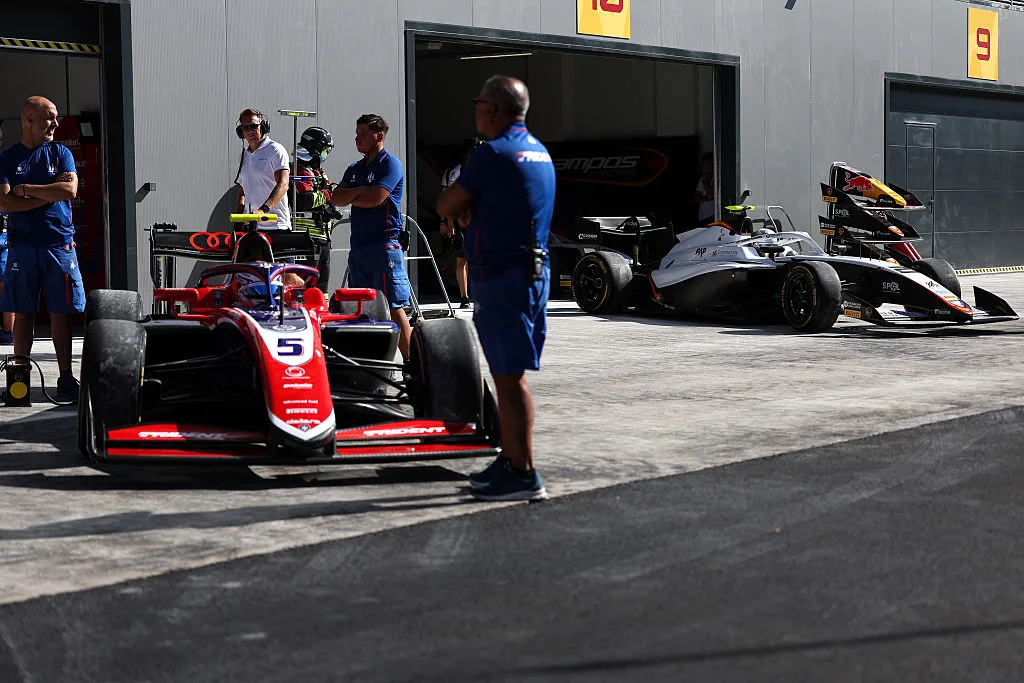
Freddie Slater and Ugo Ugochukwu enter the 2026 FIA F3 finale separated by only 15 points, yet they have reached Madrid through distinctly different routes.
Slater leads on 141 points after building his title challenge around relentless consistency, improving Qualifying form and a remarkable run of podium finishes across every round. Ugochukwu sits second on 126 after combining two victories with some of the strongest race pace and recovery drives of the season. The American led the championship for much of the year before Slater turned an 18-point deficit after Silverstone into a 15-point advantage across Spa, Budapest and Monza.
The numbers consequently paint two different pictures. Slater has more podiums, more poles and a higher average points return, while Ugochukwu has twice as many victories and has repeatedly shown an ability to move forward when starting away from the front. Those differences now feed directly into their approaches to a Madrid finale that offers 67 points through two Qualifying sessions, a Sprint Race and two Feature Races.
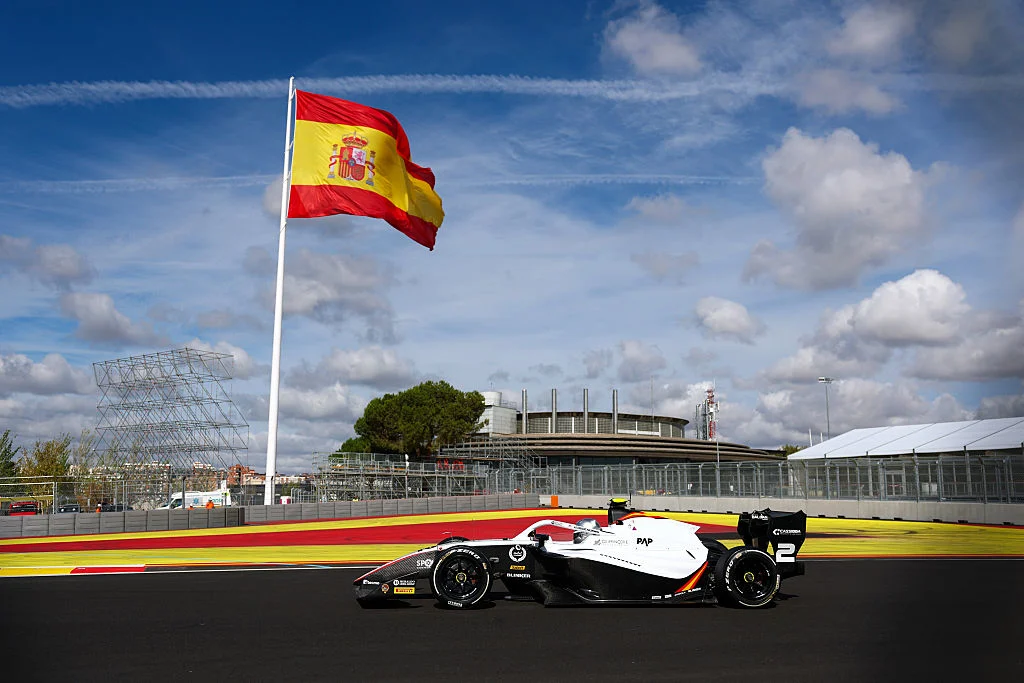
Ugochukwu “feeling good” ahead of 2026 F3 season finale in Madrid
The 15-point margin changes how the two title contenders can approach the final weekend. Slater can protect an advantage that he built through the final third of the season, while Ugochukwu needs to create a meaningful points swing rather than simply finish immediately ahead of his rival.
Ugochukwu therefore heads into Madrid with an aggressive but uncomplicated target. He wants to place himself at the front from Qualifying and maximise the two Feature Races rather than spend the weekend calculating every possible championship permutation.
“Feeling good, feeling up for it,” said Ugochukwu to Formula 3 when asked about his mindset going into the weekend. “I think this is the moment that the whole season kind of comes down to, this last round where you need to step it up in terms of performance.
“But the feeling is pretty good. I think on our side, we don’t have much to lose on my side. I’m just going to go for it and try to be as quick as possible. So my focus is just on trying to be in the front row in Quali and then go for the race win. That’s going to maximise our points.”
Slater “buzzing” as he prepares for final championship charge
Slater arrives in a different position, but he has no intention of treating the championship lead as a reason to become conservative. The TRIDENT driver believes his season has already demonstrated the level of performance required to fight for the title, and he wants to finish the job rather than simply defend what he has.
“I’m buzzing,” said Slater to Formula 3 ahead of the weekend. “I think obviously last weekend was what it was, and we could have been in a much better position going into this weekend. But that’s in the past and now we focus on this weekend.
“I’ve done an incredible job all year. The team has done an incredible job as well. For the results we’ve had, we’ve had eight podiums in eight weekends. We’ve been on the front row in however many Qualifyings. It’s been an incredible rookie season. So to put ourselves in a championship, the pressures on everyone else as a rookie, it’s just having fun and maximising results.
“There’s a lot of other things that other people need to prove, but for me it’s just about trying to fight for this championship and win it on Sunday.”
Their comments reflect the broader shape of their seasons. Slater can point to an uninterrupted record of results across all eight rounds, whereas Ugochukwu must now rely on the attacking qualities that produced his biggest results to overturn the deficit.
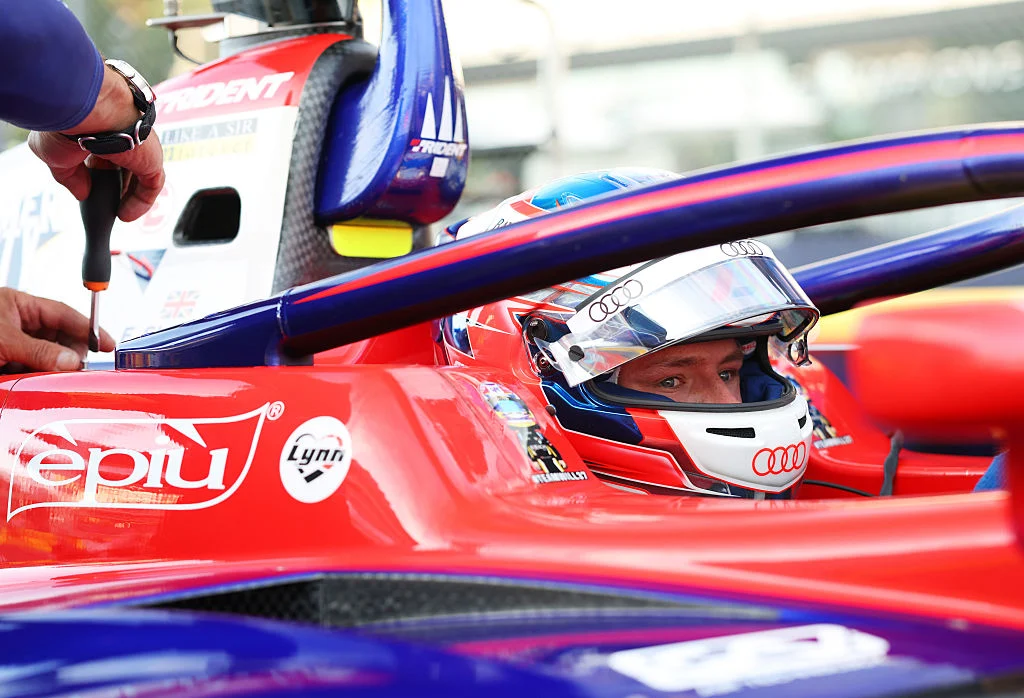
By the numbers: consistency gives Slater the advantage
Through eight rounds, Slater has accumulated 141 points compared with Ugochukwu’s 126. That works out at approximately 17.6 points per round for the Briton and 15.8 for the American, a relatively small average difference that has nevertheless created a useful championship buffer.
The podium statistics show where Slater has gained much of that advantage. He has reached the podium eight times across the 16 races held before Madrid, giving him a 50 per cent podium rate. More importantly, he has achieved at least one podium at every round. Six of those eight have come in Feature Races, meaning Slater has finished on the Sunday podium at 75 per cent of the events.
Ugochukwu has six podiums, equivalent to 37.5 per cent of the races, and five have come in Feature Races. His Sunday podium rate therefore stands at 62.5 per cent. However, he holds the advantage in victories, with two compared with Slater’s one. Ugochukwu won the Melbourne Feature Race and produced his extraordinary Silverstone Sprint victory, while Slater had to wait until Budapest to record his first F3 win.
That contrast explains much of the championship: Ugochukwu has produced more winning peaks, but Slater has suffered fewer low-scoring weekends and has consistently converted competitive pace into substantial points.
Ugochukwu established the early championship advantage
Ugochukwu started 2026 with momentum already behind him. After a difficult first F3 campaign in 2025, his results improved during the latter half of that season, while his switch to Campos Racing and strong winter preparation provided a platform for a much more competitive second year. He then beat Slater to the Formula Regional Oceania Trophy before carrying that form into F3.
Melbourne immediately demonstrated the difference. Ugochukwu won the Feature Race and left the opening round with 25 points, seven more than Slater’s 18. Slater still started his season strongly with a Feature Race podium, but Ugochukwu established the first meaningful championship advantage.
The American maintained that position through Monaco, Barcelona and Spielberg. Meanwhile, Slater continued accumulating podiums without yet finding a victory. He followed his Melbourne result with another Feature Race podium in Monaco, finished second in the Barcelona Sprint and added third in the Spielberg Feature Race.
Therefore, the opening four rounds established the defining contrast between them. Ugochukwu produced the bigger early result and held the points lead, while Slater quietly created a remarkably stable scoring base without experiencing the dramatic swings that affected several other contenders.
Silverstone showcased Ugochukwu’s biggest strength
Ugochukwu arguably produced the clearest demonstration of his outright race performance at Silverstone, where he won the Sprint Race by a record-breaking 17-second margin.
The result highlighted his ability to create a pace advantage once he reaches the front. However, his Feature Race drive arguably revealed even more about the qualities that have sustained his championship challenge. Starting 12th, he climbed through the field to third, securing another Sunday podium despite beginning outside the positions from which Feature Race success normally develops.
Slater still limited the damage by finishing second in the Feature Race, yet Silverstone ended with Ugochukwu on 104 points and Slater on 86. The 18-point advantage represented the American’s strongest championship position before the momentum changed sharply.
Ugochukwu’s Silverstone performance also provides the clearest explanation for why a 15-point Madrid deficit remains manageable. He has already demonstrated that he can create large points swings through raw race pace, and the finale gives him two Feature Races in which to exploit that strength.
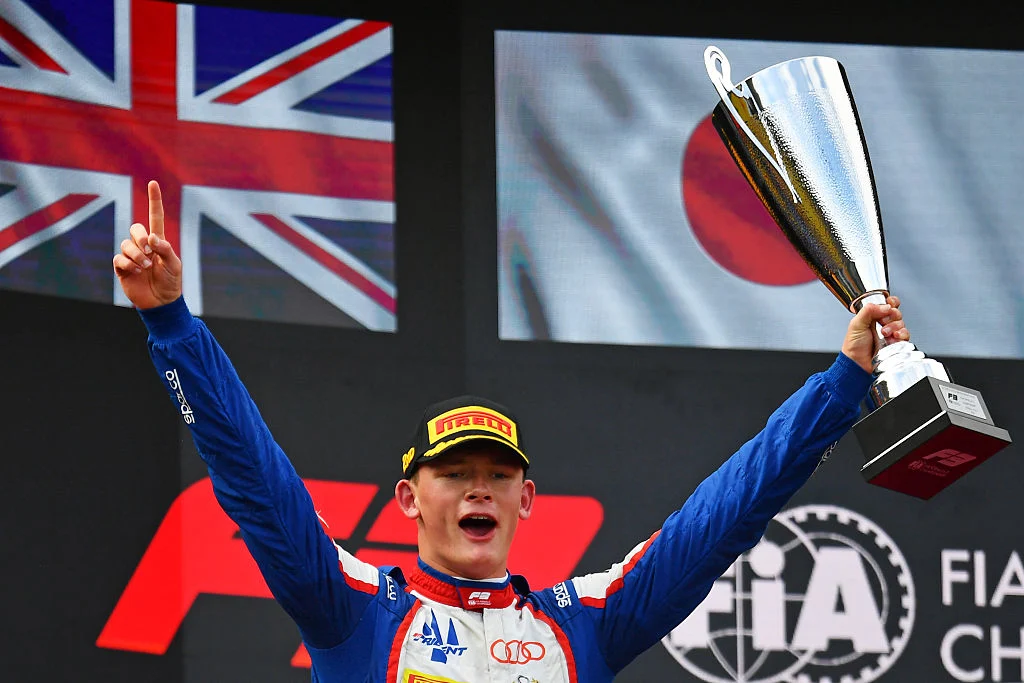
Spa triggered a 33-point championship swing
If Silverstone represented the high point of Ugochukwu’s championship control, Spa began Slater’s decisive counterattack. Ugochukwu failed to score across the Belgian weekend, while Slater added another Feature Race podium and collected 17 points. The 18-point gap consequently collapsed to a single point in one round.
Budapest then completed the change at the top. Slater finally converted his season-long consistency into victory by winning the Feature Race, while Ugochukwu recovered from sixth to second and finished directly behind him. The Campos driver again demonstrated his ability to progress through the field, including an ambitious double move around the outside of Brando Badoer and Mattia Colnaghi, but he could not find enough overspeed to challenge Slater successfully for the win.
Slater therefore took the championship lead for the first time all season. From an 18-point deficit after Silverstone, he had moved eight clear before Monza. By the end of the Italian round, the margin reached 15 points, creating a 33-point net swing across only three events.
That sequence represents the strongest statistical argument in Slater’s favour. His season never required a prolonged run of victories because his floor remained exceptionally high. When Ugochukwu experienced one scoreless weekend, Slater immediately turned months of gradual pressure into a championship-changing swing.
Monza showed both sides of their title campaigns
Monza compressed many of the themes from their seasons into one weekend.
Slater delivered under pressure in Qualifying and took pole before charging from 12th to second in the Sprint Race. Ugochukwu, meanwhile, struggled in Qualifying, started 23rd and failed to score on Saturday. Slater consequently increased his championship advantage from eight to 17 points before the Feature Race.
Sunday then reversed their fortunes. A mechanical problem forced Slater out while he fought among the podium contenders, creating an opportunity for Ugochukwu to make a major championship gain. However, the Campos driver had already started near the rear and then suffered a spin during the early stages, dropping him to the back.
Ugochukwu responded with one of his strongest recovery performances of the season and climbed to eighth. Those four points reduced Slater’s advantage to 15, but the circumstances meant he gained only two points on a rival who had failed to finish.
The result therefore illustrated both Ugochukwu’s greatest strength and the weakness that has complicated his second half of the campaign. His race pace allowed him to rescue points from an extremely difficult position, yet poor starting position forced him to spend much of the weekend recovering rather than fighting for victories.
Qualifying separates Slater and Ugochukwu most clearly
The sharpest statistical difference between the title rivals comes over one lap.
Slater has taken three of the last four pole positions as his Qualifying performances improved during the decisive phase of the championship. Ugochukwu has yet to take a pole in 2026. Earlier in the year, the American qualified inside the top five at each of the opening four rounds, but that consistency disappeared during the second half.
Ugochukwu qualified towards the back of the top 10 at Silverstone and Spa before taking sixth in Budapest. Monza produced the most damaging result when he finished 10th in his group and started 23rd. Slater moved in the opposite direction, with his late-season poles increasingly allowing him to control his own races rather than rely on recovery drives.
Madrid magnifies that difference because the expanded finale includes two Qualifying sessions, each awarding two points for pole. Four points will therefore become available before the races even begin, while track position could prove especially important on a circuit where drivers expect overtaking to present a challenge.
For Ugochukwu, improved Qualifying offers the most obvious route to combining his strengths into a championship-winning weekend. If he starts near the front, he no longer needs to spend valuable laps recovering positions before using the race pace that has already produced two victories.
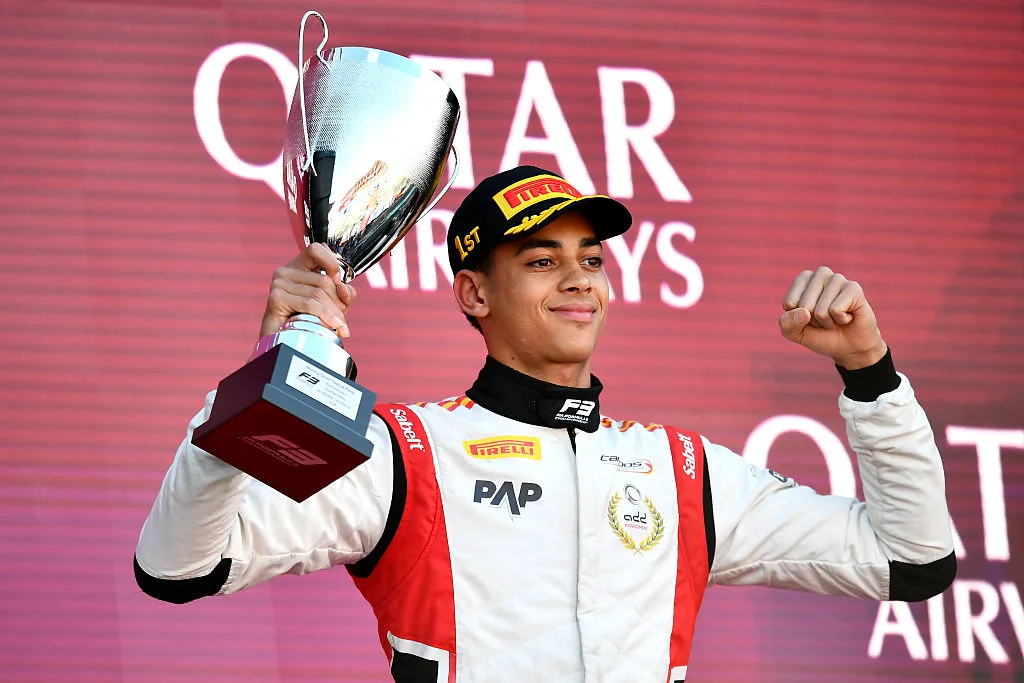
Ugochukwu wants to recreate his Melbourne feeling
Madrid testing provided encouragement for Campos and Ugochukwu. The American set the fastest time across the two days and topped two of the four sessions, while Slater also showed strong pace and led the final afternoon. Ugochukwu finished that final session just 0.105s behind his title rival, leaving little evidence of a clear performance favourite.
For Ugochukwu, the test created confidence that he can immediately attack when competitive running begins.
“Feeling good for the weekend, for sure,” he said. “I think there’s definitely some points to catch up on, but I’m still confident that it’s definitely possible to get the job done.
“Coming off a good test always helps. I feel pretty nailed around the track. We’ll see in FP how the weekend starts and evolves with the F1 grip now. But I’m getting Melbourne vibes for some reason to this weekend, and that went pretty well. It was the first race of the season, everyone was excited to get it going, and this is kind of similar. “It’s the last one, and everyone wants to end very well, and it’s just time to do it now.”
The comparison with Melbourne carries particular significance because Ugochukwu started the championship by winning the Feature Race. Replicating that level of execution in Madrid would immediately place Slater under greater pressure, particularly with the unusual two-Feature-Race format offering more opportunities for large swings.
Slater relishes Madrid’s high-speed challenge
Slater also left the Madrid test with reason for confidence. He topped two of the four sessions, including the final afternoon, and has increasingly used his Qualifying strength to establish an advantage before the races begin.
The Briton also believes the new circuit suits the type of driving challenge he enjoys.
“I love it. I think it’s one of the best tracks on the calendar.” He added, “It’s one of the most exciting. It’s old school. It’s got character.”
He continued, “It’s one of the most exhilarating to drive and it’s nice to get a new track that actually has that to it. It gives you a real buzz when you drive it on the qualifying lap. So honestly, I can’t wait for qualifying, a sunset qualifying, which is going to be quite late. “The track’s going to be fast, cars are going to be fast, low fuel, everything. So it’s going to be an enjoyable one.”
That enthusiasm matters because Qualifying has become one of Slater’s clearest advantages. If he can maintain the form that delivered three of the previous four poles, he could add points directly to his championship total while simultaneously forcing Ugochukwu to recover on a circuit where track position may carry even greater value.
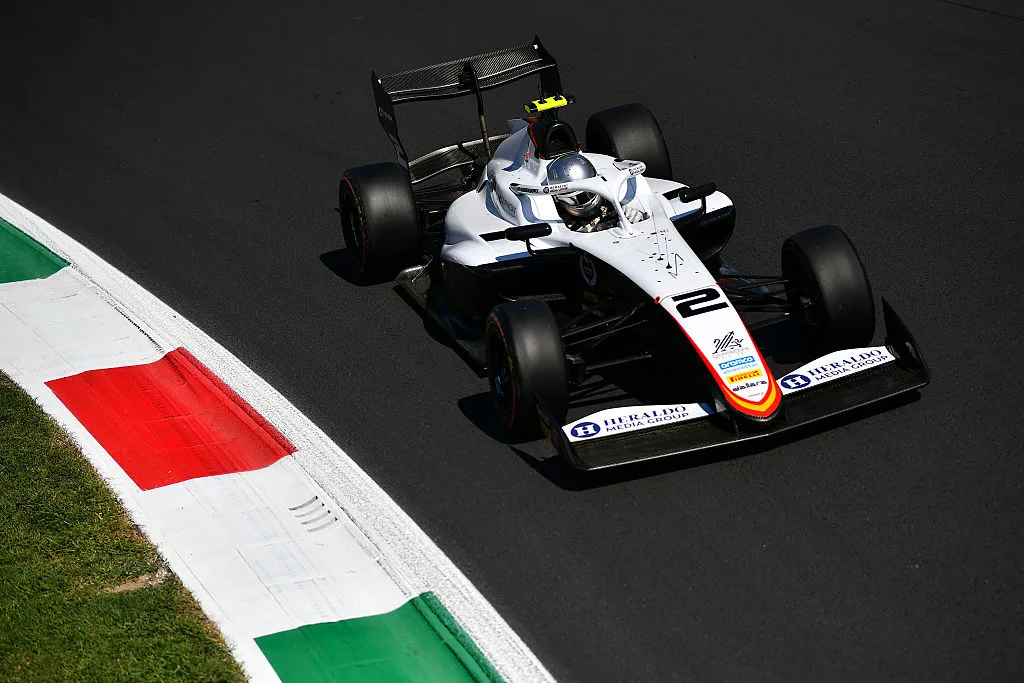
Racecraft gives Ugochukwu another route to the title
Ugochukwu’s strongest counterargument lies in what happens after the lights go out. His season has repeatedly featured aggressive but controlled progress through the field, particularly at Silverstone, Budapest and Monza.
The title fight has also placed him directly against Slater several times. Budapest provided the clearest example when Ugochukwu closed onto the TRIDENT driver but could not complete the move for the win. Madrid could create another direct confrontation, although the championship situation gives Ugochukwu little incentive to gamble on unnecessary contact.
“Well, as I said, it depends a little bit on the situation,” said Ugochukwu. “I think being the one behind, you want to finish the races to kind of outscore your rival.
“So you don’t really want to be taking too many on track battle risks. I’ll try to be further you are in the front or P1. That’s how you kind of avoid those risks. So that’ll make the weekend a lot cleaner if I’m going off the front.”
That approach reinforces why Qualifying remains so important. Ugochukwu wants to avoid turning the championship into a sequence of direct wheel-to-wheel gambles against Slater. Starting ahead and using his race pace to create separation would give him a much cleaner route to the 16-point net gain he needs.
Ugochukwu sees the championship as the reward for execution
Although Ugochukwu trails by 15, he can still point to a season that has demonstrated the pace and consistency required to remain within striking distance through eight rounds.
His two victories and six podiums have kept him firmly ahead of the other challengers, while his recovery drives have repeatedly limited losses when weekends moved away from Campos. That ability has become particularly important since his Qualifying form dipped.
“I think through the year we definitely showed that the pace was there,” he said. “We had strong results, and also the consistency was there, to be battling for the title, you need to be consistently getting the points.
“For sure, the championship will be a nice little icing on the cake. I think pure mindset is trying to get two Feature Race wins.
“That’s what’s on our mind, because if we can get that, there’s a good chance that the title will come with it. So I think the title kind of comes later, and then just the pure focus on the weekend is the main thing on our mindset.”
Two Feature Race wins would transform the mathematics. Each victory carries 25 points, with another point available for fastest lap, while each pole contributes two. Madrid therefore offers Ugochukwu a structure that rewards precisely the type of high-scoring Sunday-style performances that have underpinned his season.
Slater backs the execution that built his 2026 F3 championship lead
Slater approaches the finale from a position built less on spectacular recovery drives and more on repeatedly putting himself where the largest points become available.
His eight podiums from eight rounds represent the clearest evidence. Even before his Budapest victory, he remained within championship range because he kept converting opportunities into second and third places. As other contenders experienced larger fluctuations, Slater steadily reduced the deficit before finally moving ahead.
That consistency also shapes his confidence before Madrid.
“I think I’ve proven everything that I’ve needed to,” he said. “I’ve done an amazing job all year. I’m not a person that always gives myself a lot of credit, but honestly, when I look back on this year, the things I’ve done in my control have been really well executed.
“Now we want to go fight for a championship. I don’t want to finish second and I want to win this thing. So I’m going to do everything in my power, everything that we can to try and win it. I’m definitely going to leave anything out there.”
Slater therefore does not need to transform the approach that brought him to Madrid. If he maintains roughly the same performance level that produced 17.6 points per round across the opening eight events, Ugochukwu must substantially outperform his own season average to overturn the gap.
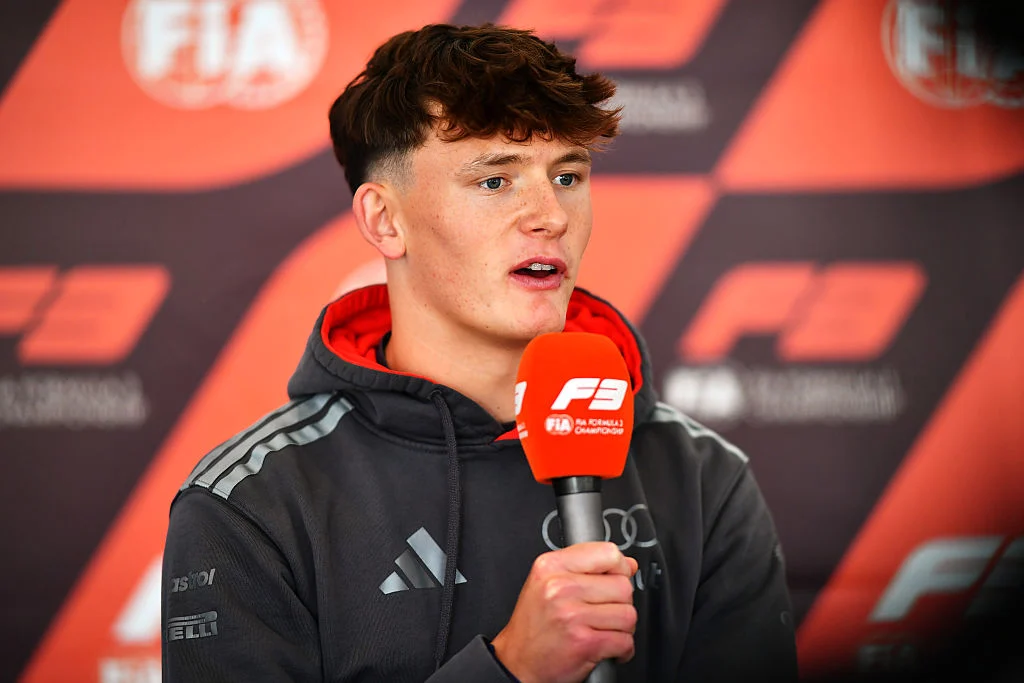
Madrid mathematics favours Slater, but leaves Ugochukwu multiple routes to 2026 F3 title
The championship equation remains simple at its core. Slater has 141 points, Ugochukwu has 126 and Madrid offers a maximum of 67. Ugochukwu therefore needs a net gain of 16 points to finish ahead outright. A 15-point swing would leave them level and send the title to countback.
Slater does not need a victory, pole or even to outscore Ugochukwu. If he collects 20 points, Ugochukwu needs at least 36 to move ahead outright. A 30-point weekend from Slater raises that target to 46, while 40 points forces Ugochukwu to find 56. Slater can guarantee the championship on points regardless of his rival by scoring 53 and reaching 194, one beyond Ugochukwu’s maximum possible total.
However, the numbers also show why Ugochukwu remains a genuine threat. If he scores the maximum 67, Slater can still collect 51 and lose the championship on points. A 60-point score for Ugochukwu requires Slater to stay at 44 or below, while 50 points gives the American the title outright if Slater scores no more than 34.
The enlarged Madrid format creates plenty of opportunities for such swings. One sequence of pole, Feature Race victory and fastest lap produces 28 points. If Ugochukwu achieved that while Slater finished fourth for 12, the American would gain the entire 16 points he currently needs in a single Qualifying-and-race sequence.
Countback adds another layer to Slater-Ugochukwu battle at 2026 Madrid F3 finale
A tie cannot automatically hand Slater the championship. Both drivers currently have one Feature Race victory, while Ugochukwu also owns his Silverstone Sprint victory and Slater has yet to win on Saturday. The regulations prioritise Feature Race victories before Sprint wins and then move through second places, third places and subsequent finishing positions.
Madrid can change that balance because it includes two more Feature Races. If Ugochukwu gains exactly 15 points across the weekend, the identity of the race winners could decide the championship without either driver finishing ahead on points.
That possibility strengthens the logic behind Ugochukwu’s stated target of two Feature Race victories. Such a result would not only deliver a large points haul but could also give him a decisive countback advantage if the championship ends level.
Consistency meets outright race pace in Madrid
Slater and Ugochukwu have ultimately built championship-calibre seasons around different strengths. Slater’s eight podiums, six Feature Race podiums, three recent poles and 141 points demonstrate an exceptional level of consistency for a rookie. He has finished on the podium at every round, rarely made costly errors and steadily improved the area that can make Madrid easiest: Qualifying.
Ugochukwu has built his 126 points around a more volatile but often more explosive profile. His two wins exceed Slater’s total, his 17-second Silverstone victory remains one of the most dominant performances of the season, and his recoveries from 12th to third at Silverstone and from the back to eighth after a Monza spin underline how much he can achieve even when Qualifying or circumstance places him out of position.
The championship progression captures the contrast perfectly. Ugochukwu controlled the standings through much of the first half and led by 18 after Silverstone. Slater then used three rounds of superior scoring to produce a 33-point swing and arrive in Madrid 15 ahead.
Now the finale asks each driver to lean on the qualities that brought him this far. Slater needs the controlled execution and one-lap speed that transformed his season, while Ugochukwu needs to combine his race pace with the stronger Qualifying position that has sometimes escaped him. With both showing front-running speed during Madrid testing and 67 points still available, their contrasting routes through 2026 have ultimately brought them to the same place: one final weekend with the F3 title at stake.