Toyota Racing welcomed the victorious #7 TR010 Hybrid back to its Cologne headquarters after the Hypercar claimed victory at the 2026 24 Hours of Le Mans.
Mike Conway, Kamui Kobayashi and Nyck de Vries guided the #7 across the finish line shortly after 16:00 last Sunday, completing a demanding 24-hour contest in front of tens of thousands of spectators.
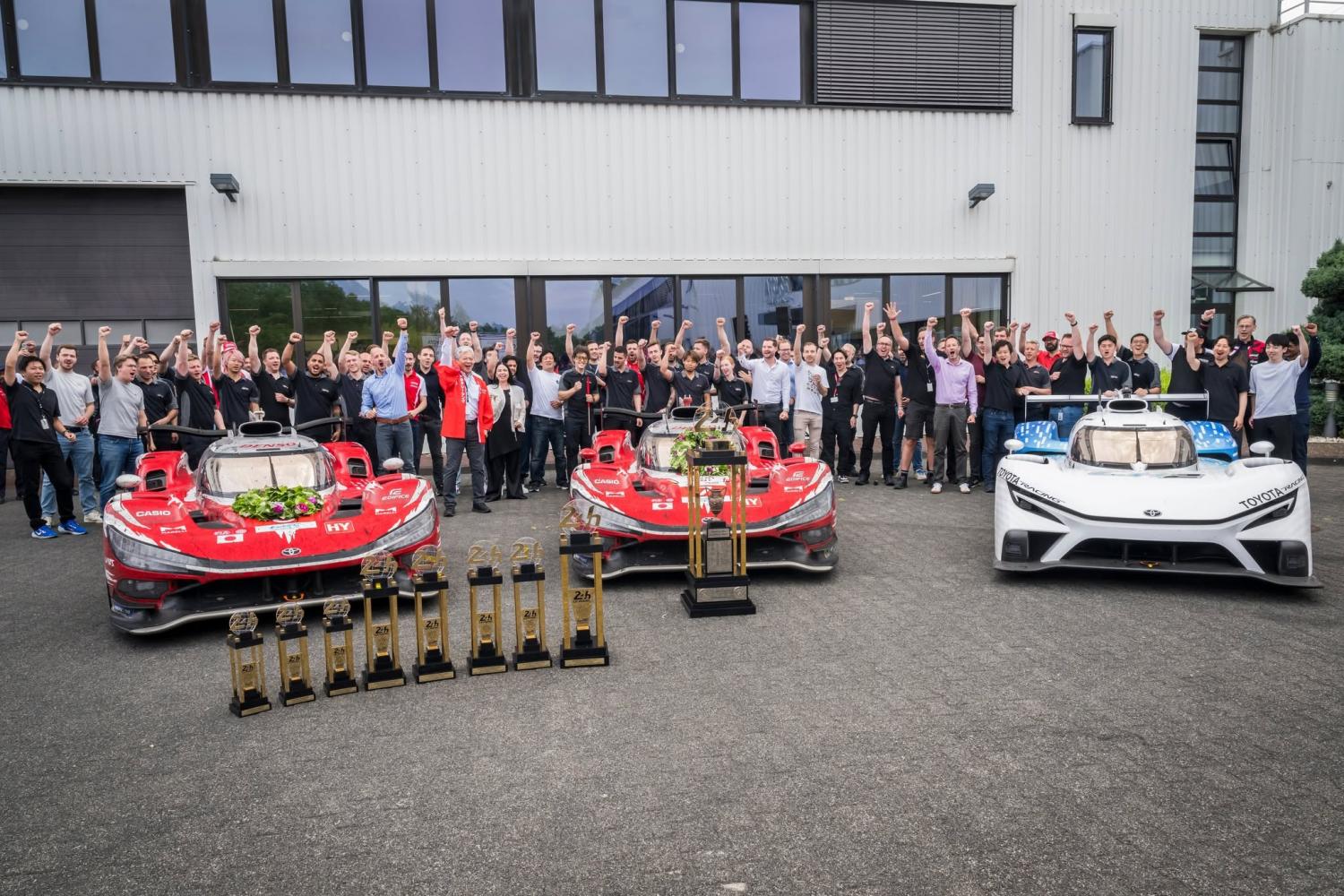
On Wednesday, the winning car returned safely to Toyota Racing Europe’s base in Germany. Engineers, mechanics, technicians and logistics staff gathered to greet the machine they had designed, developed and prepared for endurance racing’s most prestigious event.
The homecoming gave the wider team an opportunity to celebrate away from the pressure and attention of the Le Mans pit lane. Although three drivers carried the car across the finish line, Toyota’s latest victory reflected the contribution of hundreds of people working behind the scenes.
Toyota staff welcome victorious Hypercar home
The #7 TR010 Hybrid returned to the same Cologne facility where Toyota had prepared it for the demands of Le Mans.
Staff members assembled around the car as it re-entered its garage, creating an emotional moment for those who had spent months refining its performance, reliability and efficiency.
The team had worked through countless hours of development before the event. Engineers studied every area of the car, mechanics prepared its components and logistics personnel ensured that the operation reached Le Mans with everything it required.
Their work rarely attracts the same attention as the drivers or the final podium ceremony. However, the car’s return allowed Toyota to recognise the wider group that made the victory possible.
The 2026 Le Mans trophy now occupies a place in Toyota Racing’s silver cabinet in Cologne. While the trophy records the result, it also represents the strategic decisions, technical development and sustained effort that supported the #7 throughout the race.
Conway, Kobayashi and de Vries deliver Le Mans win
Conway, Kobayashi and de Vries faced relentless pressure as they attempted to take the TR010 Hybrid through a full day and night of racing.
The drivers needed to push hard enough to remain in contention without exceeding the car’s limits or making an error. Traffic, fatigue and competition from rival manufacturers increased the challenge throughout the 24 hours.
Nevertheless, the #7 crew maintained its pace and composure. Toyota combined the drivers’ performance with accurate pit work and effective strategy to place the car at the front when the chequered flag fell.
The victory added another major achievement to Toyota’s endurance racing record and placed the TR010 Hybrid among the manufacturer’s successful Le Mans machinery.
Its return to Cologne therefore carried significance beyond the physical arrival of a race car. The team welcomed back a machine that had survived one of motorsport’s most severe tests and secured a place in Le Mans history.
Sister #8 Toyota completes double podium
Toyota’s performance extended beyond the winning #7 car.
Sébastien Buemi, Brendon Hartley and Ryō Hirakawa brought the #8 Toyota GR010 Hybrid home in third place after remaining involved in a close fight until the finish.
After 24 hours of racing, the #8 crossed the line only 20.417 seconds behind the winners. The narrow margin demonstrated the intensity of the battle and the level of performance that Toyota maintained across both entries.
The sister car’s podium also strengthened the collective nature of the result. Toyota did not rely solely on one successful crew, as both cars remained competitive throughout the event and finished among the leading positions.
As a result, the manufacturer left Le Mans with a victory, a double podium and further proof of the strength of its endurance racing operation.
Hydrogen prototype signals Toyota’s future direction
Toyota also used Le Mans to showcase technology that could shape the future of endurance racing.
The Toyota TR LH2 Racing Prototype completed a demonstration lap of the Circuit de la Sarthe with former Le Mans winner Kazuki Nakajima behind the wheel.
The run placed a liquid hydrogen-powered racing prototype in front of spectators, teams and technical experts at one of the world’s most important motorsport events.
Although the prototype did not compete in the race, its appearance carried practical and symbolic importance. Toyota demonstrated the technology in real track conditions and provided a glimpse of how hydrogen could contribute to future racing programmes.
The demonstration also connected the manufacturer’s current success with its longer-term development goals. While the TR010 Hybrid delivered victory through established hybrid technology, the TR LH2 Racing Prototype pointed towards another potential route for high-performance endurance racing.
Toyota combines present success with future ambition
The 2026 Le Mans weekend allowed Toyota to celebrate both its immediate achievements and its future plans.
The #7 TR010 Hybrid secured victory after surviving 24 hours of intense competition, while the #8 completed a double podium for the manufacturer. Meanwhile, the liquid hydrogen prototype demonstrated Toyota’s continued interest in developing lower-emission racing technology.
The return of the winning car to Cologne brought those achievements back to the people who had helped make them possible.
For Toyota’s engineers, mechanics, technicians and support staff, the homecoming offered a chance to see the result of their work in physical form. The scratches, dirt and signs of strain on the #7 told the story of a car that had endured the night, resisted its rivals and reached the finish first.
Toyota had already celebrated beneath the Le Mans podium. In Cologne, the manufacturer celebrated the people and preparation behind the victory.