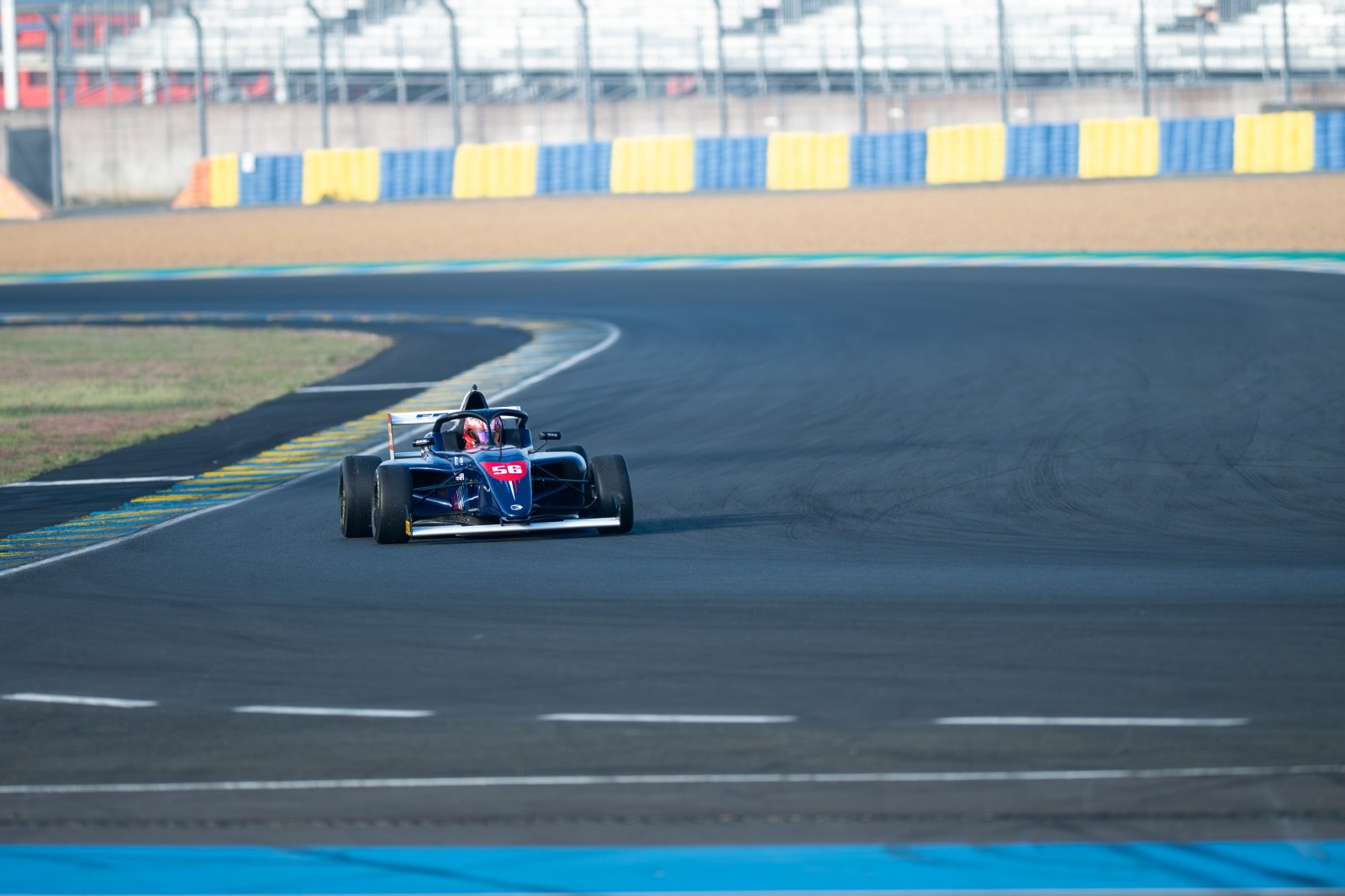
Like many young drivers emerging from non-traditional motorsport nations, like Kenya, Shane Chandaria has built his career through persistence, adaptability, and an unwavering belief in his own potential. From his early days in Kenya—where circuit racing infrastructure remains limited compared to Europe—to becoming the 2025 FIA Indian F4 champion, his rise reflects both determination and a willingness to embrace every challenge along the way.
Now preparing for the next stage of his career in French F4, Chandaria continues to draw on the lessons learned throughout his journey. Those lessons, as he explained in an exclusive interview with Pit Debrief, however, began long before competitive racing entered the picture.
From family weekends in Kenya to F1 dreams: How Chandaria fell in love with motorsport
For Chandaria, motorsport began not in the cockpit, but in front of the television. Weekend race days became a shared ritual, shaping both his passion for the sport and his earliest understanding of competition. The atmosphere, the rivalries, and the sense of occasion all combined to spark something deeper than casual interest.
“It started off when I was young, and to be honest, I just loved the atmosphere of watching the races, because I got to see one when I was younger, and I loved watching on TV. And to be honest, it’s kind of just a really great time on the weekends with my family and my friends, just watching the races and supporting the teams. And I was always a Ferrari fan, and half my family was Ferrari fans, half my family was Mercedes fans. So, it was always a fight over the weekends to see who would do it, especially because it was in 2017 when they were having the battle with Vettel and Hamilton.”
That period, defined by the intense rivalry between Sebastian Vettel and Lewis Hamilton, left a lasting impression. It not only fuelled his enthusiasm for Formula One but also introduced him to the competitive mindset required at the highest level.
A developing interest
As his interest deepened, curiosity gradually transformed into action. Chandaria began to look beyond watching and towards participation, eager to understand the mechanics, discipline, and skill behind the spectacle.
“So yeah, from there, I just really loved the racing, and I got really interested in the cars and how the drivers have to train and all. So, I really just wanted to try it. And I got to try a go-kart. My dad took me to the track for a practice session. And yeah, I just really loved it. I wasn’t quick from the first time I sat in, but I just loved it so much and kept on going back. And eventually, after a few sets of times, I was starting to get some really good times.”
Developing in an unconventional environment: Chandaria reflects on his early motorsport career in Kenya
While many young drivers benefit from structured development systems, Chandaria’s early career unfolded in a far less conventional setting. Growing up in Kenya, he navigated a motorsport scene that offered limited depth but valuable foundational experience.
Initially, karting remained a hobby rather than a defined career path. This allowed him to explore the sport freely, without the immediate pressure of results or expectations.
“I think it was, I’ve lived in Kenya my whole life, so I didn’t really know anything else. And at the start, I think it was, it was a hobby. It was like, I always wanted to become a racing driver, but I guess for my parents and everyone, it was like, yeah, ‘it’s just something for fun.’”
As time progressed, however, that casual involvement began to evolve. With more track time came improved confidence, stronger performances, and a growing sense of direction.
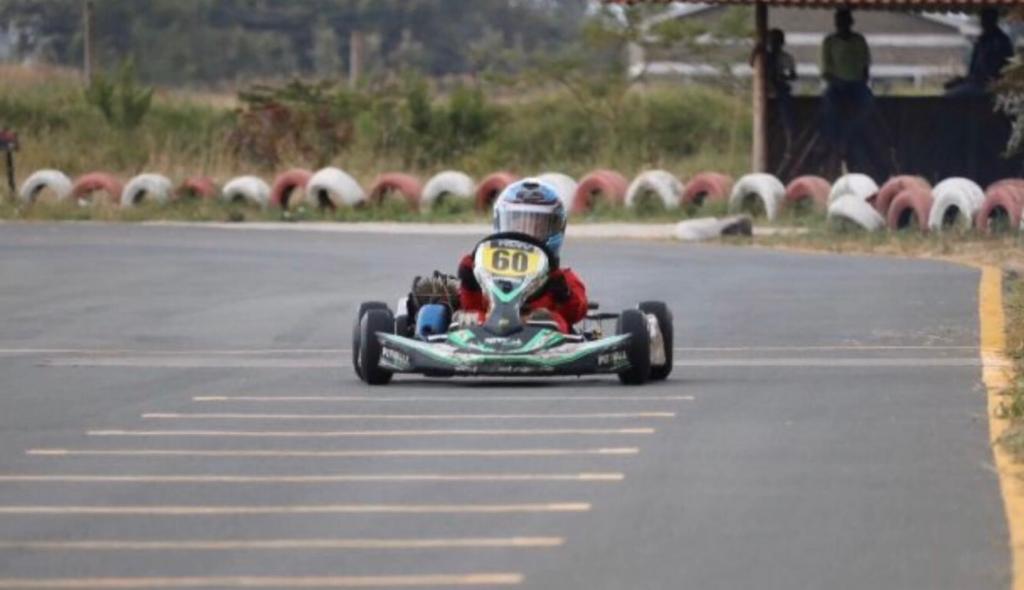
“So, it started off slow, like the first two years, I was just having fun in a rental go-kart. Then I moved up, I got my own go-kart, in 2018, but for fun. And I think it was good because it was like the tracks and I had, and there were people there to race against. So, it was definitely good for learning.”
Nevertheless, the limitations of the local scene soon became evident. With only a handful of competitive drivers, maintaining consistent high-level competition proved difficult.
“And then, but eventually it became to a point where there were drivers who were quick, but they were not enough. So there were maybe three or four drivers who were quick. And that would lead to a bit of a, like if you’re having a good weekend, you’ll just win. It became a bit like too little competition over there.”
A solid introduction to motorsport
Despite this, Chandaria recognises the value of those early years. Rather than hindering his development, they provided an essential introduction to the realities of motorsport.
“But I think it was really good for gaining the confidence in the driving. And also, it introduced me to the highs and lows of motorsport, which it’s the first part to see, like if you can go through those highs and lows, then you actually like the sport and you can continue no matter what. There was never a point where I wanted to quit, even when the race weren’t going my way.”
In this way, his environment helped build not only technical ability but also mental resilience—an attribute that would prove crucial as he advanced through the ranks.
“So I think it showed me the introduction to motorsport, which I think was really good.”
Learning through setbacks and self-reflection
As Chandaria progressed into more competitive environments, the challenges naturally intensified. Success no longer came easily, and setbacks became an unavoidable part of the journey.
One particularly difficult period in 2024 forced him to confront both his performance and his mindset. A series of incidents and disappointing results tested his confidence and raised questions about his abilities.
“Yeah, I think for sure, the lowest I’ve been is kind of in the summertime of 2024. I think it was just a row of bad races and crashes, stuff that I did, stuff that other people did. And it was like, I just remember sitting on the bed and on my bed and just thinking like, kind of feeling sorry for myself about like, ‘well, why is this all happening to me? Like, am I good enough and stuff like that?’”
However, rather than allowing those doubts to define him, Chandaria used the experience as an opportunity for growth. By reframing his perspective, he began to see progress beyond the results sheet.
“But then when I caught myself doing that, I kind of just remembered that it’s all part of learning. Like each race, I’m becoming better, even though the results might not show it.”
This shift marked a key turning point in his development. He recognised that improvement often occurs beneath the surface, requiring patience and persistence to fully materialise.
“It was an improvement that every driver has to go through, like those few tough races to make that kind of breakthrough. And I think it’s about just telling yourself it’ll be okay. And I just had to tell myself to get on with it and try and work harder and improve myself.”
Perspective beyond the cockpit
Looking back on his journey, Chandaria now understands the importance of balance—not only in racing but in his overall approach to life and competition. His experiences have taught him to manage pressure, accept uncertainty, and focus on what he can control.
If given the chance to speak to his younger self, his advice reflects a maturity shaped by both success and adversity.
“Let’s say, ‘just keep going, don’t give up.’ And I guess I’d also say, I’d probably just advise to ‘take a moment and take a deep breath every once in a while; don’t get, don’t get too worked about some stuff that are out of your control.’”
Chandaria continuing the climb from early days of karting in Kenya to the international motorsport stage
Chandaria’s journey from karting in Kenya to international single-seater success highlights the evolving presence of drivers from emerging motorsport regions. His achievements—including becoming the youngest FIA Indian F4 champion and the first Kenyan to win an FIA-sanctioned single-seater title—represent both personal milestones and broader progress for the sport.
As he prepares for the next step in French F4, his story continues to unfold. Yet, at its core, it remains grounded in the same principles that defined his earliest days: passion for racing, resilience in the face of setbacks, and a commitment to constant improvement.